
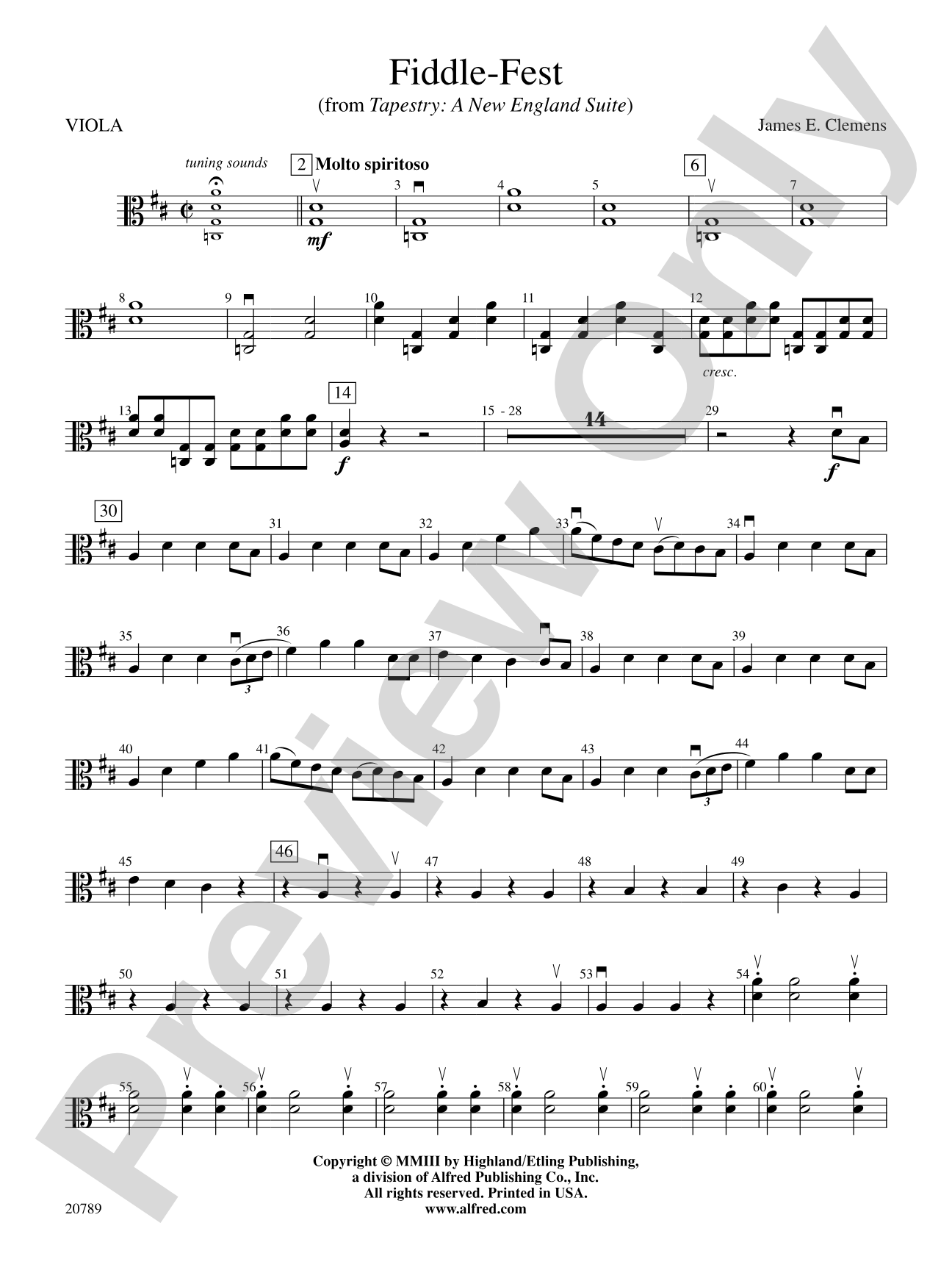

Fiddle-Fest: Viola
(from Tapestry: A New England Suite)
By James E. Clemens
Grade: 3
Item: 00-PC-0000457_VA1
$5.99
Pickup currently not available
Description
As part of Tapestry: A New England Suite, Fiddle-Fest pays homage to the fiddlers of the New England style by incorporating three tunes from the fiddle tradition. The set begins with the joyful reel "Come Dance and Sing" and is followed by "Black Nag," a double jig. Stomps and claps lead to "Staten Island," which is then altered to become a waltz. The set concludes with a flourish as the first reel returns.


Don't just read it, hear it, play along with it, and watch your students grow with it. In MakeMusic Cloud, Fiddle-Fest: Viola comes alive with professional accompaniment, adjustable tempo, and built-in practice tools that turn solo practice into real progress.
Open in the Player
Jump straight in and assign it today.
Start Your Free Trial
Open this title and explore the full library in minutes.
Sample Audio
1
Audio File
--:--
0:00
0:00
Sample Video
No sample videos found.
Additional Details
Series:
Highland/Etling String Orchestra
Publisher:
Alfred Music
Page Count:
124
SKU:
00-PC-0000457_VA1
More about this title
About the Composer: James Clemens

James Clemens grew up in Goshen, Indiana, and developed his compositional voice through a largely self-directed path. His training at Goshen College was wide-ranging: he performed as a violinist in the orchestra, sang in the chamber choir, played jazz piano, accompanied vocal ensembles, and explored early music on recorder and Renaissance instruments. He also studied the erhu, a Chinese two-string fiddle, expanding his instrumental palette and cross-cultural musical understanding.
Clemens is drawn to commissions that invite direct collaboration with the musicians who will perform his work. He finds this exchange of ideas between composer and performer to be both exciting and deeply gratifying, which shapes how he thinks about accessibility and craft in his writing.
Why we love this
Clemens captures the energy and character of New England fiddle music while keeping the string orchestra writing clear and playable at Grade 3. The piece builds a satisfying arc: it opens with infectious rhythmic momentum, introduces contrasting material through the double jig, and lands the waltz variation with real personality. It's the kind of work that sounds more sophisticated than its level suggests, rewarding rehearsal time without punishing a mid-level ensemble.
What to expect
Fiddle-Fest radiates the scrappy joy of traditional New England music: dancing reels, lilting jigs, and waltzes that invite participation. The writing captures the spirit of fiddlers and community musicians without losing orchestral sophistication. There's warmth and humor in the journey from reel to jig to waltz and back again.
Who it's for
String orchestras at the middle grade level who want to perform folk-rooted music with genuine style and energy. This work suits ensembles comfortable with clean ensemble playing and clear part independence, and it provides an excellent opportunity to explore rhythmic confidence and tonal character.
How to get the most out of it
- Establish the rhythmic drive of the opening reel early in rehearsals. The stomps and claps are not ornamental; they anchor the ensemble's pulse and need commitment from every stand.
- Treat the 'Black Nag' double jig as a chance to refine articulation across the section. The character shifts when this tune enters, and clarity in the bow attack will help the players hear and feel the difference.
- Shape the waltz variation of 'Staten Island' with a gentle lilt rather than metronomic precision. Let the melody breathe and the accompaniment figures support that breathing; the transformation from jig to waltz should feel natural, not mechanical.
- Bring the return of the opening reel to a clear climax. The piece earns its flourish here, and a well-prepared final statement sends the audience out with the joy the movement deserves.
How to use it
This piece sits naturally on a concert exploring American regional music traditions, or on a festival and contest program where you want repertoire that entertains both audience and performer. Its Grade 3 level and compact scope also make it ideal for a spring concert or assembly program, where its accessible energy and clear narrative arc land well.
Skills your students will build
- Articulation and style appropriate to folk idiom (detached vs. connected bowings)
- Rhythmic precision within a reel and jig meter
- Ensemble unison and division in fast passages
- Dynamic control to shape melodic lines and support rhythmic figures
- Rapid adaptation to tonal shifts (reel to double jig to waltz)