

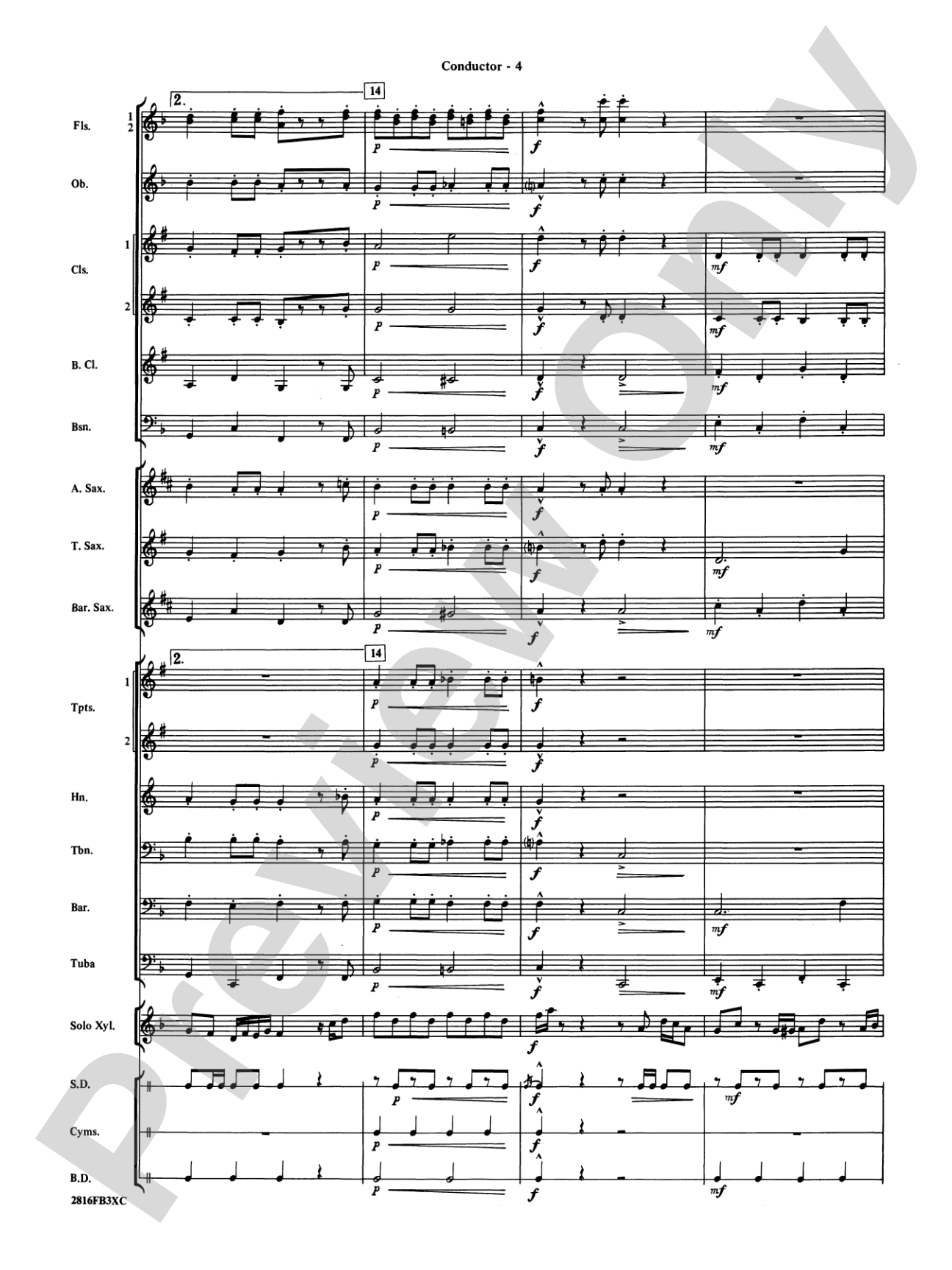
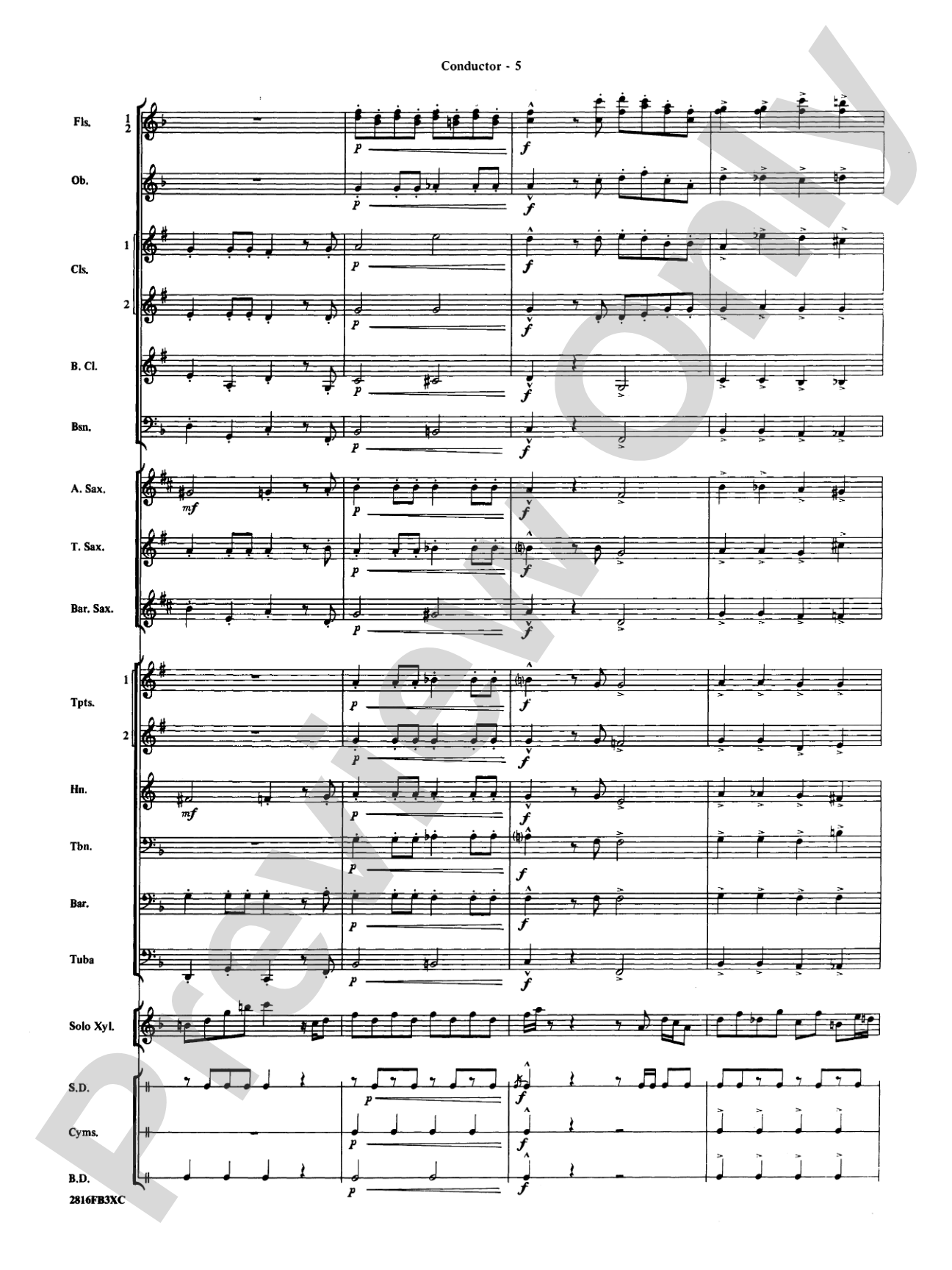
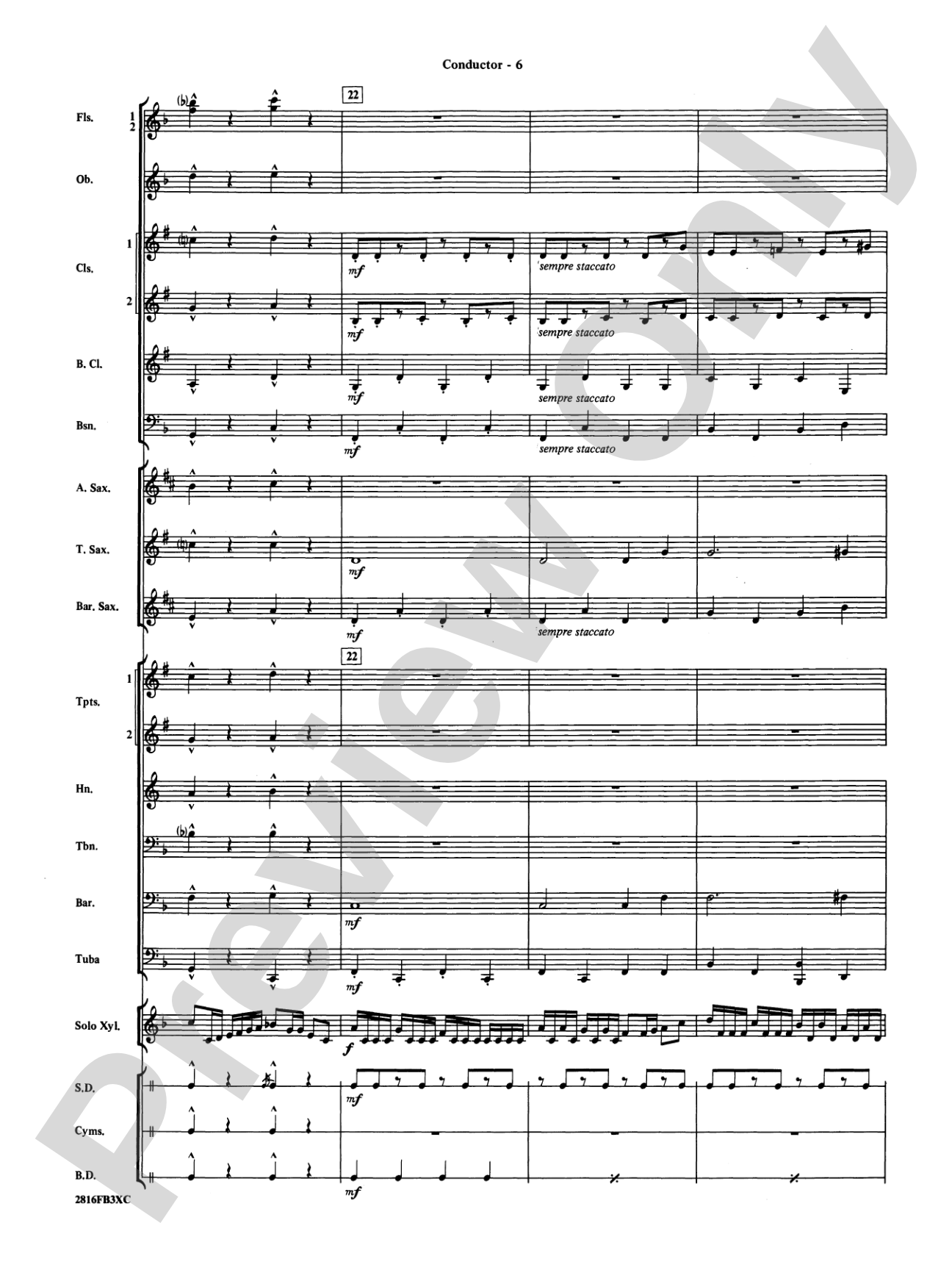
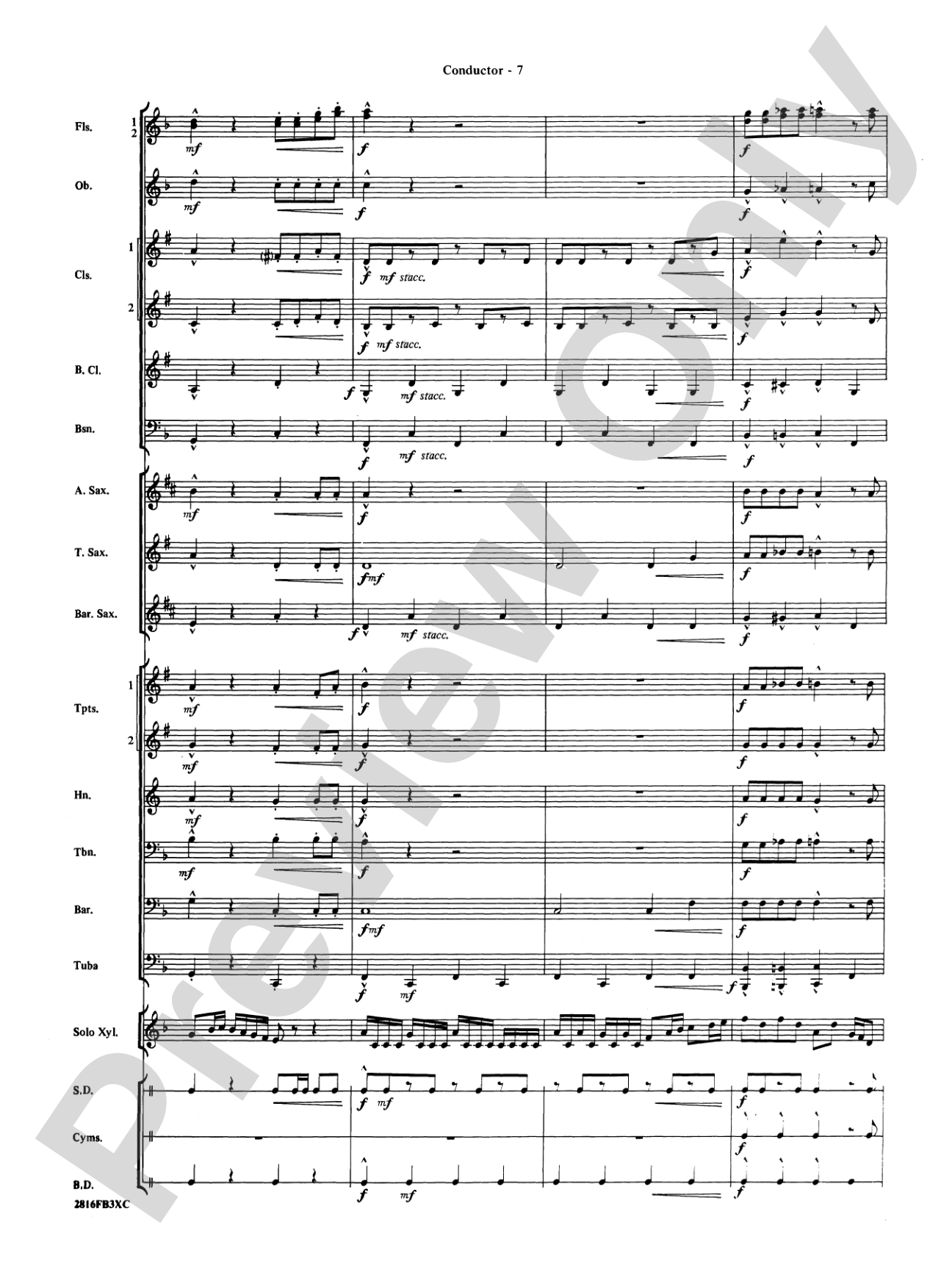
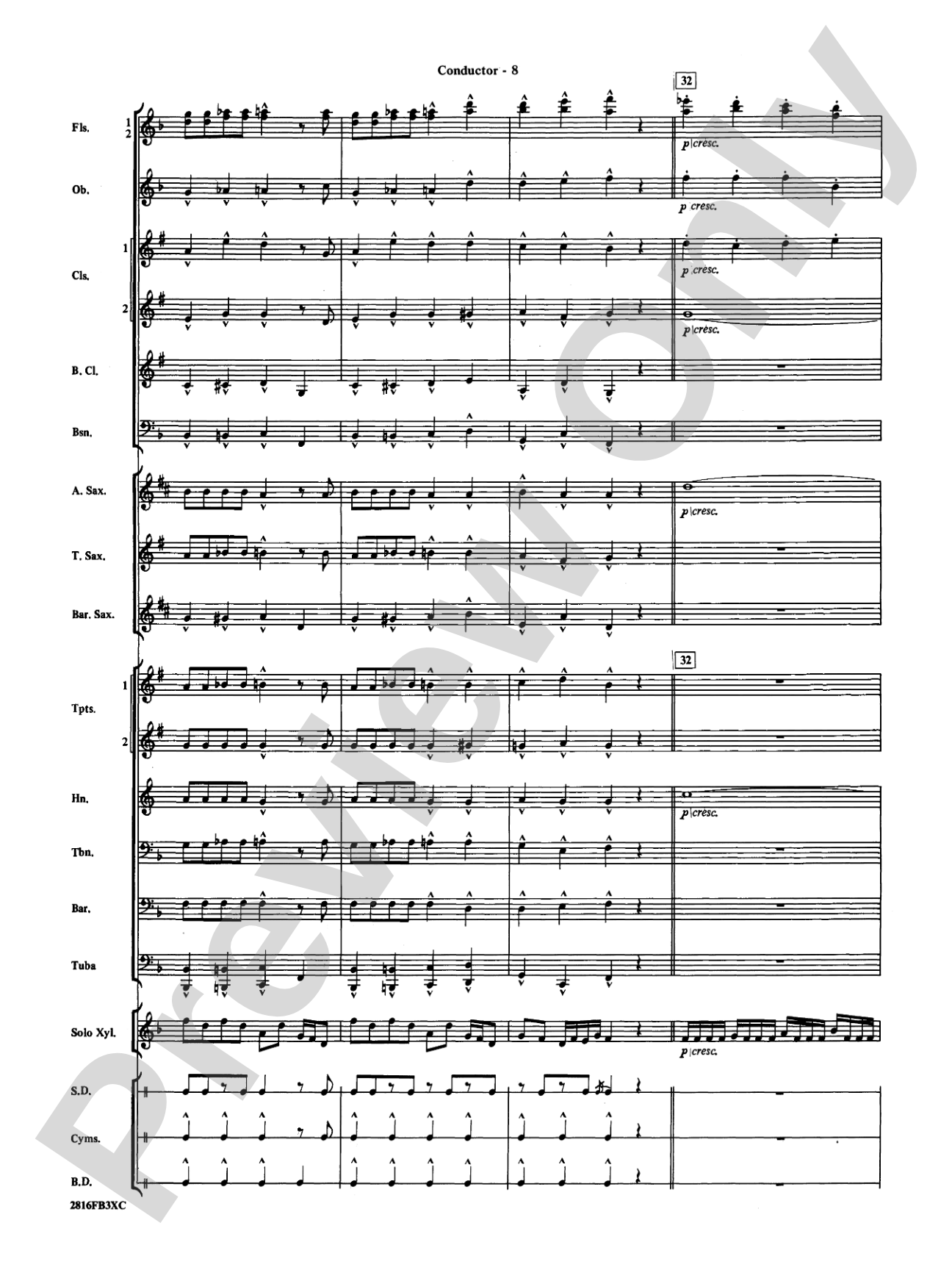
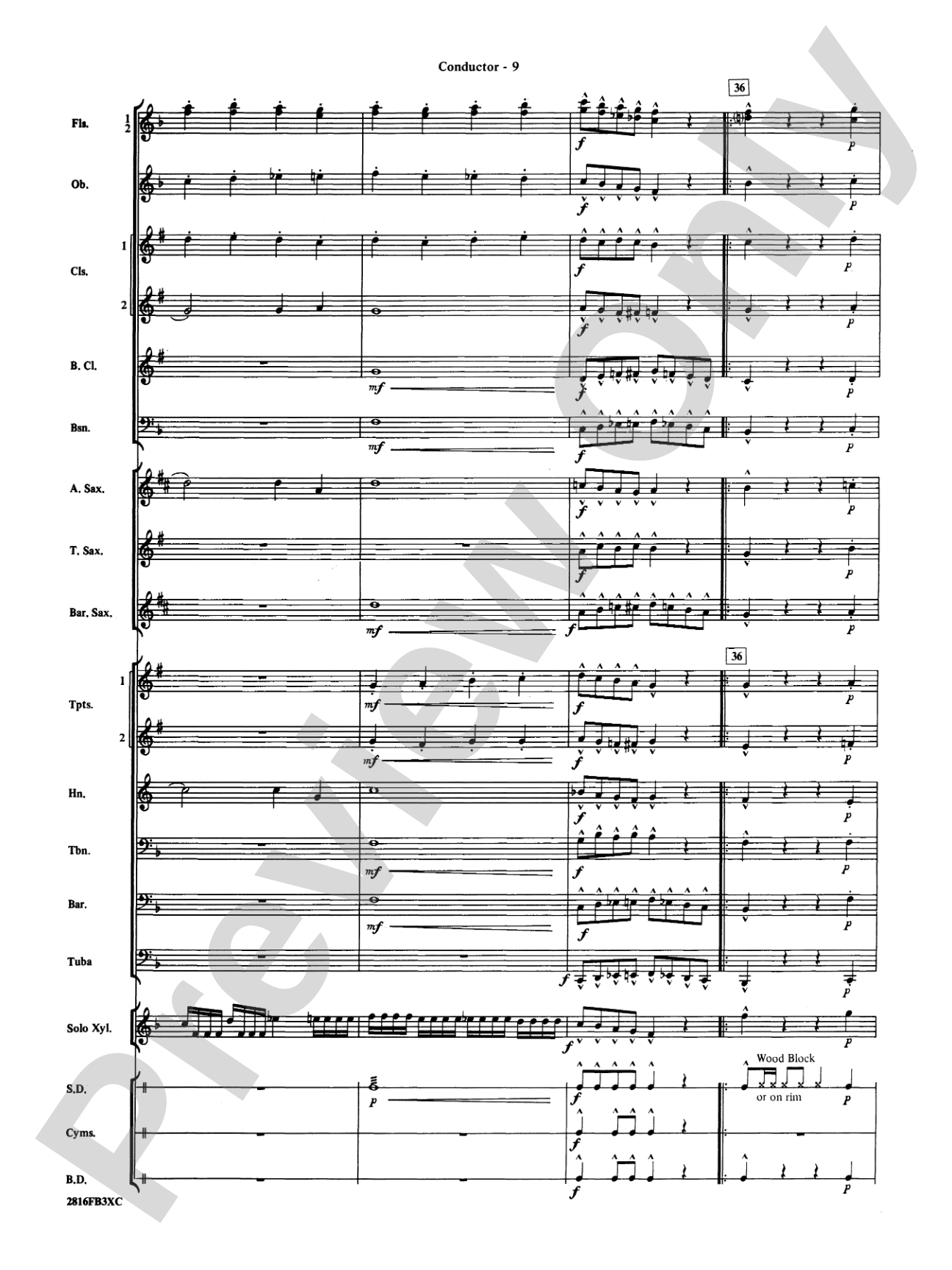
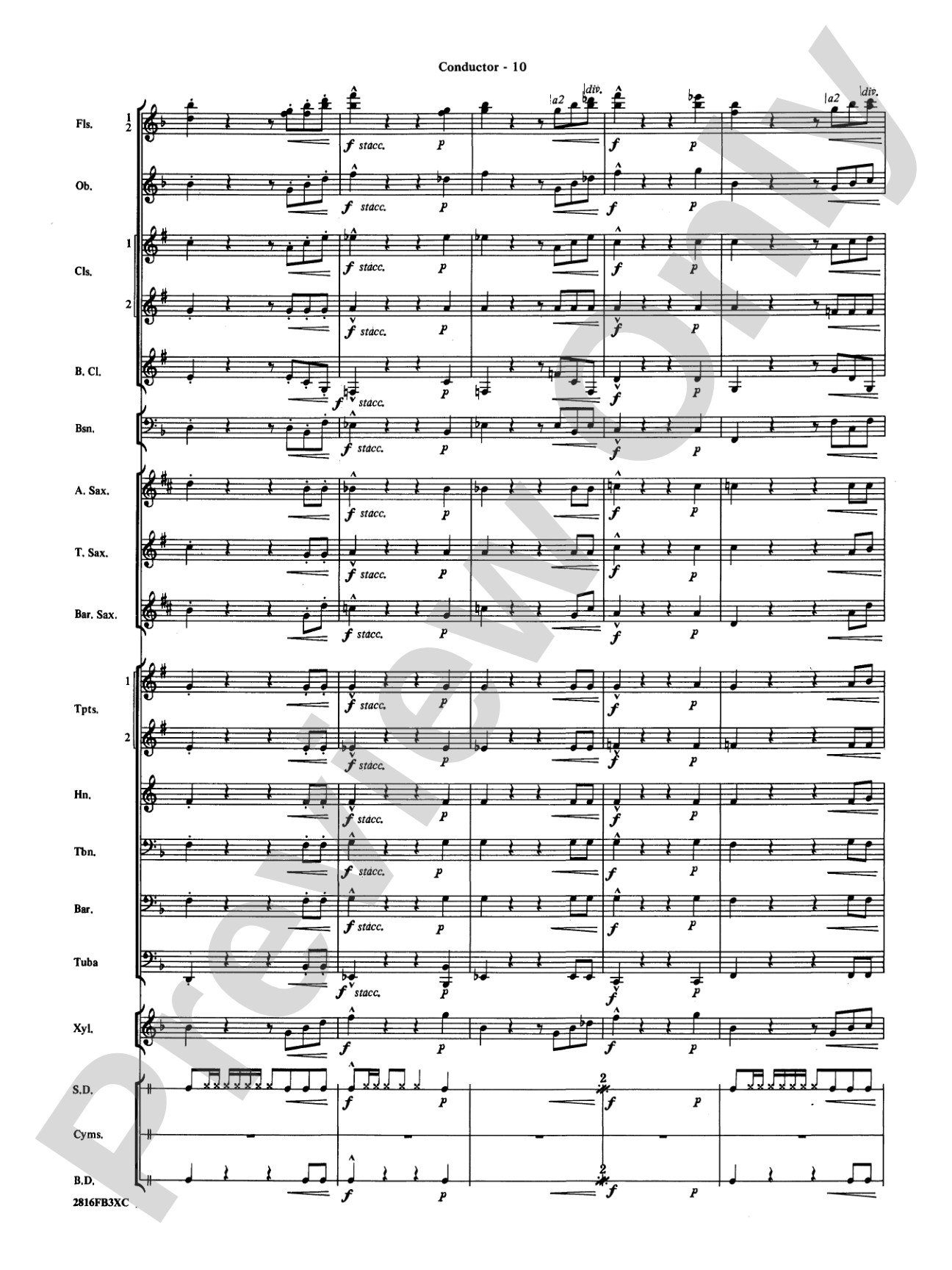
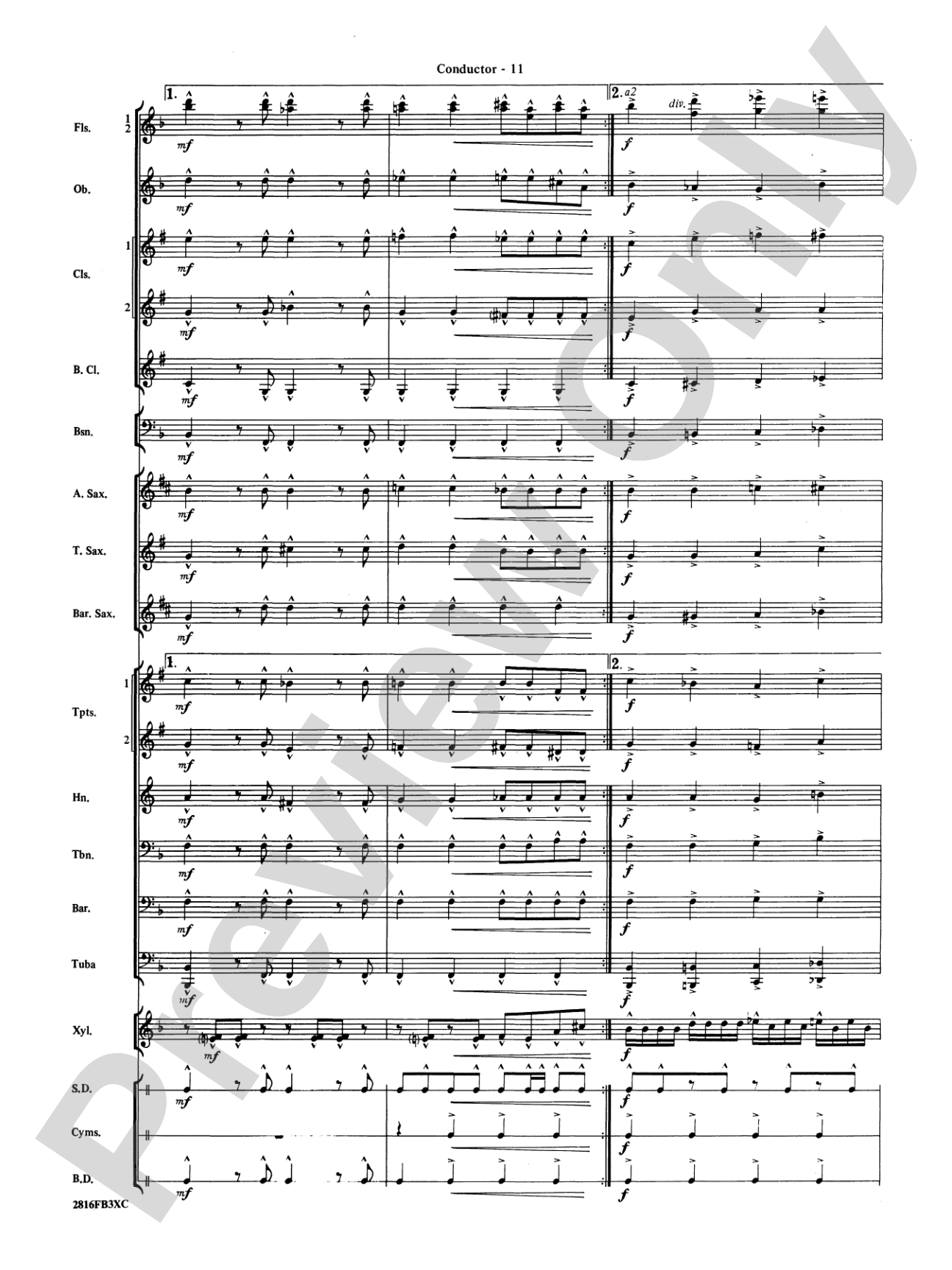
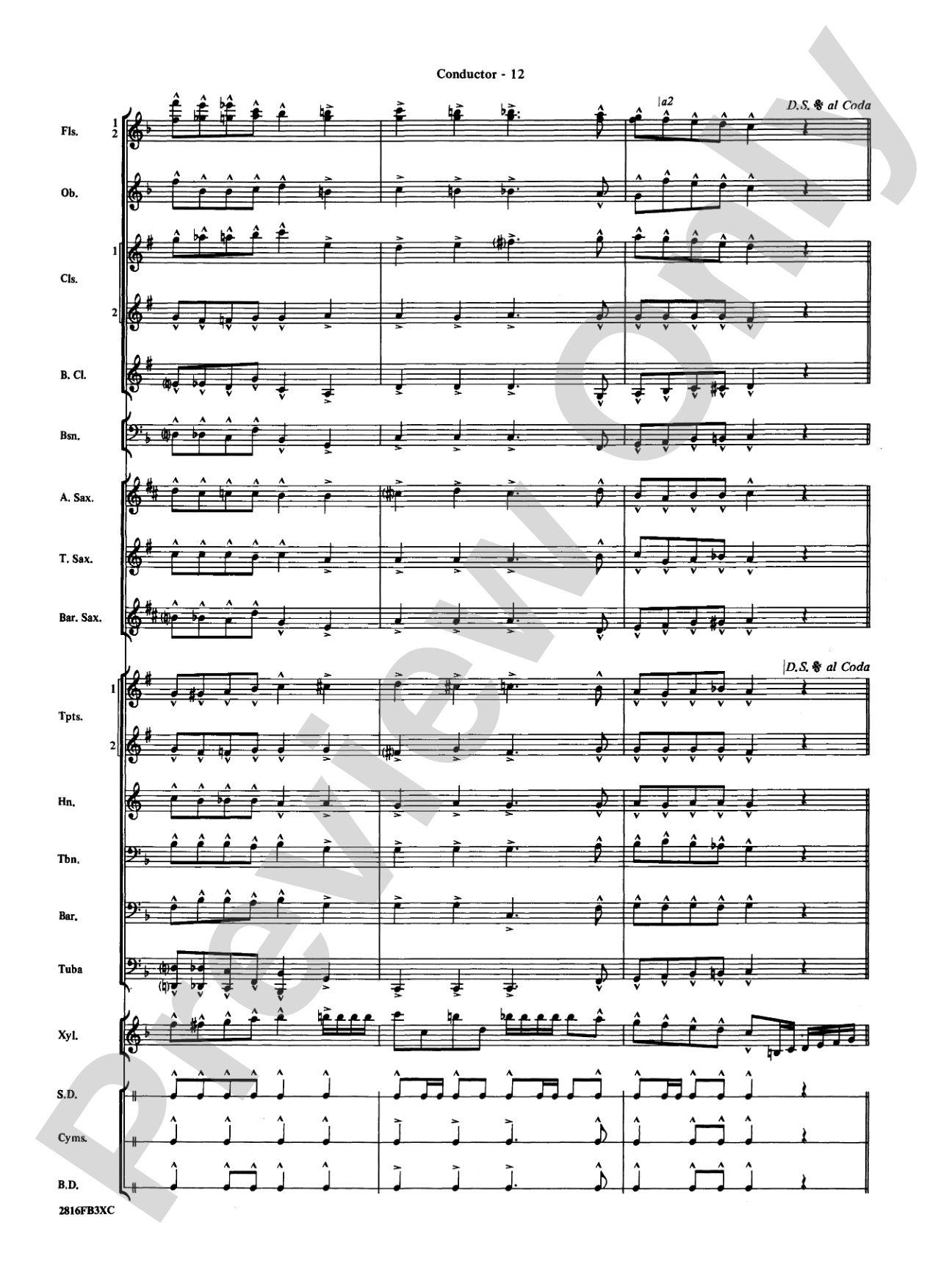
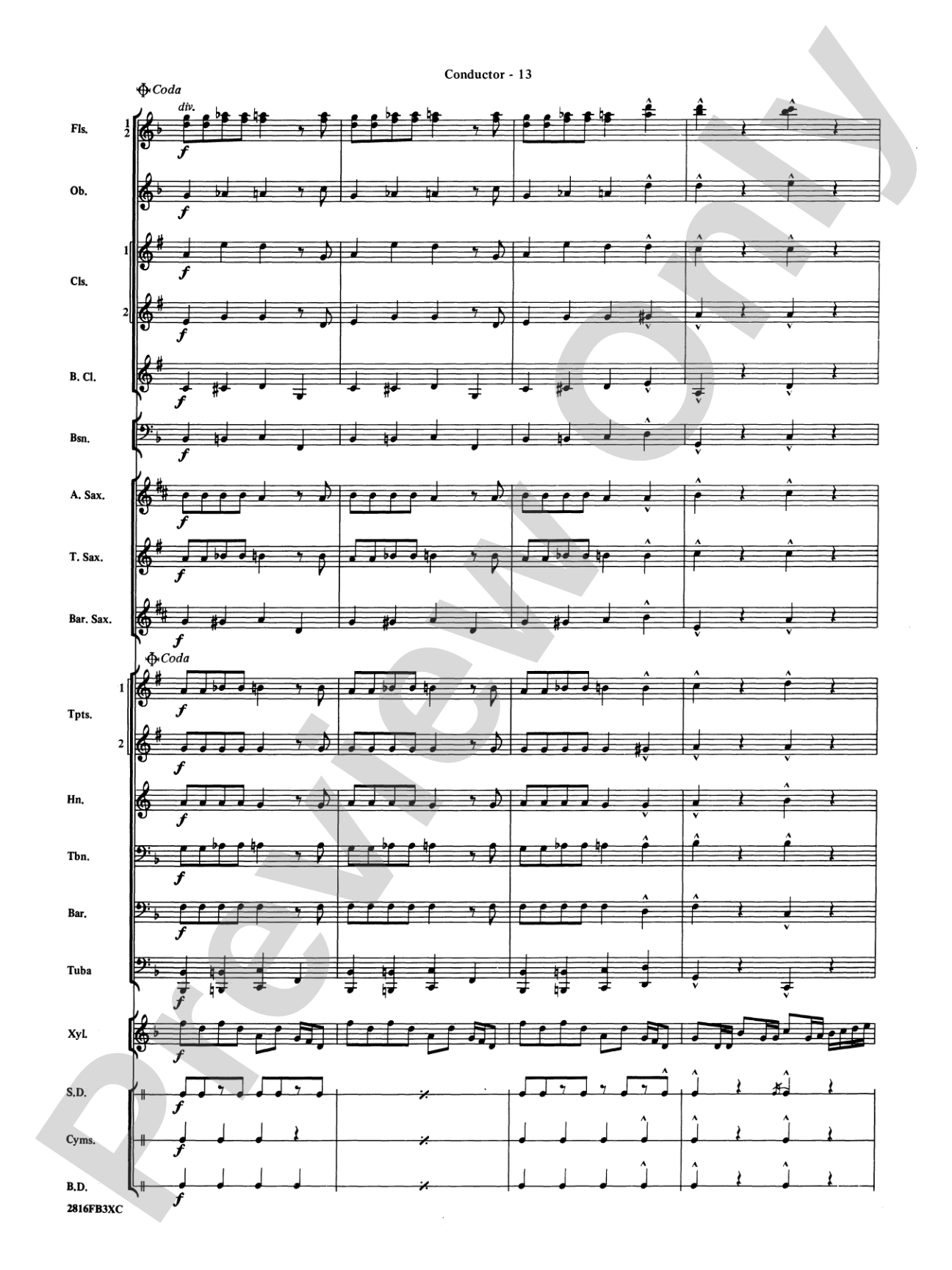
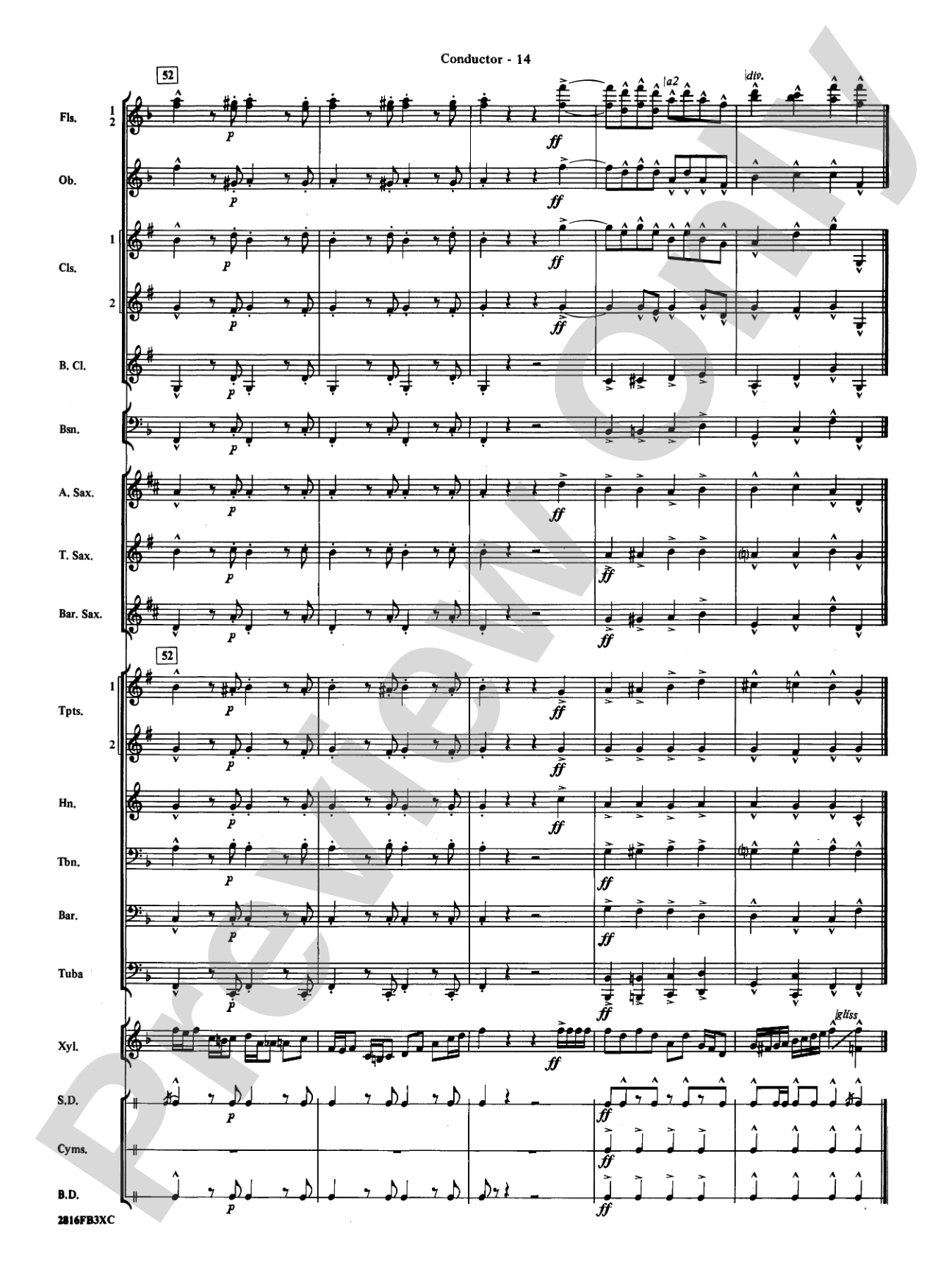

Fiddle-Faddle: Score
Featuring Solo Xylophone or Marimba
By Leroy Anderson / arr. John Ford
Grade: 2 (Easy)
Item: 00-PR-0004469
$9.00
Pickup currently not available
Description
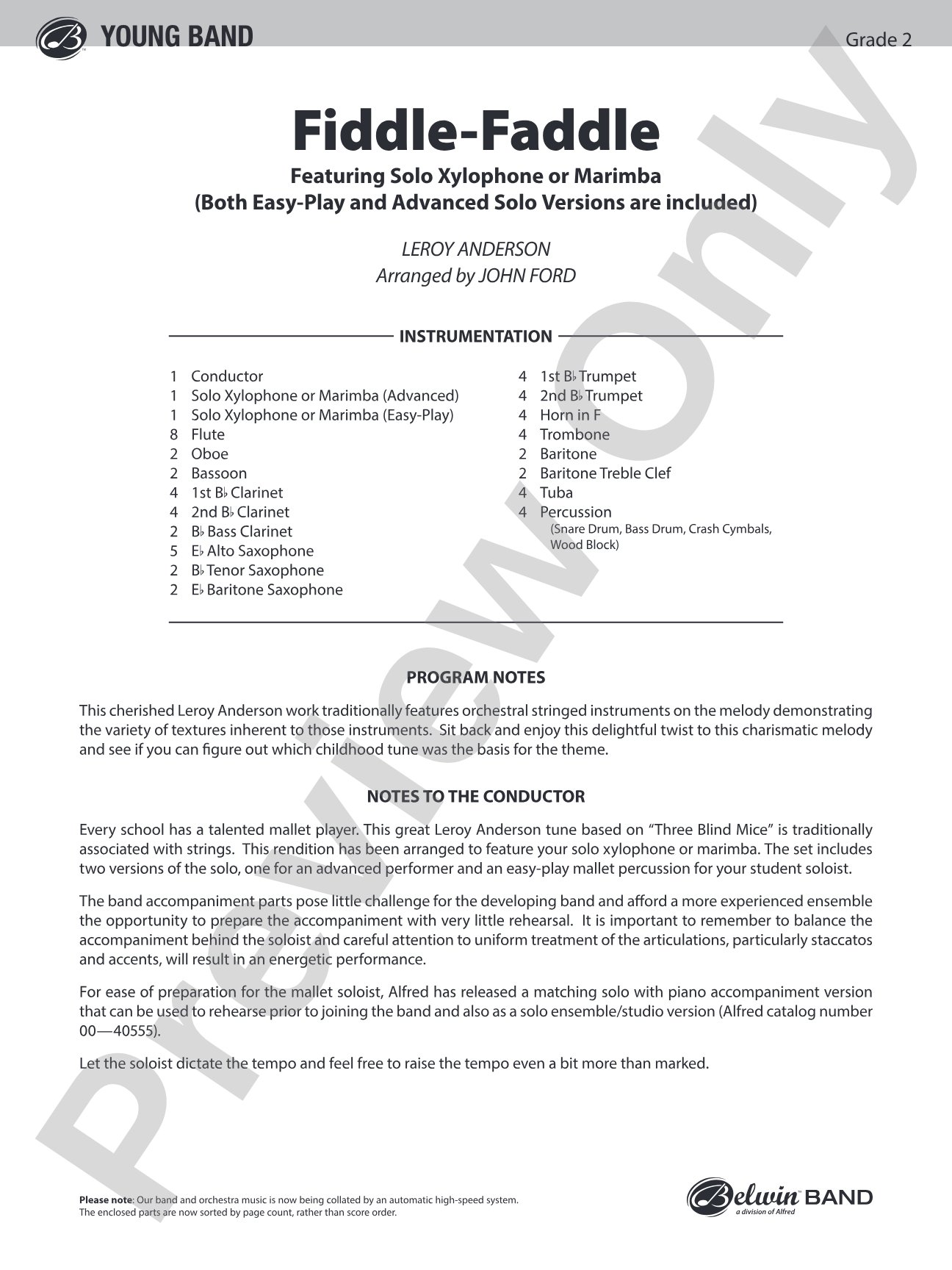
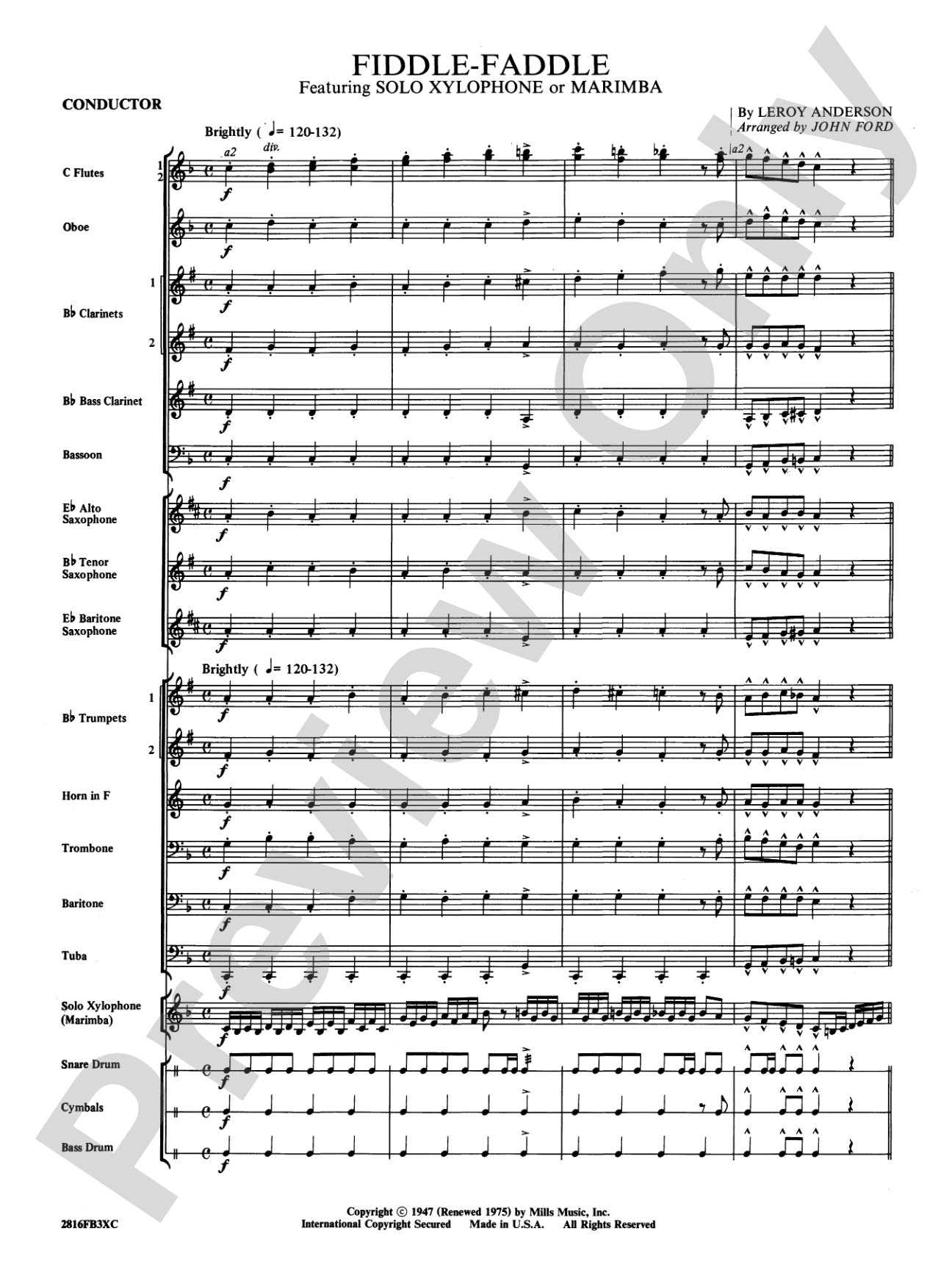
Every school has a talented mallet player. Why not take a great Leroy Anderson tune associated with strings and arrange it for mallet percussion? Why not, indeed . . . in fact, John Ford has arranged it for advanced as well as easy-play mallet percussion (both versions included). This one is a winner! Way to go, John! (2:45)


Don't just read it, hear it, play along with it, and watch your students grow with it. In MakeMusic Cloud, Fiddle-Faddle: Score comes alive with professional accompaniment, adjustable tempo, and built-in practice tools that turn solo practice into real progress.
Open in the Player
Jump straight in and assign it today.
Start Your Free Trial
Open this title and explore the full library in minutes.
Sample Audio
1
Audio File
--:--
0:00
0:00
Sample Video
No sample videos found.
Additional Details
Series:
Belwin Young Band
Publisher:
Alfred Music
Page Count:
134
SKU:
00-PR-0004469
More about this title
About the Composer: Leroy Anderson
Leroy Anderson (1908-1975) was an American composer and conductor whose gift for orchestral miniatures made him one of the most performed composers of the twentieth century. His lightweight, witty instrumental pieces were written primarily for orchestra, but their melodic clarity and rhythmic charm have made them enduring favorites for transcription and arrangement across ensembles.
Why we love this
Fiddle-Faddle arrives with two complete arrangements side by side, so you can deploy your stronger mallet section on the advanced version and keep everyone else engaged with the easy-play option. That kind of flexibility, paired with a tune that audiences genuinely enjoy hearing, makes this a smart programming choice when you want to highlight percussion without compromising the whole band's involvement.
What to expect
Bright, playful, and effervescent. Fiddle-Faddle bounces with classic Anderson charm, the kind of lighthearted miniature that reminds audiences why instrumental music can be purely joyful. The rhythmic energy keeps moving forward, and the orchestration sparkles.
Who it's for
Any concert band with capable mallet players and directors looking for audience-friendly repertoire that doesn't require orchestral resources. The inclusion of both easy and advanced versions means this works whether your section is developing or polished.
How to get the most out of it
- Lock the articulation between the mallet parts and the supporting woodwinds; Anderson's scoring relies on precise rhythmic clarity, and any sloppiness in staccato or legato will fog the character.
- Balance the mallets prominently in the mix without burying the harmonic foundation underneath. This piece lives in texture and rhythmic detail, not volume.
- Anchor the tempo steadily. Anderson's humor depends on rhythmic precision and spring; rushing flattens both.
How to use it
This sits naturally on a concert that needs a lighter moment between heavier works, or at the close of a program as an upbeat finale. At under three minutes, it's an efficient spotlight for your percussion section without disrupting the arc of a longer set.
Skills your students will build
- Mallet control and independence between hands
- Articulation clarity in fast passagework
- Reading and performing in mixed meters and rhythmic figures typical of light concert music
- Responding to conductor cues for stylistic precision in a short, tightly structured form