
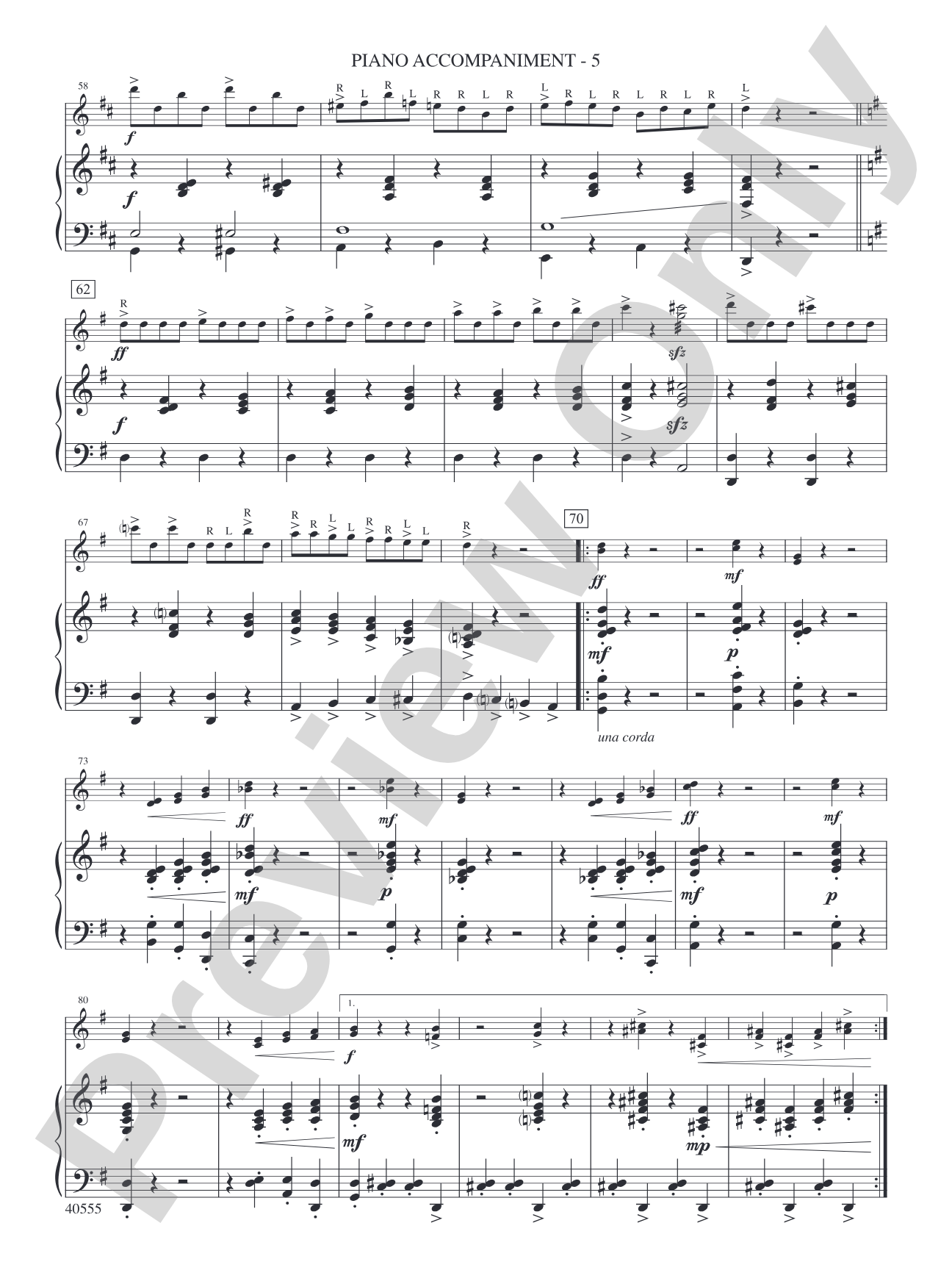
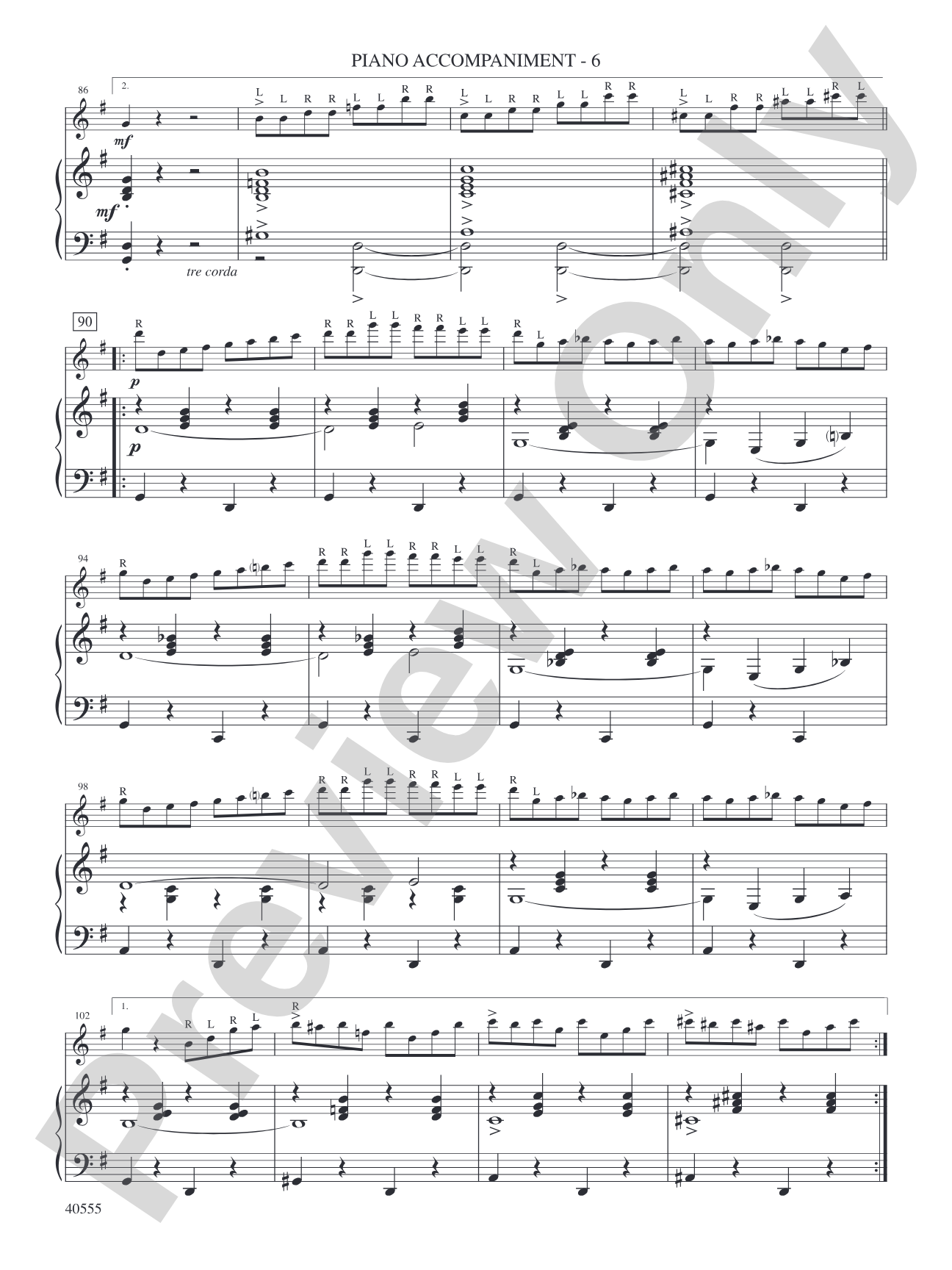
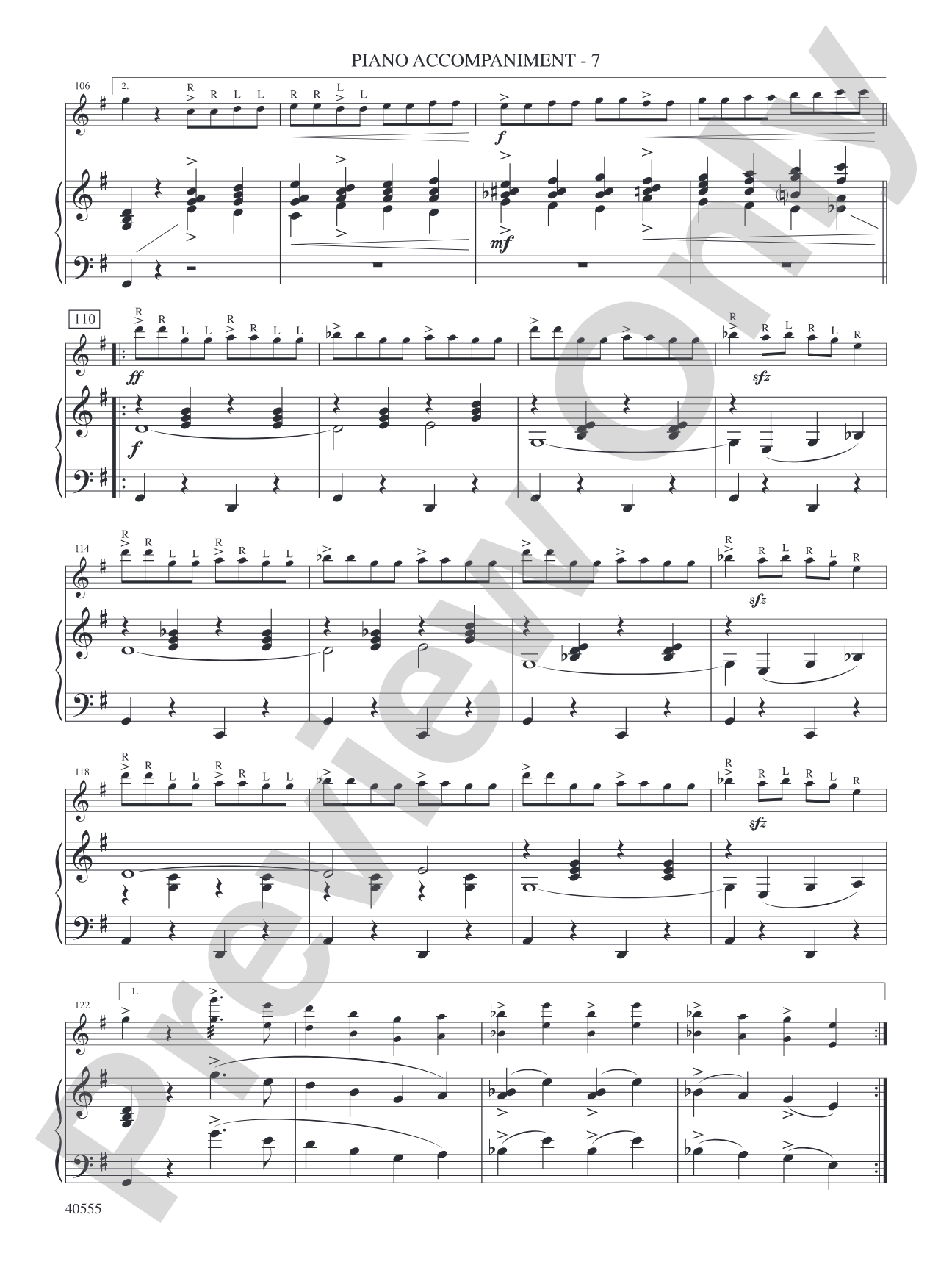
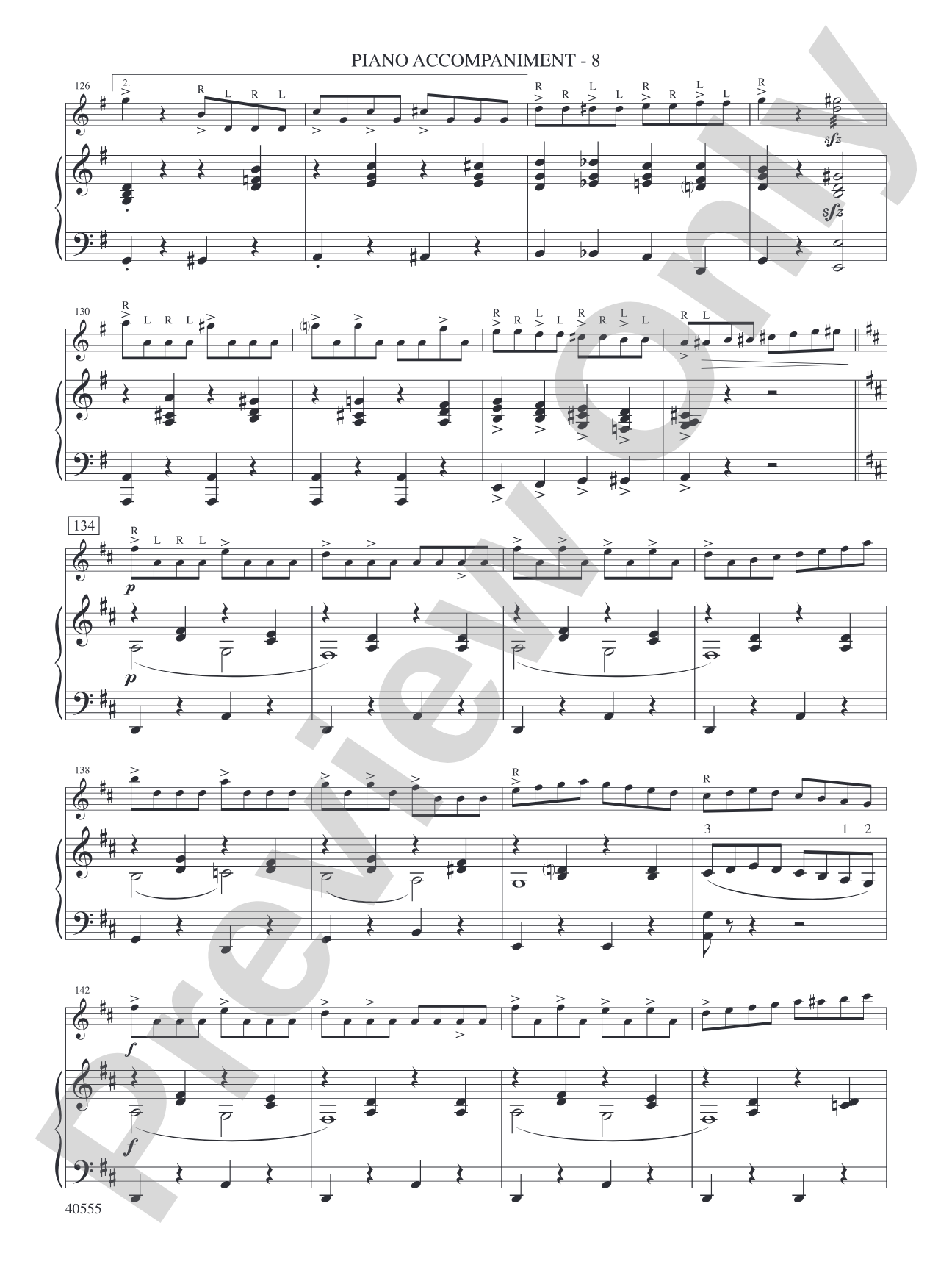
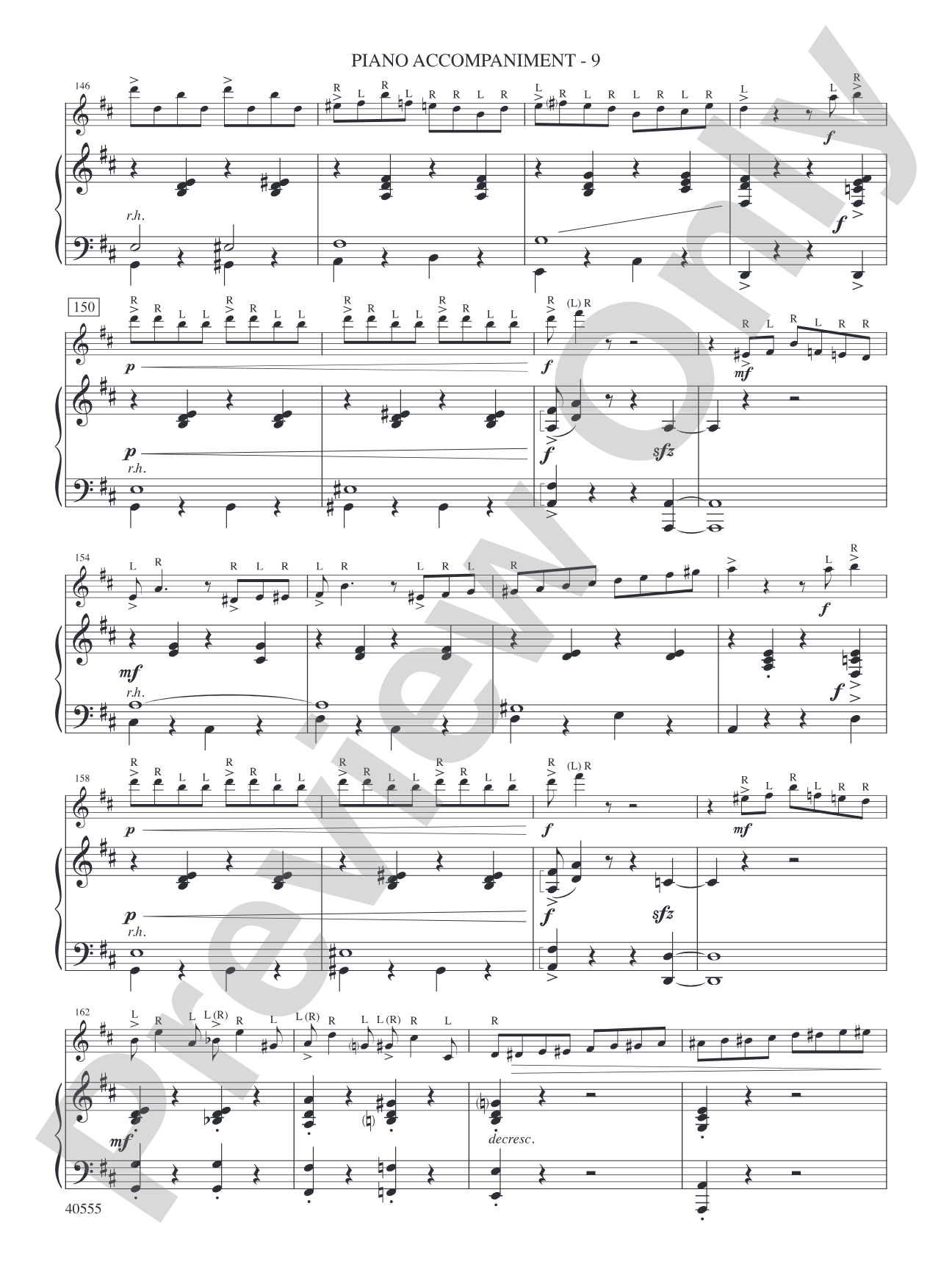
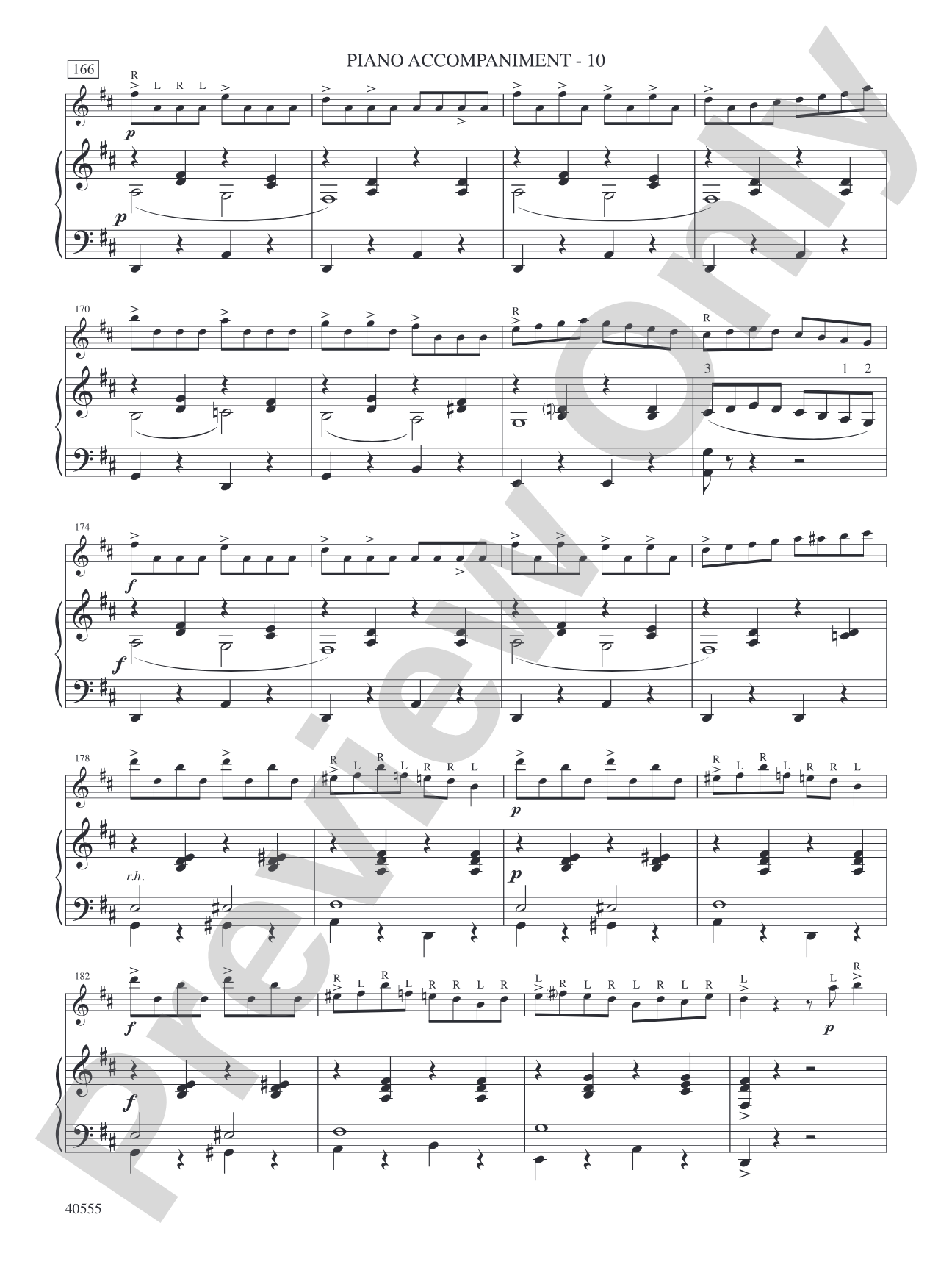
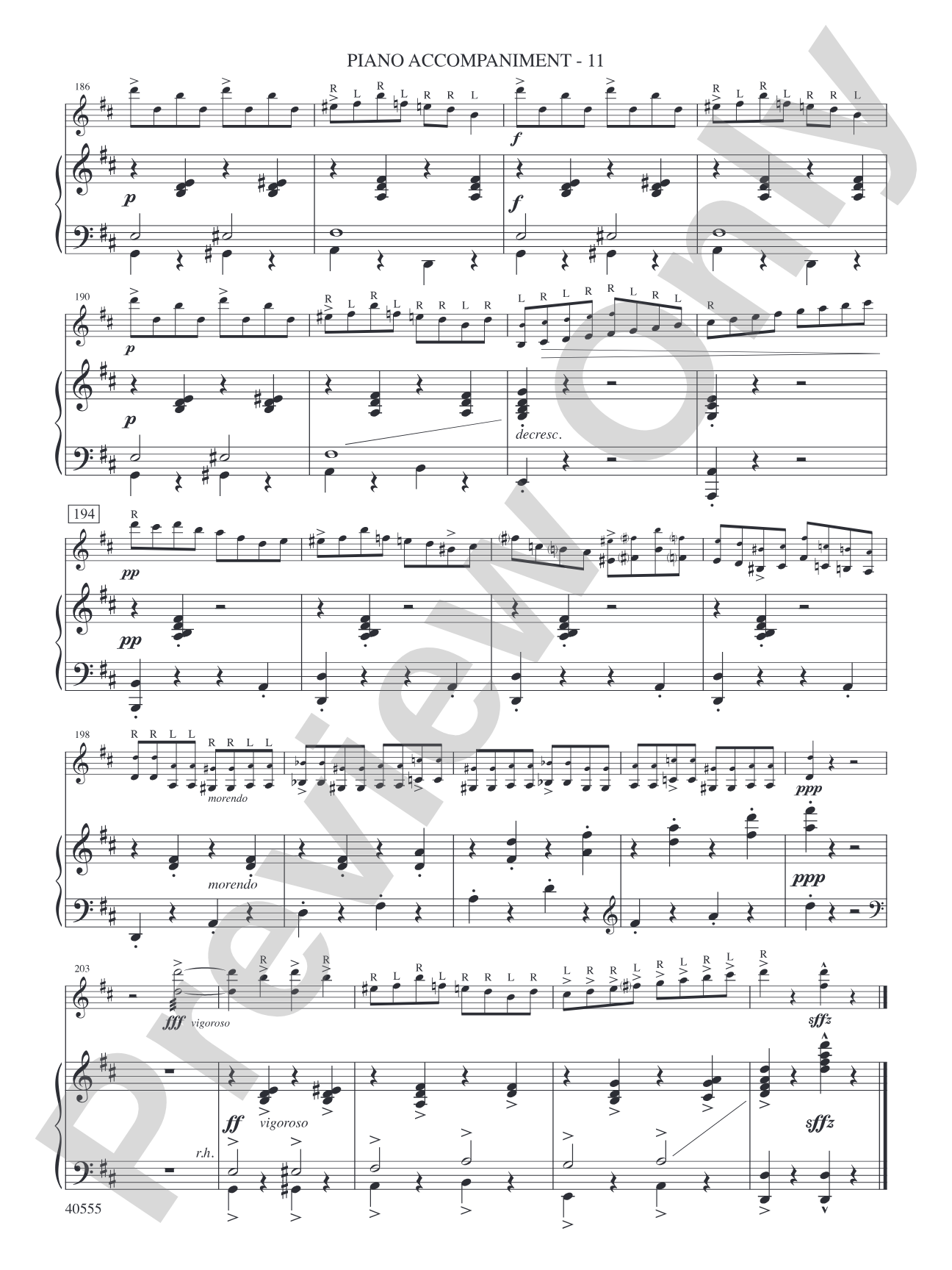


Fiddle-Faddle: Score
For Solo Xylophone or Marimba with Piano Accompaniment
By Leroy Anderson
Item: 00-PR-0004345
$8.00
Pickup currently not available
Description
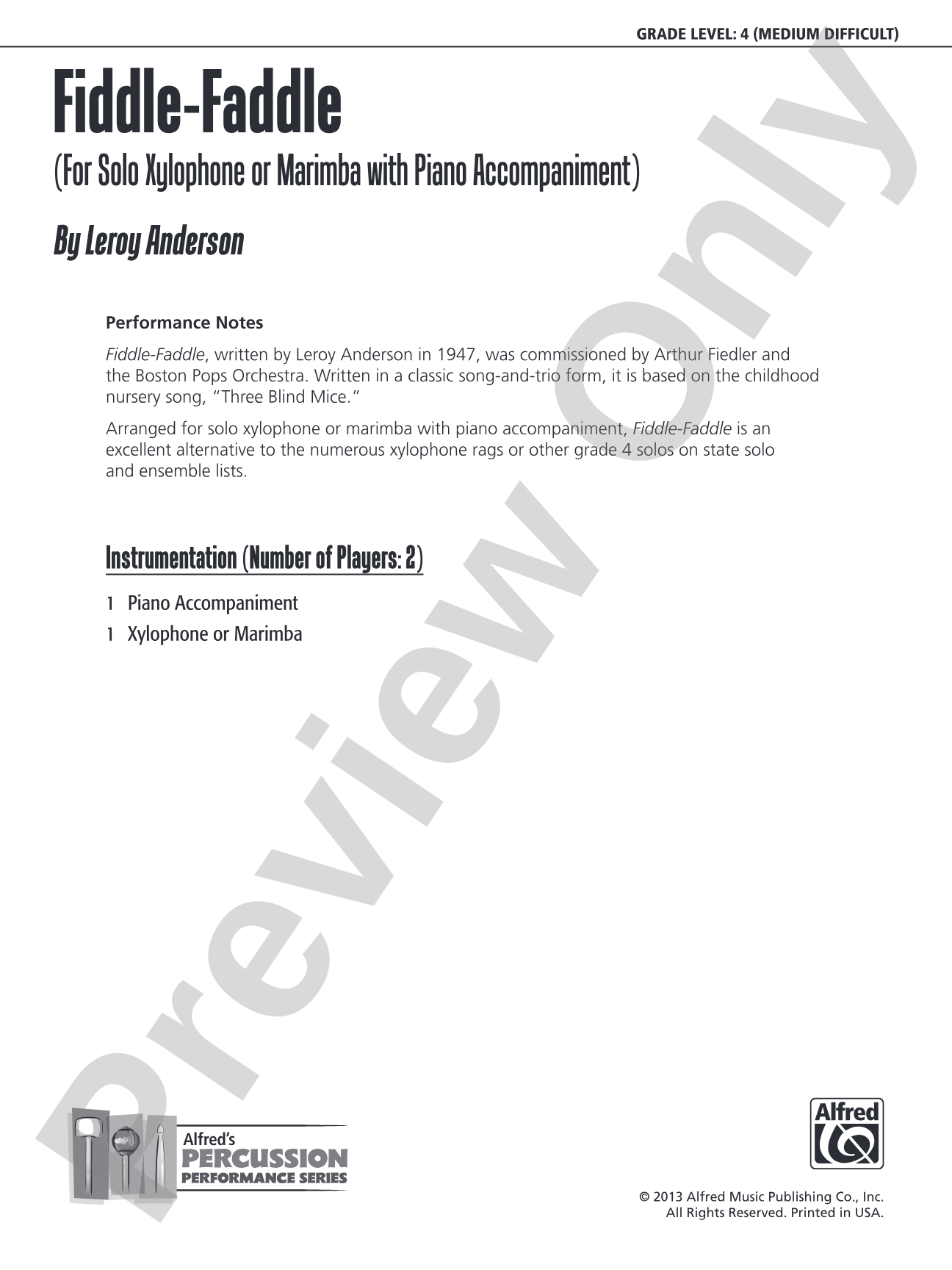
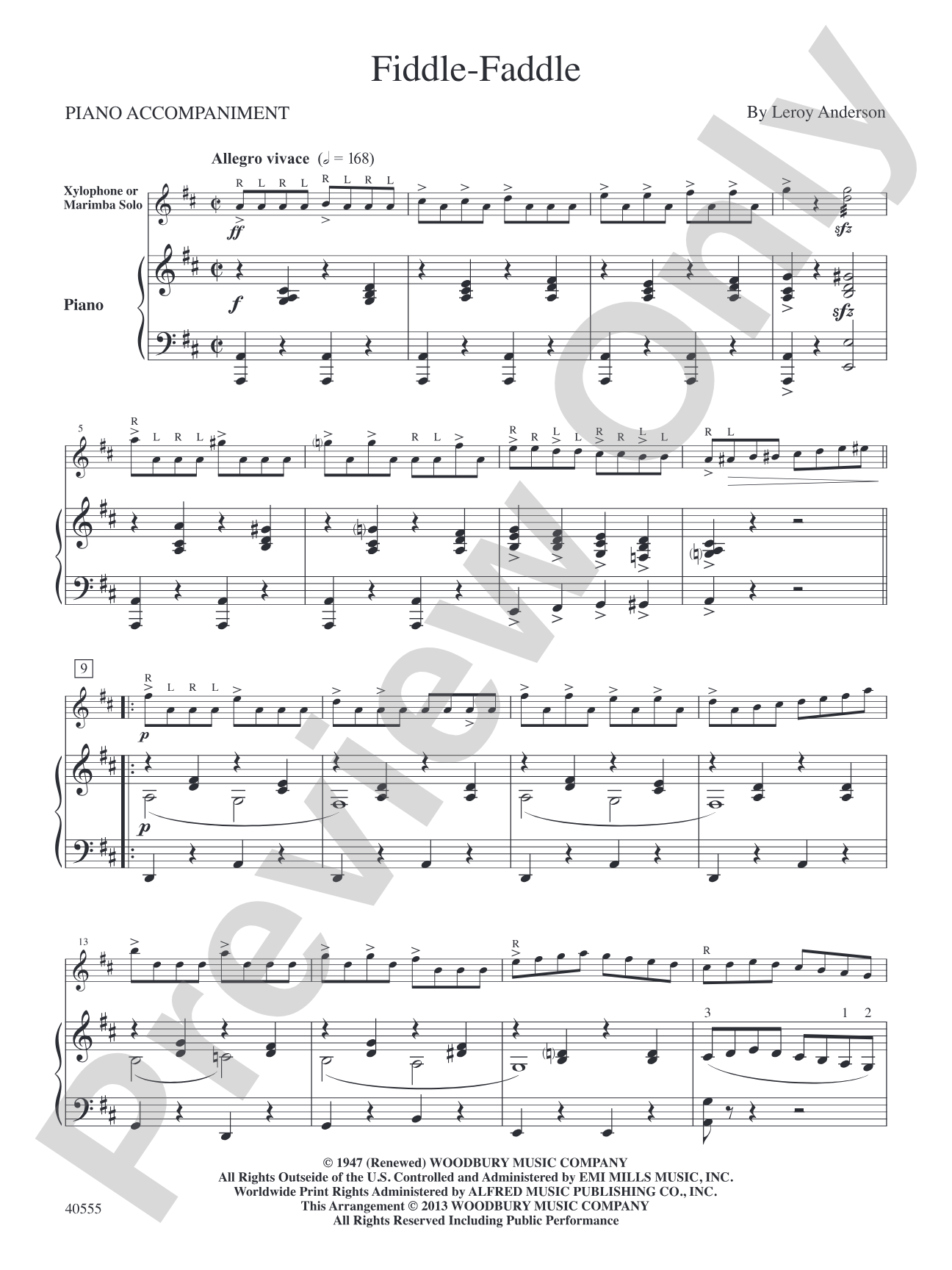
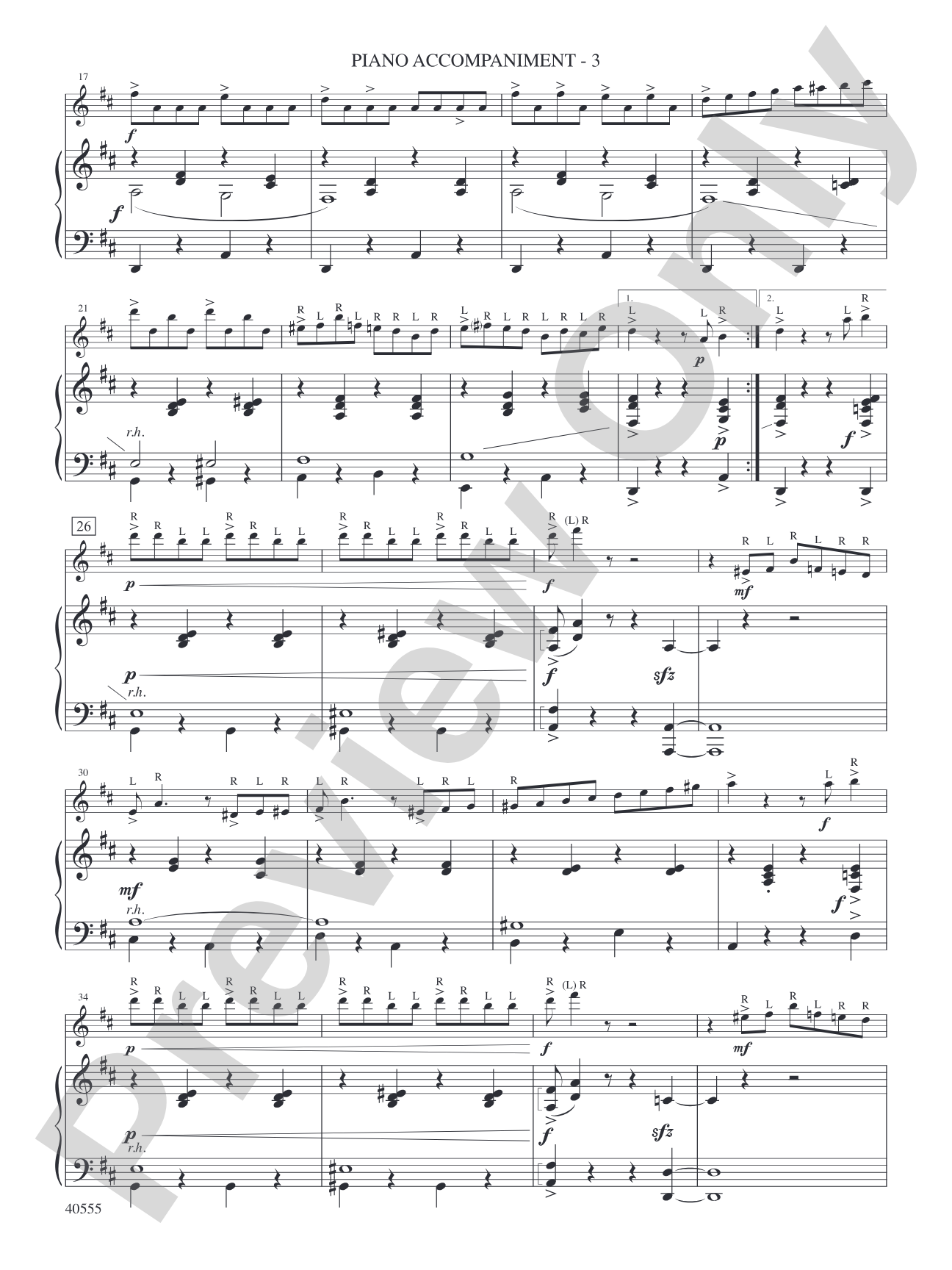
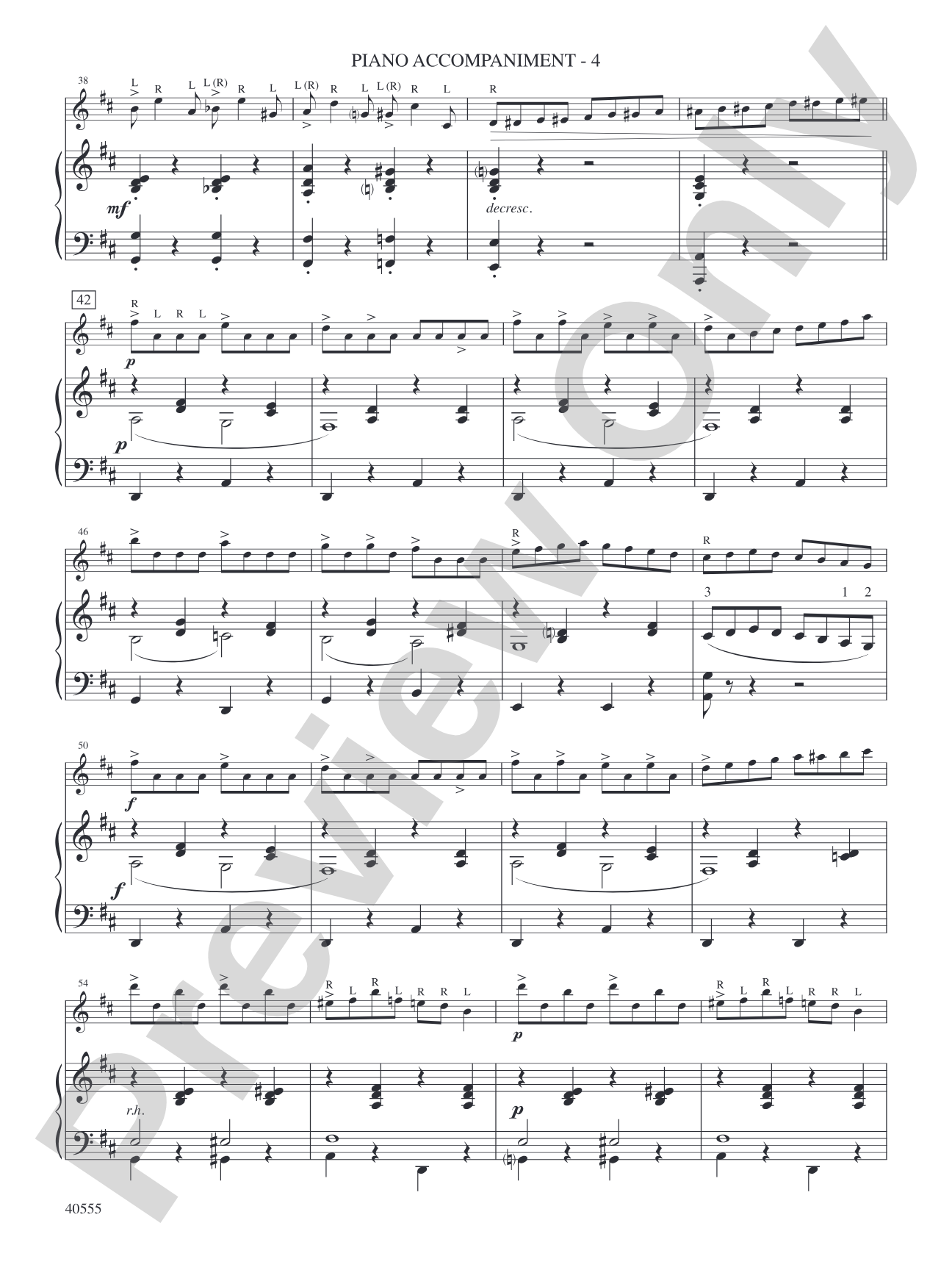
This piece, written by Leroy Anderson in 1947, was commissioned by Arthur Fiedler and the Boston Pops Orchestra. Written in a classic song-and-trio form, it is based on the childhood nursery song "Three Blind Mice." Arranged for solo xylophone or marimba with piano accompaniment, this is an excellent alternative to the numerous xylophone rags or other grade 4 solos on state solo and ensemble lists. A Federation Festivals 2020-2024 selection.


Don't just read it, hear it, play along with it, and watch your students grow with it. In MakeMusic Cloud, Fiddle-Faddle: Score comes alive with professional accompaniment, adjustable tempo, and built-in practice tools that turn solo practice into real progress.
Open in the Player
Jump straight in and assign it today.
Start Your Free Trial
Open this title and explore the full library in minutes.
Sample Audio
No sample audio found.
Sample Video
No sample videos found.
Additional Details
Series:
Alfred's Percussion Performance Series
Publisher:
Alfred Music
Page Count:
4
SKU:
00-PR-0004345
More about this title
About the Composer: Leroy Anderson
Leroy Anderson (1908-1975) was an American composer and conductor who became one of the most recorded composers of his era. His gift for orchestration and infectious melodic sensibility made him a favorite of Arthur Fiedler and the Boston Pops, who championed his work throughout the mid-twentieth century. Anderson's compositions bridged the gap between classical and popular music, earning him respect from both concert halls and radio audiences.
Anderson's catalog includes over 140 published works, many of which have become staples of light classical programming and solo competition repertoire. His pieces consistently reward performers with clear musical lines, clever harmonic touches, and moments of genuine humor. Teachers and directors value his work for its craftsmanship, accessibility, and enduring appeal to audiences of all ages.
Why we love this
Anderson's skill for turning a familiar melody into something bright and sophisticated shows clearly here. The song-and-trio structure gives you a natural arc without requiring students to manage extended development or sudden stylistic shifts, making it genuinely satisfying to perform and program.
What to expect
Fiddle-Faddle sparkles with the same lighthearted charm as the nursery rhyme it's built on, but with sophisticated harmonic underpinnings that elevate it beyond novelty. The piece has an almost buoyant, dance-like quality that makes audiences smile without ever feeling condescending to the performer.
Who it's for
This solo works well for percussionists at grade 4 level who have solid four-mallet control and can sustain a clear, singing melodic line on xylophone or marimba. It's an excellent choice for students preparing for state festivals and competitions who want an alternative to the rag-based repertoire that dominates mallet solo lists.
How to get the most out of it
- Let the "Three Blind Mice" melody breathe in the opening section; resist the urge to rush despite the cheerful character. Anderson's articulation markings shape the phrasing more than tempo variation.
- Balance the solo part prominently over the piano accompaniment, but listen carefully during the trio section where the harmonic interest shifts. Your part shouldn't dominate every moment.
- Shape phrase endings with a slight diminuendo to echo the playful, song-like quality of the source material. This prevents the performance from feeling relentless or one-dimensional.
How to use it
Place this on a solo competition program or concert where you want to showcase your percussionist's musicality without dwelling entirely in the jazz-inflected world of rags. The connection to "Three Blind Mice" also makes it effective in family or young audience concerts where the familiar tune gives listeners an immediate entry point.
Skills your students will build
- Singing through melodic passages on mallet instruments
- Sustaining consistent four-mallet independence across phrase boundaries
- Voicing the relationship between solo line and accompaniment texture
- Shaping and phrasing in a song form that mirrors vocal music