

Fèy O!: 2-Part Choral Octavo
Traditional Haitian Folk Song / arr. with new music by Ruth Morris Gray
Item: 00-PO-0007035
$2.20
Minimum order quantity: 20 copies
Pickup currently not available
Description
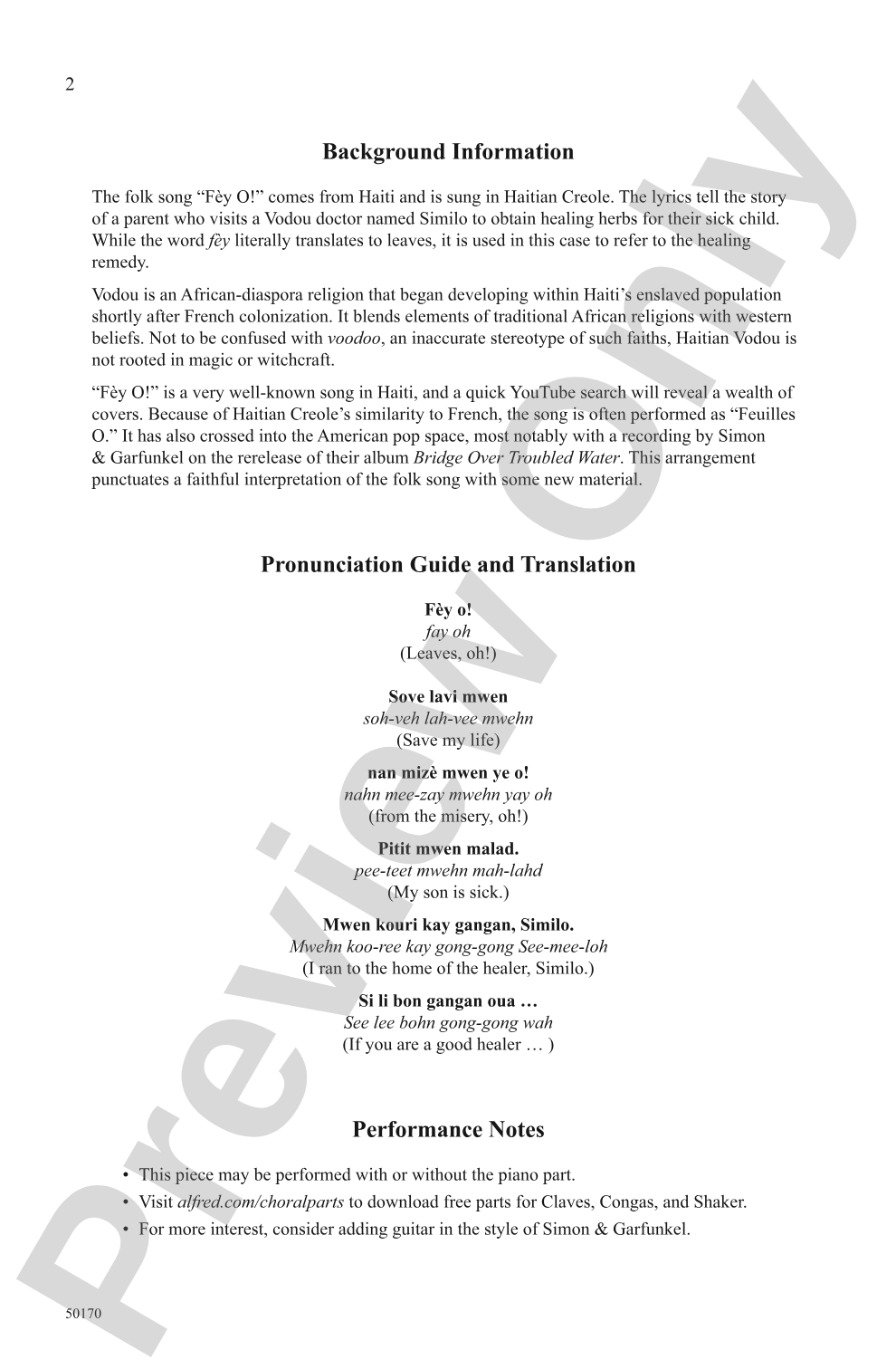
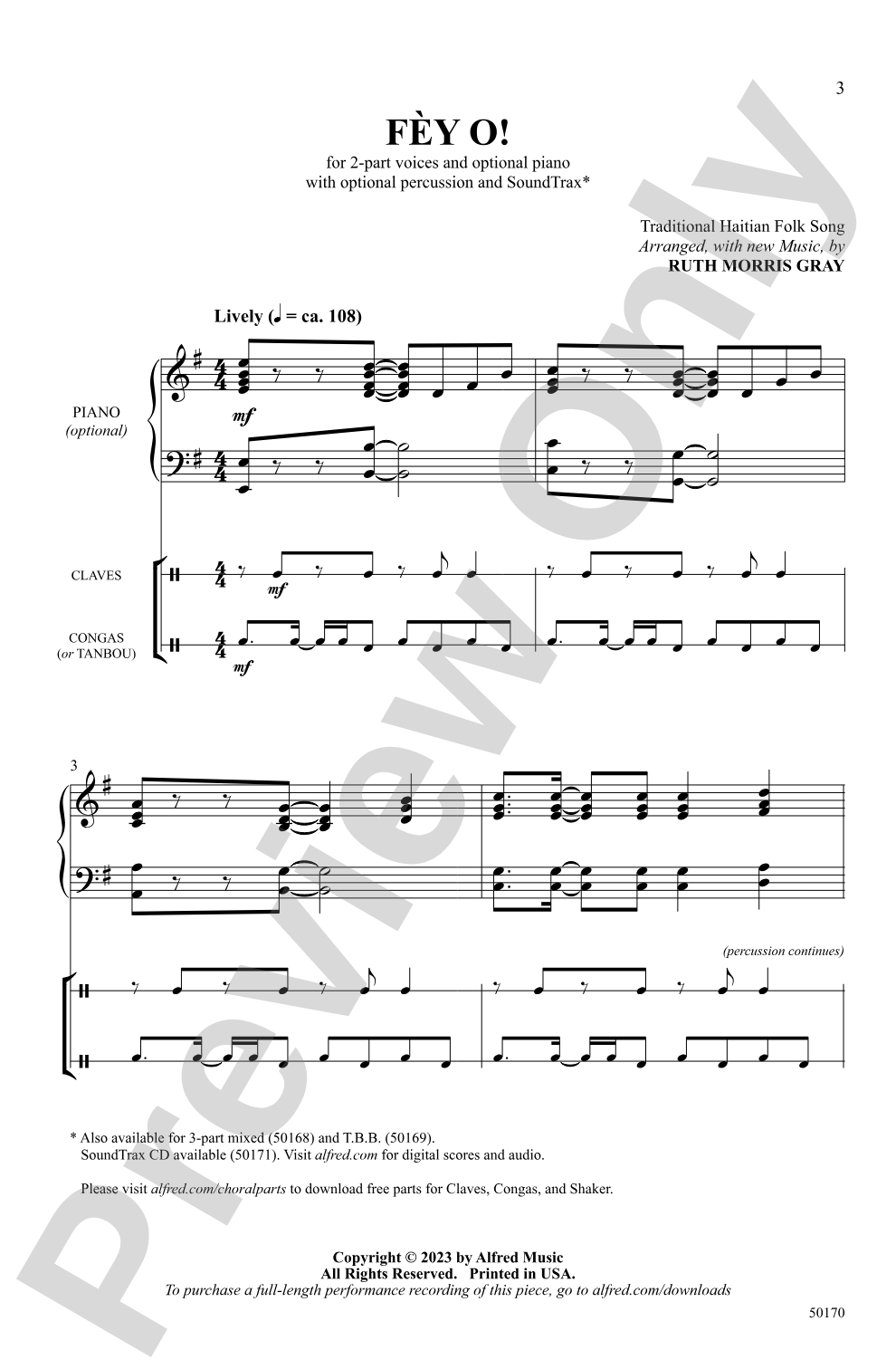
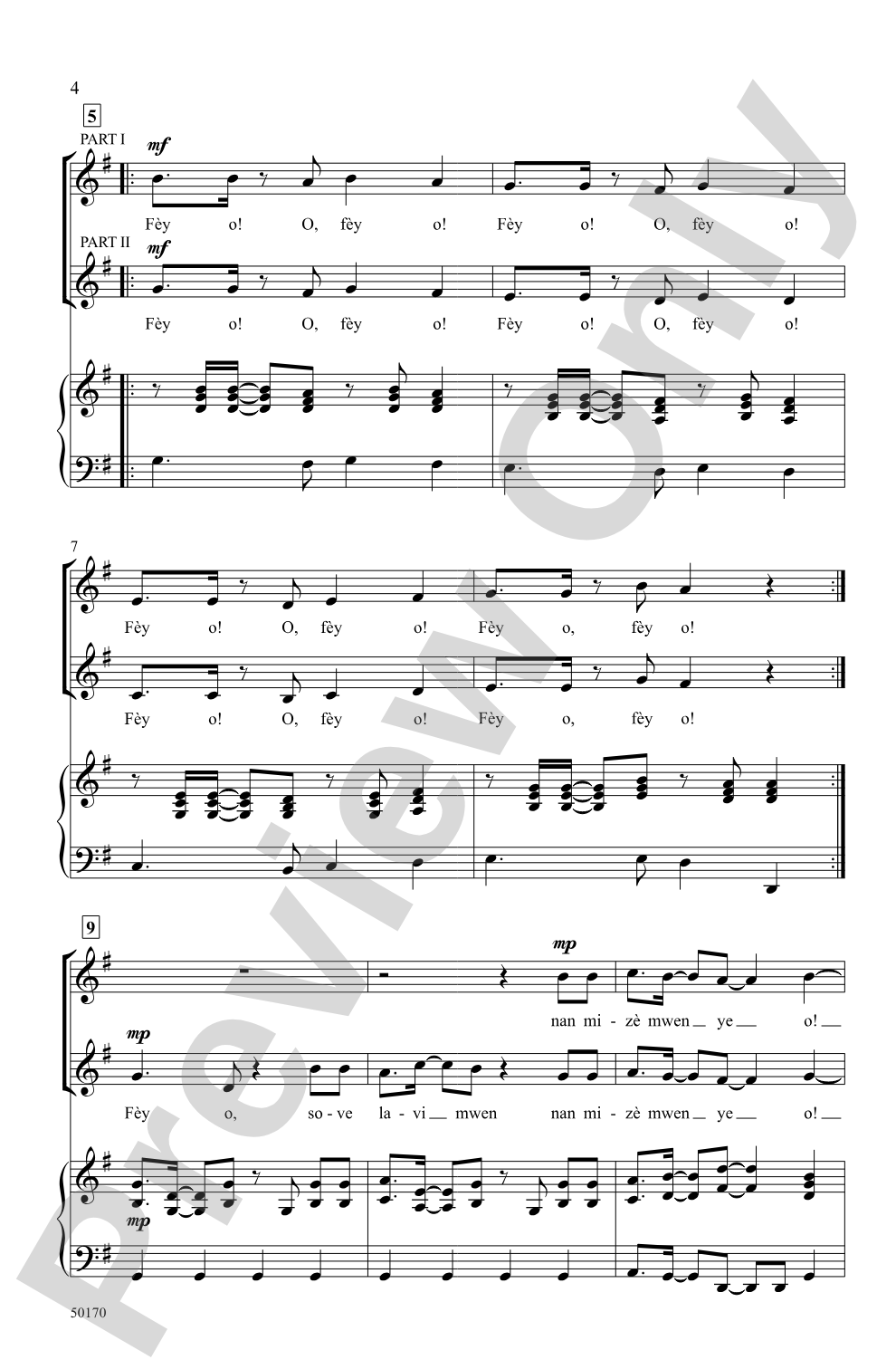
Lively percussion and rhythmic choral phrases reflect the urgency of a parent seeking healing herbs for a sick child. Sung entirely in Creole, this song is well-known across Haiti and beyond. The arrangement punctuates a faithful interpretation of the folk song with new material and can be performed with or without piano. Claves, congas, and shaker parts are free to download at alfred.com/choralparts.


Discover MakeMusic Cloud: thousands of interactive titles your students can play along with today.
Sample Audio
1
Audio File
--:--
0:00
0:00
Sample Video
Additional Details
Series:
Alfred Choral Designs
Publisher:
Alfred Music
Page Count:
16
SKU:
00-PO-0007035
Instrumentation:
Percussion
More about this title
About the Arranger: Ruth Morris Gray

Ruth Morris Gray directs choirs at Rosemead High School in California, where she has shaped the choral program since 2004. She also teaches piano and has composed and arranged more than 100 works for choral ensembles. Gray holds degrees in piano performance and composition from Biola University and the University of California, Santa Barbara, along with her California teaching credential from Cal State Northridge.
Beyond her work in the classroom and rehearsal room, Gray is an active performer and composer whose arrangements honor folk traditions while bringing them into contemporary choral voices. She approaches each project with the same curiosity that takes her around the world, seeking out musical stories worth telling.
Why we love this
Gray's arrangement captures the raw emotional core of a Haitian folk song without sentimentalizing it. The percussion writing gives students genuine rhythmic work to do while the 2-part voicing keeps the focus on ensemble cohesion and the authentic Creole text, making this both accessible and musically substantial for middle-grade and high school choirs.
What to expect
Urgency pulses through every measure. The Creole phrases, sung with the percussion undercurrent of claves and congas, create an intimate yet driving quality, as if you're witnessing a community's collective will toward healing. There's both tenderness and insistence in the folk melody, especially as Gray's new material amplifies the emotional stakes.
Who it's for
This octavo works for intermediate to advanced 2-part choirs ready to engage with non-English text and world music traditions. It's equally at home in a middle school ensemble with strong sight-reading skills or a high school choir seeking meaningful cultural repertoire that connects to concert programming and festival requirements.
How to get the most out of it
- Build independence in the rhythm section from rehearsal one. Even if your percussion parts are optional, learning them early (using the free downloadable parts at alfred.com/choralparts) gives singers a kinetic sense of the piece's propulsive energy.
- Sing the Creole text with full commitment to its meaning. The lyrics tell a parent's desperate search for healing; clarity and directness in diction will land that narrative far more effectively than any stylistic embellishment.
- Let the new material Gray added breathe against the folk melody. These moments should feel like an echo or reflection rather than a departure, so shape dynamics carefully through the transitions.
- Test both versions: with piano accompaniment and with percussion alone. The stripped-down version often reveals ensemble balance issues and forces singers to listen more carefully to each other.
How to use it
Pair this with other world music selections to build a concert that celebrates diverse cultural voices, or use it as a festival submission that distinguishes your choir through authentic arrangement and meaningful repertoire choice. Its moderate length and flexible instrumentation make it workable mid-season when rehearsal time is tight but musical ambition remains high.
Skills your students will build
- Singing in a non-English language with authentic pronunciation and rhythmic clarity
- Maintaining steady pulse and rhythmic independence in a percussion-driven texture
- Balancing folk melody with contemporary harmonic arrangement
- Responding to and supporting rhythmic percussion parts through focused listening