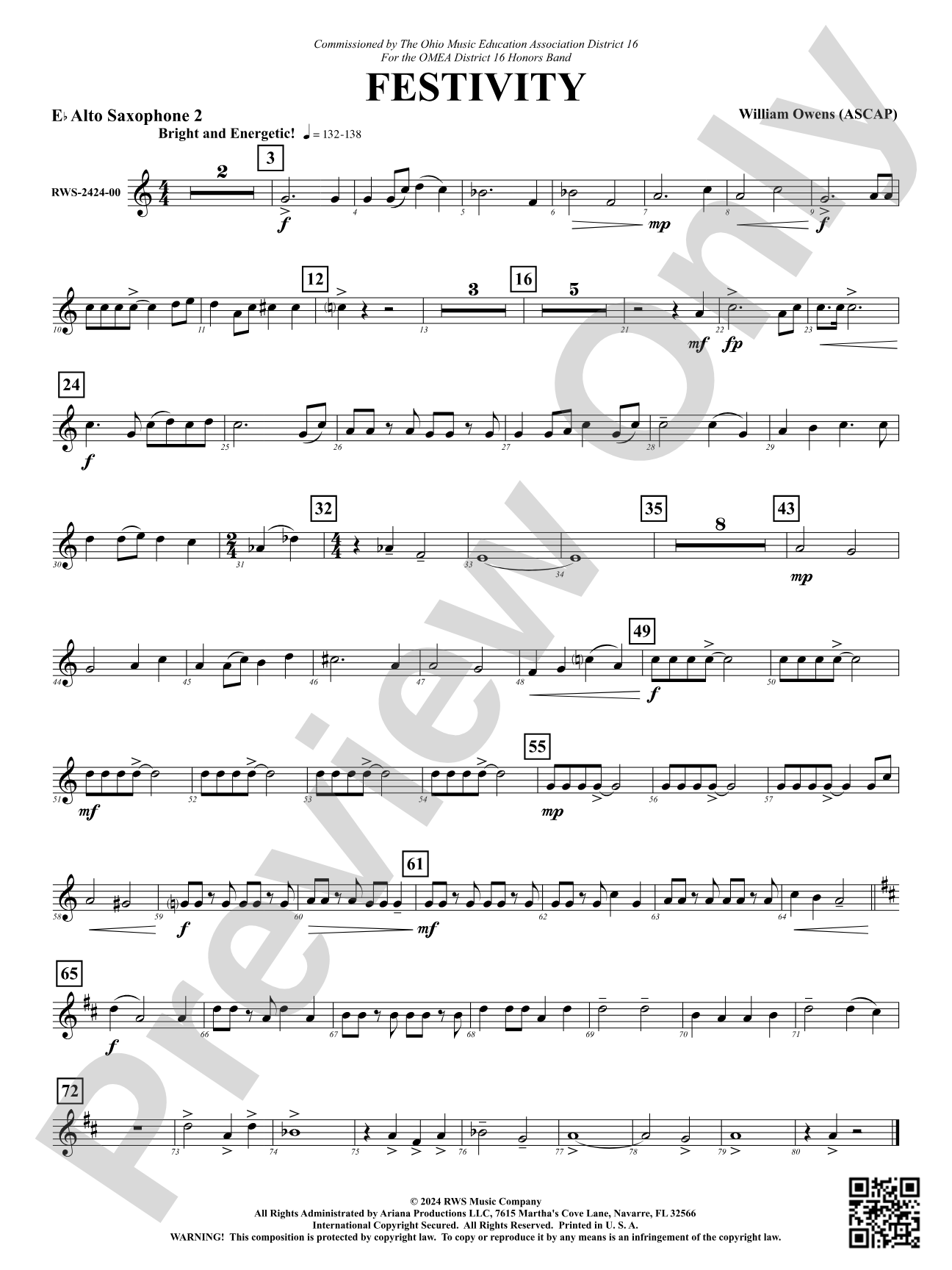
Bold melodies and driving rhythms are at the heart of this vibrant and energetic concert opener! Festivity is thoughtfully scored from start to finish, and will help your students sound mature beyond their years. Ideal for festivals and great for concerts, this one is a celebration winner! (2:29)
Discover MakeMusic Cloud: thousands of interactive titles your students can play along with today.
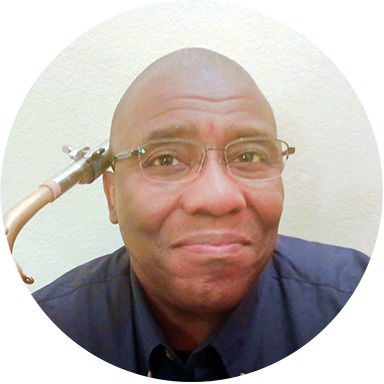
William Owens (b. 1963) grew up in Gary, Indiana, and earned his degree from VanderCook College of Music in Chicago. Over three decades as a band director in Texas, he developed an ear for what young ensembles need to succeed: music that sounds polished without overreaching technically.
Since 1993, Owens has composed more than 300 works for concert band, string orchestra, and small ensemble. His pieces appear on festival and contest lists across the country and in music education texts; many have become standard repertoire for developing bands. He holds memberships in ASCAP, the Texas Music Educators Association, and Phi Beta Mu International, and was named a Distinguished Alumnus by VanderCook. He now resides in Fort Worth with his wife Georgia, splitting time between travel, presidential history, and his passion for Corvettes.
Why we love this
Owens writes with a clear-eyed sense of what Grade 2.5 bands actually need: confident melodies that let students feel the impact of their playing, rhythmic drive that holds energy without complexity, and orchestration that makes modest forces sound full and celebratory. This is a concert opener that raises the standard of your entire program.
What to expect
Festivity crackles with purpose from the downbeat. Bold lines and propulsive rhythms create an atmosphere of celebration without sentiment, energizing the ensemble and the audience alike. There is a sense of occasion here: this is the piece that sets the tone for your whole program.
Who it's for
Band directors programming a Grade 2.5 festival or concert entry that needs to open strong without requiring extensive sectional time. Students new to more demanding rhythmic figures will build confidence through music that sounds genuinely mature, while inexperienced players get a chance to feel part of something celebratory.
How to get the most out of it
Balance the bold melody against the accompaniment voices. Young players often push the harmony line too hard; remind your band that support comes from blend, not volume.
Establish a strong pulse in the rhythm section before rehearsing the full score. Once the foundation locks, the melodic lines will sit naturally on top.
Use the tempo marking to anchor your interpretation. The driving rhythms need consistent energy, but resist the urge to accelerate during climactic passages.
Shape the phrases with small dynamic swells rather than sudden changes. This approach teaches nuance and keeps the forward motion intact.
How to use it
Open your festival set or concert with this. The energy and positive reception establish momentum for everything that follows. It works equally well in a spring pops concert or as a contest opener where you need immediate impact and clean execution.
Skills your students will build
Articulation clarity at moderate tempos
Sustaining full-band balance across multiple melodic and harmonic lines
Reading and executing syncopated rhythmic figures
Responding to dynamic contrast and phrase shaping
Maintaining consistent tempo while navigating rhythmic drive
You May Also Like
Scan to Complete Your Purchase
Use your phone's camera to scan the code below
You'll log in on your phone and the order will be added to your account