
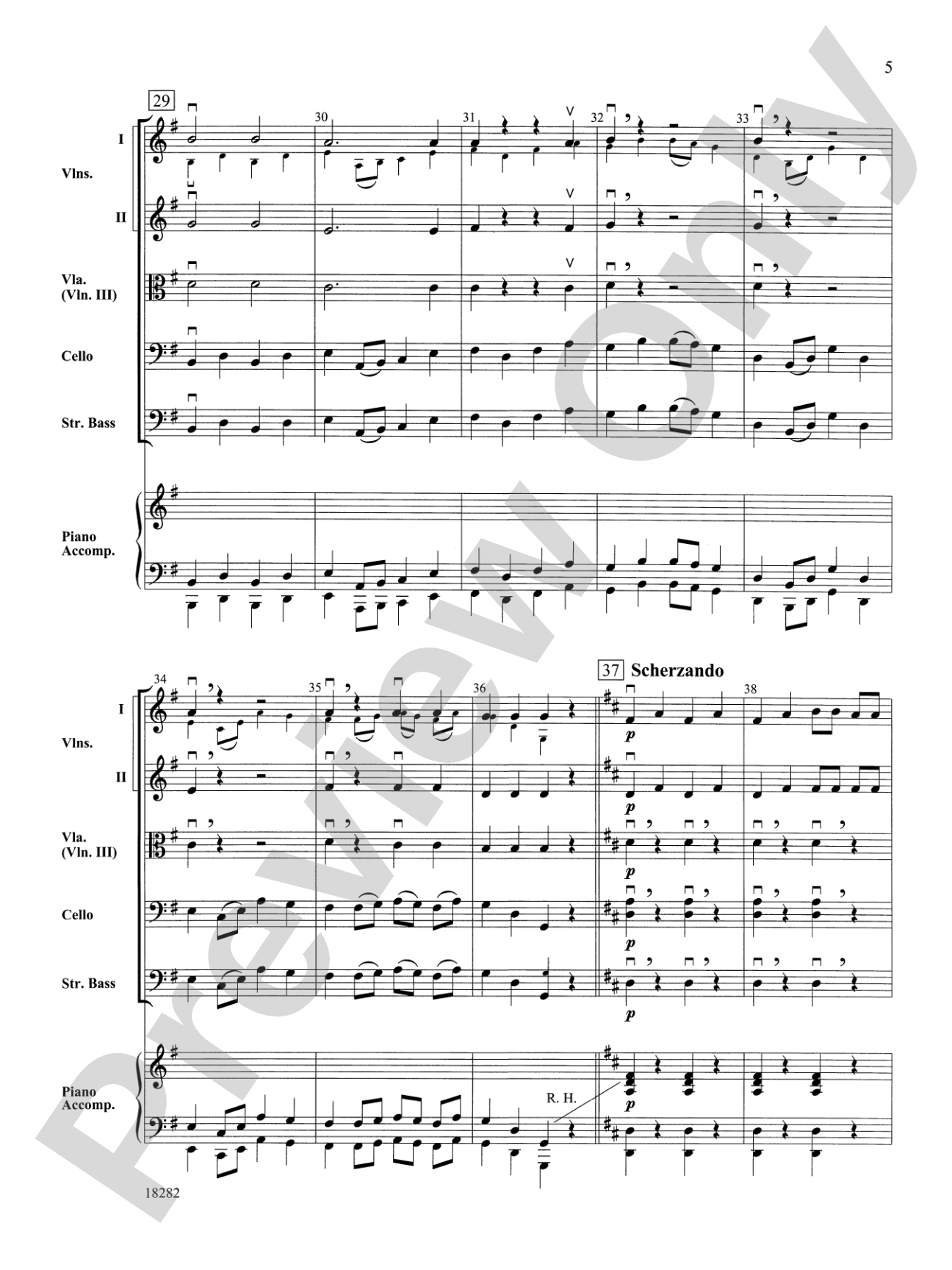
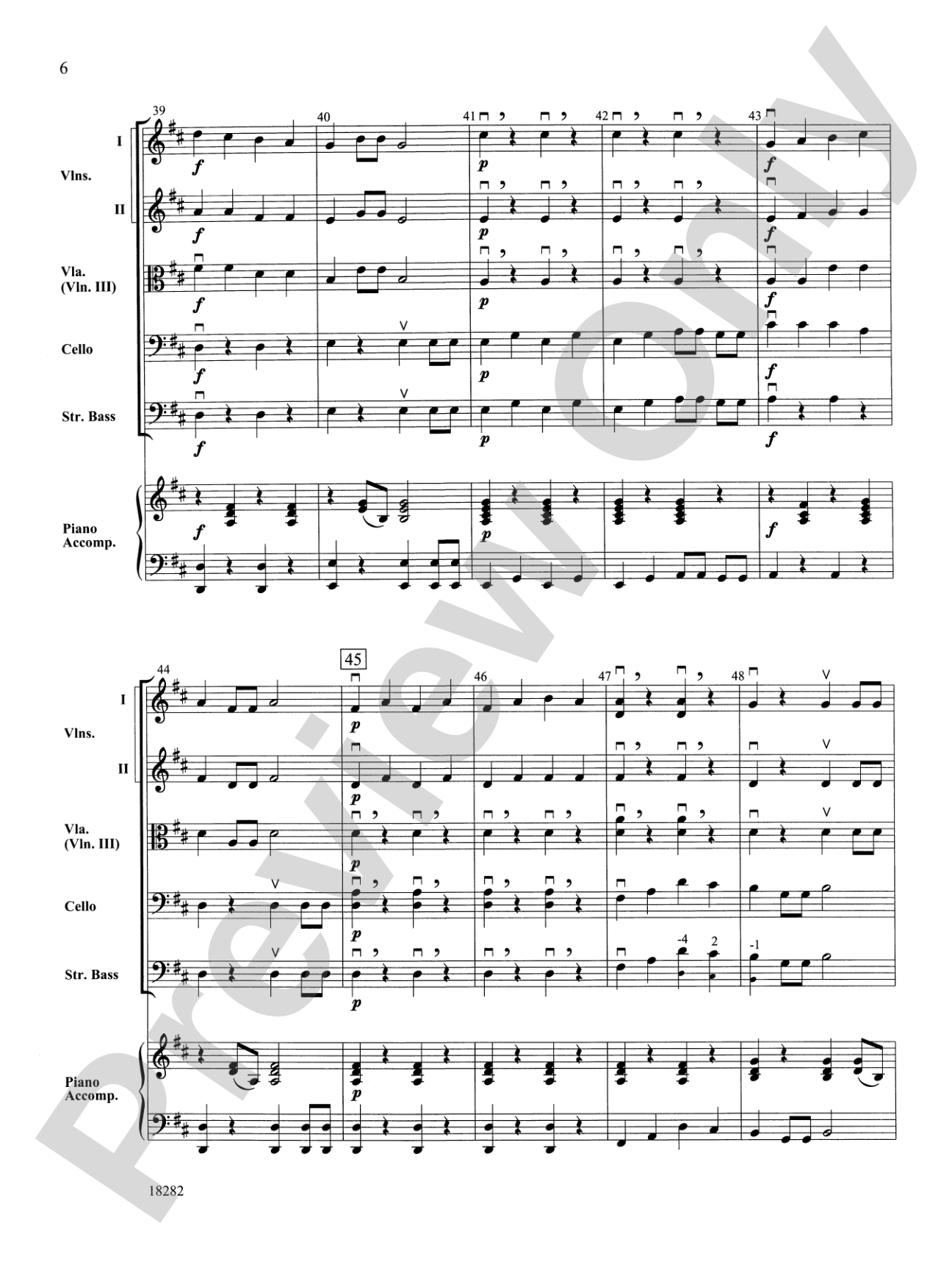
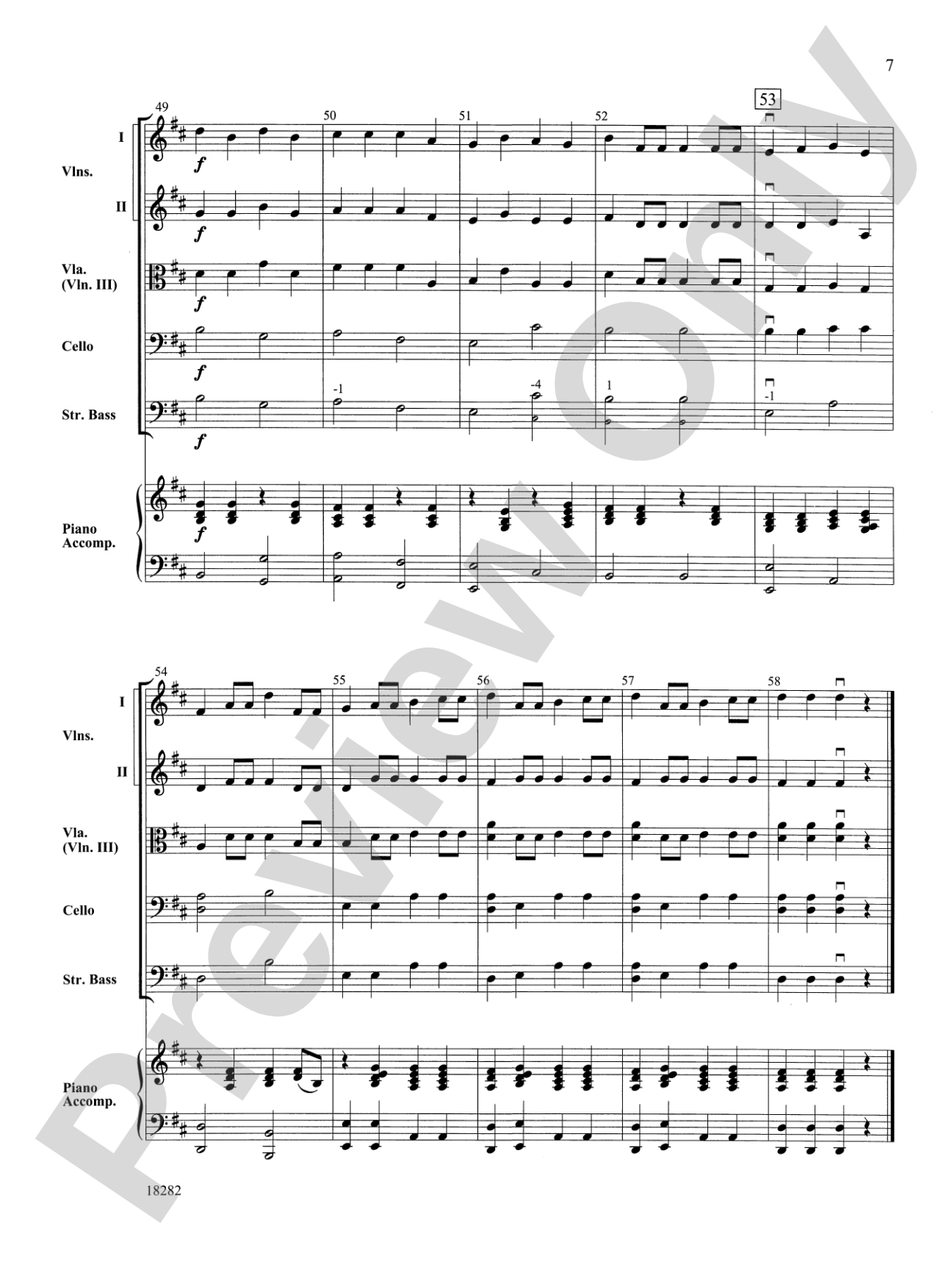


Festive Dance: String Orchestra Conductor Score & Parts
By Edmund J. Siennicki
Grade: 1
Item: 00-PK-0000265

$46.00
Pickup currently not available
Buy Extra Parts (Digital PDF Download)
| Product | Price | Quantity |
|---|---|---|
| Festive Dance: Score | $8.00 | |
| Festive Dance: 1st Violin | $5.99 | |
| Festive Dance: 2nd Violin | $5.99 | |
| Festive Dance: 3rd Violin (Viola [TC]) | $5.99 | |
| Festive Dance: Viola | $5.99 | |
| Festive Dance: Cello | $5.99 | |
| Festive Dance: String Bass | $5.99 | |
| Festive Dance: Piano Accompaniment | $5.99 |
Parts Added to Cart!
Description
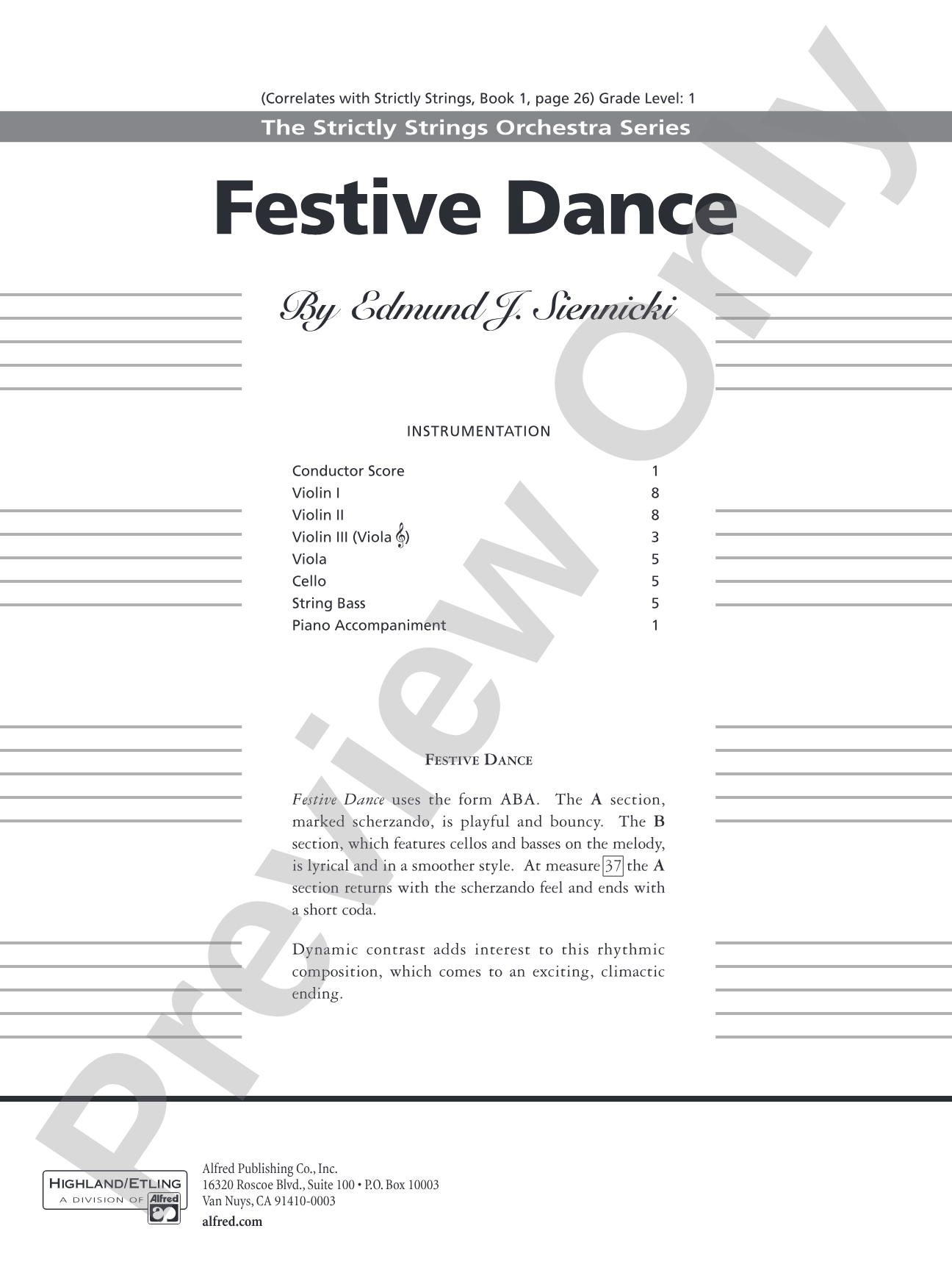
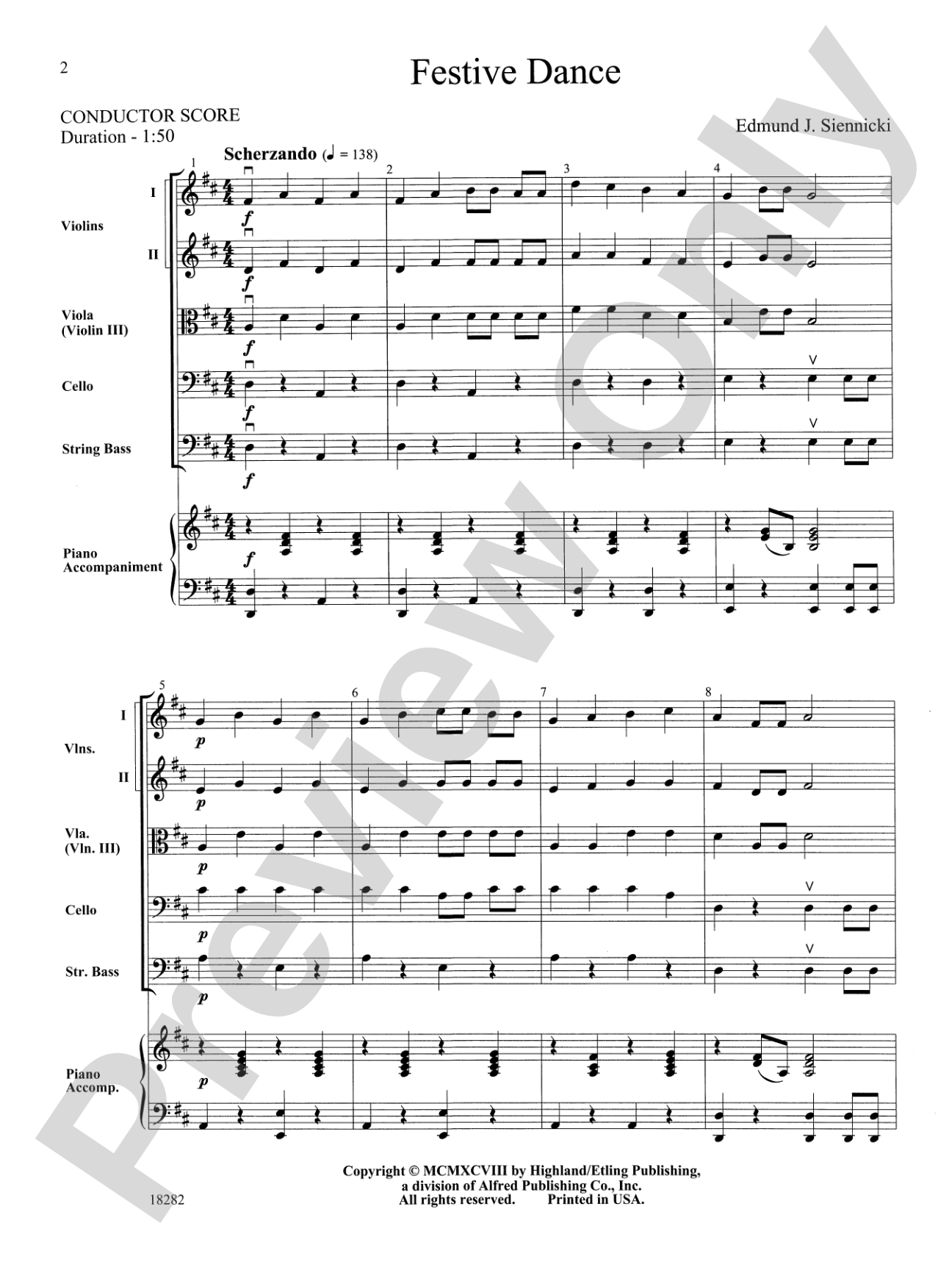
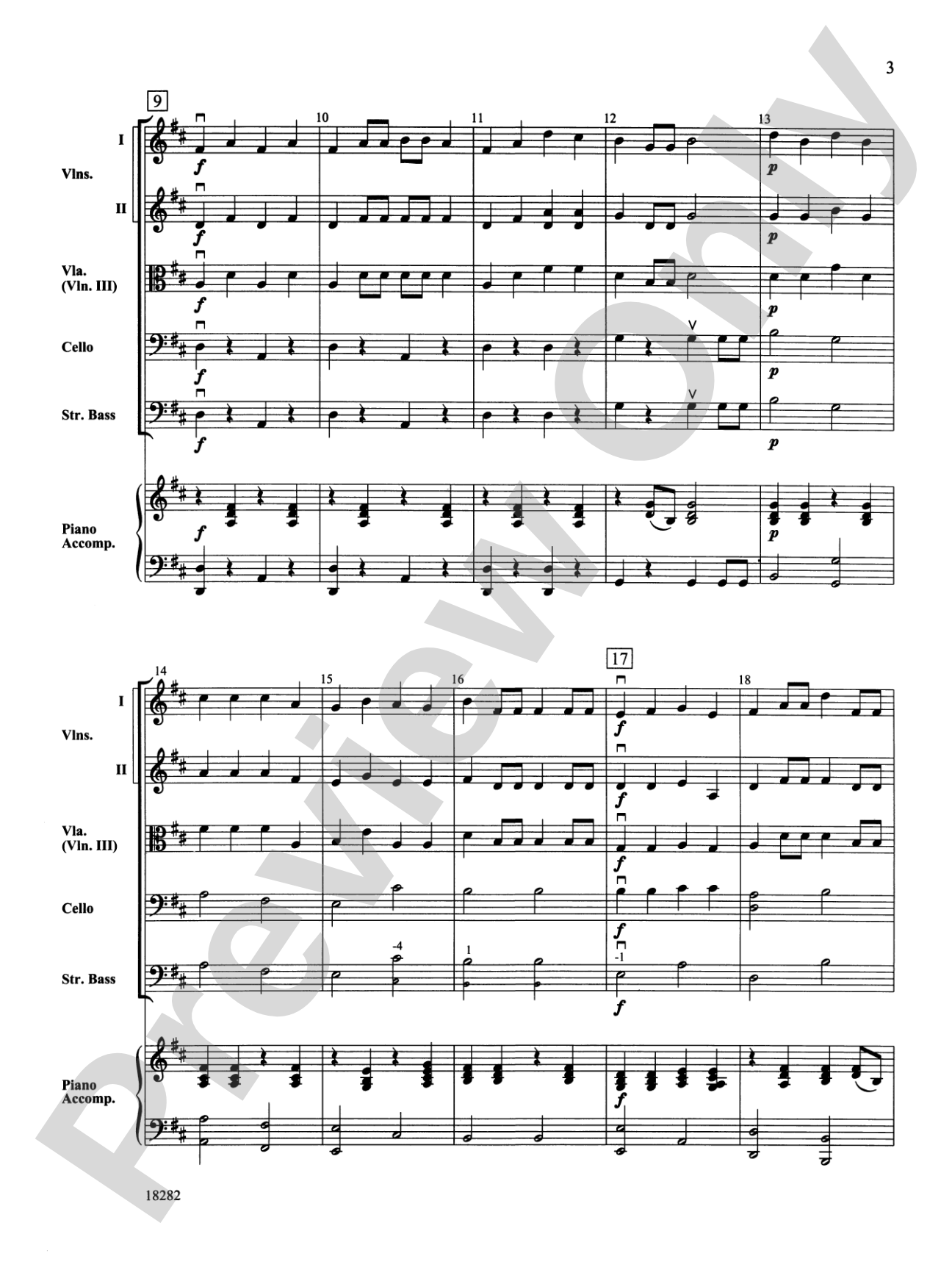
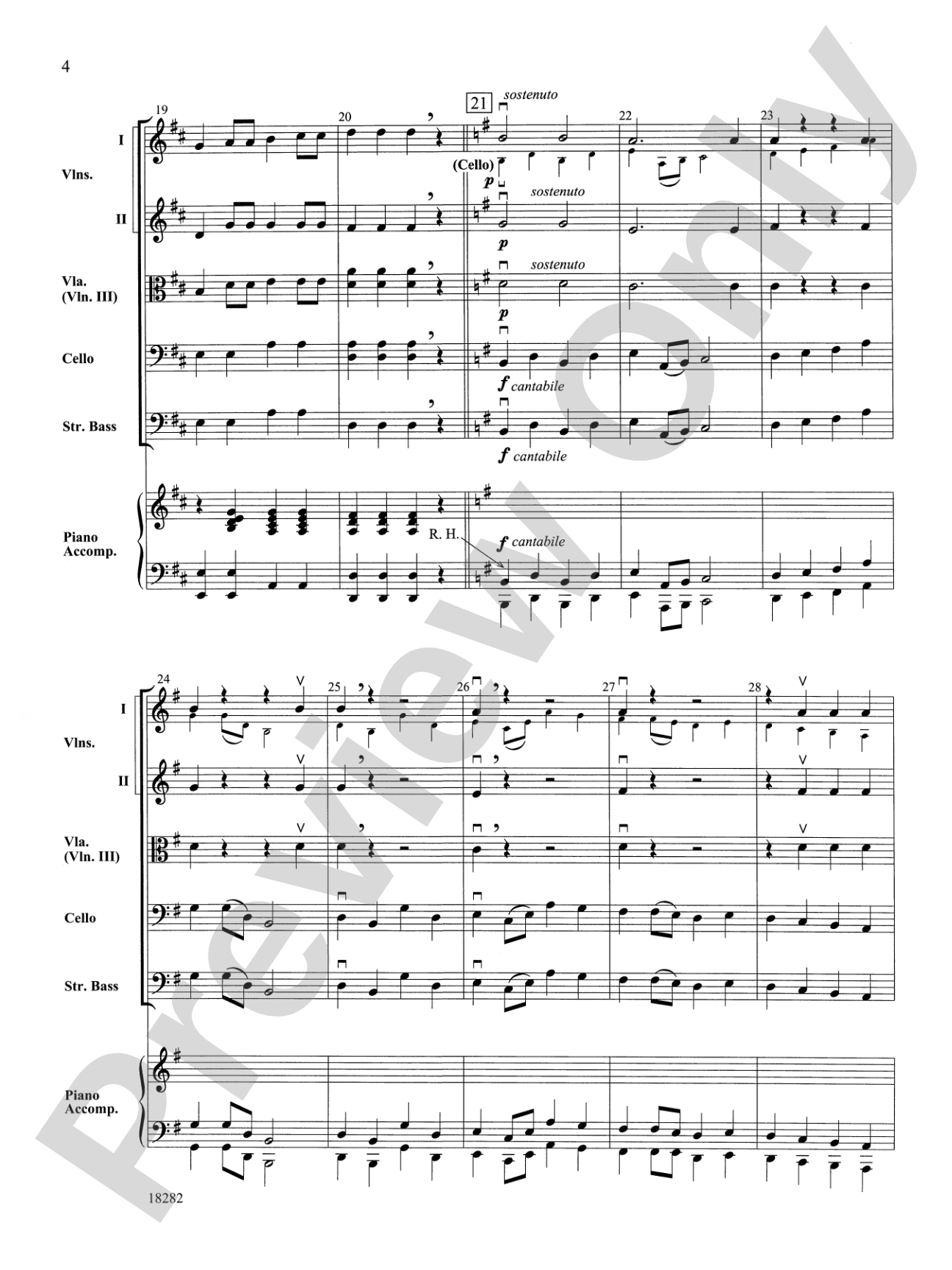
This easy, yet energetic piece is sure to become a favorite of young string players. Carefully written for this grade level, all sections of the orchestra get to share in the activity of this fun, motivating selection for string orchestra. This title is available in MakeMusic Cloud.


Don't just read it, hear it, play along with it, and watch your students grow with it. In MakeMusic Cloud, Festive Dance: String Orchestra Conductor Score & Parts comes alive with professional accompaniment, adjustable tempo, and built-in practice tools that turn solo practice into real progress.
Open in the Player
Jump straight in and assign it today.
Start Your Free Trial
Open this title and explore the full library in minutes.
Sample Audio
1
Audio File
--:--
0:00
0:00
Sample Video
No sample videos found.
Additional Details
Series:
Highland/Etling Strictly Strings
Publisher:
Alfred Music
Page Count:
72
SKU:
00-PK-0000265
More about this title
About the Composer: Edmund J. Siennicki
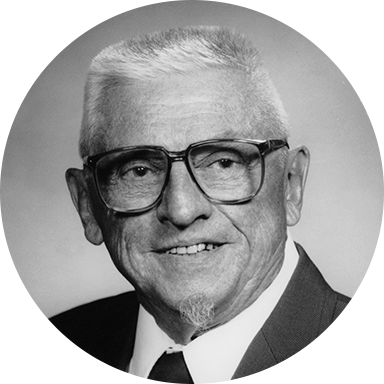
Edmund J. Siennicki grew up in Cleveland and had a formative encounter with pianist Ignacy Jan Paderewski at age 12, a meeting that shaped his artistic direction for decades to come. He earned his Bachelor's degree from Kent State University, where he composed the school's fight song, still performed at football games today. His graduate work at Teachers College, Columbia University included composition study with Herbert Elwell and electronic music training with Sergio Barroso, with consultation from Vincent Persichetti.
Siennicki built a dual career as both educator and composer. He taught in Cleveland's junior high schools while also serving on faculty at Michigan and Kent State University. His instrumental prowess on bassoon and piano informed his compositional voice across roughly 200 published works. His string writing has earned recognition through National School Orchestra composition contests, and he was twice named composer in residence at the MacDowell Colony. For the past two decades, he has received consecutive awards from ASCAP and continues to compose, visit schools, and lead clinics.
Why we love this
Siennicki writes for Grade 1 orchestras with genuine understanding of what young players can accomplish when given engaging material. Every section of the ensemble gets its moment in the spotlight, which means nobody is sidelined during rehearsal or performance. The piece balances technical accessibility with real musical satisfaction, making it an excellent choice for concert programming when you want energy without struggle.
What to expect
Festive Dance captures exactly what its title promises: a spirited, uplifting piece that moves with infectious energy from start to finish. The writing dances across the ensemble without losing sight of musicality, giving young players the satisfaction of performing something that sounds polished and feels genuinely fun to play.
Who it's for
Young string orchestras in Grades 1-2, whether in school programs, youth orchestras, or community ensembles. The piece works equally well for orchestras building fundamentals or those ready to tackle something energetic with active ensemble parts. It's ideal for groups preparing for contests, festivals, or end-of-year concerts.
How to get the most out of it
- Balance the melodic line between your first and second violin sections; the piece moves quickly enough that clarity matters more than volume.
- Keep cellos and basses anchored to a steady pulse, their rhythmic foundation determines whether the dance feels secure or rushed.
- Let the articulation be clean and rhythmic without excessive pressure; young players tend to tighten up during fast passages.
How to use it
This works beautifully as an opening concert selection, setting an energetic, welcoming tone for your audience. It pairs well with slower, more lyrical pieces on the same program, creating natural variety. The piece's approachable difficulty also makes it an excellent choice for a spring or festival performance when you want to showcase ensemble growth without overreaching technically.
Skills your students will build
- Maintaining steady pulse and rhythmic precision in an active ensemble texture
- Balancing parts when multiple sections carry melodic and rhythmic material simultaneously
- Clear entrances and cut-offs across an eight-part ensemble
- Dynamic shaping and expression within Grade 1 technical limitations
- Ensemble listening and blending when sections play similar rhythmic figures