

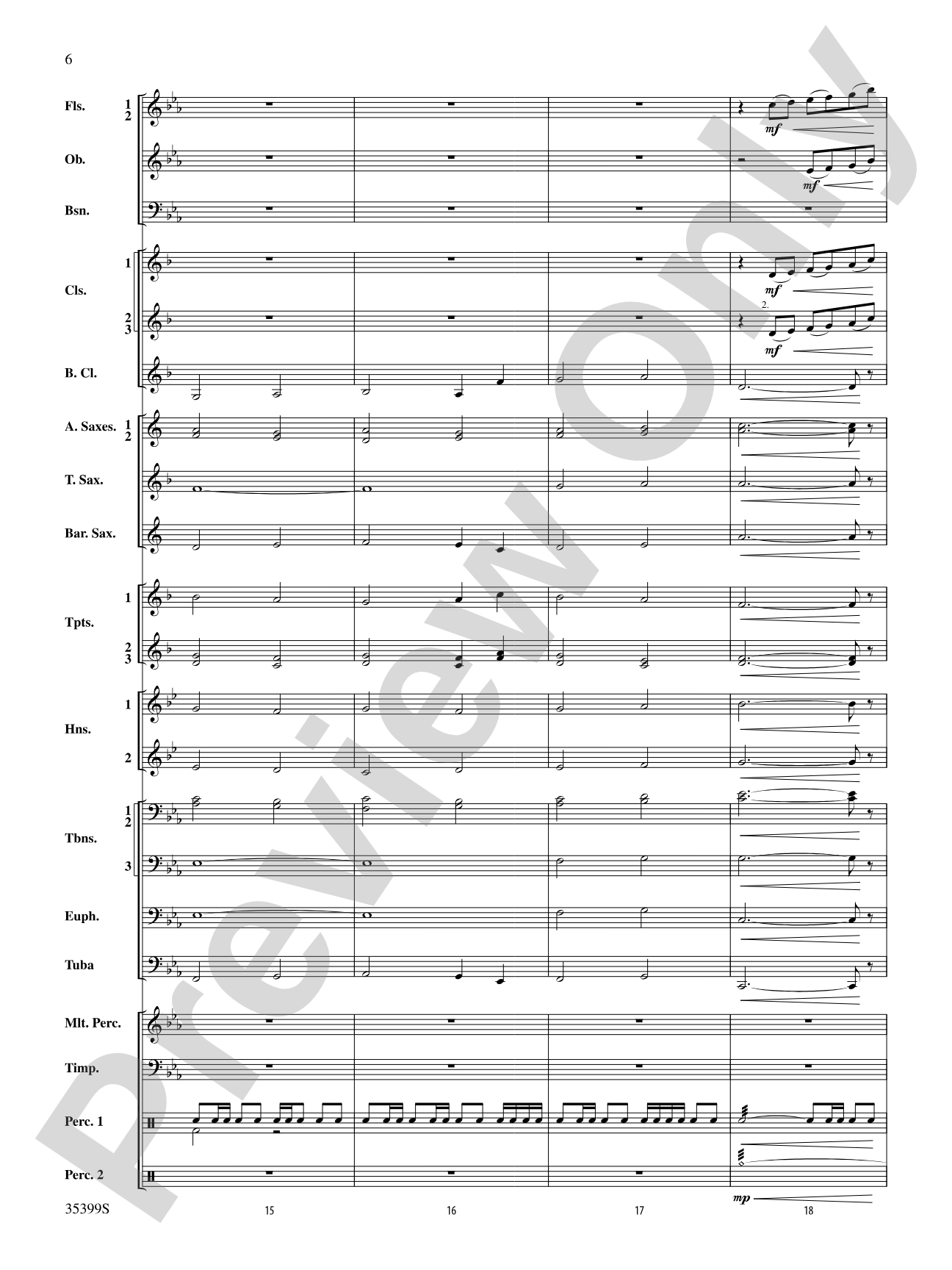
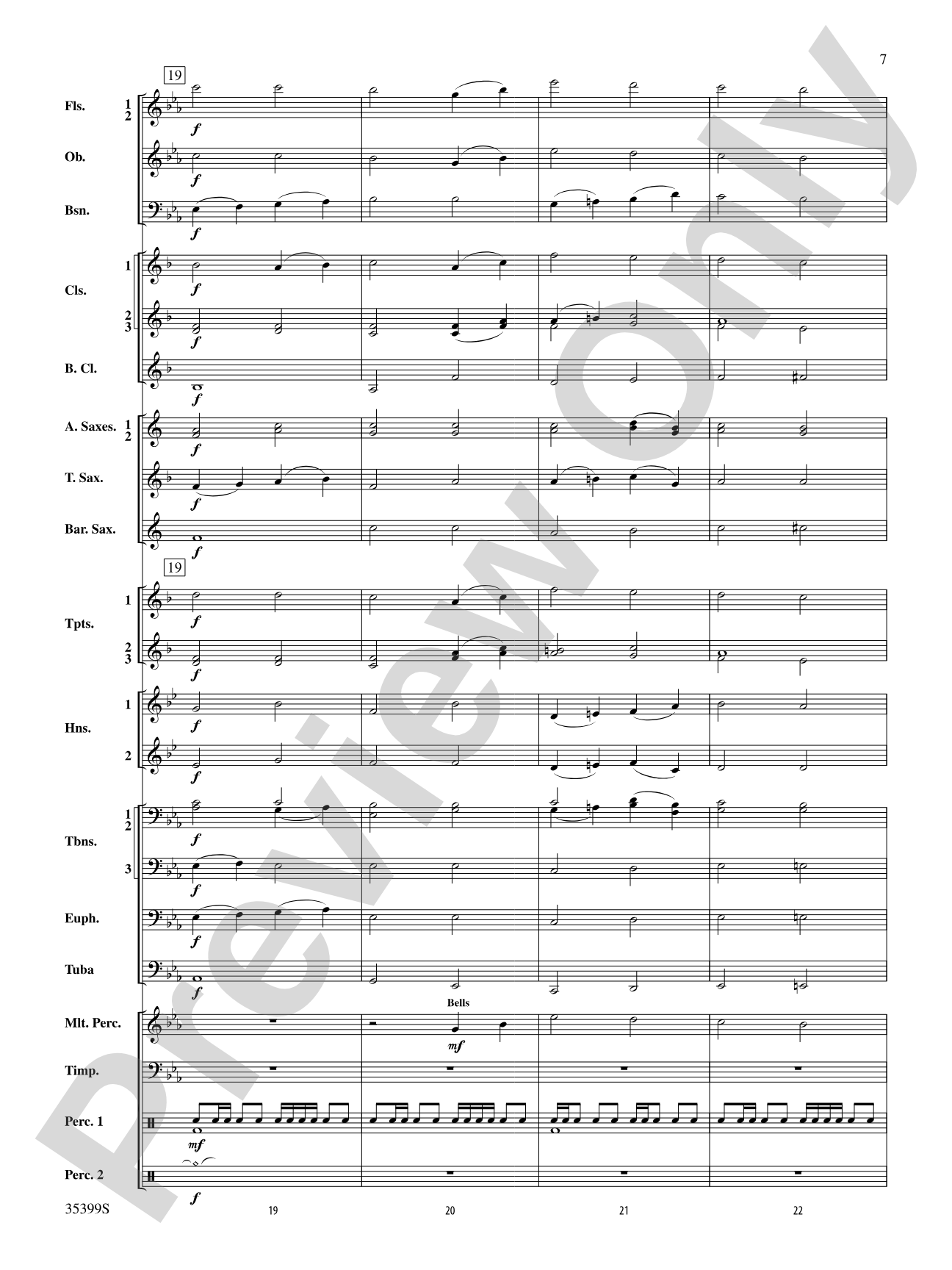
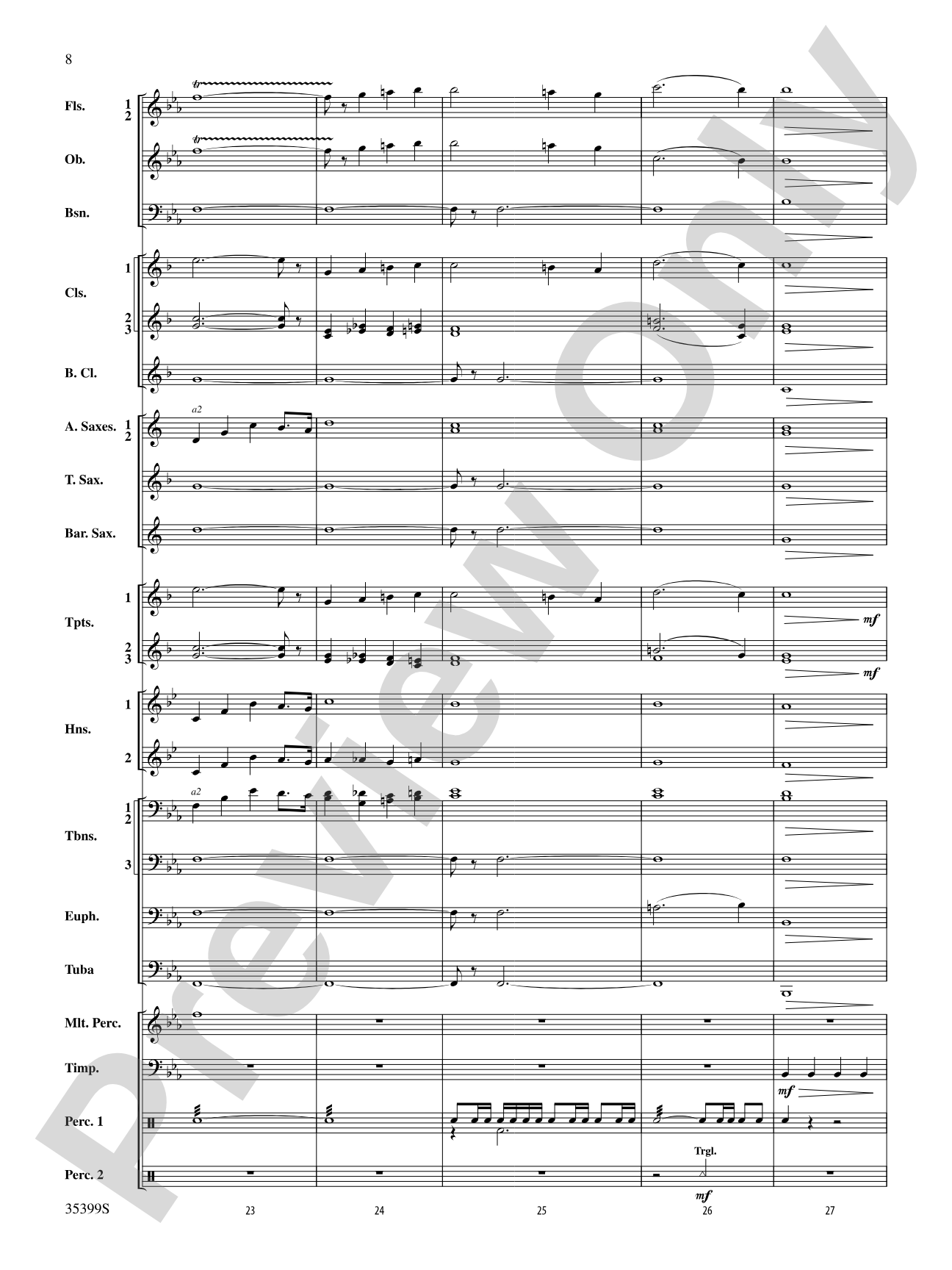
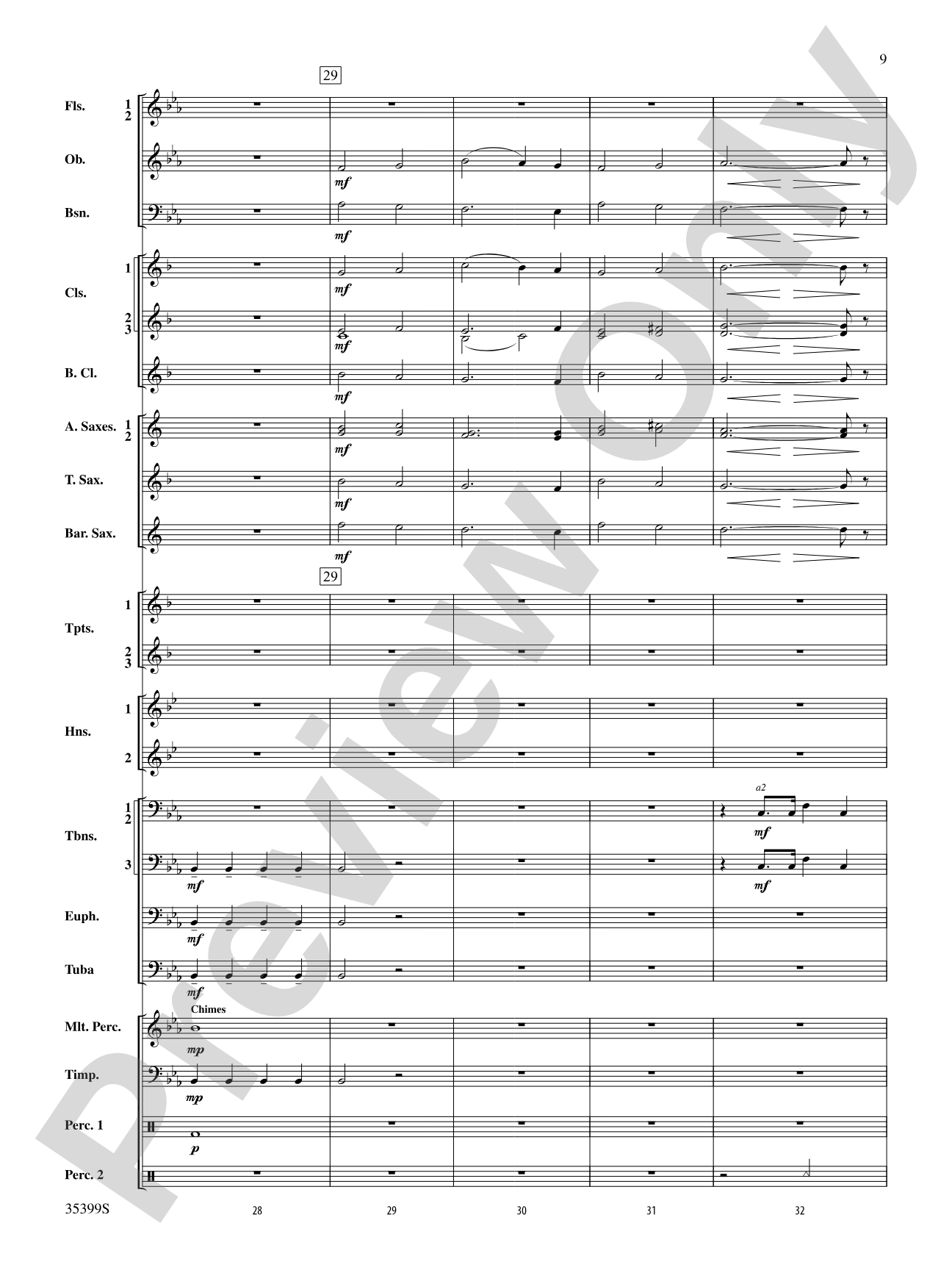
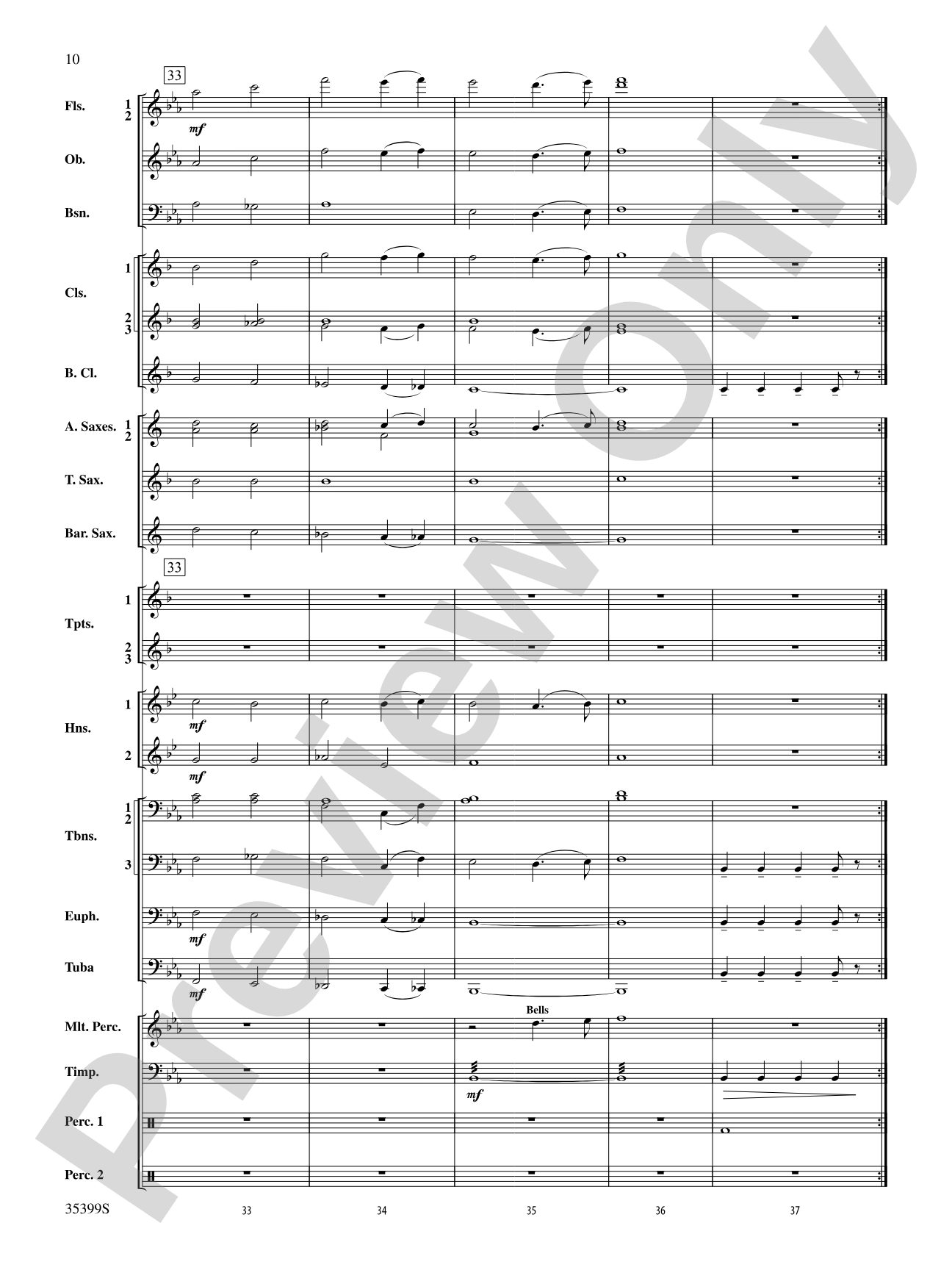
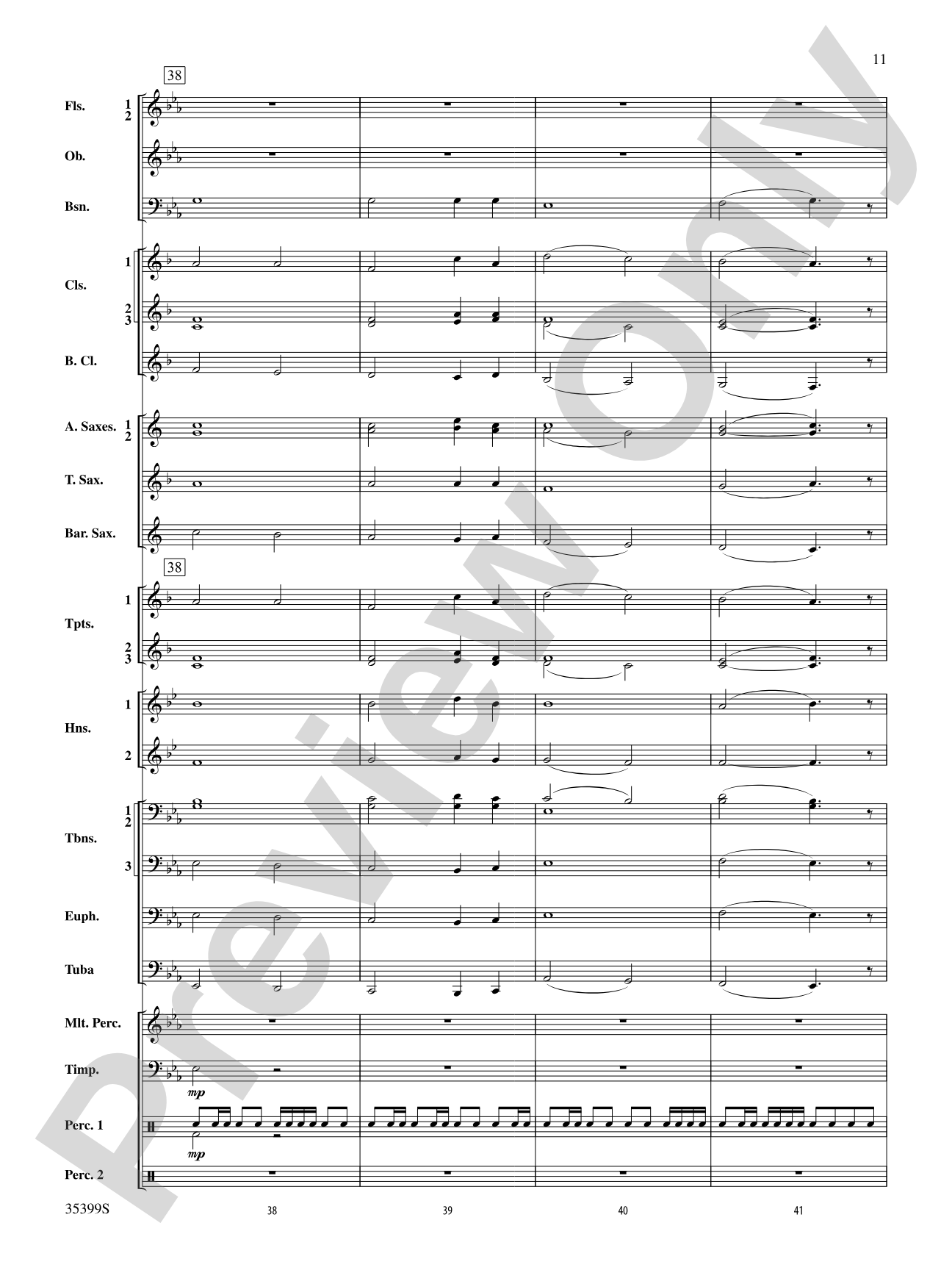
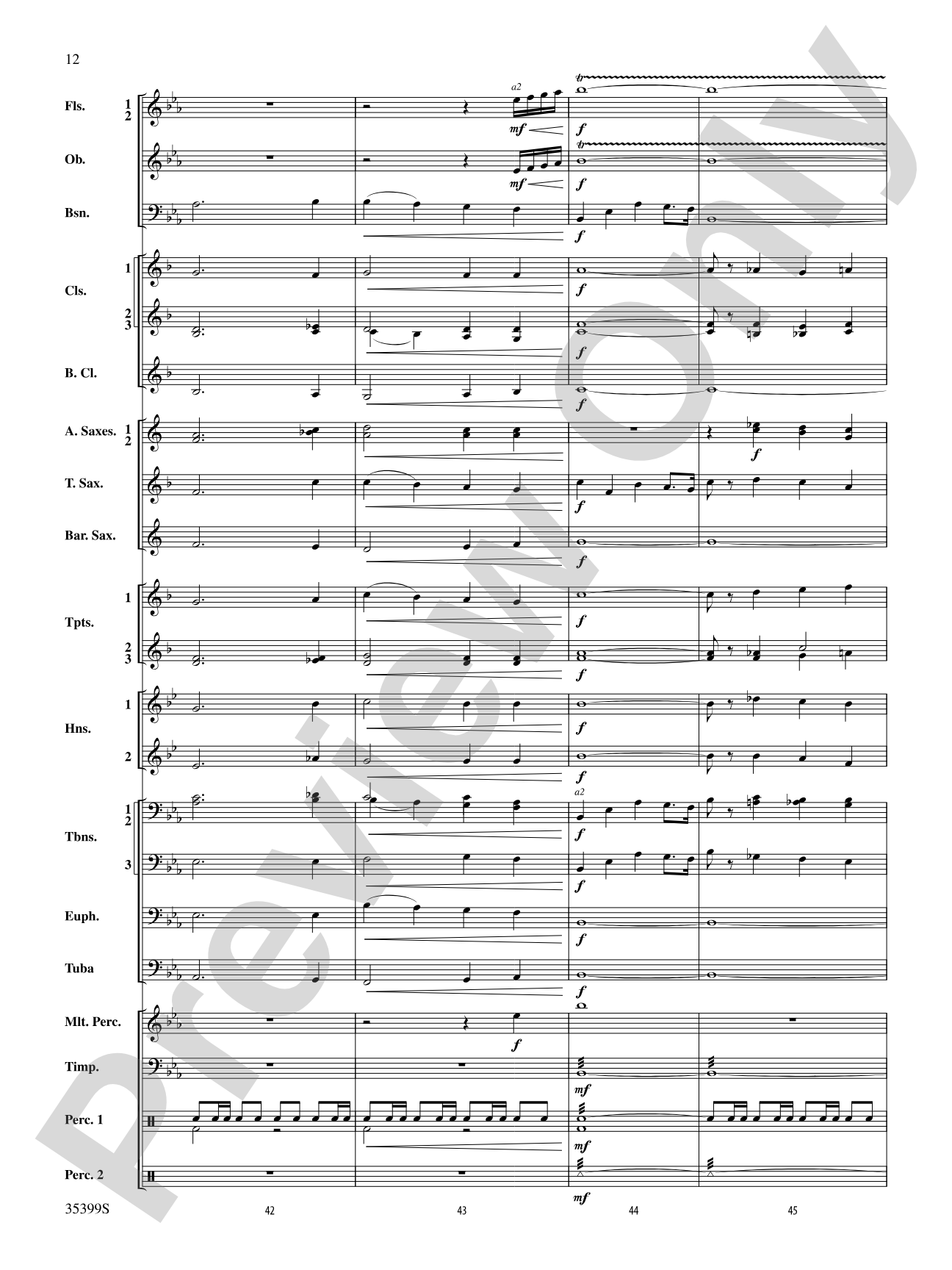
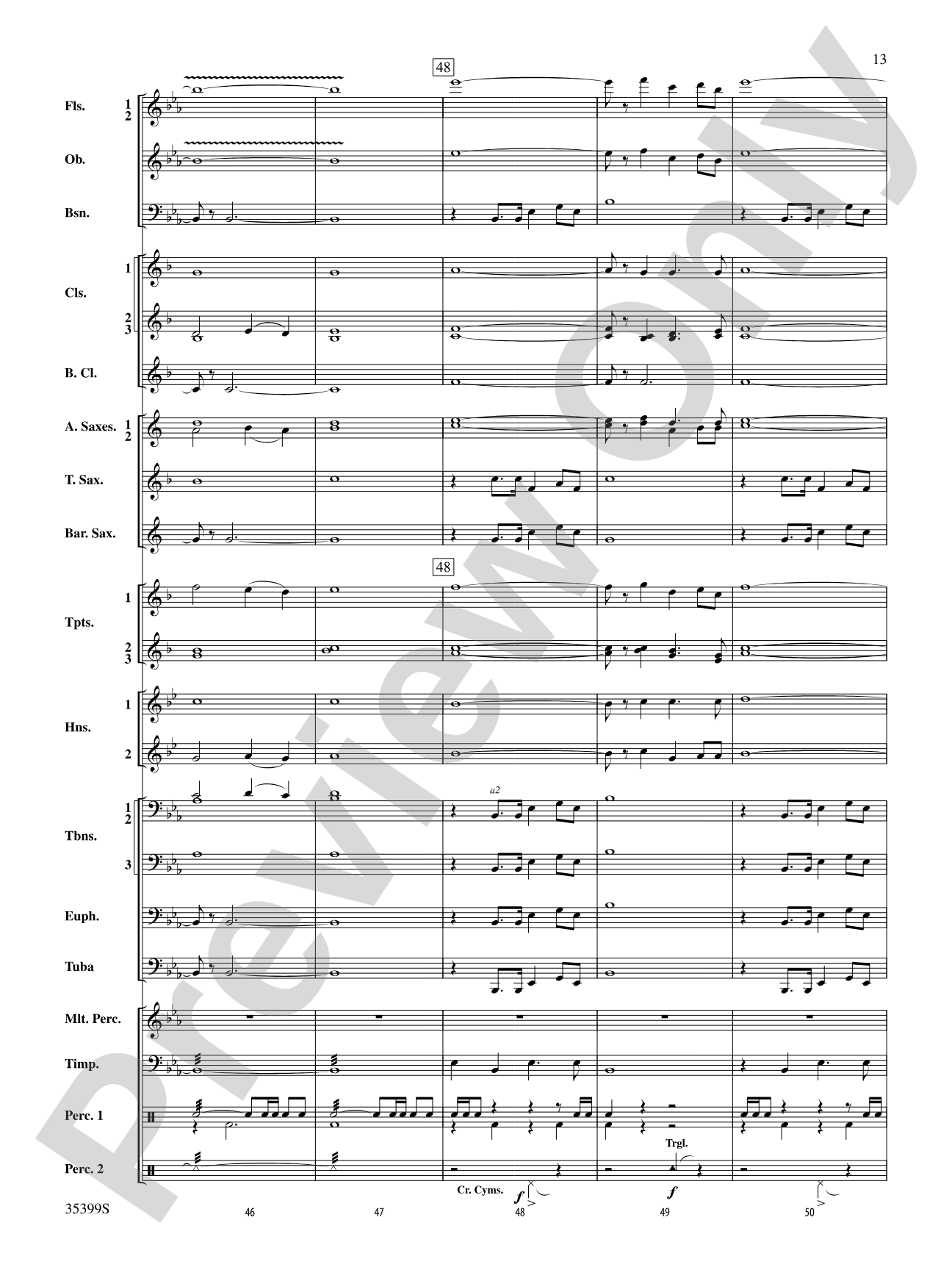
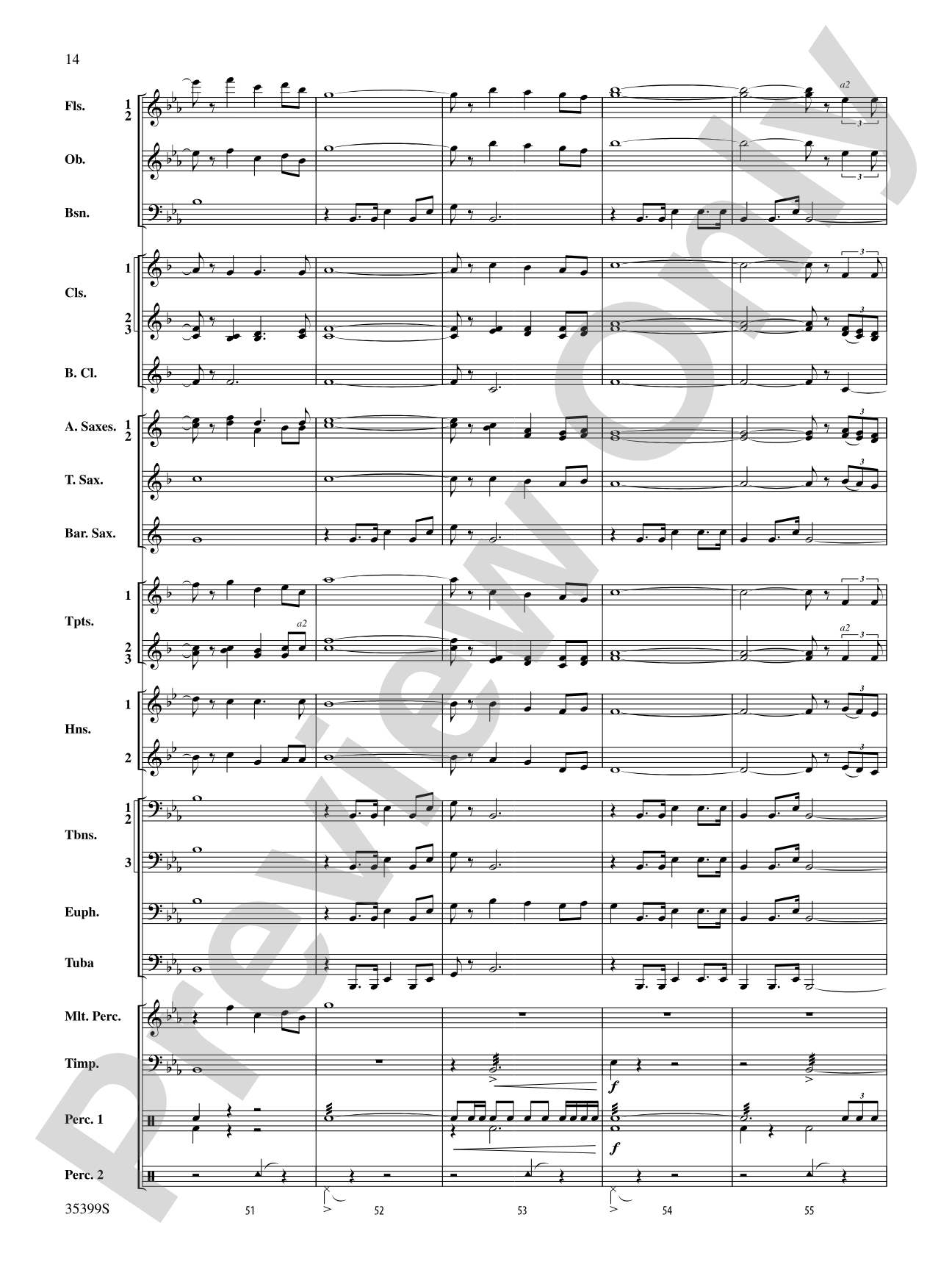
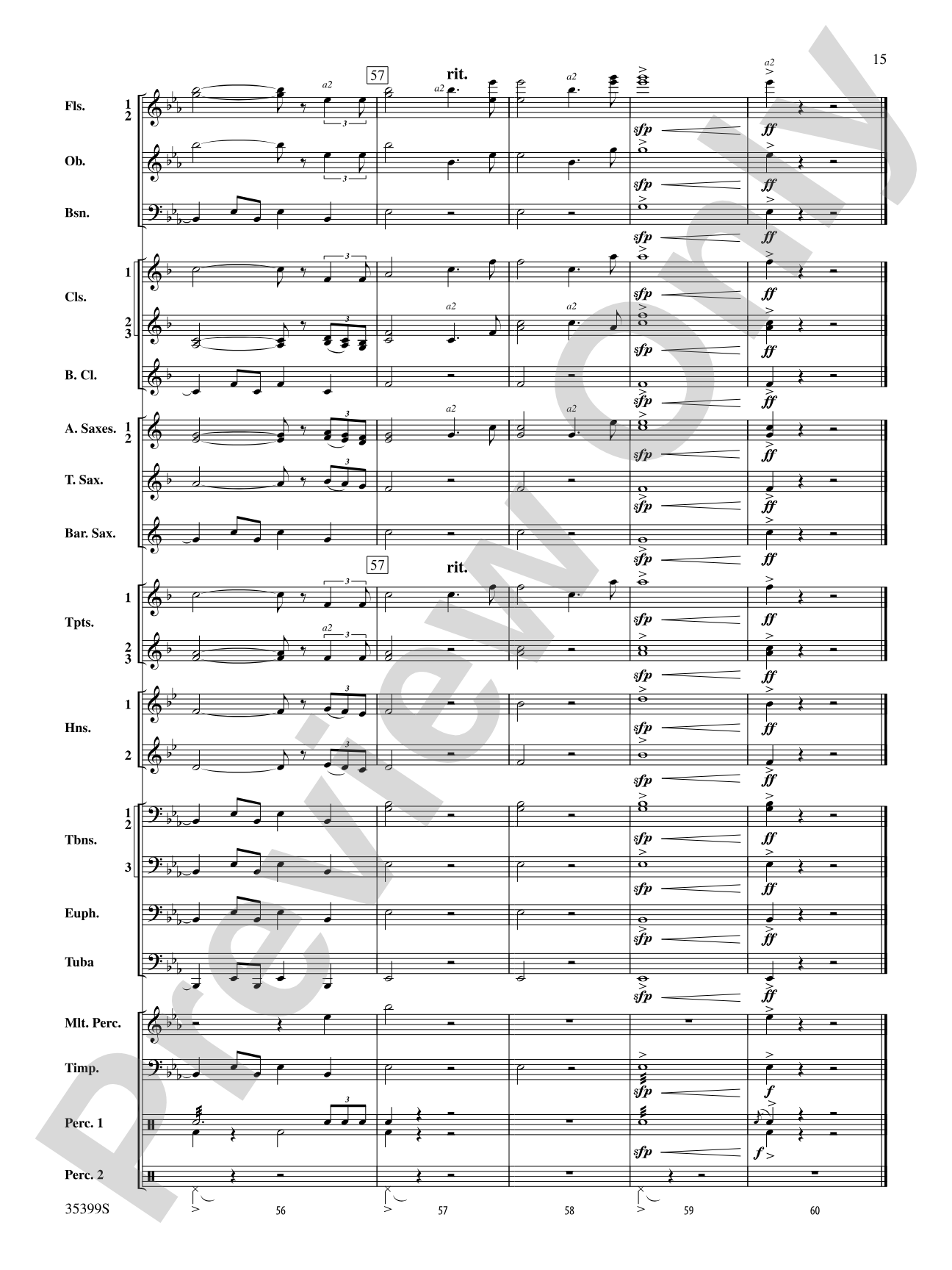


Festival Procession: Concert Band Conductor Score & Parts
By Richard Strauss / arr. Douglas E. Wagner
Grade: 3 (Medium Easy)
Item: 00-PK-0004656

$67.00
Pickup currently not available
Buy Extra Parts (Digital PDF Download)
Parts Added to Cart!
Description
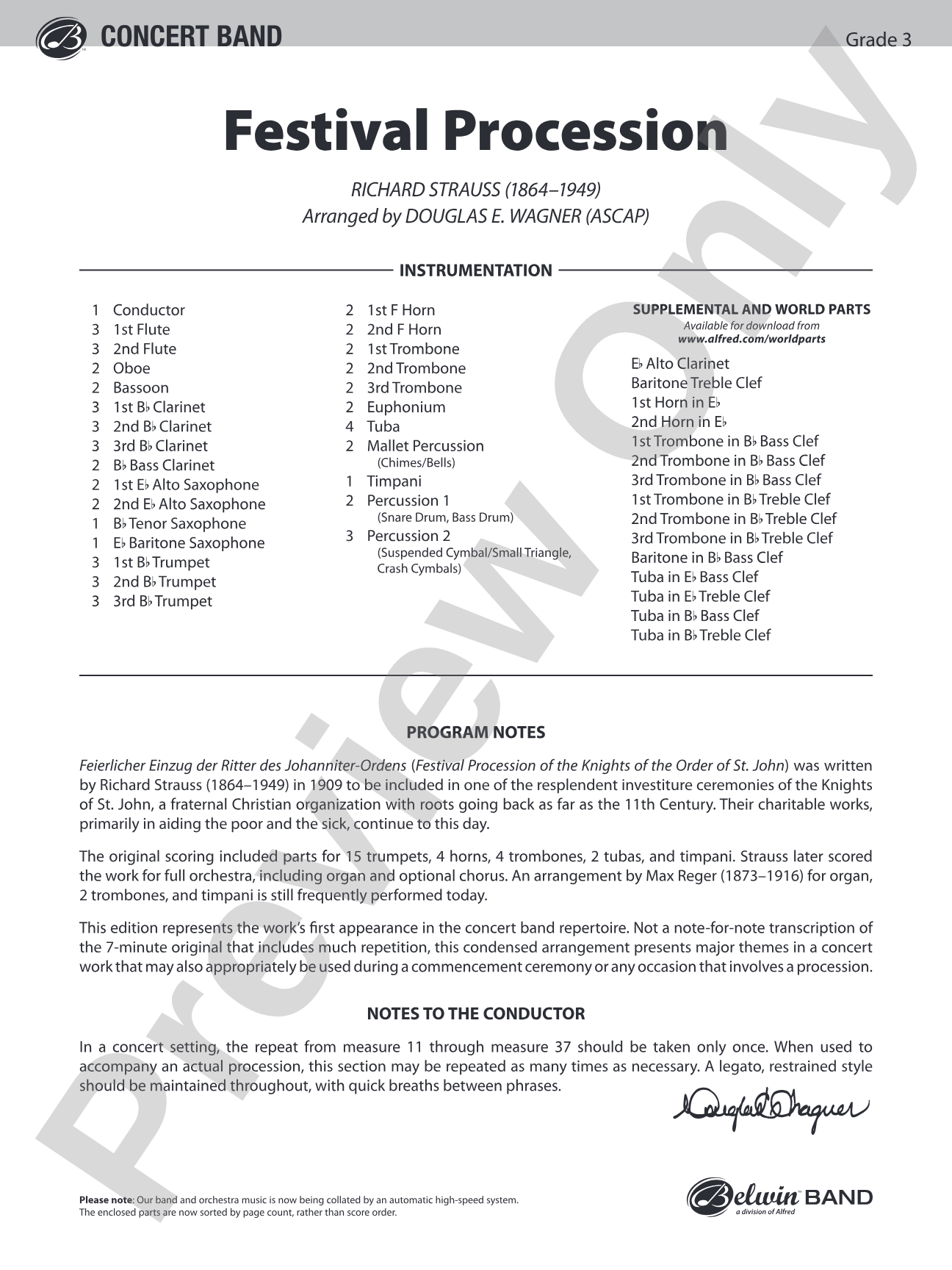
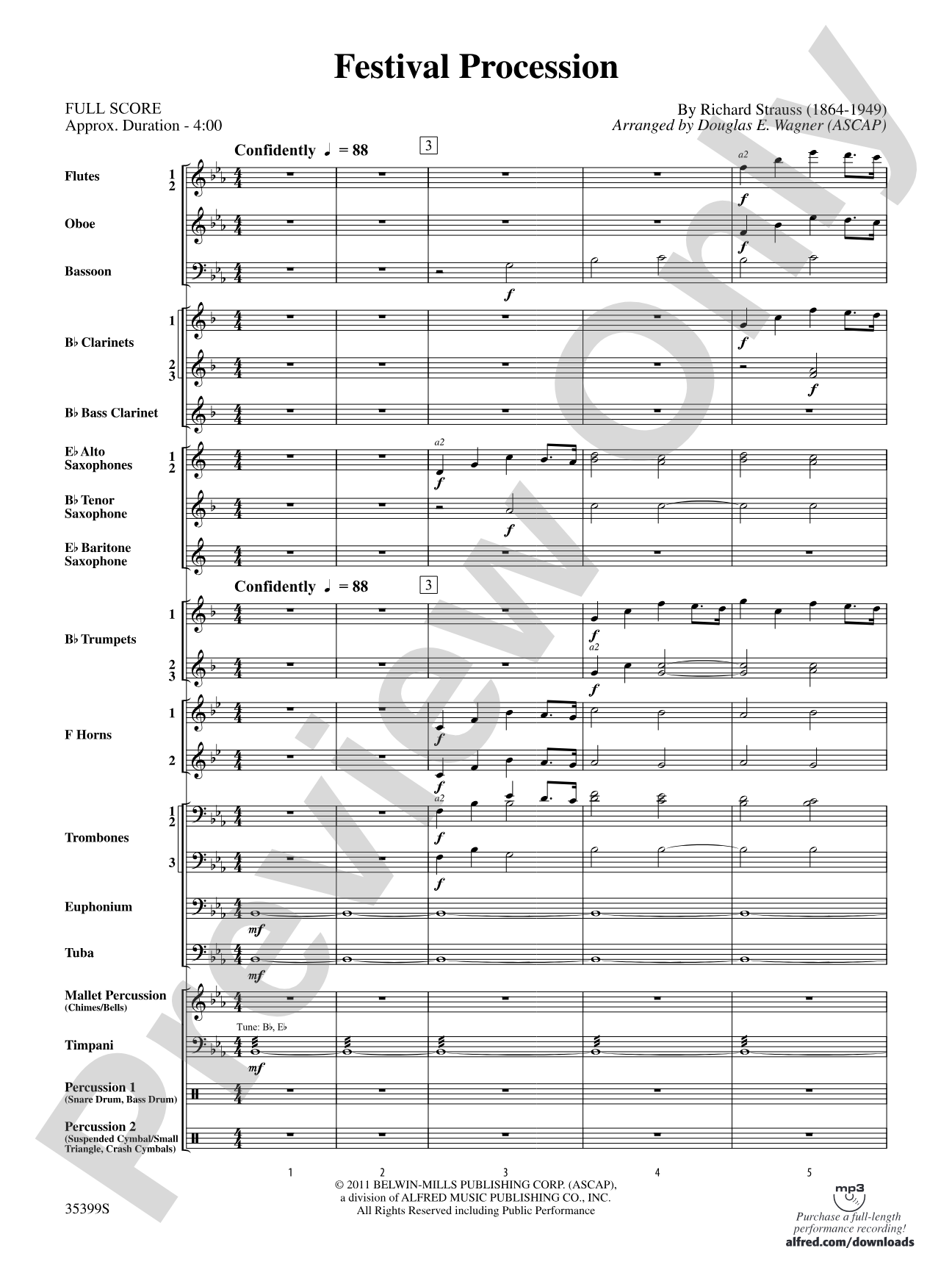
Originally composed in 1909 to be included in one of the ceremonies of the Knights of St. John with a bold outside instrumentation, Strauss later scored the work for full orchestra. As the title implies, Douglas Wagner's condensed arrangement presents major themes in a concert setting for the first time for concert band that may also appropriately be used during a commencement ceremony or any occasion that involves a procession. This title is available in MakeMusic Cloud.


Don't just read it, hear it, play along with it, and watch your students grow with it. In MakeMusic Cloud, Festival Procession: Concert Band Conductor Score & Parts comes alive with professional accompaniment, adjustable tempo, and built-in practice tools that turn solo practice into real progress.
Open in the Player
Jump straight in and assign it today.
Start Your Free Trial
Open this title and explore the full library in minutes.
Sample Audio
1
Audio File
--:--
0:00
0:00
Sample Video
No sample videos found.
Additional Details
Series:
Belwin Concert Band
Publisher:
Alfred Music
Page Count:
120
SKU:
00-PK-0004656
More about this title
About the Composer: Richard Strauss
Richard Strauss (1864-1949) stands among the most performed composers in the concert band and orchestra repertoire. His gift for memorable melody and orchestral color shaped twentieth-century music across opera, symphonic poems, and ceremonial works. Strauss composed Festival Procession in 1909 for a formal Knights of St. John ceremony, originally scoring it for a distinctive outdoor ensemble before later adapting it for full orchestra.
Why we love this
Douglas Wagner's arrangement captures the ceremonial grandeur of Strauss without overwhelming a Grade 3 ensemble. The condensed scoring highlights major themes clearly while preserving the work's stately character, making it accessible for bands ready to tackle masterwork literature. Its dual purpose as both concert and processional music gives you genuine flexibility in how you program it.
What to expect
Stately and confident, with the measured dignity of a formal procession. Lyrical passages glow warmly against crisp harmonic support, while the overall arc feels unhurried and ceremonial rather than rushed. The musical language honors tradition while remaining accessible.
Who it's for
Conductors programming their first Strauss work or seeking ceremonial music that builds band musicianship without technical excess. Advanced intermediate ensembles benefit most from the orchestral sensibilities embedded in the arranging, while Grade 3 difficulty keeps the focus on interpretation rather than technical hurdles.
How to get the most out of it
- Balance the lyrical themes across your ensemble so the Strauss melodies sing through the harmonic texture. Avoid letting inner voices overwhelm the main melodic line.
- Shape phrases with deliberate rubato during sustained passages; the ceremonial nature invites slight flexibility rather than metronomic precision.
- Check your brass balances carefully. Strauss orchestrated with specific doublings in mind, and Wagner's arrangement depends on transparent voicing between trumpet, horn, and trombone sections.
- If you're using this in a procession, rehearse the tempo as a walking tempo first. Many conductors lock it to the actual processional pace and adjust rehearsal tempos accordingly.
How to use it
This works beautifully as a concert opener that sets an elegant tone or as a processional for commencement and formal occasions. Its Grade 3 accessibility makes it an ideal anchor piece when you're pairing easier works with more challenging repertoire in the same concert. The clear thematic writing also serves students well as an introduction to how masterwork composers approach band scoring.
Skills your students will build
- Balancing lyrical lines against harmonic accompaniment
- Sustaining tone quality across longer melodic phrases
- Shaping rubato in ceremonial and processional contexts
- Reading and responding to orchestral texture and doublings
- Adjusting ensemble blend when melodic focus shifts between sections