
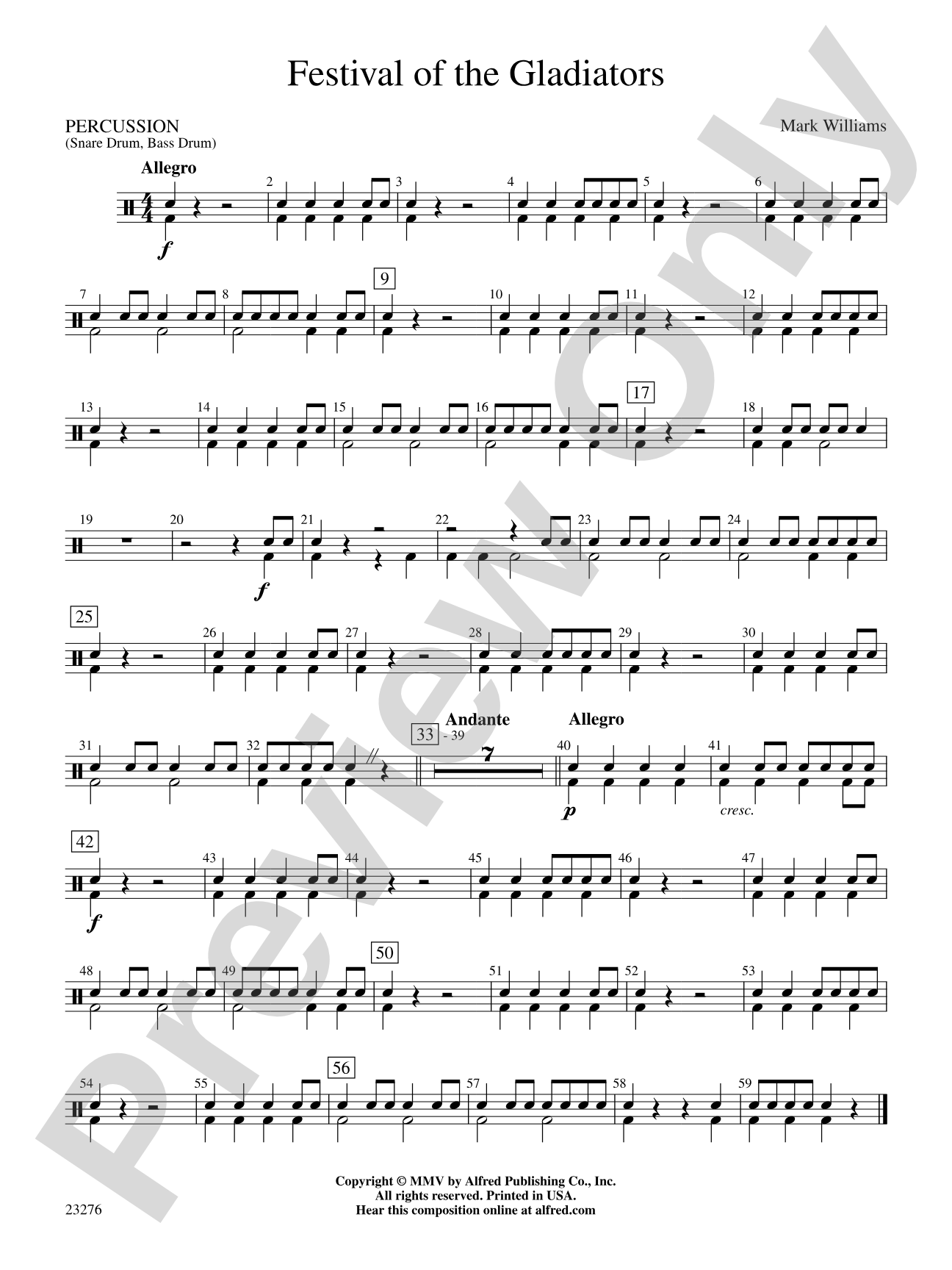

Festival of the Gladiators: 1st Percussion
By Mark Williams
Grade: 1 (Very Easy)
Item: 00-PC-0000626_PC1
$3.00
Pickup currently not available
Description
This bold new work will appeal to the imagination and sense of adventure of younger instrumentalists with its driving beat and heroic harmonies. Perfect as an closer for your next concert, or as a selection for contest season. Correlates to Accent on Achievement, Book 1, page 15. This title is available in MakeMusic Cloud.


Don't just read it, hear it, play along with it, and watch your students grow with it. In MakeMusic Cloud, Festival of the Gladiators: 1st Percussion comes alive with professional accompaniment, adjustable tempo, and built-in practice tools that turn solo practice into real progress.
Open in the Player
Jump straight in and assign it today.
Start Your Free Trial
Open this title and explore the full library in minutes.
Sample Audio
1
Audio File
--:--
0:00
0:00
Sample Video
No sample videos found.
Additional Details
Series:
Accent on Achievement
Publisher:
Alfred Music
Page Count:
116
SKU:
00-PC-0000626_PC1
More about this title
About the Composer: Mark Williams

Mark Williams shaped school band repertoire for generations with over 200 compositions that prioritized musicality alongside accessibility. His work as co-author of the Accent on Achievement Band Method gave him deep insight into what young musicians could achieve, and his compositions reflect that understanding. Williams earned recognition through the Gralia Competition and multiple ASCAP Special Awards, and his influence extended far beyond the page as a guest conductor and clinician across 34 states, five Canadian provinces, and Australia.
A Chicago native who built his career in Washington state, Williams specialized in elementary band instruction and brought those classroom experiences directly into his writing. His credentials included degrees from Eastern Washington University and service as a woodwind performer and arranger for the 560th Air Force Band. Beyond composing, he maintained an active performance life on bassoon and served as conductor and artistic director for the Spokane British Brass Band, ensuring his work remained grounded in the practical realities of making music.
Why we love this
Williams writes for Grade 1 ensembles without condescension, and this piece proves it. The driving beat and heroic harmonies grab young musicians immediately, creating genuine musical satisfaction rather than just filling rehearsal time. It works equally well as a concert closer or contest selection because it has real character, not synthetic excitement.
What to expect
Festival of the Gladiators launches with heroic confidence and maintains its energy through driving rhythmic momentum. The harmonic language feels bold without becoming complex, creating a soundworld that feels adventurous and triumphant for young musicians encountering it.
Who it's for
This works beautifully for first-year band students or ensembles at the Grade 1 level who are ready to tackle something with genuine musical personality. Directors seeking a strong, engaging closer for spring concerts or a contest selection that young musicians find genuinely exciting will find real value here.
How to get the most out of it
- Keep the pulse steady and energetic throughout. Young bands often rush when excitement builds, so a conductor who commits to a rock-solid tempo will help the ensemble feel the heroic character without losing control.
- Balance the melody against supporting voices carefully. The driving beat can easily overshadow what's happening in the harmony, so ear-training exercises in rehearsal will help students hear their role in the larger sound.
- Emphasize the rhythmic clarity of the accompaniment figures. Since this piece leans heavily on rhythmic momentum, crisp articulation and tight ensemble attacks will make the work sparkle.
- Use dynamic contrast to shape the piece architecturally. Even at Grade 1, students can execute the difference between assertive and brilliant, which will prevent the piece from sounding one-dimensional.
How to use it
Program this as a concert closer when you want to leave the audience with energy and excitement rather than introspection. Its Grade 1 accessibility makes it ideal for mid-season contest festivals, where younger ensembles benefit from the confidence boost of performing something genuinely heroic.
Skills your students will build
- Maintaining steady tempo under rhythmic excitement
- Balancing melody and accompaniment textures
- Articulation clarity in fast-moving accompaniment figures
- Dynamic shaping and contrast at the ensemble level
- Reading and executing heroic character in contemporary concert band writing