
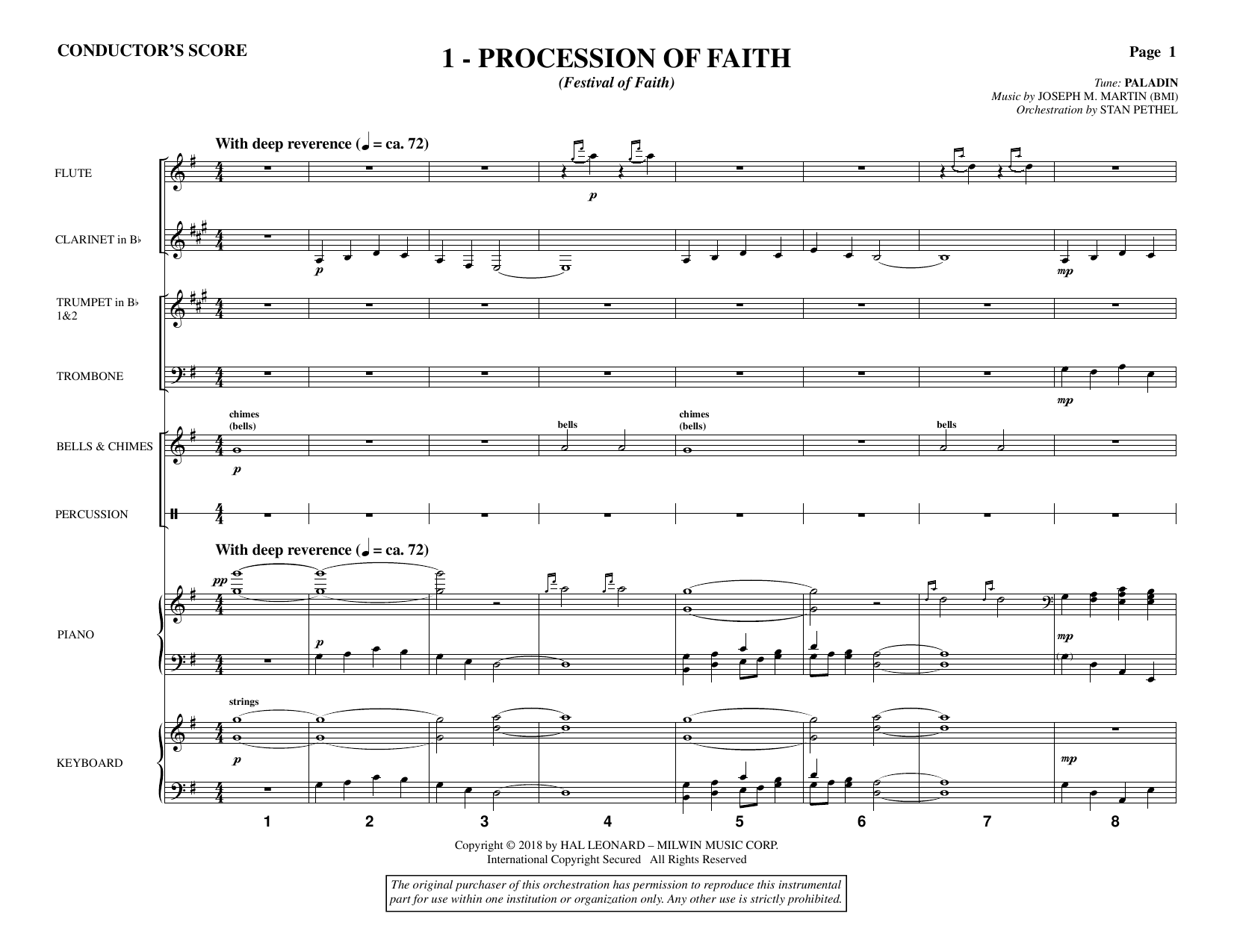

Festival of Faith: Choral Instrumental Pak
Item: 35-PK00428635
$200.00
Pickup currently not available
Buy Extra Parts (Digital PDF Download)
Parts Added to Cart!
Description
"Festival of Faith" is a celebration of the life and ministry of Christ. Through hymns, original anthems and scripture readings, we travel with Him down the dusty roads of Galilee and the ancient stone streets of Jerusalem. We climb the windswept hill of Calvary and enter the garden of resurrection. The orchestration creates a soundscape for this dramatic retelling and a full line of companion products are available to support your rehearsals and performance. This significant work is ideal for performances during Eastertide and will have a lasting impact on your community as they remember the life of the Savior.
Songs include: "Procession of Faith; And Can It Be That I Should Gain; A Call to Faith; Come to the Mountain; Prayer of Restoration; Festival of Palms; In the Breaking of the Bread; Shadow Garden; I Saw the Cross of Jesus; Easter People, Rise; A Call to Alleluia."
Score and Parts for Full Orchestra (fl 1-2, ob/enghn, cl 1-2, bn, hn 1-2, tpt 1-3, tbn 1-2, tba, timp, perc 1-2, hp, pno, vn 1-2, va, vc, db) and Consort (fl, cl, tpt 1-2, tbn, perc, kybd) available as a Printed Edition and as a digital download.


Festival of Faith: Choral Instrumental Pak isn't in MakeMusic Cloud just yet...but it could be. Let us know you'd like to see it, and you'll help shape what comes next. In the meantime, start a free trial and dive into thousands of interactive titles your students can play along with today.
Request This Title
Tell us you want it.
Start Your Free Trial
Explore everything that's ready to play right now.
Sample Audio
No sample audio found.
Sample Video
No sample videos found.
Additional Details
Publisher:
Hal Leonard
SKU:
35-PK00428635
More about this title
Why we love this
The eleven movements create a complete liturgical arc that works as a standalone concert experience, yet each piece can stand alone for flexibility in your rehearsal calendar. You get genuine orchestral writing that serves the text without drowning it out, and the dual score options (full orchestra and consort) mean you're not locked into one instrumentation.
What to expect
The music traces a dramatic emotional journey from processional hope through suffering to resurrection triumph. Hymn tune anchors create familiarity while original compositions deepen the spiritual narrative, and the orchestration shifts from sparse, intimate textures to full, luminous soundscapes that mirror the story's peaks and valleys.
Who it's for
This work serves choirs with instrumental resources who want substantial Easter programming beyond a single anthem. It works equally well for directors leading a full orchestra or those choosing the consort version to match available players.
How to get the most out of it
- Build the dynamic architecture across the full work by mapping out which movements sit in quiet reflection versus full instrumental support; this prevents fatigue and maintains narrative momentum across the 11 segments.
- Prepare your rhythm section early: the piano and harp parts anchor many sections and deserve dedicated rehearsal time before full ensemble runs.
- Coordinate your orchestral forces with the choral entries by sectional rehearsals; the interplay between instrumental texture and vocal line requires precision that jumbled full rehearsals won't achieve.
- Consider the acoustic demands of "Shadow Garden" and the resurrection movements by testing these in your actual performance space; the orchestration's subtlety depends on clarity, not volume.
How to use it
Schedule this as your central Holy Week or Eastertide offering, allowing the 11 movements to unfold over a full concert length. Its scope also makes it suitable for a community collaboration combining multiple choirs or for a spring festival where each movement anchors a different station or meditation within a larger liturgical service.
Skills your students will build
- Singing sustained lines over changing harmonic support
- Balancing choral blend with orchestral texture
- Interpreting hymnody within contemporary compositional contexts
- Responding to architectural shifts between intimate and grand musical statements
- Coordinating between independent instrumental and vocal parts