

Festival Alleluia: SATB Choral Octavo
By Sonja Poorman
Item: 00-PO-0003204
$1.90
Minimum order quantity: 20 copies
Pickup currently not available
Description
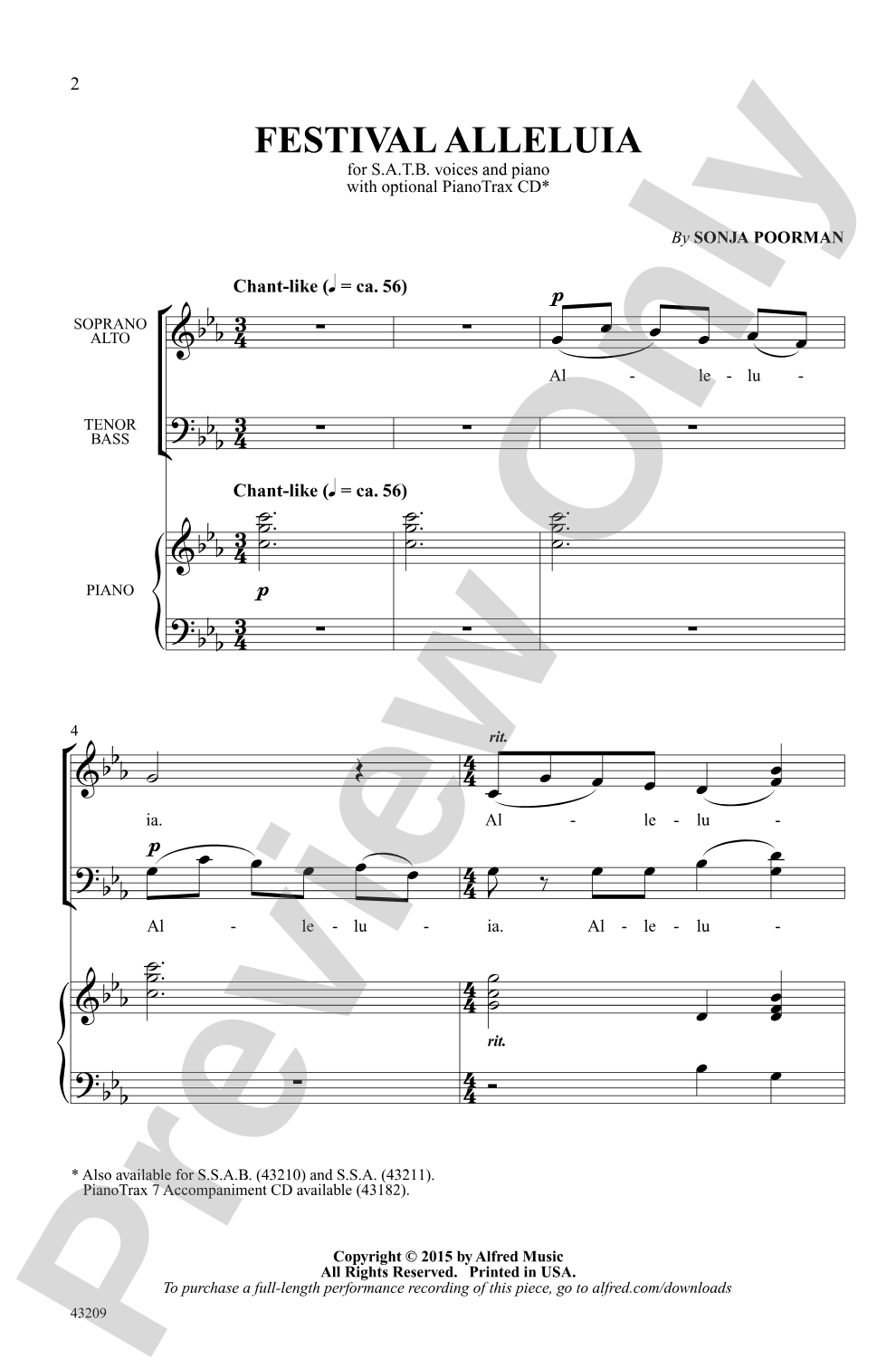
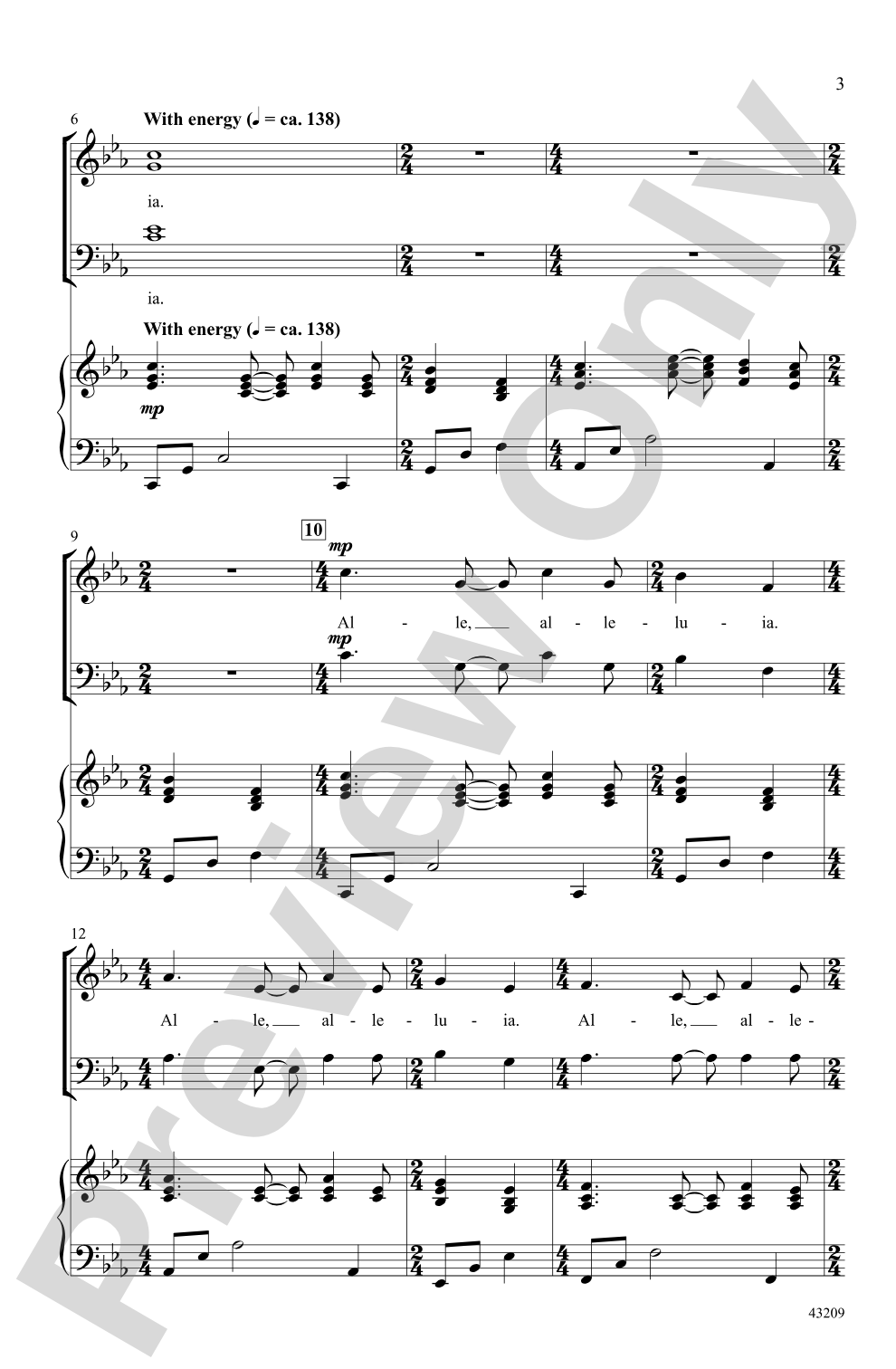
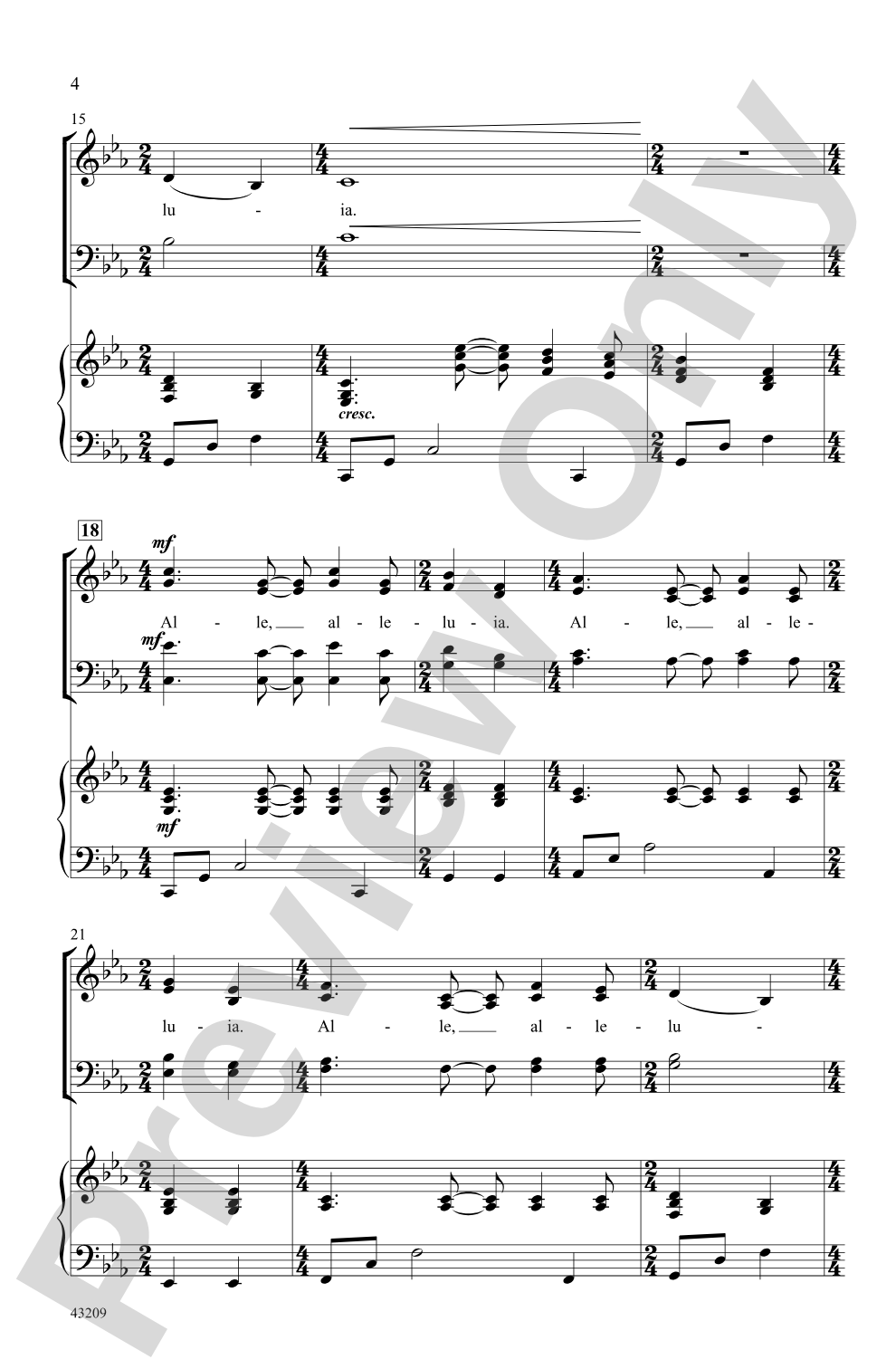
A solemn chant provides the compelling opening for this thrilling mixed-meter piece. Eventually the sequential melody, sung first in unison, develops into full homophonic writing. Resonant chords ring in all voicings and a glorious tonal shift heightens the final cadence.


Festival Alleluia: SATB Choral Octavo isn't in MakeMusic Cloud just yet...but it could be. Let us know you'd like to see it, and you'll help shape what comes next. In the meantime, start a free trial and dive into thousands of interactive titles your students can play along with today.
Request This Title
Tell us you want it.
Start Your Free Trial
Explore everything that's ready to play right now.
Sample Audio
1
Audio File
--:--
0:00
0:00
Sample Video
No sample videos found.
Additional Details
Series:
Alfred Choral Designs
Publisher:
Alfred Music
Page Count:
12
SKU:
00-PO-0003204
More about this title
About the Composer: Sonja Poorman

Sonja Poorman brings three decades of experience directing choirs across age groups and writing music for them. She holds degrees in music education from Ball State University and the University of Miami, foundations that shaped her work in both church and educational settings.
Her catalog spans sacred and educational compositions, reflecting a deep understanding of what works in rehearsal and resonates with singers at all levels. She continues to write and arrange music that serves the needs of working directors and choirs.
Why we love this
Poorman builds this piece on genuine compositional architecture: a solemn opening that draws singers in, a unison melody that unites the ensemble before expanding into rich harmonic textures, and a harmonic pivot that makes the final cadence feel earned rather than merely tacked on. Directors appreciate writing that respects mixed meter without making it gimmicky and that trusts singers to hear how homophonic voicing can be just as powerful as counterpoint.
What to expect
Festival Alleluia unfolds like a processional that gradually opens outward. It begins in reverent quiet, builds momentum through sequential repetition and ensemble unison, then blooms into resonant four-part harmony. The final harmonic shift lifts the sound skyward, leaving singers and listeners with a sense of arrival and brightness.
Who it's for
SATB choirs with basic facility in reading mixed meters and homophonic writing. The piece works well for intermediate to advancing high school and adult church choirs seeking sacred repertoire with textural variety and clear architectural development.
How to get the most out of it
- Honor the solemnity of the chant opening by allowing space and breath; resist the urge to rush into the sequential material that follows.
- When the melody moves into unison, ensure all sections sing with identical vowel shapes and diction so the unified sound carries real weight before dividing into voicings.
- Shape the sequential passages with subtle dynamic growth to keep momentum moving through the mixed-meter sections without disrupting the choral blend.
- Prepare singers for the tonal shift at the final cadence by rehearsing the harmonic color change in isolation; it should feel like a deliberate brightening, not a sudden jolt.
How to use it
Program this as a spring concert closer or for a festival appearance where a shorter sacred work with dramatic arc serves your programming. It pairs well in a set with more austere choral writing earlier in the program, creating contrast without requiring extended rehearsal time.
Skills your students will build
- Reading and executing mixed meters in a choral context
- Sustaining uniform vowel color and diction in unison sections
- Transitioning between unison melody and homophonic writing
- Understanding harmonic function and tonal color in final cadential gestures