Feliz Navidad (arr. Peter van Lonkhuijsen) Sheet Music Preview

Feliz Navidad (arr. Peter van Lonkhuijsen): SSAA Choral Octavo

As performed by Jose Feliciano / Arranged by Peter van Lonkhuijsen

Item: 35-DS00487969

Digital Download
$2.99
Description

Feliz Navidad (arr. Peter van Lonkhuijsen): SSAA Choral Octavo isn't in MakeMusic Cloud just yet...but it could be. Let us know you'd like to see it, and you'll help shape what comes next. In the meantime, start a free trial and dive into thousands of interactive titles your students can play along with today.

Sample Audio
No sample audio found.
Sample Video
Additional Details
Publisher: Hal Leonard
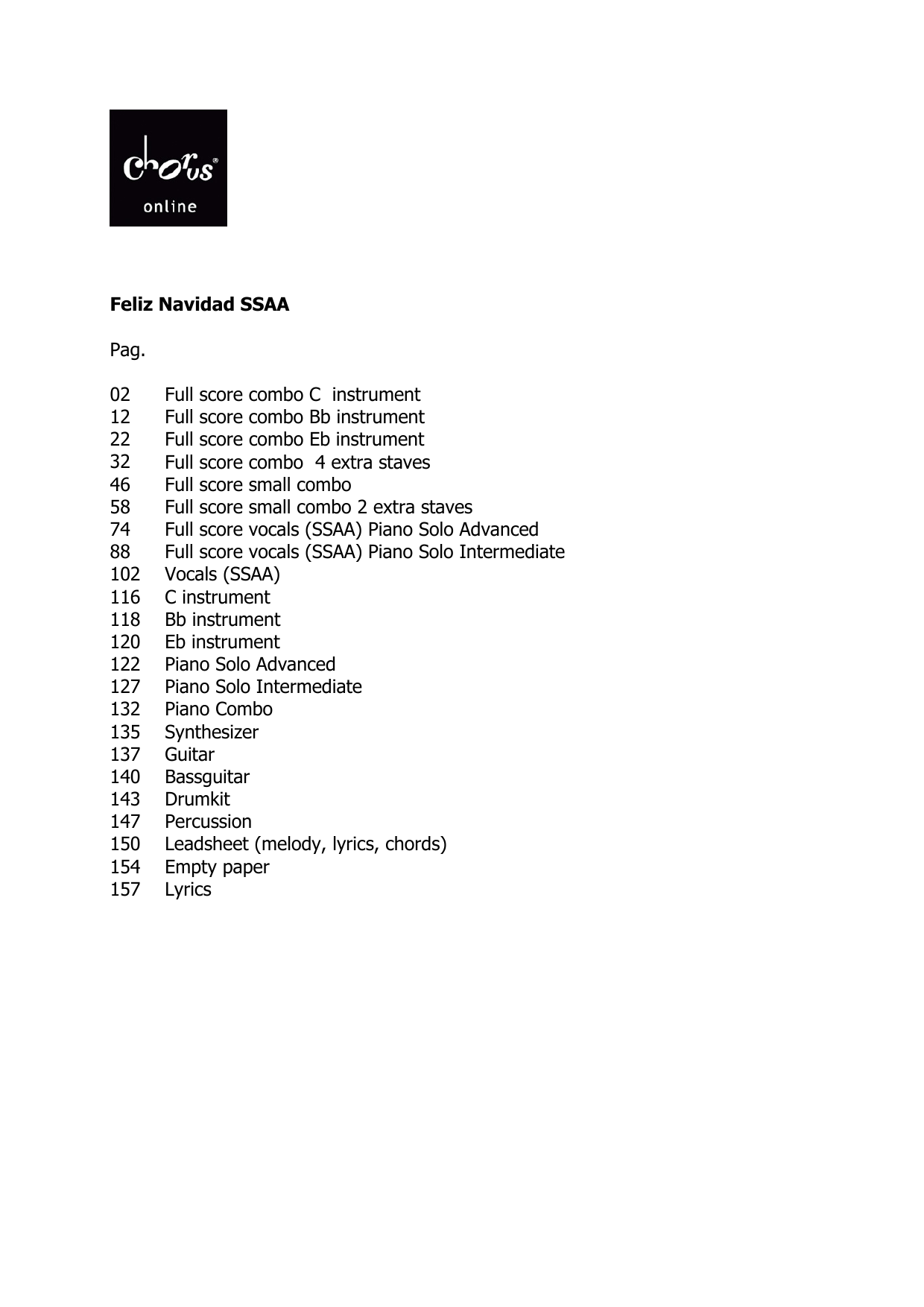
Page Count: 157
SKU: 35-DS00487969

More about this title

About the Artist: Jose Feliciano

Jose Feliciano is a Puerto Rican singer and songwriter whose 1970 recording of "Feliz Navidad" became an instant standard in the American holiday canon. A classically trained guitarist who lost his sight in infancy, Feliciano brought both technical mastery and emotional depth to a bilingual celebration of Christmas that transcended cultural and linguistic boundaries. His warm, conversational delivery and sophisticated harmonic sensibility shaped a song that has endured for over five decades.

Beyond this perennial holiday favorite, Feliciano's career spans Latin pop, soul, and easy listening, with numerous Grammy awards and a distinctive artistic voice that influences interpreters across multiple genres. For music educators, his work demonstrates how accessibility and artistry coexist; "Feliz Navidad" succeeds precisely because it balances simplicity with genuine musicianship.

Why we love this

Peter van Lonkhuijsen's arrangement captures the warmth and singability that made the original so beloved while respecting the bilingual text and harmonic identity. The SSAA voicing opens this perennial favorite to women's and youth choirs that might otherwise reach for a unison or SAB adaptation, giving singers access to genuine four-part harmony without complexity that obscures the song's essential character.

What to expect

Gentle and inclusive. The SSAA voicing creates a warm harmonic palette that sounds naturally balanced even in smaller ensembles. The familiar melody sits comfortably in each voice, while the arrangement respects the original's simplicity; you're not learning a completely reimagined version of a beloved song, but rather discovering new harmonic colors within something you already know.

Who it's for

Women's and youth choirs seeking a holiday standard that works for both secular and interfaith settings. Directors building December programs need reliable crowd pleasers that also offer musical substance; this arrangement delivers both without requiring advanced part independence or extended range demands.

How to get the most out of it

  • Lean into the conversational tone of the English verses; these sections benefit from a slightly softer dynamic that contrasts with the fuller texture of the Spanish refrain.
  • Balance the bilingual text by treating each language with equal weight and clarity; neither should feel like a translation of the other.
  • Let the harmonic progression breathe in the accompaniment; resist rushing the chord changes, which give the arrangement its warm, settled feeling.
  • Consider whether your ensemble will perform with or without the recorded accompaniment, and rehearse accordingly; the independence of your parts may shift depending on that choice.

How to use it

This works beautifully as an encore or closer on a mixed holiday concert, particularly when programmed after more elaborate seasonal works. It also serves well as a bridging piece between concert repertoire and pops or community sing segments, since audiences invariably respond with recognition and warmth. For directors building identity within a women's choir, it offers an accessible entry point to four-part singing while honoring both the English and Spanish traditions of the original.

Skills your students will build

  • Singing in a second language with clear articulation and authentic phrasing
  • Balancing soaring melody with supportive harmonic lines in four-part writing
  • Sustaining tone quality across a warm, moderate range without forcing volume
  • Responding to the emotional character of a piece rather than technical complexity as the primary rehearsal focus
  • Blending consonants and vowels across multiple voice parts in close-position chords

You May Also Like