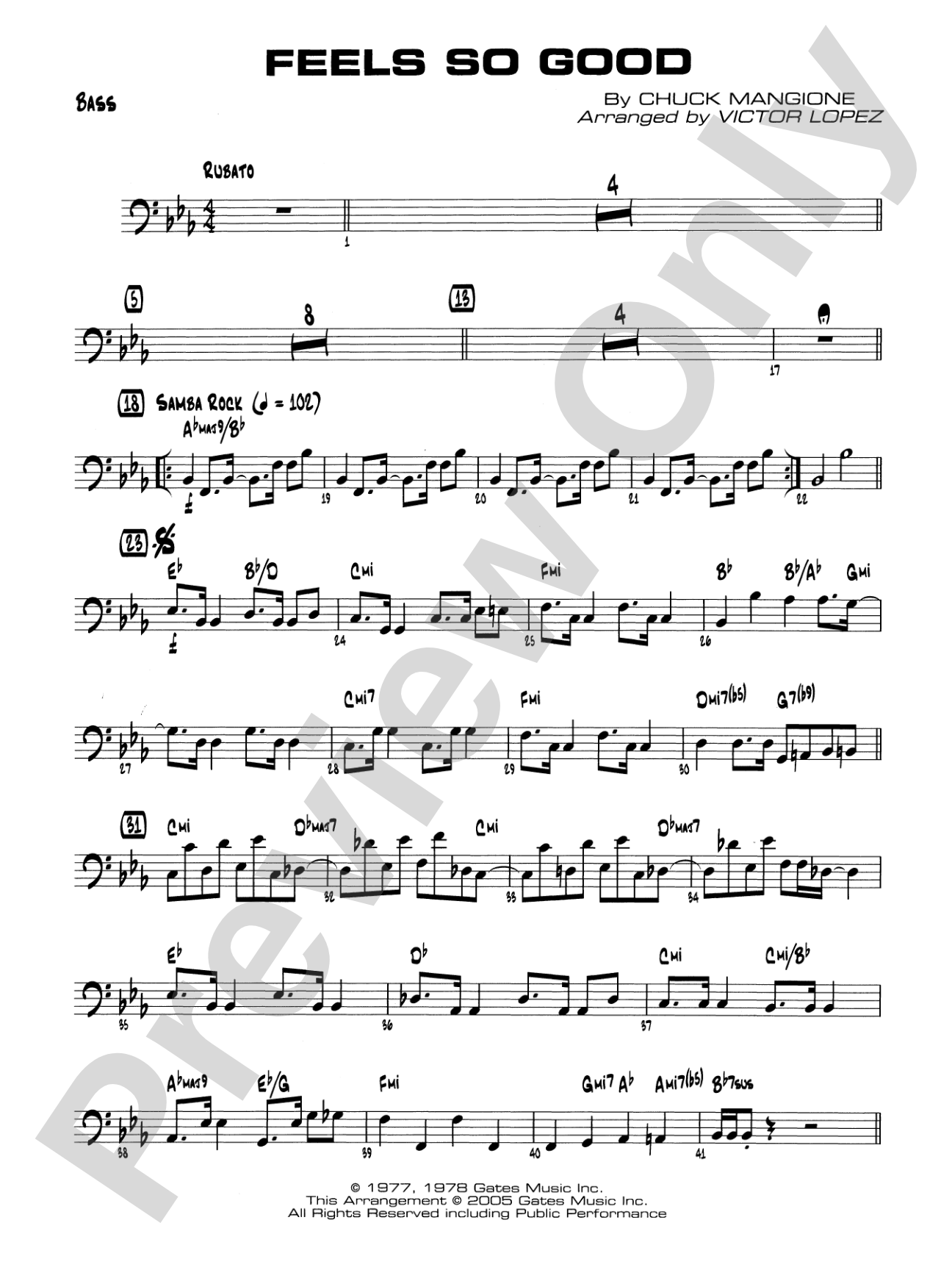
Feels So Good: String Bass Sheet Music Preview

Feels So Good: String Bass

By Chuck Mangione / arr. Victor López

Grade: 3 (Medium)

Item: 00-PC-0017274_SB

Digital Download
$3.00
Description
Chuck Mangione's huge hit arranged by Victor López, "Feels so Good" features the Flugelhorn solo (on the 1st trumpet part) throughout with the distinctive melody and then a written out solo along with a written tenor sax solo. The flugelhorn solo range is up to written high C but the solo is cued on the 1st tenor part. A well-known and appealing tune that will be enjoyed by both the band and the audience. (6:36)

Don't just read it, hear it, play along with it, and watch your students grow with it. In MakeMusic Cloud, Feels So Good: String Bass comes alive with professional accompaniment, adjustable tempo, and built-in practice tools that turn solo practice into real progress.

Sample Audio
0:00
0:00
Sample Video
Additional Details
Series: Jazz Band Series
Publisher: Alfred Music
Page Count: 98
SKU: 00-PC-0017274_SB

More about this title

About the Composer: Chuck Mangione

Chuck Mangione is a flugelhorn virtuoso and composer who brought the instrument into mainstream popular music during the 1970s and 1980s. His lyrical approach to jazz improvisation and gift for crafting accessible melodies made him one of the most commercially successful jazz artists of his era, proving that sophisticated musicianship and broad appeal weren't mutually exclusive.

Why we love this

Victor López's arrangement preserves the warmth and singability of the original while giving your ensemble a legitimate solo vehicle. The written-out flugelhorn and tenor sax solos mean your students engage with idiomatic jazz phrasing from the first rehearsal, and the melody is so inherently musical that both sections and soloists sound good immediately.

What to expect

Warm, unhurried, and deeply lyrical. The flugelhorn's intrinsic gentleness threads through the entire arrangement, creating space for reflection rather than flash. There's joy in the melody without sentimentality, and the written solos invite the ensemble to listen like they're in a small club rather than a concert hall.

Who it's for

Medium-level jazz ensembles looking for a recognizable, audience-friendly feature that doesn't sacrifice musicianship. Your students will engage immediately because most have heard this tune, and soloists get real material to sink their teeth into without technical requirements that exceed their abilities.

How to get the most out of it

  • Have your first trumpet practice the flugelhorn solo passages on trumpet first, then experiment with tone color and vibrato choices that approximate a flugelhorn's breathy, rounded character. The solo cue on first tenor saxophone makes this accessible even if your trumpet soloist isn't comfortable on flugelhorn.
  • Shape the written solos with rubato and dynamics that reflect the recording's intimate quality. These aren't high-energy burns; they're conversations between the soloist and the ensemble.
  • Keep the rhythm section locked but relaxed. The groove should breathe rather than push; let the waltz-time feel in López's arrangement settle naturally into the pocket.

How to use it

Slot this into a jazz concert as a refreshing contrast to high-energy charts and modal vehicles. It also works beautifully as a feature in mixed jazz and classical programs, showing audiences that jazz arranging can be just as sophisticated and moving as concert band repertoire.

Skills your students will build

  • Reading flugelhorn cues and alternate voicings on written parts
  • Executing written jazz solos with stylistic articulation and phrasing
  • Balancing ensemble texture to support rather than overshadow a soloist
  • Understanding swing feel and groove in a laid-back, lyrical context
  • Voice leading in contemporary jazz harmony

You May Also Like