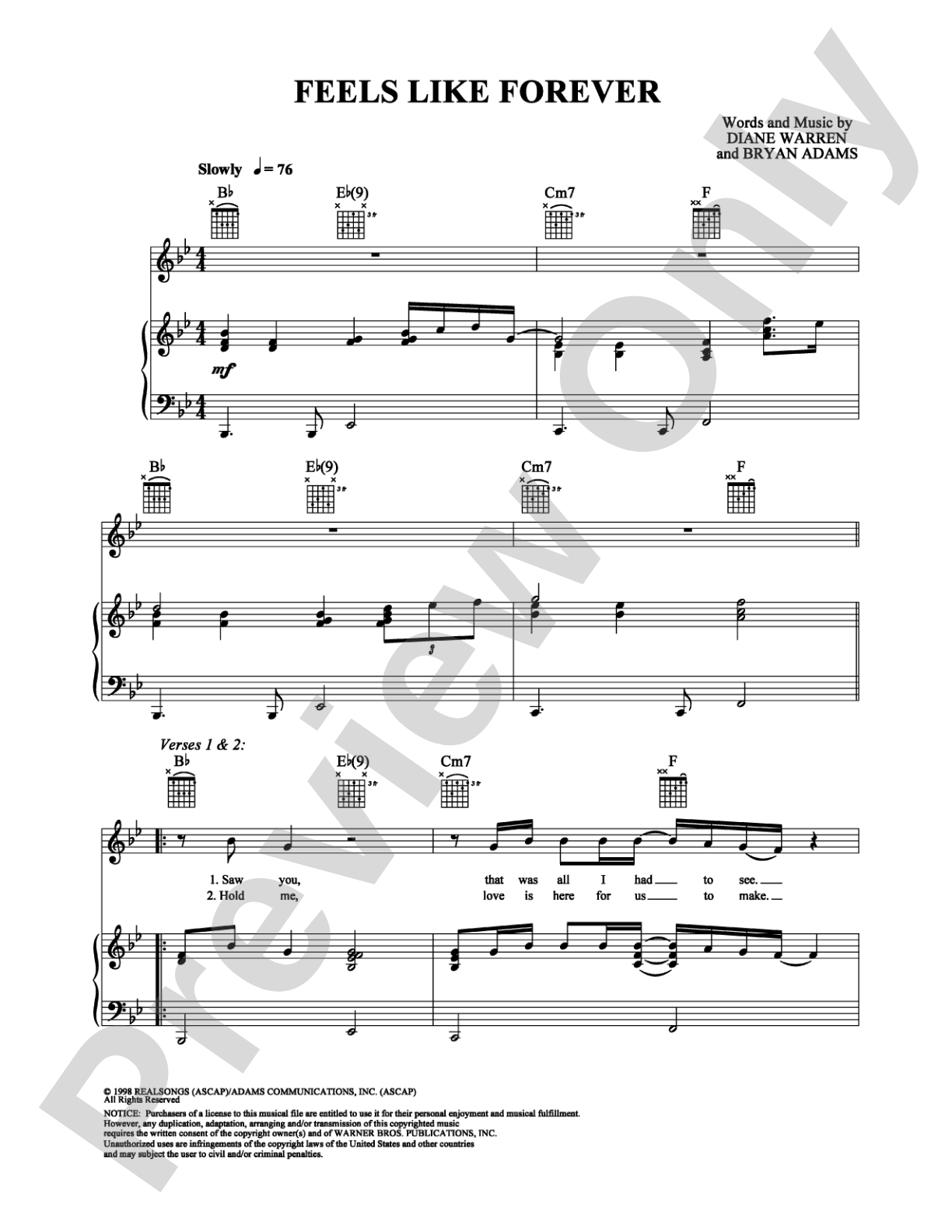
Feels Like Forever: Piano/Vocal/Chords Digital Sheet Music

Feels Like Forever: Piano/Vocal/Chords Digital Sheet Music

Diane Warren, Bryan Adams, Joe Cocker

Item: 00-PS-0004841

Digital Download
$3.99
Description

Feels Like Forever: Piano/Vocal/Chords Digital Sheet Music isn't in MakeMusic Cloud just yet...but it could be. Let us know you'd like to see it, and you'll help shape what comes next. In the meantime, start a free trial and dive into thousands of interactive titles your students can play along with today.

Sample Audio
No sample audio found.
Sample Video
Additional Details
SKU: 00-PS-0004841

More about this title

About the Artist: Joe Cocker

Joe Cocker (1944-2014) was a British rock and soul singer whose raspy, emotionally direct voice became one of the most distinctive in popular music. Rising to prominence in the late 1960s, Cocker built a career on interpreting songs with raw vulnerability and improvisational flair, whether tackling rock standards or soul-influenced material. His influence extends across generations of singers who value emotional authenticity over technical perfection.

Cocker's legacy in music education centers on his approach to phrasing and vocal character. He demonstrated how a non-classical voice could command attention through conviction, timing, and interpretive choices rather than range or technical display. For singers studying contemporary music, Cocker's recordings offer masterclasses in making emotional choices within popular song structures.

Why we love this

This arrangement captures the soulful, conversational quality that made Cocker's voice so compelling. The piano/vocal/chords format gives singers room to interpret the melody with the same kind of spontaneity Cocker brought to his recordings, while the chord symbols support accompanists in maintaining the song's bluesy, unhurried feel. It's an excellent choice for teaching how to sing with character and restraint within a popular song form.

What to expect

A intimate conversation with an unhurried pace, where every word lands with purpose. The song settles into blues-influenced harmonies and allows space for the voice to shape the melody, creating a recording that feels more like a performance moment than a polished studio take. There's an ease in the phrasing that invites listeners into the singer's emotional world.

Who it's for

Singers studying contemporary popular music who want to develop interpretive skills and phrasing nuance in a song-focused context. Accompanists looking for chord-based arrangements that encourage musical partnership rather than locked-in backing tracks. This works well for vocalists who connect with soul and rock influences in their singing.

How to get the most out of it

  • Study how Cocker phrases across the bar line and into sustained notes rather than hitting every beat squarely. The piano chart will support this conversational approach.
  • Treat the vocal melody as a suggestion for where to sit dynamically, not a rigid roadmap. Let the lyrics and emotional arc guide when you lean in and when you pull back.
  • Work with your accompanist on space and breathing. The piano part should breathe with the voice, especially in moments where the melody settles into sustained notes or conversational pauses.
  • Pay attention to how the chords shift underneath the melody. These changes often suggest emotional turns in the lyric that your voice should acknowledge.

How to use it

Feature this in a recital devoted to contemporary popular standards or singer-songwriter material where emotional directness matters more than technical display. It pairs well with other soul-influenced pop classics in a concert exploring how rock and soul voices have shaped modern song interpretation. Consider it for a collaborative recital between voice and piano students, where both performers have meaningful interpretive choices to make.

Skills your students will build

  • Phrasing across bar lines and phrase boundaries in popular song form
  • Interpreting melody with character and restraint rather than technical display
  • Communicating emotional intent through vocal choices like timing, dynamics, and note shaping
  • Collaborating with an accompanist using chord symbols as a flexible framework
  • Understanding and singing within blues-influenced harmonic progressions

You May Also Like