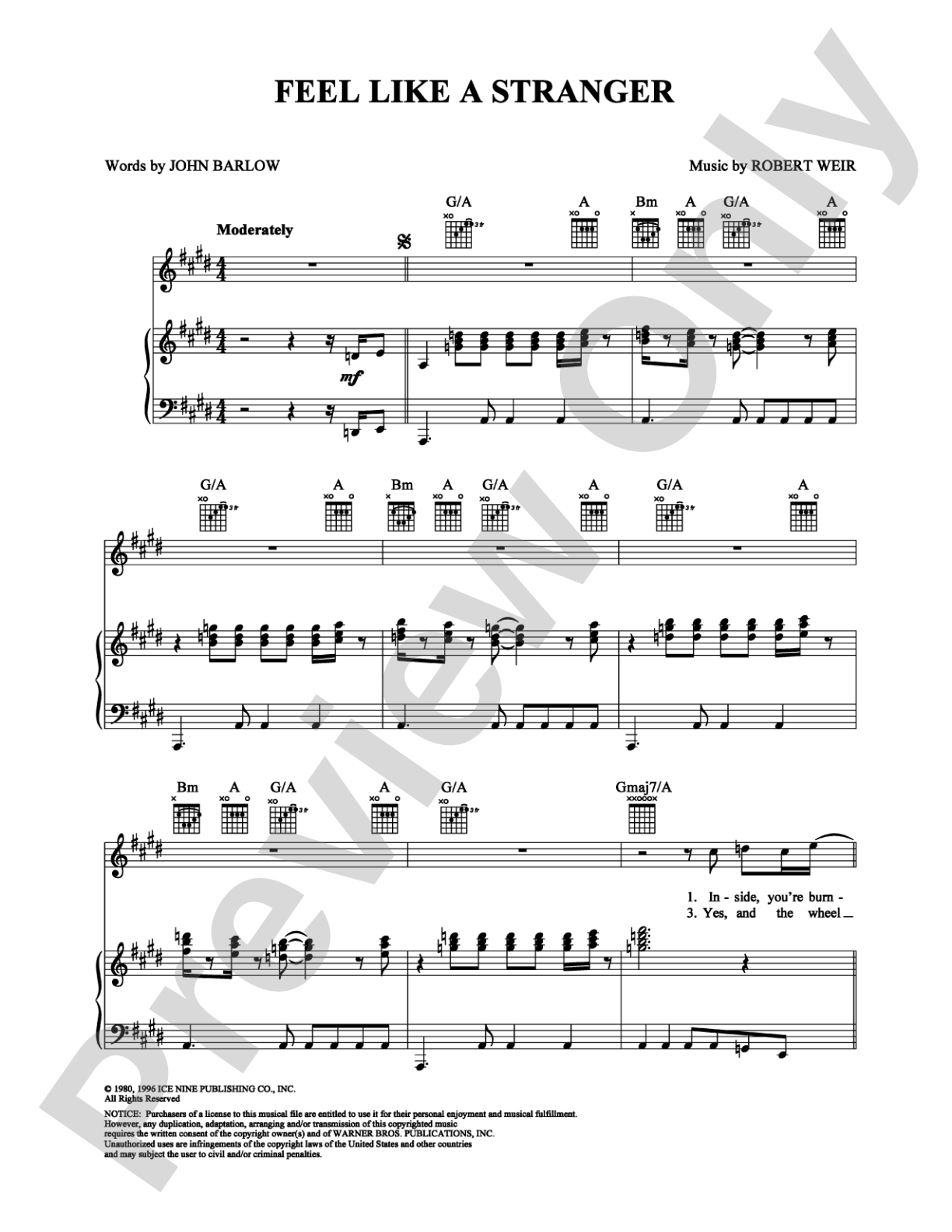
Feel Like a Stranger: Piano/Vocal/Chords Digital Sheet Music

Feel Like a Stranger: Piano/Vocal/Chords Digital Sheet Music

Grateful Dead, Bob Weir

Item: 00-PS-0002437

Digital Download
$2.95
Description

Feel Like a Stranger: Piano/Vocal/Chords Digital Sheet Music isn't in MakeMusic Cloud just yet...but it could be. Let us know you'd like to see it, and you'll help shape what comes next. In the meantime, start a free trial and dive into thousands of interactive titles your students can play along with today.

Sample Audio
No sample audio found.
Sample Video
Additional Details
SKU: 00-PS-0002437

More about this title

About the Artist: Grateful Dead

The Grateful Dead shaped American rock and popular music across five decades, from their emergence in the San Francisco Bay Area in the 1960s through their final performances in 1995. Their improvisational approach to live performance, intricate compositional structures, and devoted fanbase created a unique cultural phenomenon that continues to influence musicians across genres. Songs written by members Jerry Garcia, Bob Weir, Phil Lesh, and others have become standards in popular music education and performance.

For music educators, the Grateful Dead catalog offers rich material for understanding rock composition, lyrical storytelling, and the relationship between structure and improvisation. Their songs reward close listening and arrangement exploration, making them valuable resources for contemporary music study.

Why we love this

Feel Like a Stranger brings a recognizable rock anthem into the piano/vocal/chord format, offering singers and pianists a chance to explore the interplay between melody and harmony in a song built on strong musical momentum. The chord changes and rhythmic drive translate well to keyboard performance, giving accompanists material that's both engaging to play and familiar enough to connect with many performers and audiences. This is the kind of song that keeps students interested in expanding their repertoire beyond classical traditions.

What to expect

The song carries an urgent, propulsive energy beneath lyrics about searching and connection. The melody sits comfortably in mid-range vocal territory, allowing singers to focus on phrasing and emotional delivery rather than vocal strain. Piano voicings support the rock aesthetic while maintaining harmonic sophistication that rewards careful listening and intentional interpretation.

Who it's for

Pianists who arrange rock and pop music for their own performances, vocalists building contemporary song lists that reach beyond pop radio charts, and collaborative pianists working with singers in recital or performance ensemble settings. This digital resource works for high school and college musicians exploring 1970s rock songwriting and for adult amateur musicians rediscovering songs that shaped their musical taste.

How to get the most out of it

  • Lock the rhythm between vocal line and piano part; the song's energy comes from the forward motion, not rubato interpretations
  • Pay attention to chord voicings and inversions written in the chart; they shape the harmonic color and should not be oversimplified
  • Sing through the melody cleanly before adding interpretation; let the natural phrasing of the lyrics guide your breath marks rather than fighting against them
  • Use the piano as an anchoring voice rather than relegating it to pure accompaniment; the interplay between vocal melody and keyboard lines is central to the arrangement

How to use it

Pair this with other classic rock standards in a contemporary music or pop/rock ensemble unit. It works well as a recital piece for a pianist with vocalist or as a solo vocal performance in a jazz or contemporary music showcase. Consider programming it alongside other Grateful Dead songs or using it as an entry point for teaching students how chord charts translate between instrumental and vocal contexts.

Skills your students will build

  • Reading chord symbols and jazz-style notation in a rock context
  • Balancing melody-driven singing with harmonic accompaniment on keyboard
  • Understanding syncopation and rhythmic anticipation in rock arrangements
  • Interpreting and adapting written voicings to suit performance context and ensemble size

You May Also Like