
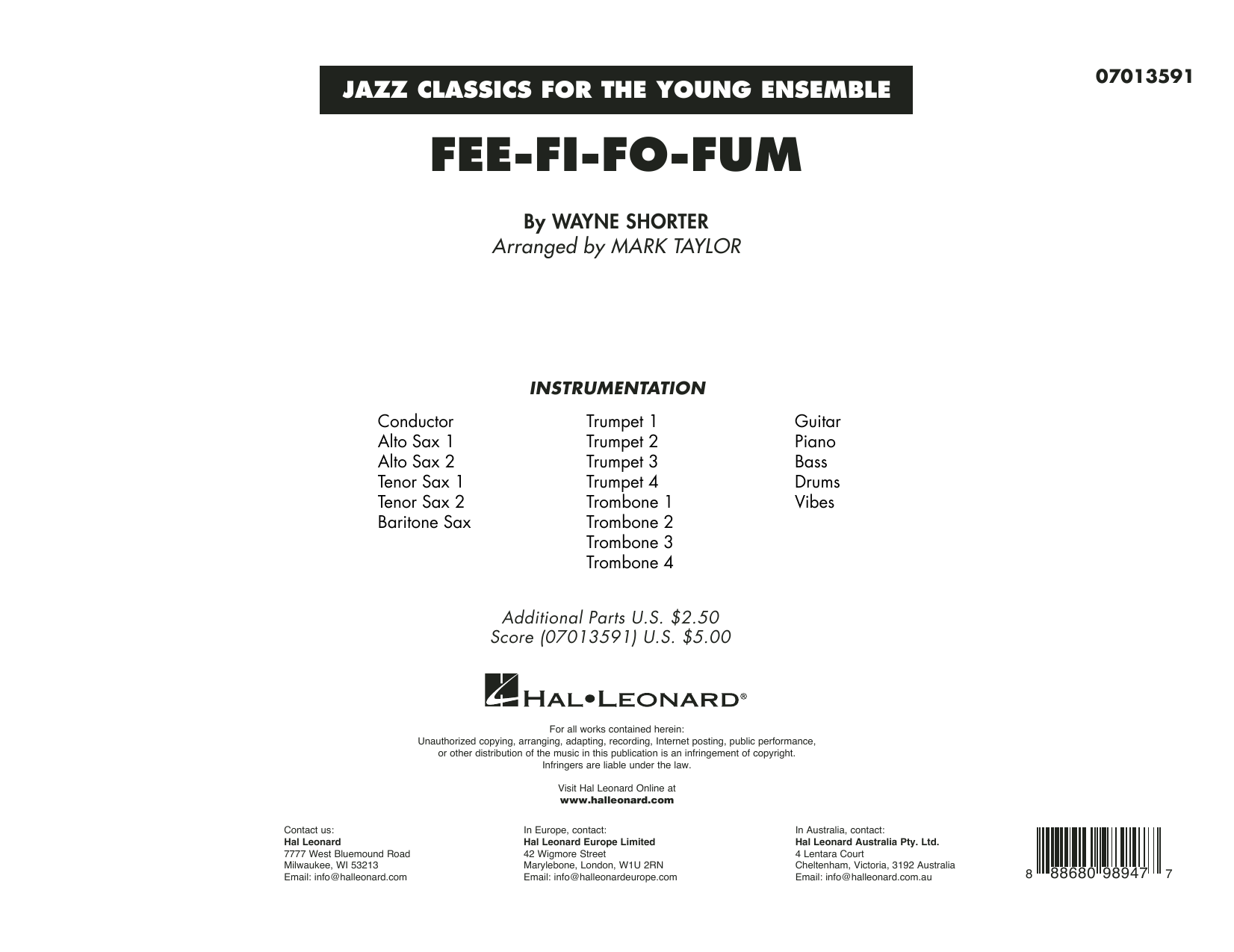

Fee-Fi-Fo-Fum (arr. Mark Taylor): Jazz Ensemble Conductor Score & Parts
Arranged by Mark Taylor
Grade: 3
Item: 35-PK00456758
$45.00
Pickup currently not available
Buy Extra Parts (Digital PDF Download)
Parts Added to Cart!
Description
From Wayne Shorter's influential 1964 album Speak No Evil, this jazz standard is transformed here for young bands by Mark Taylor. The relaxed swing feel and harmonies of the original are all retained, and solos for tenor sax and trumpet are included.


Fee-Fi-Fo-Fum (arr. Mark Taylor): Jazz Ensemble Conductor Score & Parts isn't in MakeMusic Cloud just yet...but it could be. Let us know you'd like to see it, and you'll help shape what comes next. In the meantime, start a free trial and dive into thousands of interactive titles your students can play along with today.
Request This Title
Tell us you want it.
Start Your Free Trial
Explore everything that's ready to play right now.
Sample Audio
No sample audio found.
Sample Video
No sample videos found.
Additional Details
Publisher:
Hal Leonard
SKU:
35-PK00456758
More about this title
About the Arranger: Mark Taylor
Mark Taylor is a prolific arranger whose work for young jazz ensembles has shaped jazz education curricula across North America. His arrangements balance authentic jazz vocabulary with accessibility, allowing student musicians to encounter real jazz standards without oversimplification.
Taylor's gift lies in preserving the harmonic and rhythmic integrity of the original compositions while calibrating the difficulty to match developing musicians. His scores have become staples in jazz programs because they respect both the student's current abilities and their capacity to grow.
Why we love this
Taylor's approach to this Wayne Shorter classic manages something difficult: he keeps the tune's sophisticated harmonic language and lazy swing pocket without burying younger players. The included solos for tenor sax and trumpet give your section leaders genuine solo space that sounds authentic, not watered down.
What to expect
Laid back and groovy, with a pocket-friendly swing that invites the band to settle into a comfortable groove rather than rush. The harmonic sophistication underneath the relaxed surface gives the tune a knowing quality that appeals to young musicians who want to sound contemporary and cool.
Who it's for
Jazz ensemble directors working with players at the intermediate level who want to teach real jazz arranging and authentic swing feel. This works equally well for a Grade 3 jazz band looking to expand their repertoire or for a mixed-ability ensemble where stronger players can anchor the solos.
How to get the most out of it
- Establish the swing feel early in rehearsal by playing the head together several times before diving into solo sections. The relaxation in this tune comes from collective rhythmic security, not from rushing the time.
- Balance the written accompaniment texture so that walking bass and comping chords sit behind the melody and solos rather than competing. A lighter touch from the rhythm section will let the soloists breathe.
- Record yourself taking the solos first, then play the recording back for your improvising musicians to hear what the solo section should sound like. Shorter's melodic language is distinctive enough that hearing an example accelerates their comfort.
- Pay attention to dynamics marked in the score during the head and tutti sections. These subtle curves prevent the tune from sounding flat and build listener engagement.
How to use it
Program this early in the year to establish your ensemble's swing vocabulary and to give soloists a vehicle for building confidence in front of an audience. It also pairs well with other Shorter material if you're building a unit on jazz composers or with standards from the same era.
Skills your students will build
- Playing and maintaining swing eighth-note feel within a jazz ensemble texture
- Improvising single-chorus solos over jazz harmonic changes
- Comping and walking bass lines that support soloist phrasing
- Interpreting jazz articulation and dynamics from a lead sheet context
- Listening and responding to other soloists while maintaining time and harmony