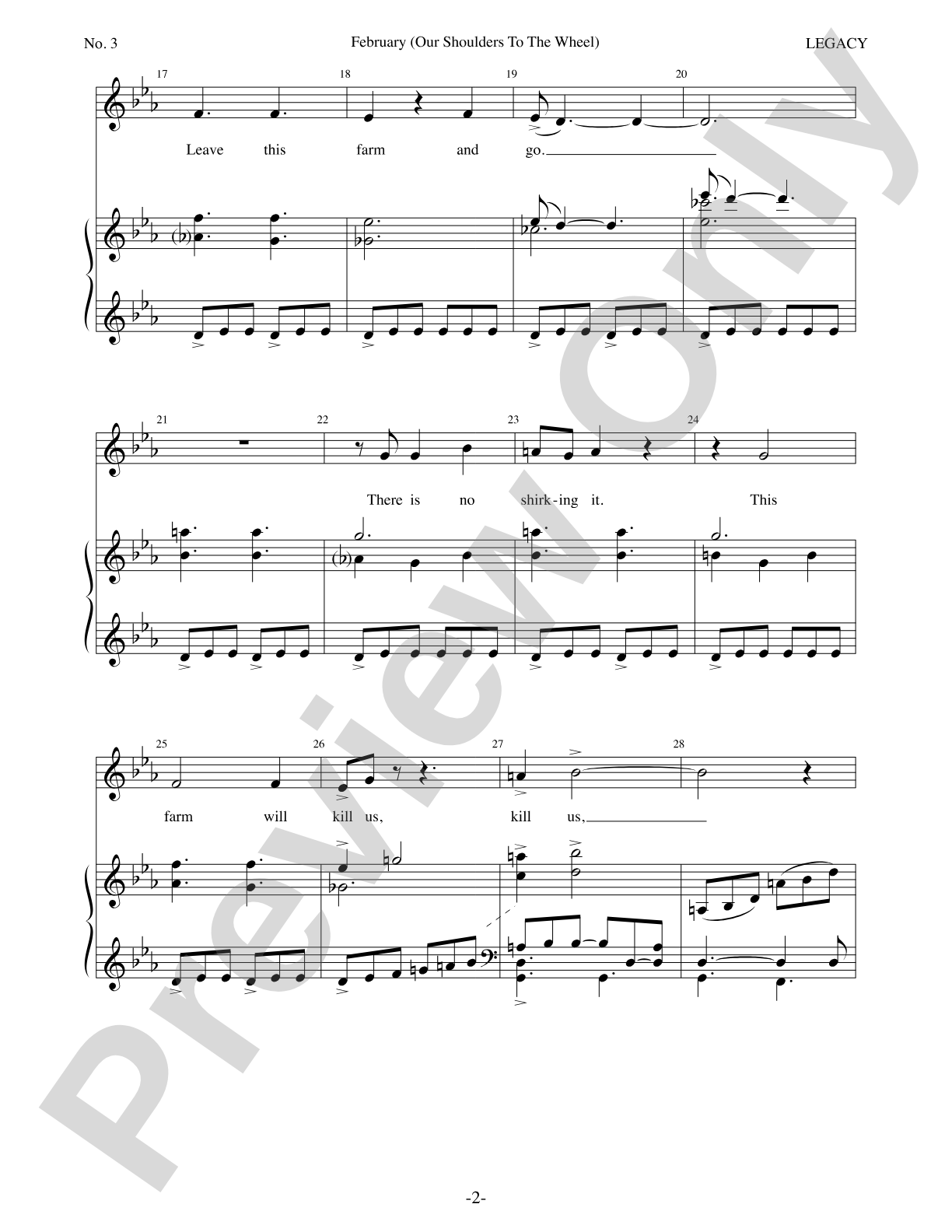
February (Our Shoulders To The Wheel) Sheet Music Preview

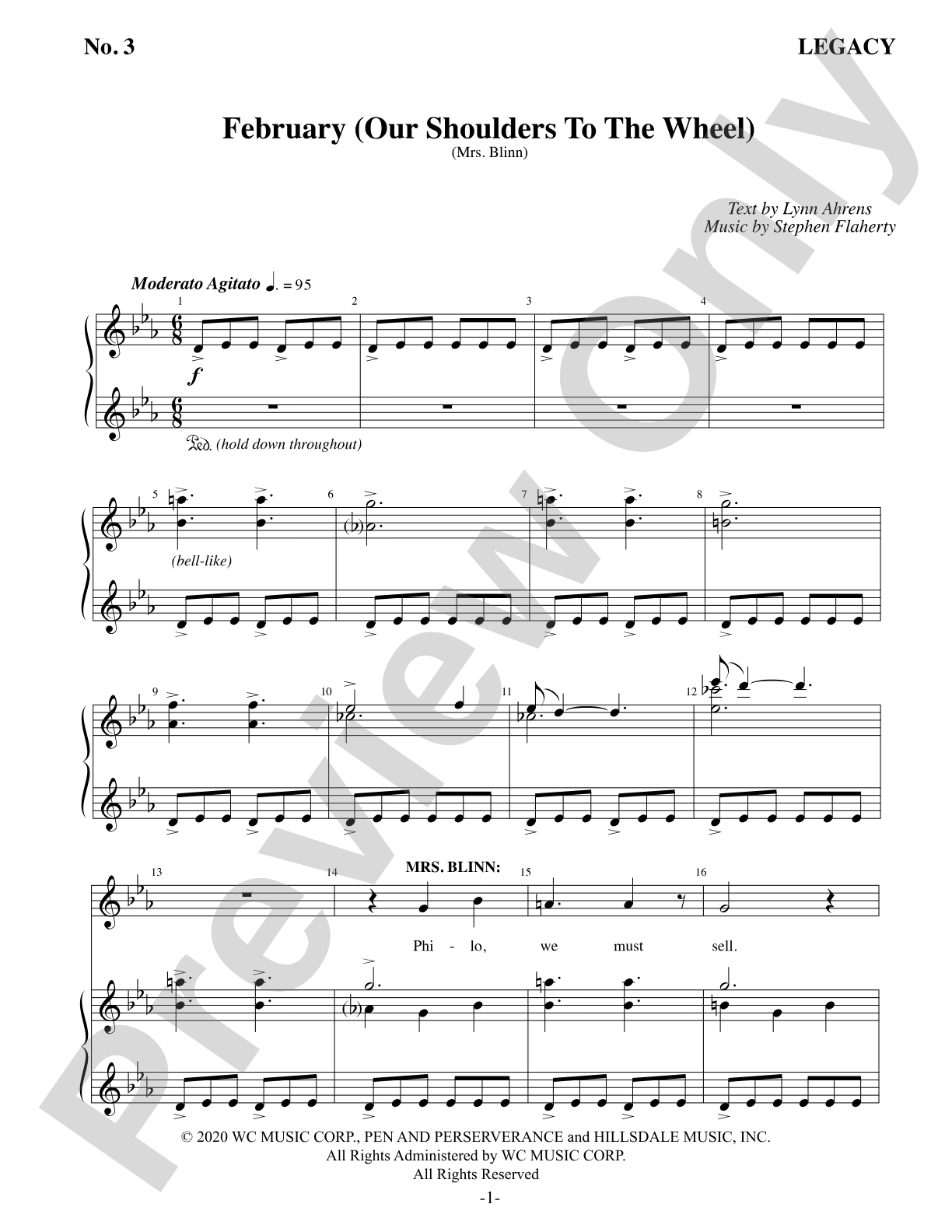
February (Our Shoulders To The Wheel): Piano/Vocal

Music by Stephen Flaherty / Lyrics by Lynn Ahrens

Item: 00-PS-0016334

Digital Download
$3.99

One moment…

Description
From the song cycle 1859: A Farmer's Diary on the album Legacy by Flaherty & Ahrens. 1859: A Farmer's Diary is based on excerpts from the diaries of Philo Blinn, a man who owned and worked a farm in Chatham, New York in the 19th century.

February (Our Shoulders To The Wheel): Piano/Vocal isn't in MakeMusic Cloud just yet...but it could be. Let us know you'd like to see it, and you'll help shape what comes next. In the meantime, start a free trial and dive into thousands of interactive titles your students can play along with today.

Sample Audio
No sample audio found.
Sample Video
Additional Details
SKU: 00-PS-0016334

More about this title

About the Composer: Stephen Flaherty

Stephen Flaherty has established himself as a composer for musical theater and concert works, creating music that bridges classical craftsmanship with contemporary accessibility. His collaborative partnerships, particularly in developing full-length song cycles and musical narratives, demonstrate a deep commitment to storytelling through music that speaks to both trained musicians and general audiences.

Flaherty's approach to composition prioritizes clear vocal writing and expressive piano accompaniment, making his work particularly valuable for singers and pianists seeking repertoire that balances technical interest with emotional authenticity. His willingness to explore American history and personal narratives through musical cycles has contributed significantly to the landscape of contemporary art song.

Why we love this

This song sits within a carefully crafted narrative cycle grounded in actual historical documents, giving singers material with genuine emotional weight rather than generic sentiment. The piano/vocal writing demonstrates real craft: the accompaniment supports and enhances the vocal line without overwhelming it, and the song's title gesture toward shared labor and resilience offers programming possibilities far beyond a simple recital slot. Pairing this with other songs from 1859: A Farmer's Diary creates a cohesive concert experience that educates audiences about American musical storytelling.

What to expect

The music carries the weight of honest labor and quiet determination, grounded in the daily reality of 19th-century agricultural life. There is resilience in the sound, neither sentimental nor bleak, with moments of lyrical beauty that emerge organically from the working rhythms and textures of the piano writing.

Who it's for

This song works for intermediate to advanced singers comfortable with contemporary art song repertoire and pianists who read fluently and bring musical maturity to accompaniment. It suits recital programming, song cycle performances, and educational settings where music history and American studies intersect.

How to get the most out of it

  • Treat the piano part as an equal partner, not mere accompaniment. Flaherty's writing often mirrors or comments on the vocal melody, so bring out these textural details without sacrificing the singer's line.
  • Research Philo Blinn's diary excerpts if possible. Understanding the historical context and the specific entry that inspired this song deepens interpretive choices about phrasing and emotional coloring.
  • Balance the work-song quality implicit in the title with genuine lyricism. These are not march-like rhythms but music rooted in the physical reality and human dignity of 19th-century farm life.
  • Coordinate with your pianist on tempo stability, especially if the song contains metric shifts or rhythmic complexity. A locked, confident partnership makes the narrative clearer for listeners.

How to use it

Program this as part of a thematic recital exploring American identity, rural life, or historical narratives in music. Alternatively, present the complete 1859 cycle as a concert work, allowing the individual songs to build a unified dramatic arc. It also serves well in educational performances that connect music to social studies, history, or literature curricula.

Skills your students will build

  • Reading and interpreting contemporary art song notation
  • Sustaining legit vocal production over rhythmic or metric complexity
  • Collaborative ensemble skills between vocalist and pianist
  • Historical context and emotional authenticity in interpretation
  • Navigating the relationship between text and musical setting

You May Also Like