
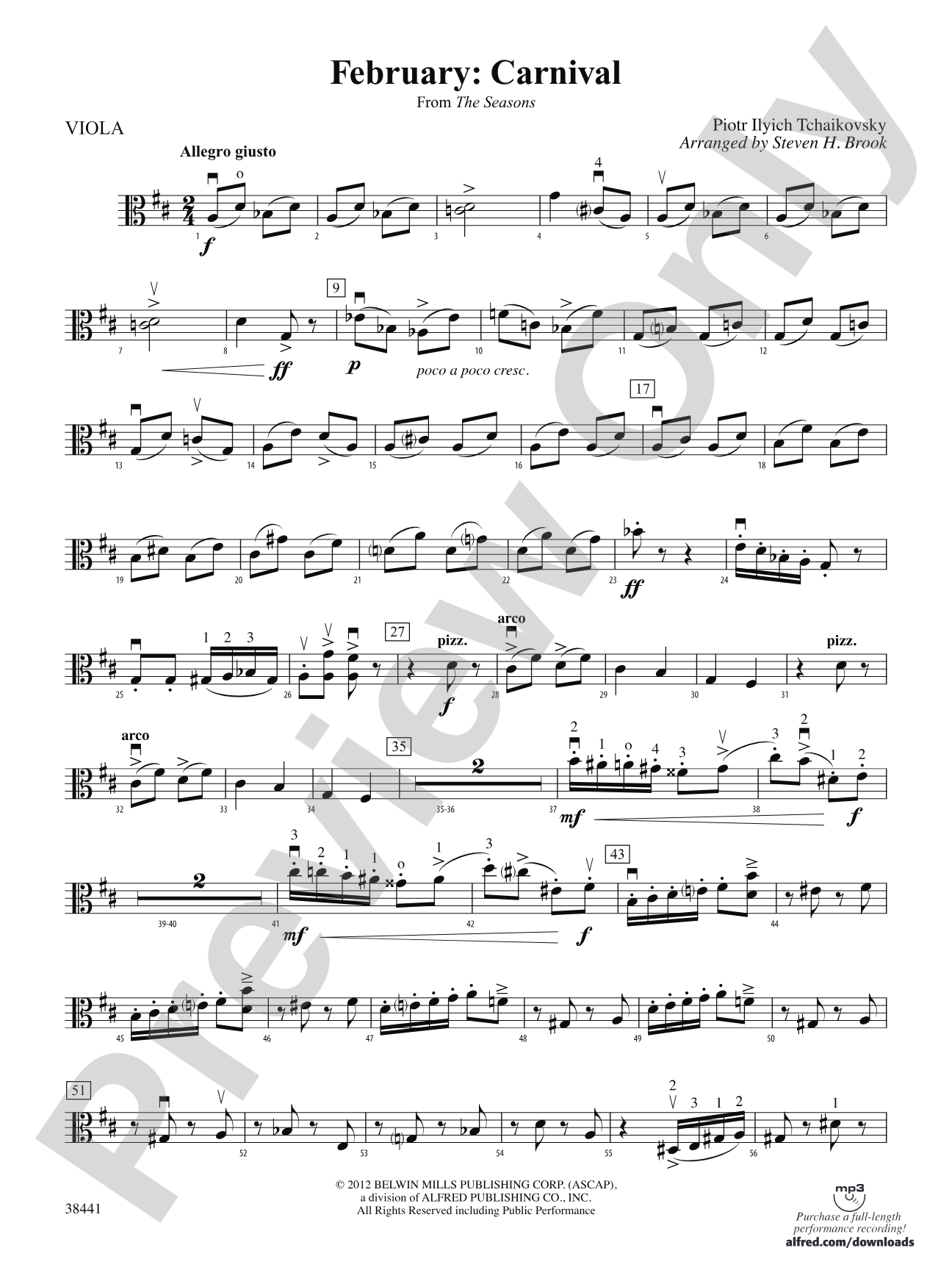

February: Carnival (from The Seasons): Viola
By Piotr Ilyich Tchaikovsky [Peter Ilyich Tchaikovsky] / arr. Steven H. Brook
Grade: 4
Item: 00-PC-0015499_VA1
$5.99
Pickup currently not available
Description
A festive and joyous romp with the master! Calling for bravura as well as lyrical playing, this arrangement is sure to please both audience and performer alike. The interplay between the instruments provides moments for each section to shine and will help take ensemble skills to the next level. Tchaikovsky's rich musical vocabulary offers an excellent opportunity to develop chromatic fingering skills and enhance note-reading abilities. A challenging yet quite attainable piece.


Don't just read it, hear it, play along with it, and watch your students grow with it. In MakeMusic Cloud, February: Carnival (from The Seasons): Viola comes alive with professional accompaniment, adjustable tempo, and built-in practice tools that turn solo practice into real progress.
Open in the Player
Jump straight in and assign it today.
Start Your Free Trial
Open this title and explore the full library in minutes.
Sample Audio
1
Audio File
--:--
0:00
0:00
Sample Video
No sample videos found.
Additional Details
Series:
Belwin Concert String Orchestra
Publisher:
Alfred Music
Page Count:
124
SKU:
00-PC-0015499_VA1
More about this title
About the Composer: Piotr Ilyich Tchaikovsky
Piotr Ilyich Tchaikovsky (1840-1893) was a Russian Romantic composer whose gift for melody and orchestration fundamentally shaped concert music worldwide. His ballets, symphonies, and concertos remain central to the repertoire, performed constantly by professional orchestras and student ensembles alike.
Tchaikovsky's orchestral writing is both transparent and rich, making his work ideal for developing musicians. The Seasons, a set of twelve piano pieces each representing a month, showcases his ability to capture mood and character through straightforward harmonic language and memorable themes. String players benefit enormously from studying his work, as his string writing demands both technical facility and musical sensitivity.
Why we love this
Steven H. Brook's arrangement brings the jubilant energy of this carnival movement to your ensemble while respecting Tchaikovsky's voice. The orchestration gives every section meaningful material and clear moments to contribute, making it as rewarding to rehearse as it is to perform. At Grade 4, it strikes the exact balance between musical ambition and technical accessibility that keeps students engaged and excited.
What to expect
Tchaikovsky's carnival bursts with color and motion. The piece sparkles with rhythmic vitality and alternates between joyous, almost dance-like themes and more lyrical, singing passages that allow the ensemble to demonstrate warmth and control. Throughout, there is an irresistible sense of festivity and celebration.
Who it's for
String orchestras at the high school level or advanced middle school with solid ensemble cohesion and competent readers in all sections. This work rewards directors who have built their programs to the point where sectional independence is secure and students can manage both technical demands and musical expression.
How to get the most out of it
- Establish a steady, energetic tempo from the downbeat. The festive character depends on forward momentum, but avoid rushing the faster sixteenth-note passages. Let the rhythm breathe naturally rather than pushing.
- Shape phrases with the dynamics marked in the score. The contrast between forte and piano sections creates the sparkle that makes this arrangement sing; resist flattening these contrasts.
- Attend closely to the interplay between sections. When one group has the primary melody, others provide rhythmic or harmonic support. Balance these roles carefully so that accompanying figures remain audible but subordinate.
- Coordinate vibrato across sections during sustained chords and lyrical passages. Unified vibrato in the violins especially will enhance the richness of Tchaikovsky's harmonic language.
How to use it
Program this as a concert opener or as part of a Romantic era showcase. Its cheerful energy works particularly well on a spring concert or as a contest piece, where audiences and adjudicators respond to its accessibility and immediate appeal. Pair it with a more introspective work to create programming balance.
Skills your students will build
- Chromatic fingering patterns across all string positions
- Reading varied rhythmic figures including sixteenth-note runs and syncopation
- Dynamic contrast and phrasing across full ensemble passages
- Sectional balance and ensemble coordination in fast-moving textures
- Intonation control in sustained chords and sustained vibrato passages