
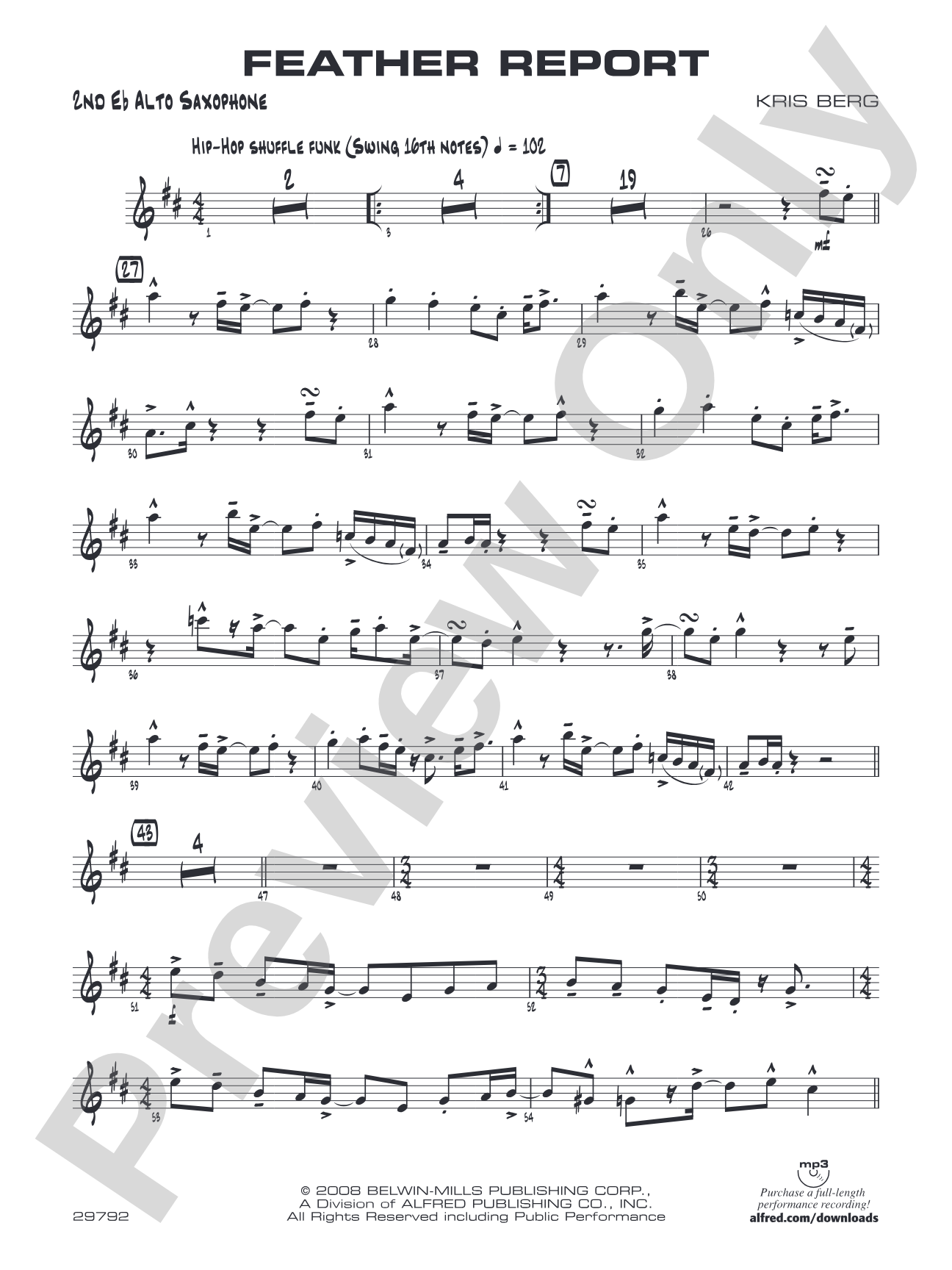

Feather Report: 2nd E-flat Alto Saxophone
By Kris Berg
Grade: 3 (Medium)
Item: 00-PC-0017136_AX2
$3.00
Pickup currently not available
Description
With the distinct flavor of the group Weather Report, writer Kris Berg continues his successful string of chicken-related jazz ensemble titles with Feather Report. A superb chart with a hip-hop/shuffle-swing kind of groove and a written-out tenor solo, although other players can handle the simple two-chord solo section. Some meter changes from 4 to 3 and back, but nothing dangerous. Lead trumpet range is to written A above the staff (optional C). Brass players have a tough blow in this one, but it's worth it. Very hip chart and another winner from Kris Berg. (6:17) This title is available in MakeMusic Cloud.


Don't just read it, hear it, play along with it, and watch your students grow with it. In MakeMusic Cloud, Feather Report: 2nd E-flat Alto Saxophone comes alive with professional accompaniment, adjustable tempo, and built-in practice tools that turn solo practice into real progress.
Open in the Player
Jump straight in and assign it today.
Start Your Free Trial
Open this title and explore the full library in minutes.
Sample Audio
1
Audio File
--:--
0:00
0:00
Sample Video
No sample videos found.
Additional Details
Series:
Jazz Band Series
Publisher:
Alfred Music
Page Count:
120
SKU:
00-PC-0017136_AX2
More about this title
About the Composer: Kris Berg
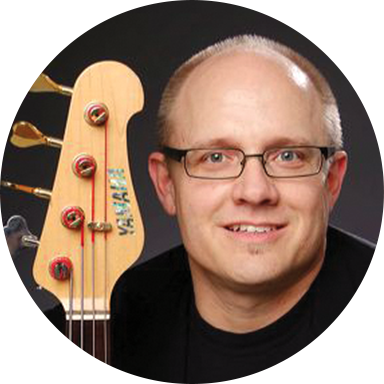
Kris Berg directs the jazz program at Collin County Community College in Texas, where he holds degrees in jazz studies from the University of North Texas at both the bachelor's and master's levels. His ensembles have earned multiple invitations to perform at the Montreux Jazz Festival, and he founded both the Collin Jazz Fest and the Texas All-Star Jazz Camp. Berg's original compositions and arrangements have been performed and recorded internationally, establishing him as a prolific voice in big band writing for Belwin Jazz (Alfred Publishing). He has also authored Bass Lines in Minutes, a widely adopted resource for jazz education.
As a clinician and artist for Yamaha Corporation of America, Berg has shared the bandstand with musicians including Kurt Elling, Randy Brecker, Peter Erskine, Bob Mintzer, and Clark Terry. His work appears regularly on festival circuits and jazz camps across the country, and he is endorsed by Walter Woods Amplifiers.
Why we love this
Berg's writing always balances contemporary groove vocabulary with genuine ensemble challenges. Feather Report delivers a funky, shuffle-swing pocket that bands find infectious while demanding real musicianship from the brass section, and the optional solo section accommodates ensembles at different levels of soloist development. It's the kind of chart that gets immediate student buy-in without sacrificing musical substance.
What to expect
Feather Report grooves with the sleek, layered sound of Weather Report, built on a shuffle-swing foundation that nods to hip-hop sensibility. The written tenor solo commands attention over a minimal harmonic landscape, while the brass writing leans heavy and contemporary, creating a contemporary funk-jazz atmosphere that feels both polished and street-level alive.
Who it's for
This chart serves intermediate to advancing jazz ensembles ready to tackle rhythmic sophistication and brass stamina. Grade 3 bands with solid fundamentals and at least one capable tenor saxophonist or alternate soloist will find this rewarding without feeling out of reach.
How to get the most out of it
- Lock the rhythm section into the shuffle-swing feel first; without a solid groove foundation, the hip-hop influence loses its punch. Have the drummer and bass player establish their interpretation before the full band rehearses.
- Balance the brass blend during the demanding passages. Berg's orchestration sits the brasses thick in the middle and upper register, so watch for tuning drift and encourage players to match dynamic shaping as a unified section.
- Shape the meter changes (4/4 to 3/4) with clear conductorial gestures. While the shifts are straightforward, they feel natural only when players hear the beat as continuous rather than lurching.
- If assigning the tenor solo to another player, keep it simple. The two-chord vamp is forgiving and opens space for any comfortable improviser, so don't over-rehearse the solo section; let it breathe.
How to use it
Program this as a concert closer or as the anchor to a set of contemporary jazz pieces that showcases your band's grooming and improvisation skills. At 6:17, it carries enough weight to stand alone or pair with a ballad and an up-tempo standard for a balanced jazz concert.
Skills your students will build
- Shuffle-swing and hip-hop influenced groove vocabulary
- Reading and executing meter changes between 4/4 and 3/4
- Melodic improvisation over a two-chord vamp
- Brass section balance and blend in contemporary big band voicings
- Listening and responding to written solo sections as accompanists