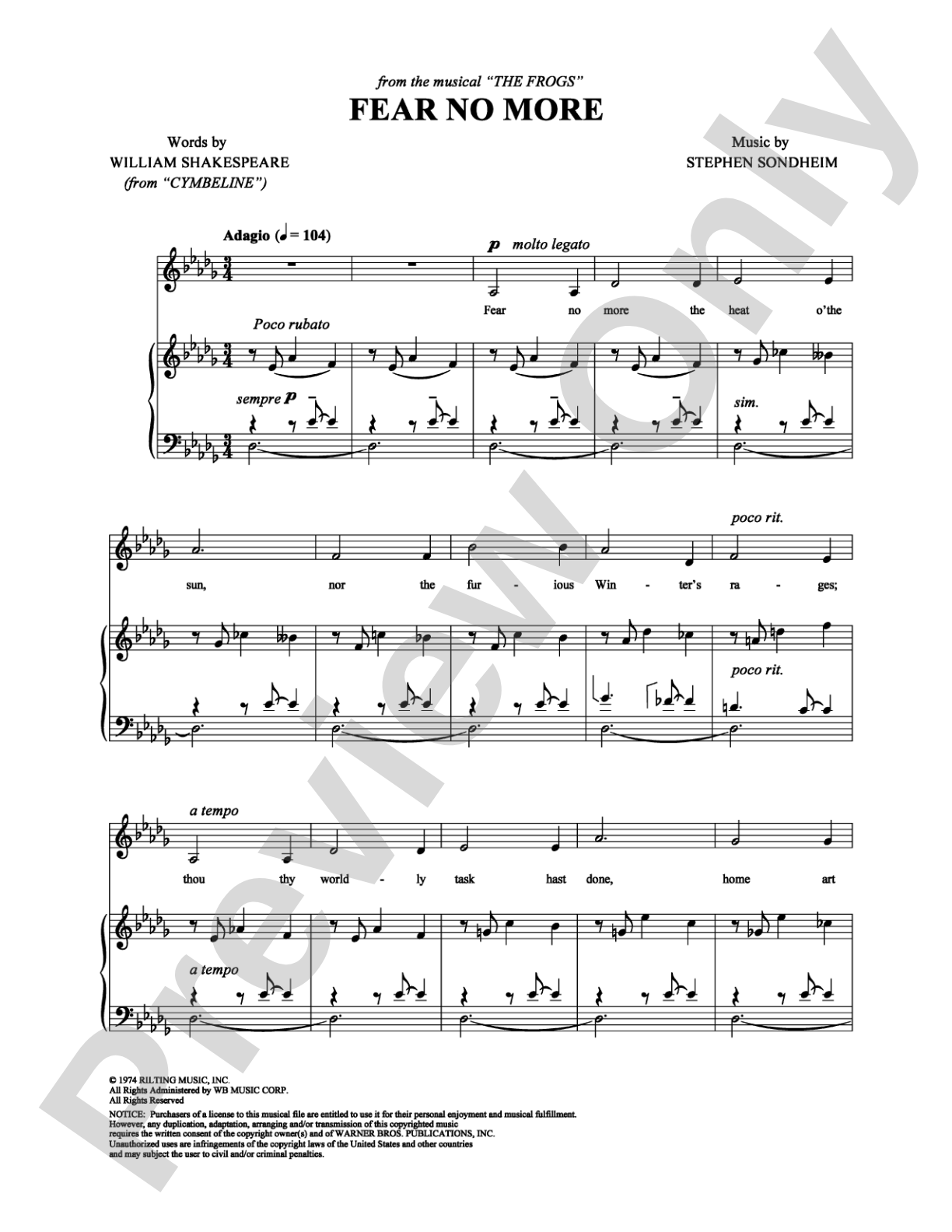
Fear No More: Piano/Vocal/Chords Digital Sheet Music

Fear No More: Piano/Vocal/Chords Digital Sheet Music

Stephen Sondheim

Item: 00-PS-0009703

Digital Download
$2.95
Description

Fear No More: Piano/Vocal/Chords Digital Sheet Music isn't in MakeMusic Cloud just yet...but it could be. Let us know you'd like to see it, and you'll help shape what comes next. In the meantime, start a free trial and dive into thousands of interactive titles your students can play along with today.

Sample Audio
No sample audio found.
Sample Video
Additional Details
SKU: 00-PS-0009703

More about this title

Why we love this

The piano/vocal arrangement gives singers a clear harmonic foundation while maintaining the flexibility to shape their own phrasing. Chord symbols make this accessible for pianists of varying levels, whether you're sight-reading an accompaniment or building interpretive choices from the ground up.

What to expect

The title signals a piece about courage and resolution. With piano and vocal melody supported by chord symbols, the arrangement gives singers room to breathe while the pianist shapes the emotional arc underneath.

Who it's for

Pianists and singers who want a ready-to-perform arrangement with chord symbols for flexibility. This works for solo vocalists with piano accompaniment, duets, or singers who want to collaborate with accompanists using the chord chart.

How to get the most out of it

  • Balance the vocal line so it sits comfortably above the piano texture; test the dynamic relationship during early rehearsals to ensure the singer isn't fighting against the accompaniment.
  • Work through chord voicings with your pianist before the first full run-through. Some pianists will prefer a fuller texture while others stay sparse; clarify expectations early.
  • Pay attention to breath placement in relation to harmonic movement. Mark natural pauses where the chord progression naturally resolves or shifts.
  • Record a scratch vocal line early and have your pianist practice to it. This prevents the accompaniment from drifting ahead of or lagging behind the melody.

How to use it

Pair this with other uplift-themed songs for a concert set, or use it as a standalone feature for a vocalist who connects with the emotional message. It works well in recitals, community performances, or educational showcases where singers are building confidence with accompaniment.

Skills your students will build

  • Reading melody and chord symbols together
  • Coordinating vocal phrasing with piano accompaniment
  • Interpreting chord voicings to support lyrical intent

You May Also Like