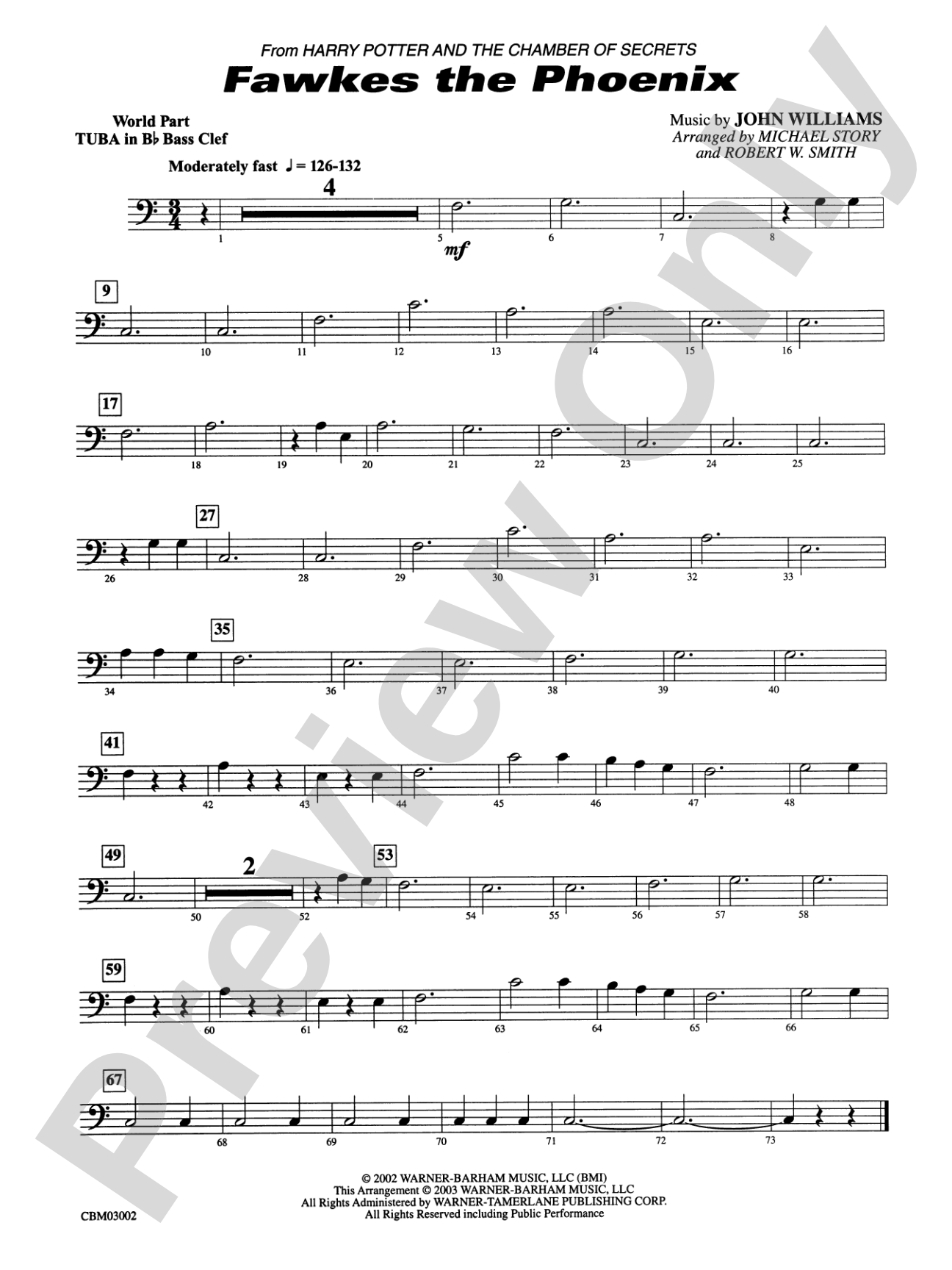
Fawkes the Phoenix (from Harry Potter and the Chamber of Secrets): WP B-flat Tuba B.C. Sheet Music Preview

Fawkes the Phoenix (from Harry Potter and the Chamber of Secrets): WP B-flat Tuba B.C.

By John Williams / arr. Michael Story and Robert W. Smith

Grade: 1 (Very Easy)

Item: 00-PC-0002326_TBBBC

Digital Download
$3.00
Description
The most memorable theme from John Williams' Harry Potter and the Chamber of Secrets film score has now been scored for the youngest learners by a pair of veteran arrangers, Michael Story and Robert W. Smith. A part of the Band Expressions series, this arrangement is prepared for use at the end of the first semester of instruction. It's rich and lush. Satisfaction guaranteed! (1:53)

For educational usage/non-profit performances only; for professional arrangements, visit our rental library at alfred.com/rental.

Don't just read it, hear it, play along with it, and watch your students grow with it. In MakeMusic Cloud, Fawkes the Phoenix (from Harry Potter and the Chamber of Secrets): WP B-flat Tuba B.C. comes alive with professional accompaniment, adjustable tempo, and built-in practice tools that turn solo practice into real progress.

Sample Audio
0:00
0:00
Sample Video
Additional Details
Series: Band Expressions
Publisher: Alfred Music
Page Count: 172
SKU: 00-PC-0002326_TBBBC

More about this title

About the Composer: John Williams

John Williams stands as one of the most prolific and celebrated film composers of the past 50 years. His work spans from Star Wars and Indiana Jones to Schindler's List and Lincoln, earning him five Academy Awards and numerous Grammy Awards. Williams brings symphonic orchestration and thematic clarity to every project, making his film scores natural bridges into band and orchestral literature for student musicians.

Why we love this

Story and Smith have captured the soaring, magical character of Fawkes' theme without oversimplifying it. First-semester students get to play genuinely beautiful orchestration with real harmonic movement, not watered-down melody lines. This is the kind of arrangement that makes young musicians feel like they're part of something grand.

What to expect

Warm, soaring, and mythical. The Phoenix theme has an ethereal quality that matches its magical subject; played by a young band, it conveys wonder and nobility without requiring advanced technical demands. There is genuine lushness in the harmony that makes the ensemble sound more mature than the grade level suggests.

Who it's for

This is ideal for first-year concert bands ready to step beyond basic rhythmic and melodic reading into ensemble sound and musicality. Directors seeking a recognizable, motivating theme that carries real artistic substance will find students engaged by both the familiar source and the quality of the arrangement.

How to get the most out of it

  • Balance the sustained chords behind the melody so the theme sings through clearly; resist the urge to let accompaniment parts grow louder as students gain confidence
  • Shape phrases with slight dynamic swells rather than holding every note at the same level; the phoenix theme breathes in four-bar gestures
  • Bring out inner voices where they carry counter-melody or harmonic color; younger bands often focus only on the top line and miss the fullness Story and Smith wrote
  • Let the piece breathe at phrase endings without rushing into the next section; the lush orchestration deserves space

How to use it

Perform this near the end of a first-semester concert to showcase how far students have come in ensemble balance and phrase control. It pairs well with lighter character pieces or folk arrangements and works as a strong closer that leaves audiences impressed by the band's musicianship. The Halloween association also makes it a natural choice for October or November programs.

Skills your students will build

  • Sustaining long tones while maintaining consistent tone quality
  • Playing balanced harmonic texture with inner voices carrying equal musical weight
  • Shaping four-bar phrases with dynamic direction and breath
  • Reading accidentals in harmonic progressions
  • Responding to a conductor's gesture in music with lyrical rather than merely technical character

You May Also Like