

Fauré: Dolly Suite, Opus 56 - Piano Duet (1 Piano, 4 Hands): Piano Duet (1 Piano, 4 Hands)
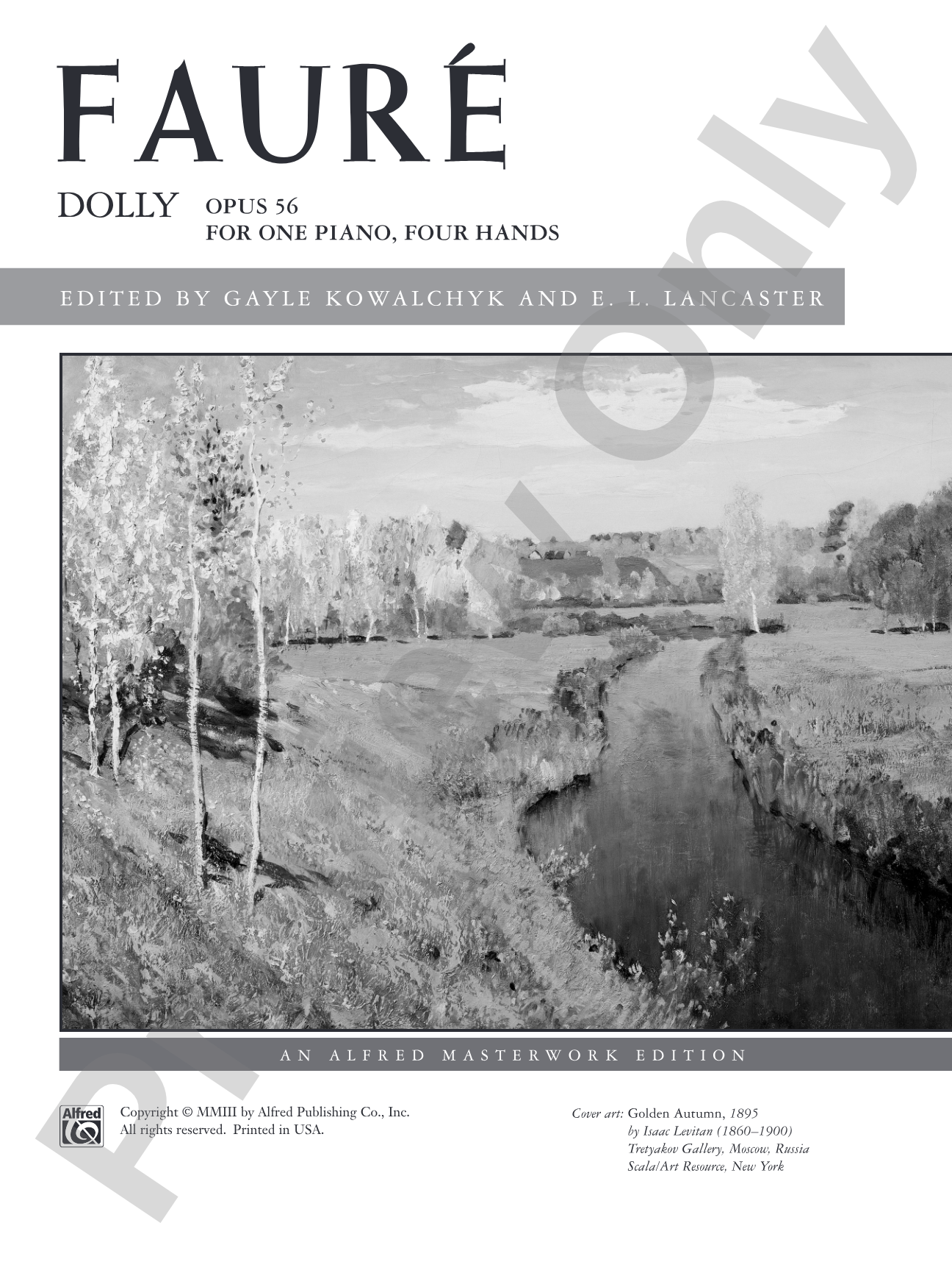
For One Piano, Four Hands
By Gabriel Fauré / ed. Gayle Kowalchyk and E. L. Lancaster
Level: Late Intermediate
Item: 00-PS-0017643
$10.99
Pickup currently not available
Related Items
Fauré: Dolly Suite, Opus 56: Piano Duet (1 Piano, 4 Hands) Book |
$10.99
|
View |
Description
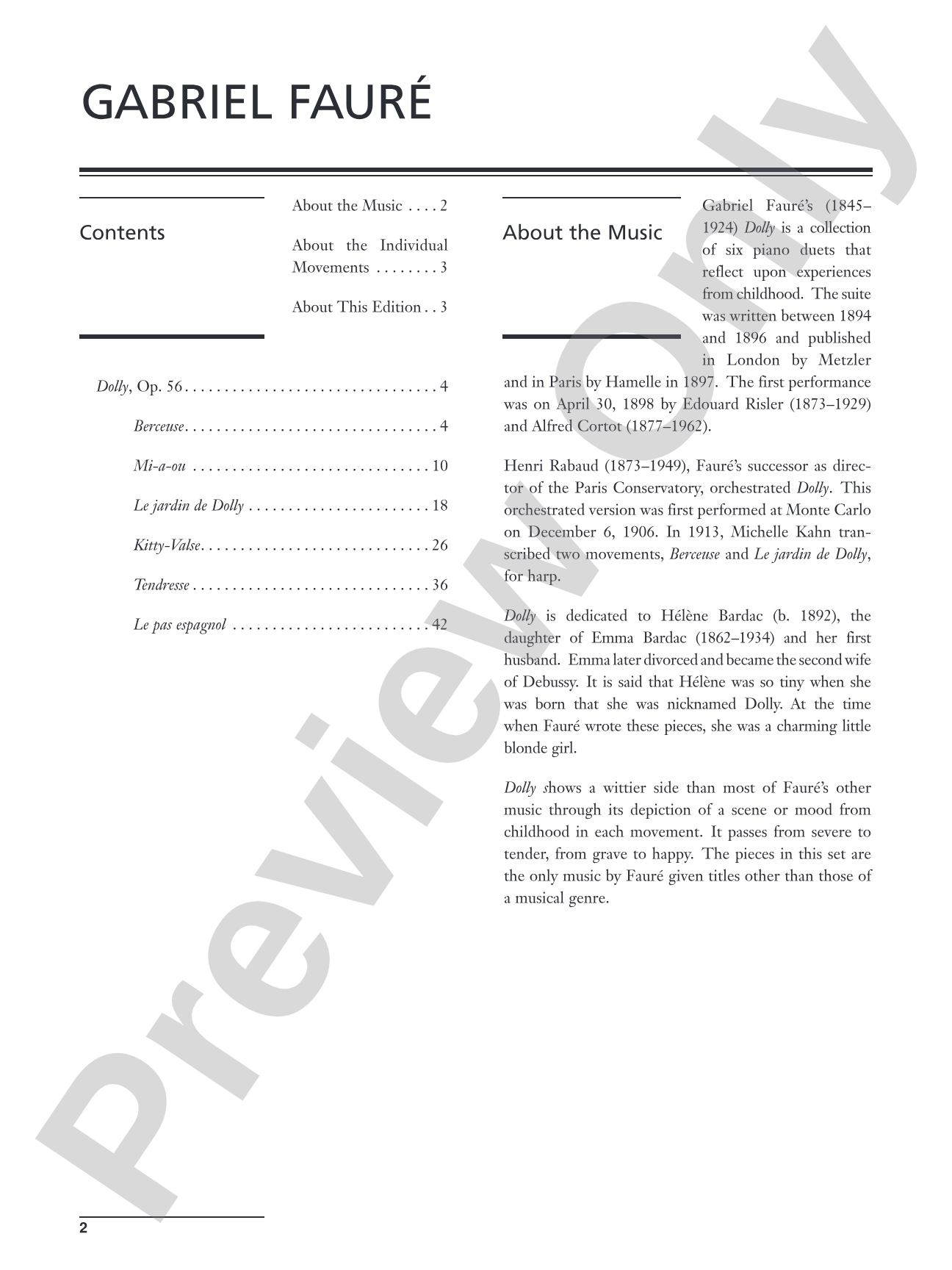
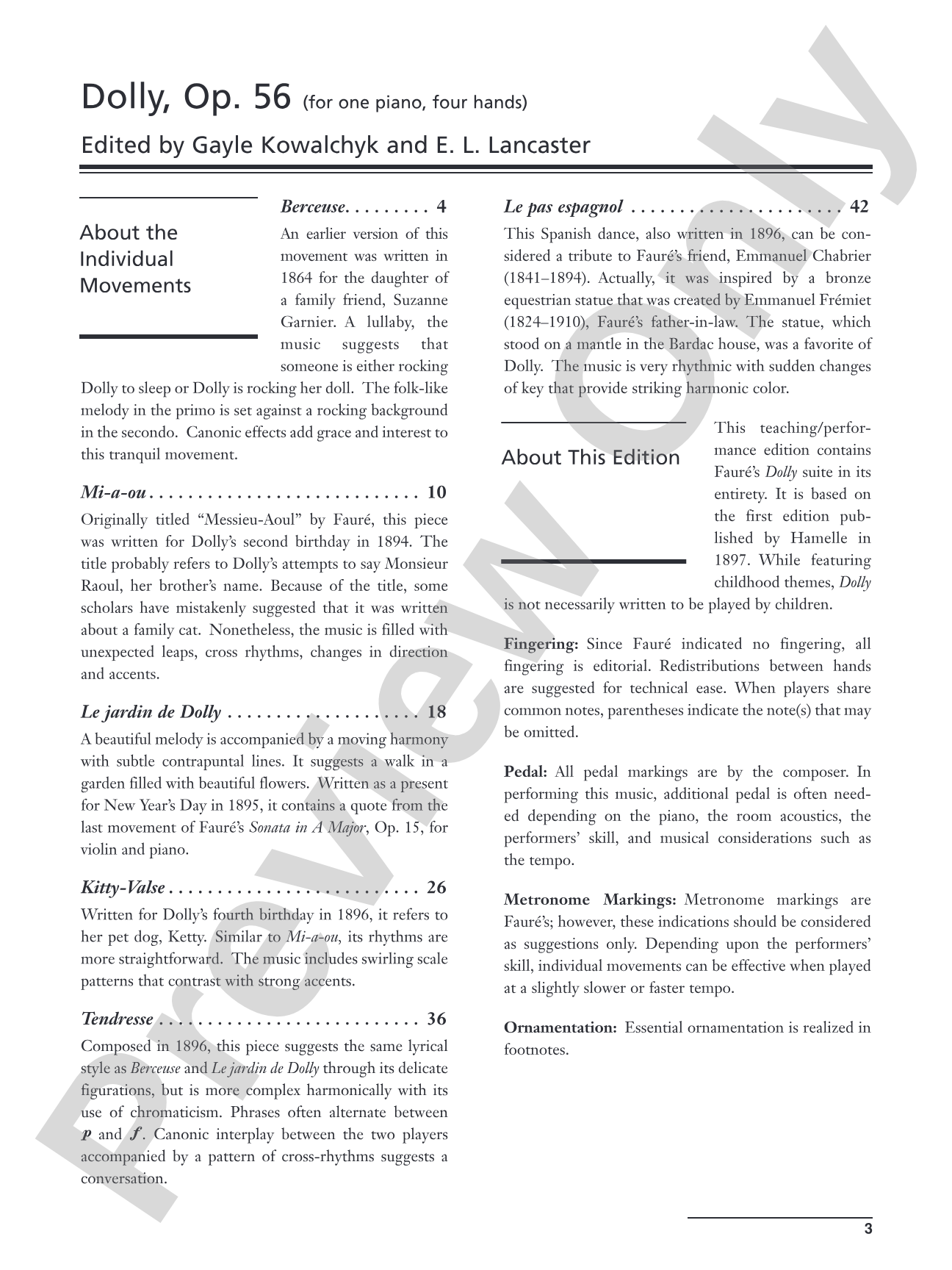
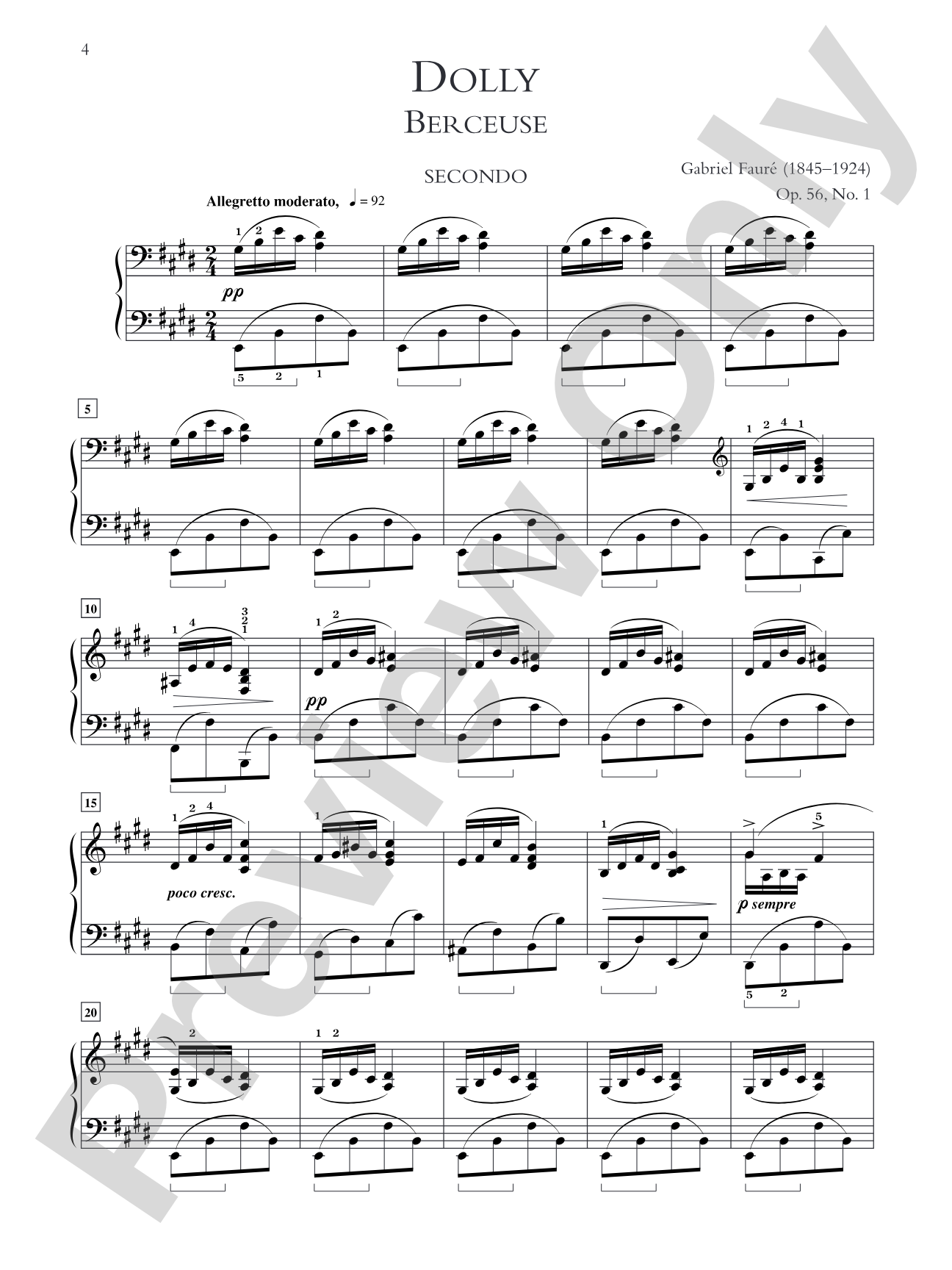
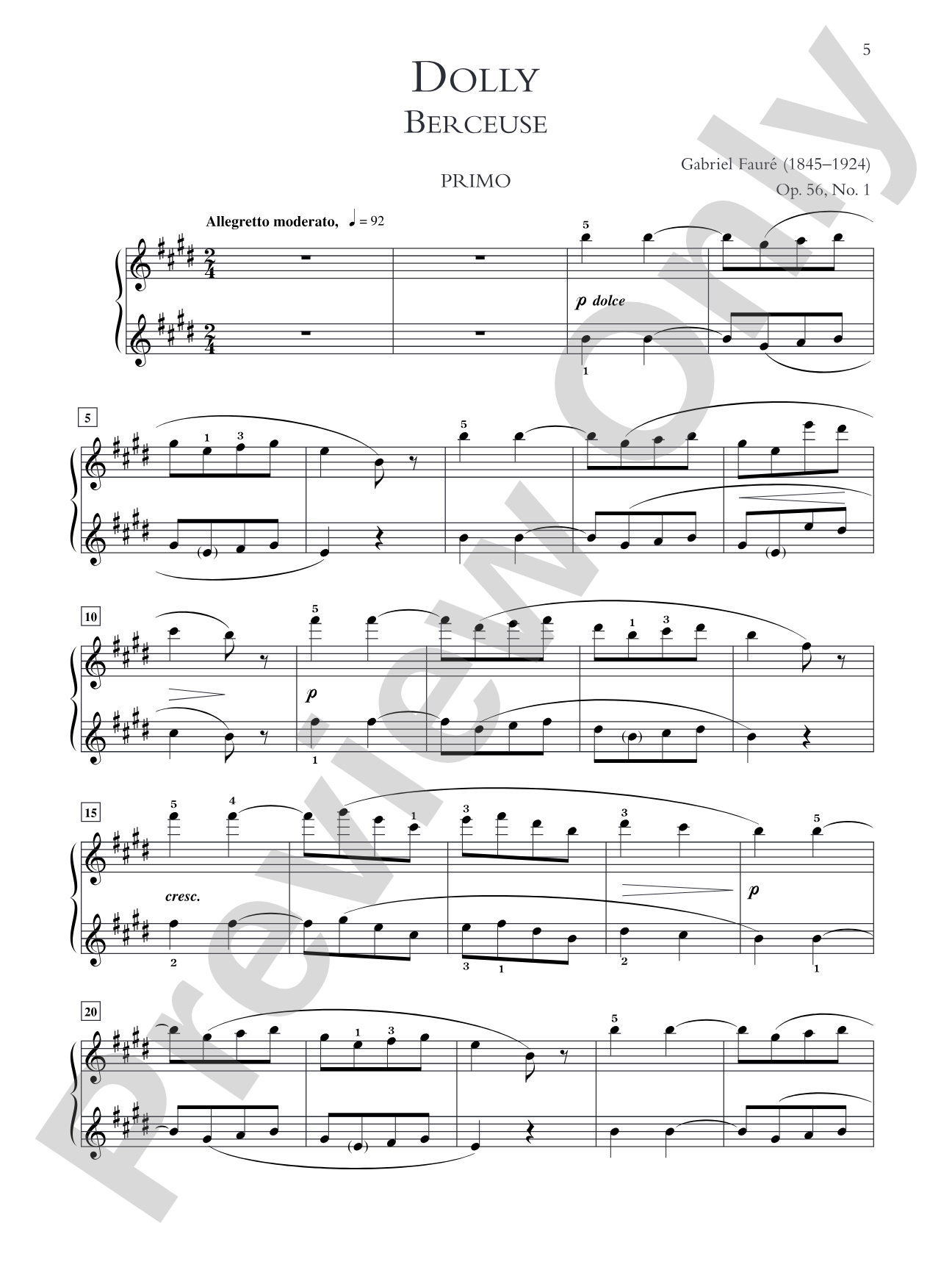
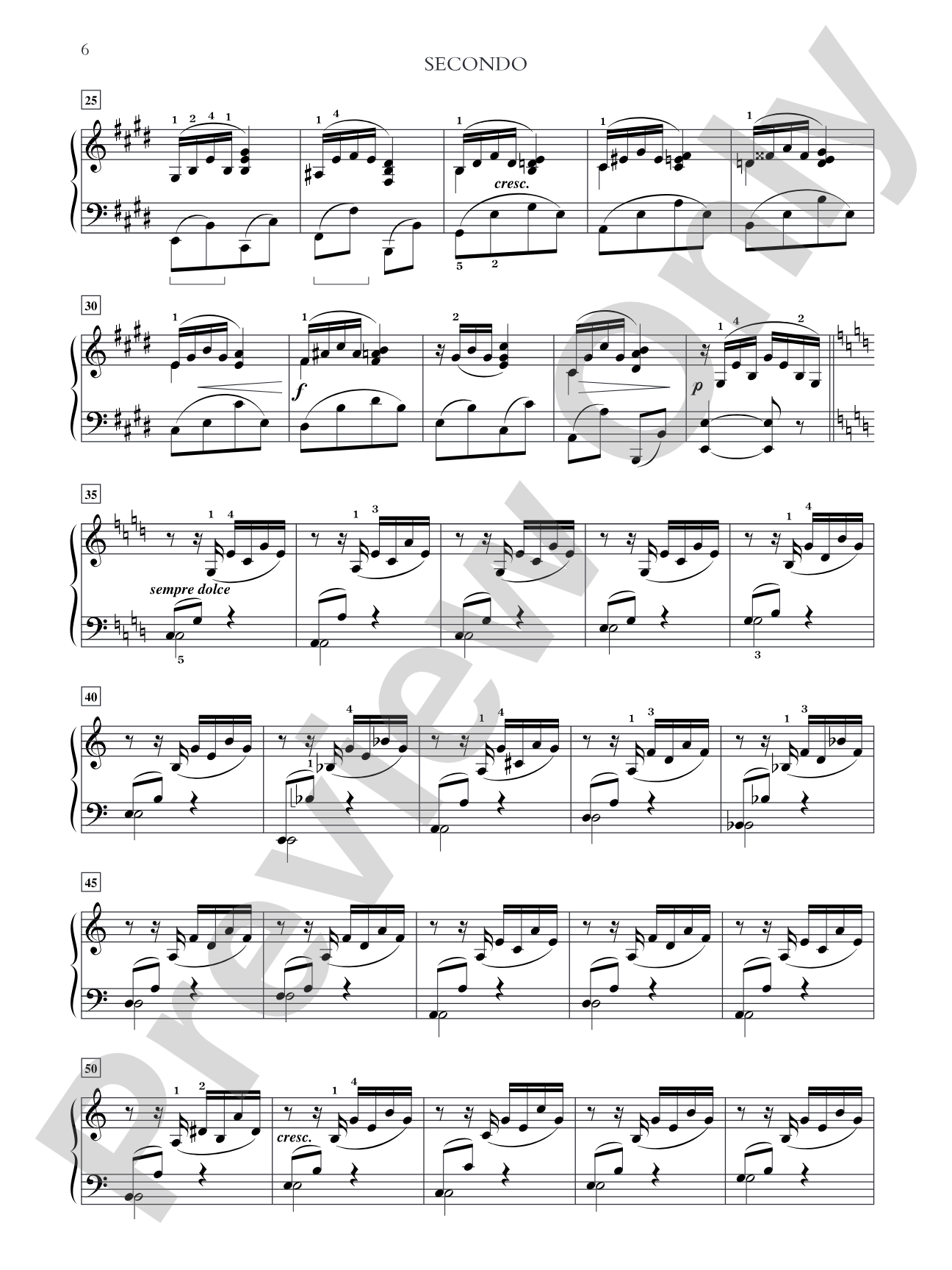
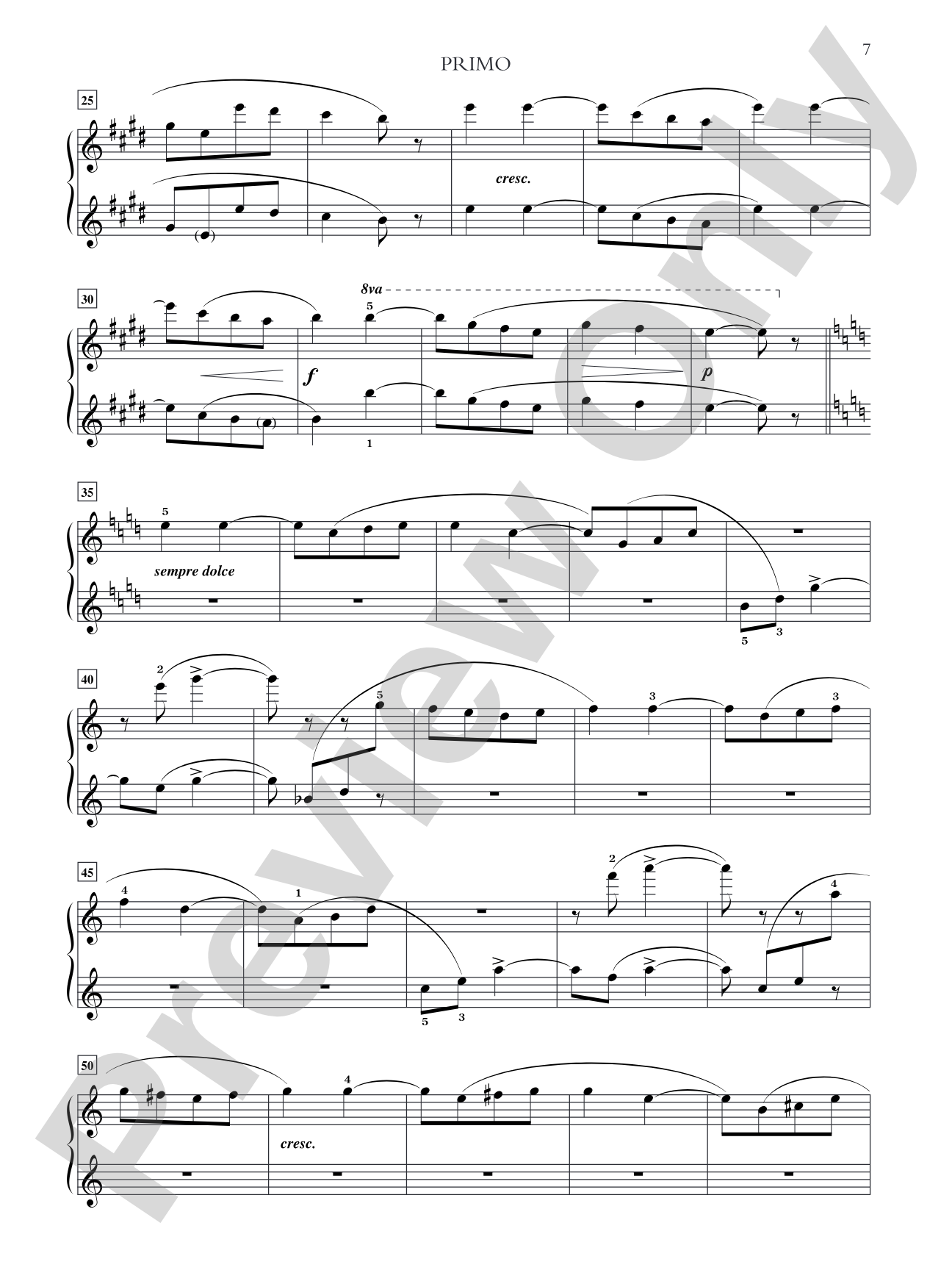
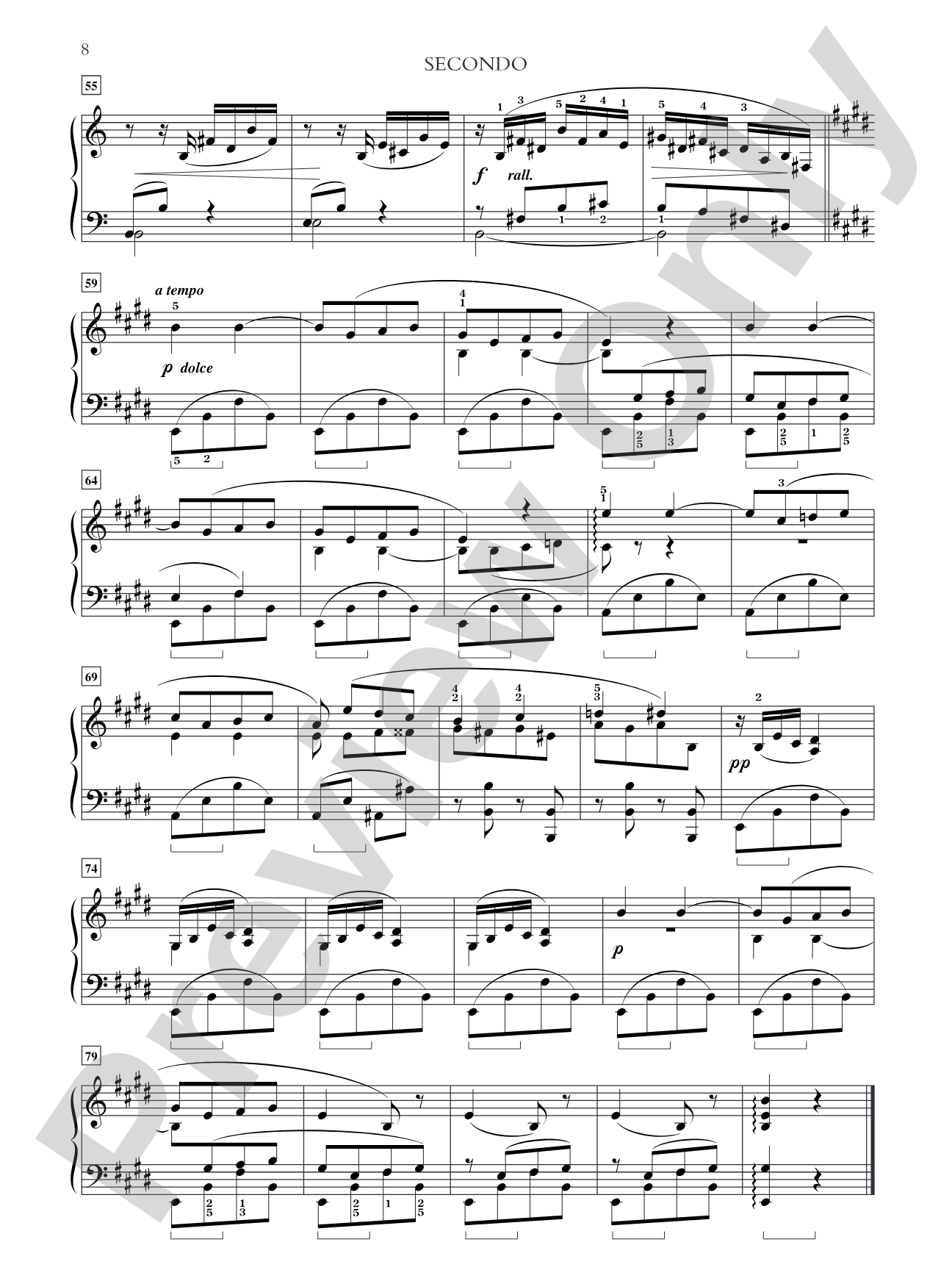
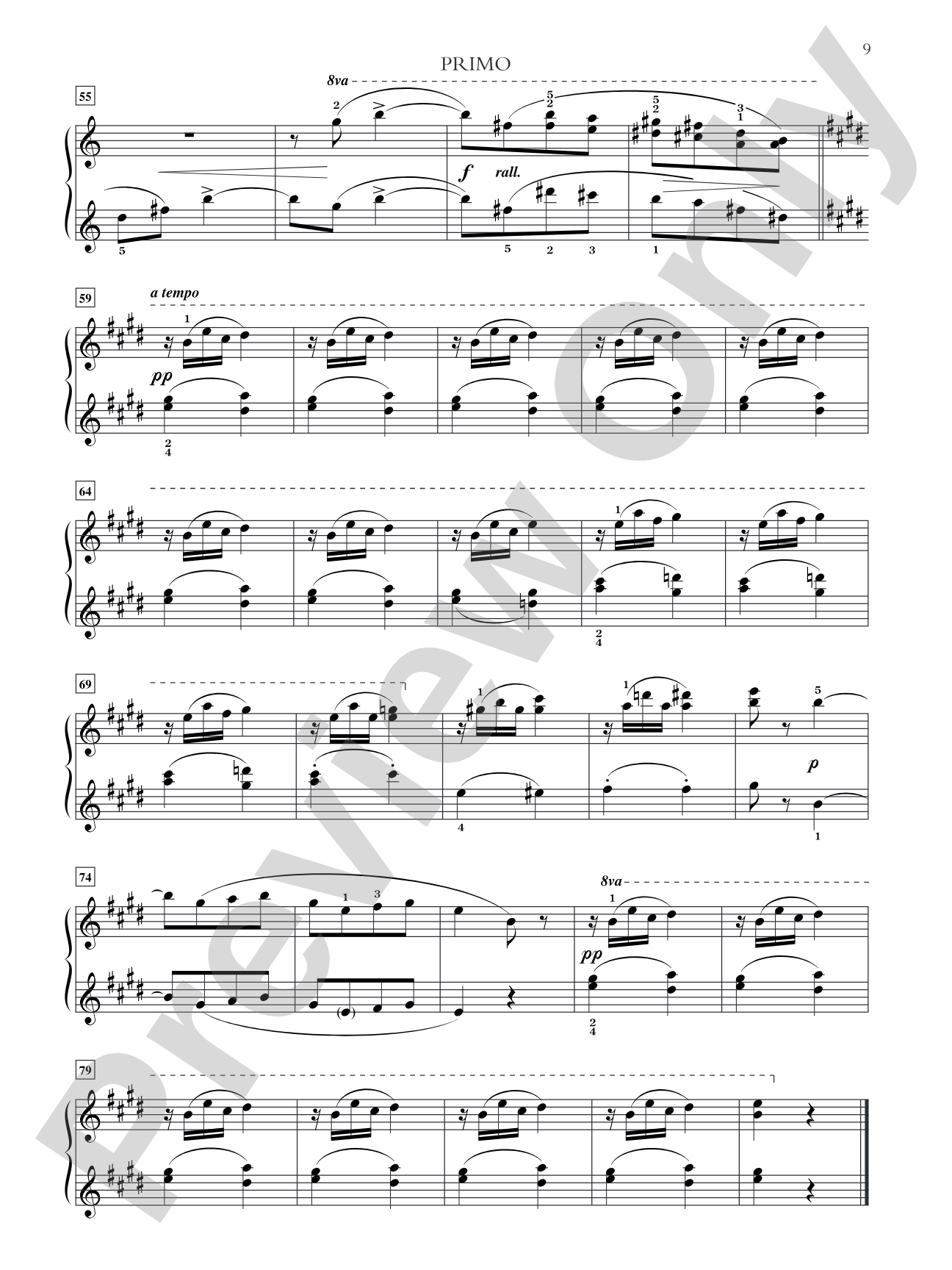
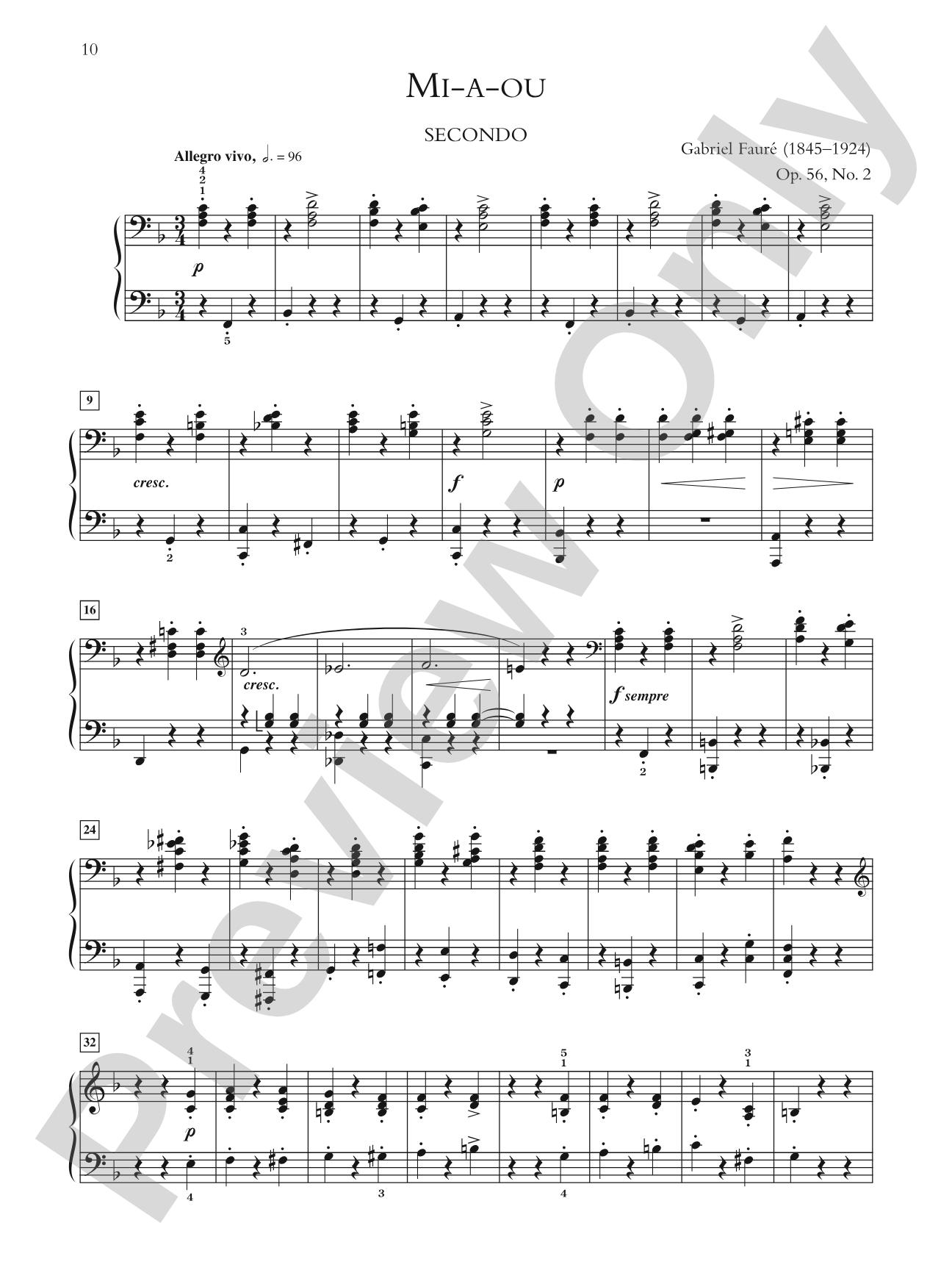
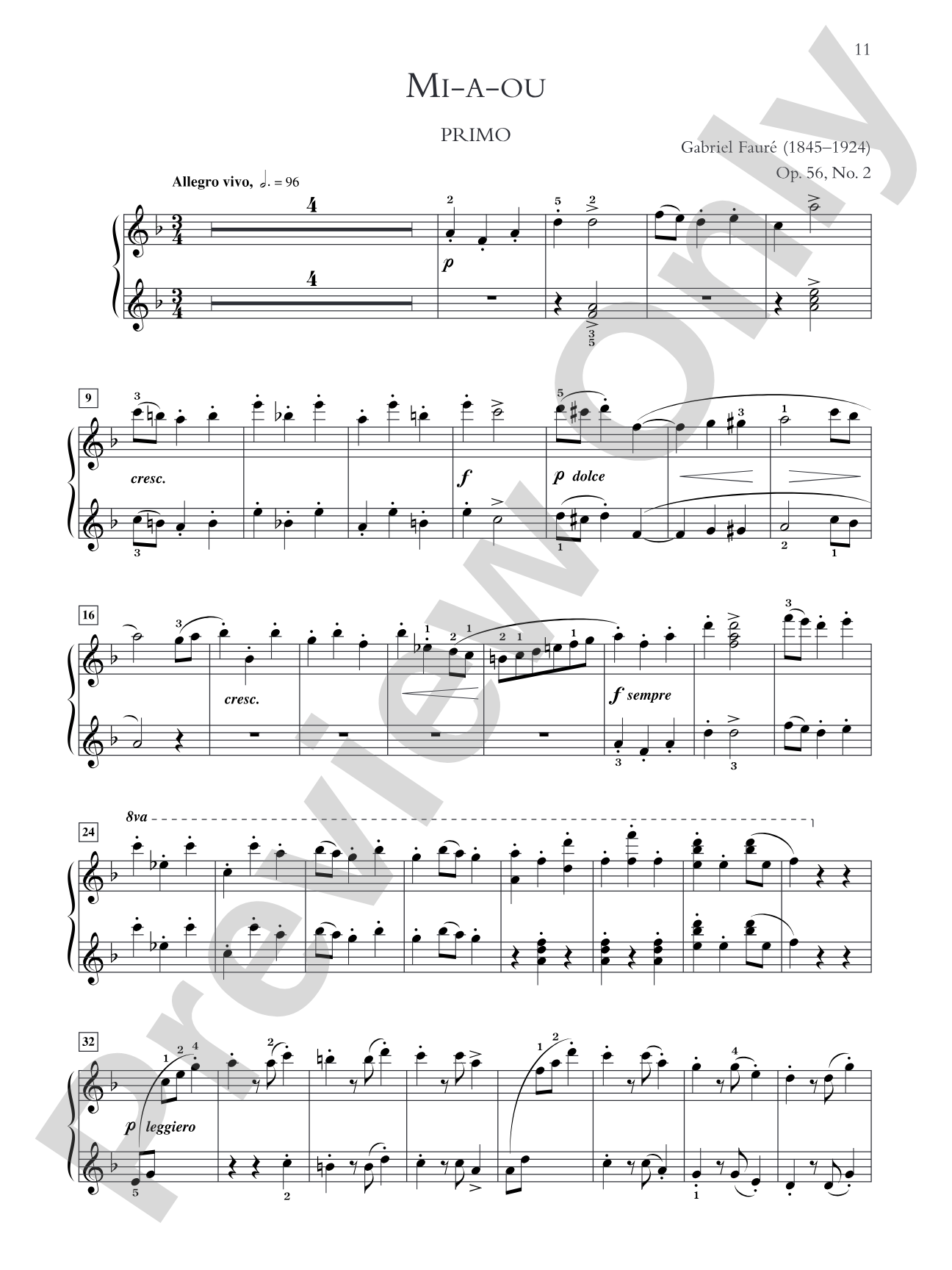
The Dolly suite, a collection of six piano duets (for one piano, four hands), shows Fauré's wittier side while portraying the many scenes and moods of childhood. This suite got its name from its dedicatee, a friend's little girl who was so tiny at birth that she was nicknamed Dolly. This teaching/performance edition contains the suite is in its entirety and is based on the first edition published by Hamelle in 1897. Editors Gayle Kowalchyk and E. L. Lancaster have included expert fingering suggestions and hand redistributions for technical ease, and have realized essential ornamentation in footnotes. The primo and secondo parts are on separate pages with measure numbers in both parts for easy reference. Although featuring childhood themes, the piece is at the late intermediate to early advanced level. A Federation Festivals 2024-2028 selection.


Discover MakeMusic Cloud: thousands of interactive titles your students can play along with today.
Sample Audio
No sample audio found.
Sample Video
No sample videos found.
Additional Details
Series:
Alfred Masterwork Edition
Publisher:
Alfred Music
Page Count:
52
SKU:
00-PS-0017643
More about this title
About the Composer: Gabriel Fauré
Gabriel Fauré (1845-1924) was a French composer whose harmonic innovations and refined melodic sensibility shaped late 19th-century music. He served as director of the Paris Conservatoire and composed across all genres, yet remained relatively unknown outside France during his lifetime. His chamber works and piano pieces reveal a composer of remarkable subtlety and emotional restraint, qualities that made him beloved by performers and listeners seeking music of sophistication rather than spectacle.
Fauré's gift for orchestrating human experience through small forms shines especially in his piano duets and songs. The Dolly Suite exemplifies his ability to find profound emotion and wit in miniature, turning childhood scenes into music of genuine artistry. He understood that teaching repertoire need not sacrifice artistic substance, and works like Dolly have become essential to the formation of young pianists with serious musical aspirations.
Why we love this
Fauré's Dolly Suite offers something rare: music that genuinely entertains while developing real musical sophistication. The six movements balance charm with compositional depth, never talking down to young players or audiences. Pianists at this level appreciate that the piece respects their growing musicianship, and the duet format creates an immediate sense of collaboration and ensemble awareness that transfers directly to their work with teachers and peers.
What to expect
The Dolly Suite inhabits a world of delicate play and quiet magic. Fauré captures childhood not through naive melody but through shimmering harmonies, unexpected harmonic turns, and moments of surprising tenderness. The six movements move between lullabies, garden scenes, and gentle dances, each one offering a small world of its own.
Who it's for
Late intermediate to early advanced pianists ready to engage with genuine art music in the duet format. This collection works equally well for two students at similar levels or for a teacher and student partnership, offering both musicians a rewarding musical experience.
How to get the most out of it
- Establish clear communication with your partner about tempo and phrasing before rehearsal. Fauré's impressionistic harmonies demand that both players breathe together and shape phrases as one instrument.
- Pay attention to the hand redistributions provided by the editors. These aren't shortcuts but carefully considered solutions that allow both hands to contribute to the musical line rather than simply dividing notes mechanically.
- Balance the primo and secondo voices with intentionality in each movement. Sometimes the secondo carries the melodic interest; allow that part its full singing quality rather than defaulting to accompaniment assumptions.
- Lean into the character titles of each movement ("Berceuse," "Dolly's Garden," etc.). These guide your interpretive choices and help ground the impressionistic harmony in lived childhood experience.
How to use it
Program this suite as a complete entity on a spring recital to showcase your students' ensemble musicianship and artistry at an important developmental milestone. The six movements also work as individual selections at competitions or festivals, particularly effective when performed by pairs of students at similar achievement levels.
Skills your students will build
- Ensemble balance and interdependence between primo and secondo voices
- Impressionistic harmonic language and voice leading in chromatic contexts
- Interpretive collaboration and communication between two pianists
- Pedal technique appropriate to impressionistic color and harmonic resonance
- Rhythmic independence and coordination of simultaneous competing rhythmic figures
- Reading and executing editorial suggestions including fingerings and hand redistributions