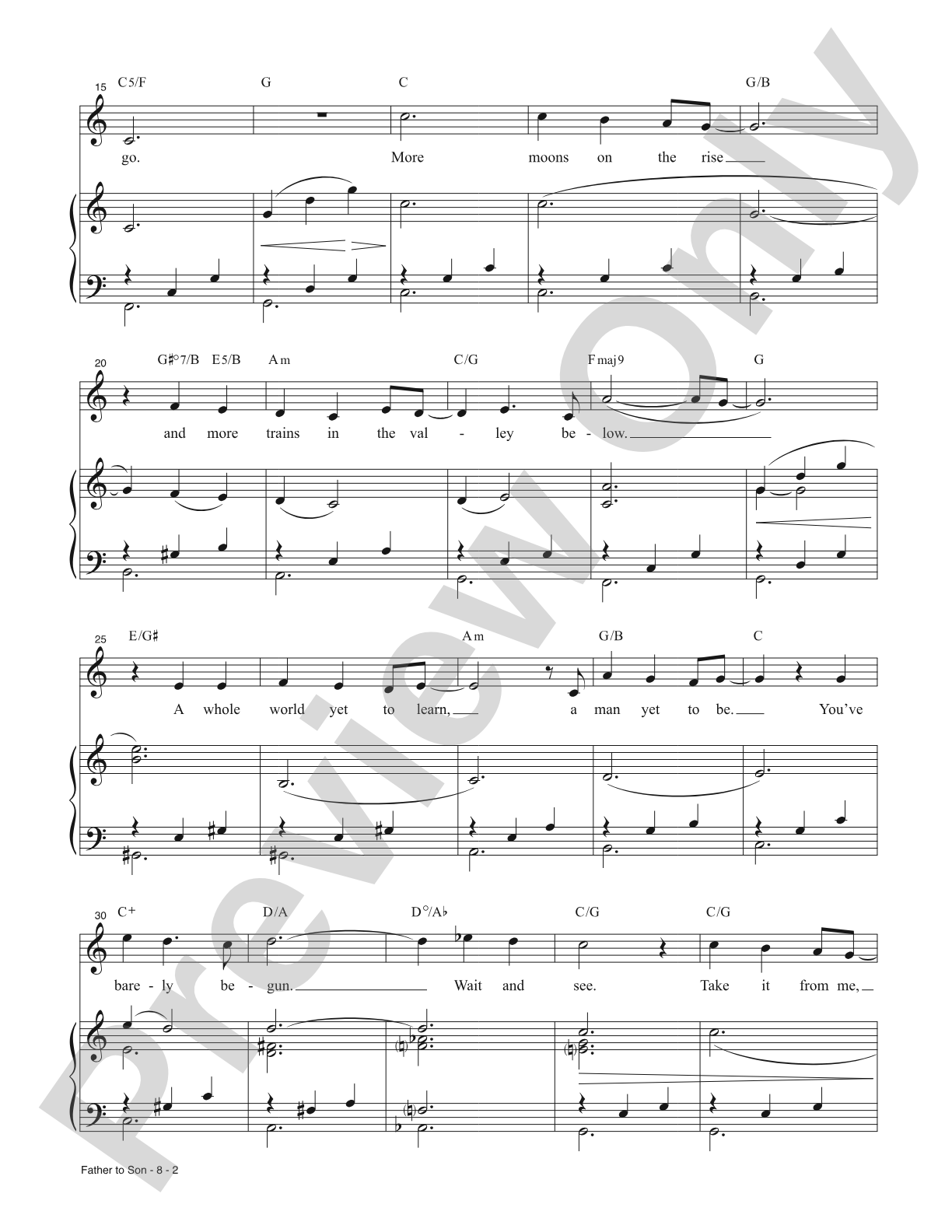
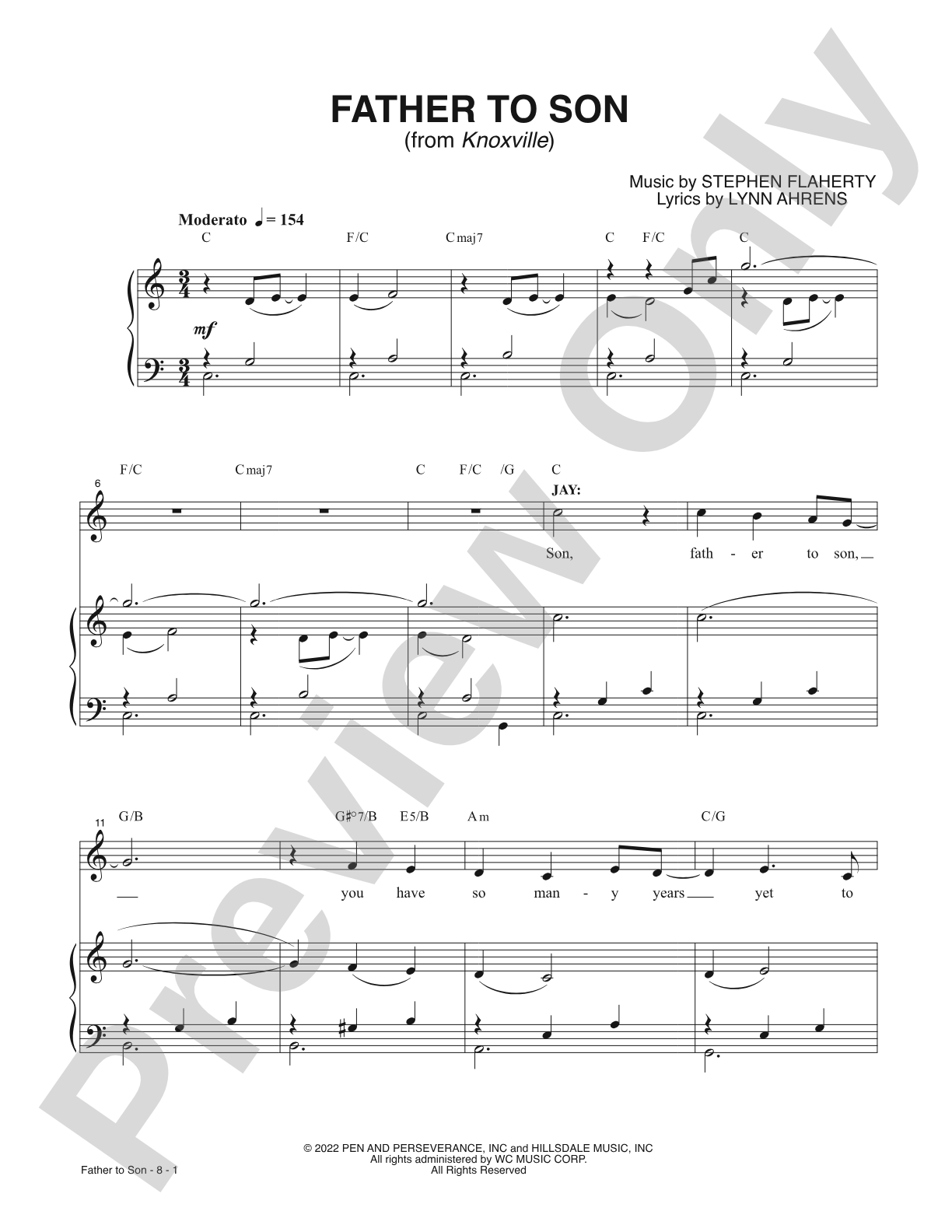
Father to Son from <i>Knoxville</i> Sheet Music Preview

Father to Son from Knoxville: Piano/Vocal/Chords

from Knoxville

Music by Stephen Flaherty / Lyrics by Lynn Ahrens

Item: 00-PS-0016697

Digital Download
$4.50

One moment…

Description
Song from Knoxville - Music by Stephen Flaherty; Lyrics by Lynn Ahrens

Cover art provided by Asolo Repertory Theatre, Sarasota, Florida

Father to Son from Knoxville: Piano/Vocal/Chords isn't in MakeMusic Cloud just yet...but it could be. Let us know you'd like to see it, and you'll help shape what comes next. In the meantime, start a free trial and dive into thousands of interactive titles your students can play along with today.

Sample Audio
No sample audio found.
Sample Video
Additional Details
SKU: 00-PS-0016697

More about this title

About the Composer: Stephen Flaherty

Stephen Flaherty has composed the scores for some of Broadway's most acclaimed musicals, including Ragtime, Anastasia, and Once on This Island. His gift for writing accessible yet sophisticated melodies has made his work a staple in both professional and educational theater programs. Flaherty's compositions often blend contemporary songwriting with classical structure, creating pieces that reward singers at every skill level.

Why we love this

Flaherty's melodic writing here is unusually direct for a song about fathers and sons. The vocal line sits naturally in the voice without requiring a performer to belt or strain, making it genuinely singable for singers who approach it with care rather than theatrical excess. The piano part serves the lyric without overwhelming it, which means a competent accompanist can support a singer's storytelling rather than compete with it.

What to expect

The music inhabits a quiet, reflective space. There is warmth here and tenderness, but also the weight of things left unsaid and the wish to bridge distance. The melody unfolds with the quality of a conversation overheard, intimate but not intrusive.

Who it's for

This song suits singers in upper-middle school through adult levels who have vocal control and interpretive maturity. It works equally well for singers with classical training and those coming from a musical theater background, provided they understand how to serve a lyric with authenticity.

How to get the most out of it

  • Resist the urge to oversing. This song's power comes from restraint and clarity of text; let the words land before you reach for emotional volume.
  • Shape the melodic line in longer phrases rather than boxing it into bars. Listen for the natural breathing points in the lyric and honor those over strict metric divisions.
  • Work the piano and voice as true partners. The accompanist should watch the singer's breath and follow rubato choices that serve the text, not fight against them.
  • Pay attention to chord changes and harmonic movement in the piano part; they often suggest emotional turning points that should show up in your vocal color and phrasing.

How to use it

Consider this for an all-musical-theater concert or a program exploring contemporary Broadway songwriting. It pairs well with other character-driven songs from film and stage and works as a solo in a variety show or recital where emotional authenticity is valued over virtuosity.

Skills your students will build

  • Singing through-composed melody without relying on repeated motifs
  • Using dynamic control to convey emotion rather than volume
  • Coordinate phrasing between voice and piano accompaniment
  • Interpreting harmony to inform performance choices

You May Also Like