
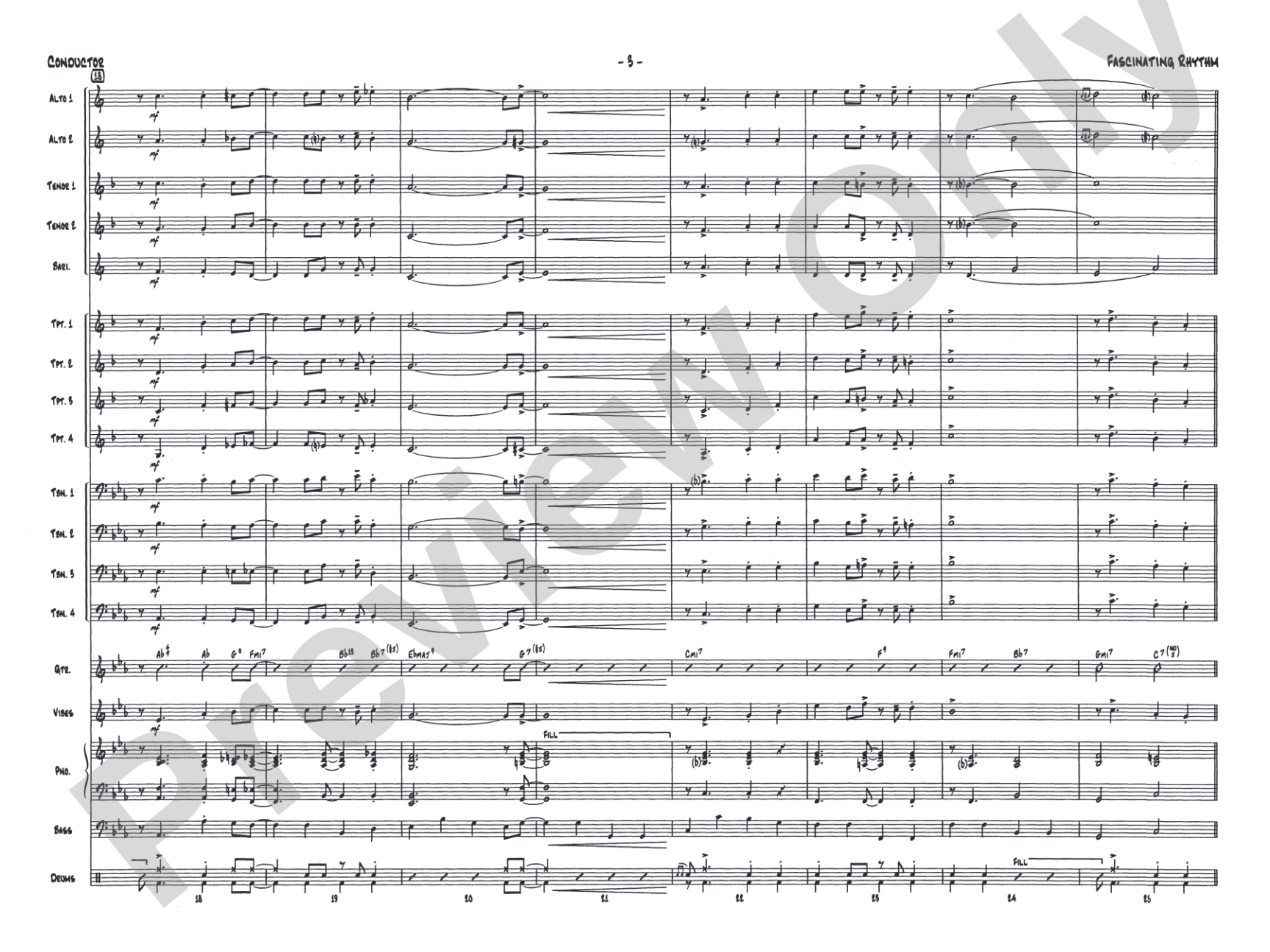
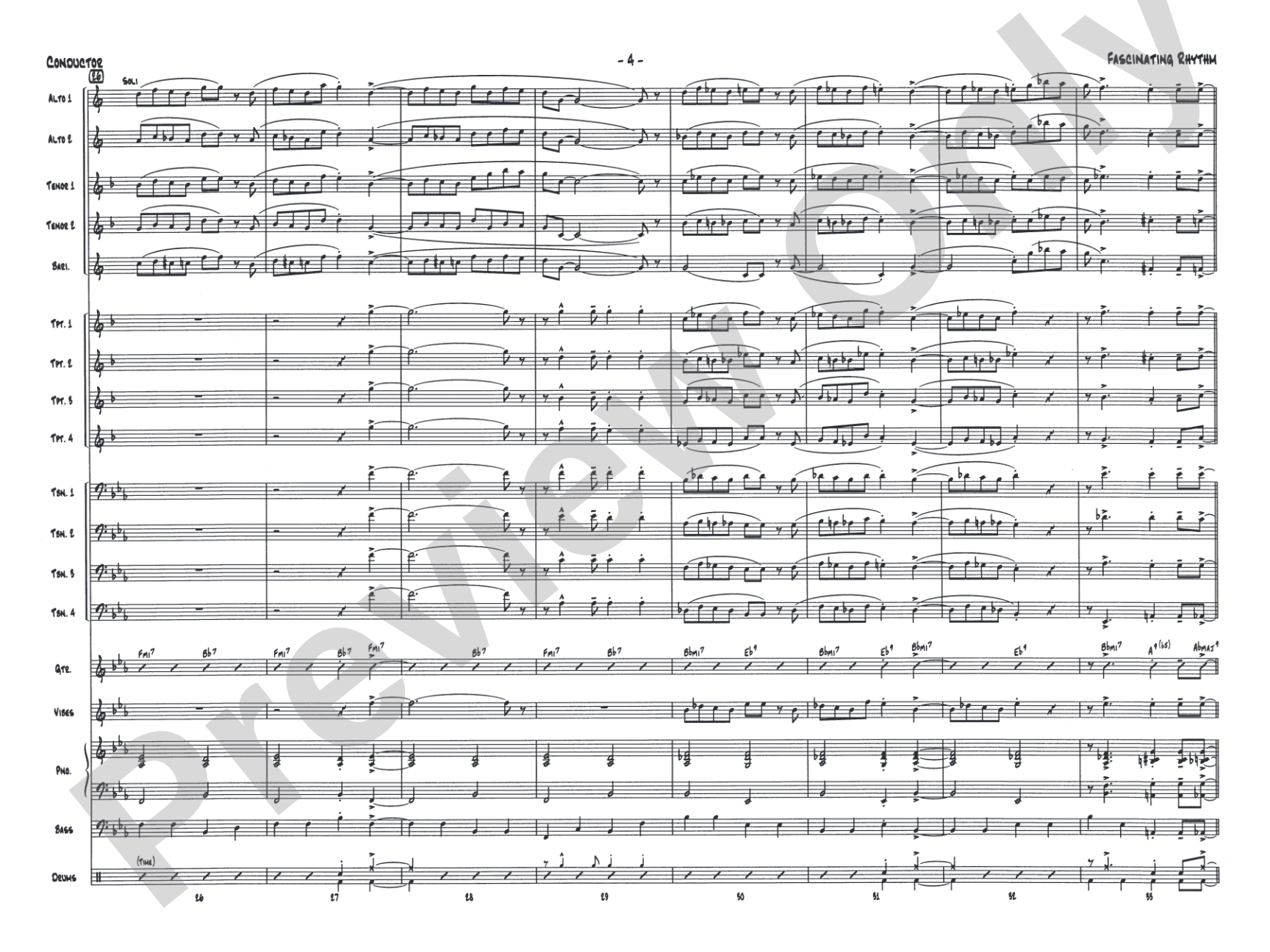
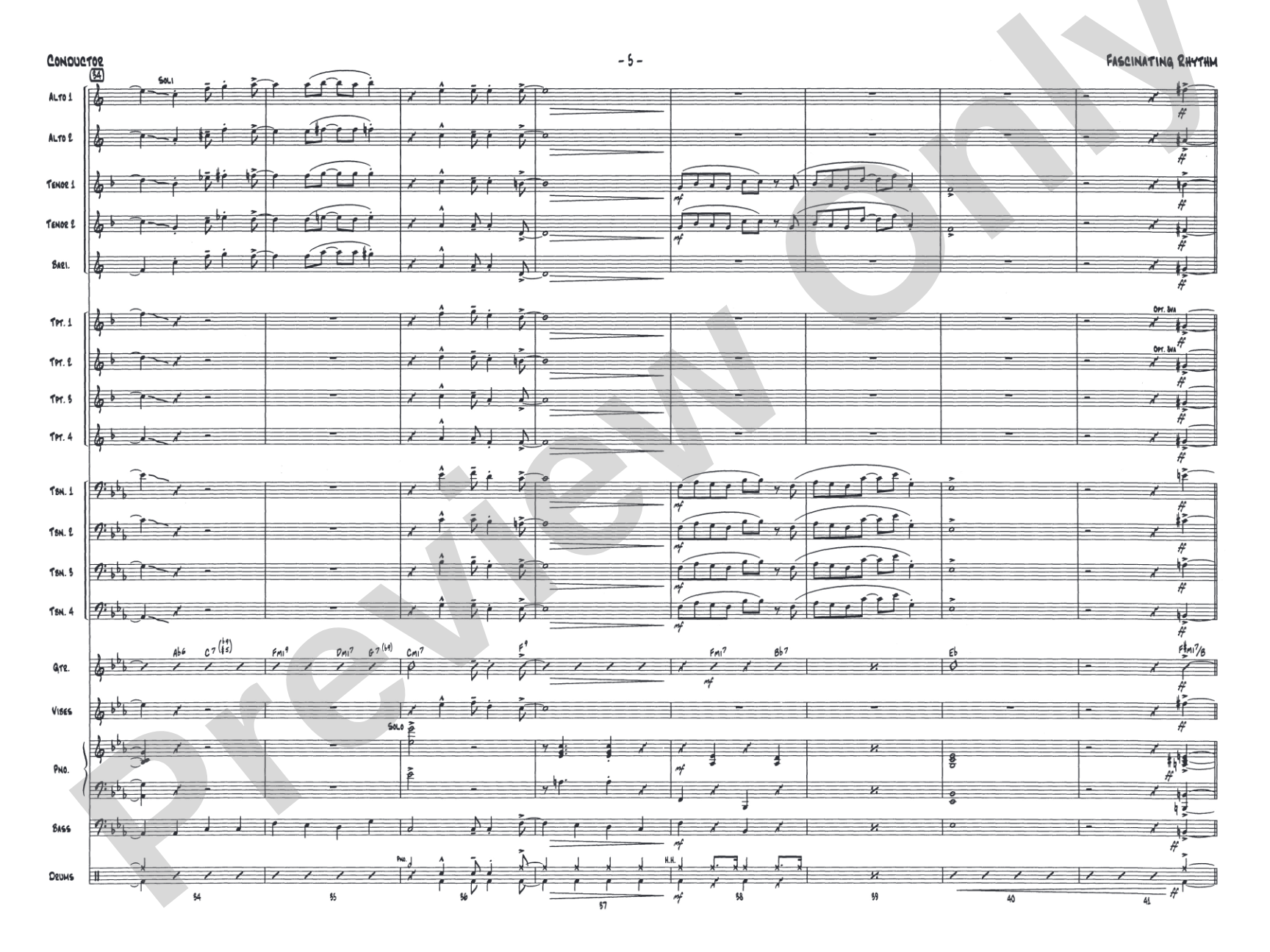
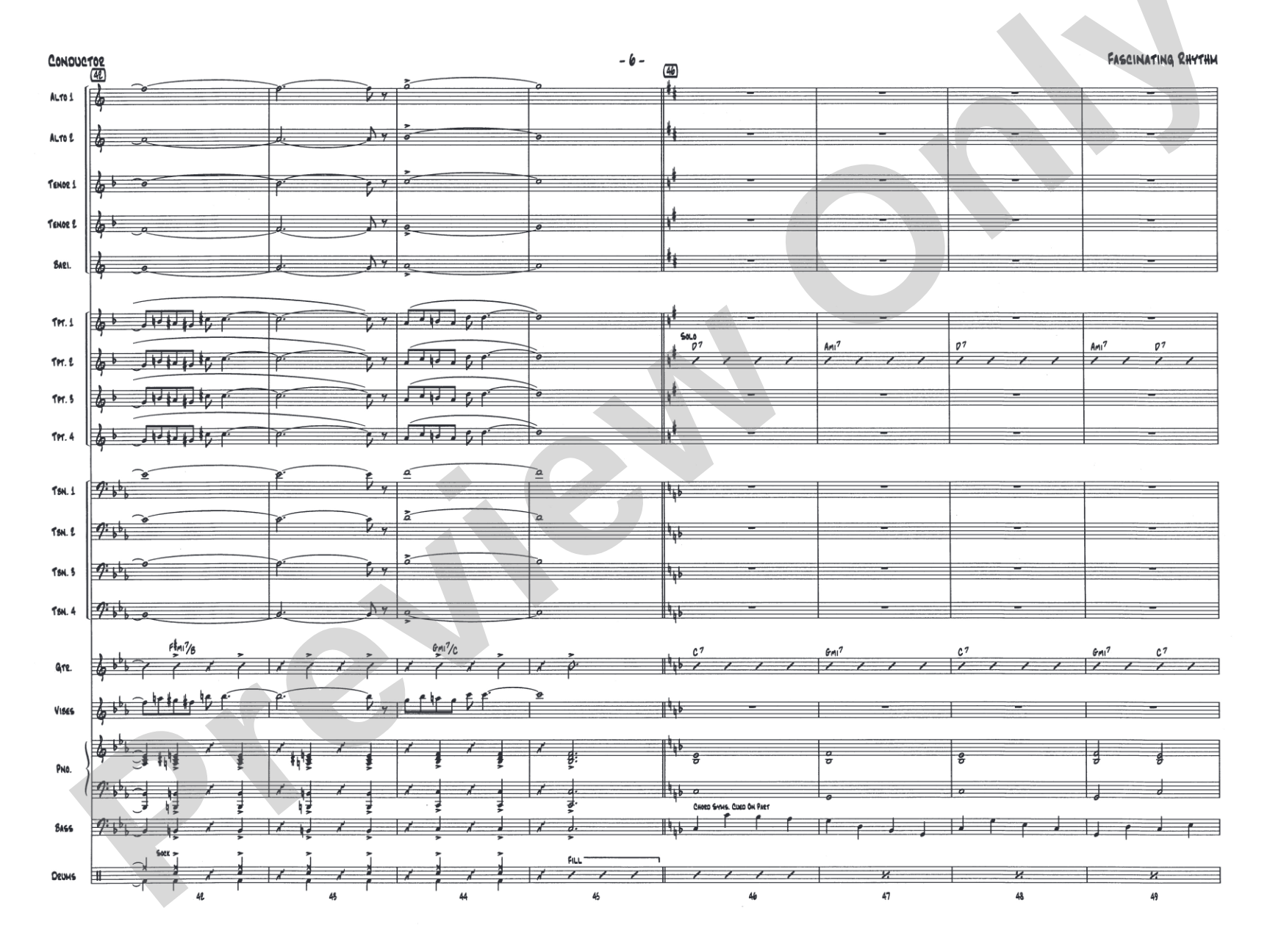
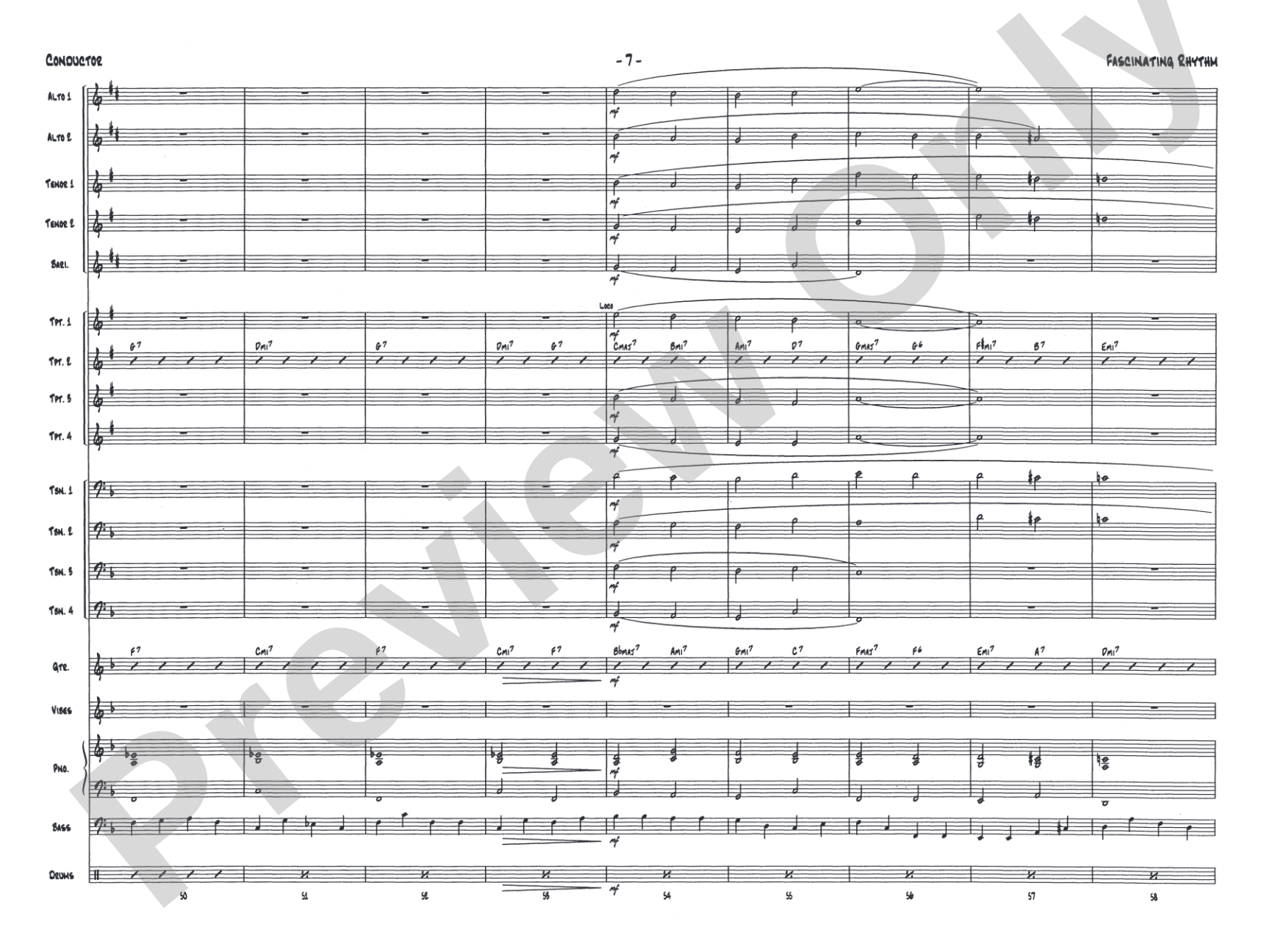
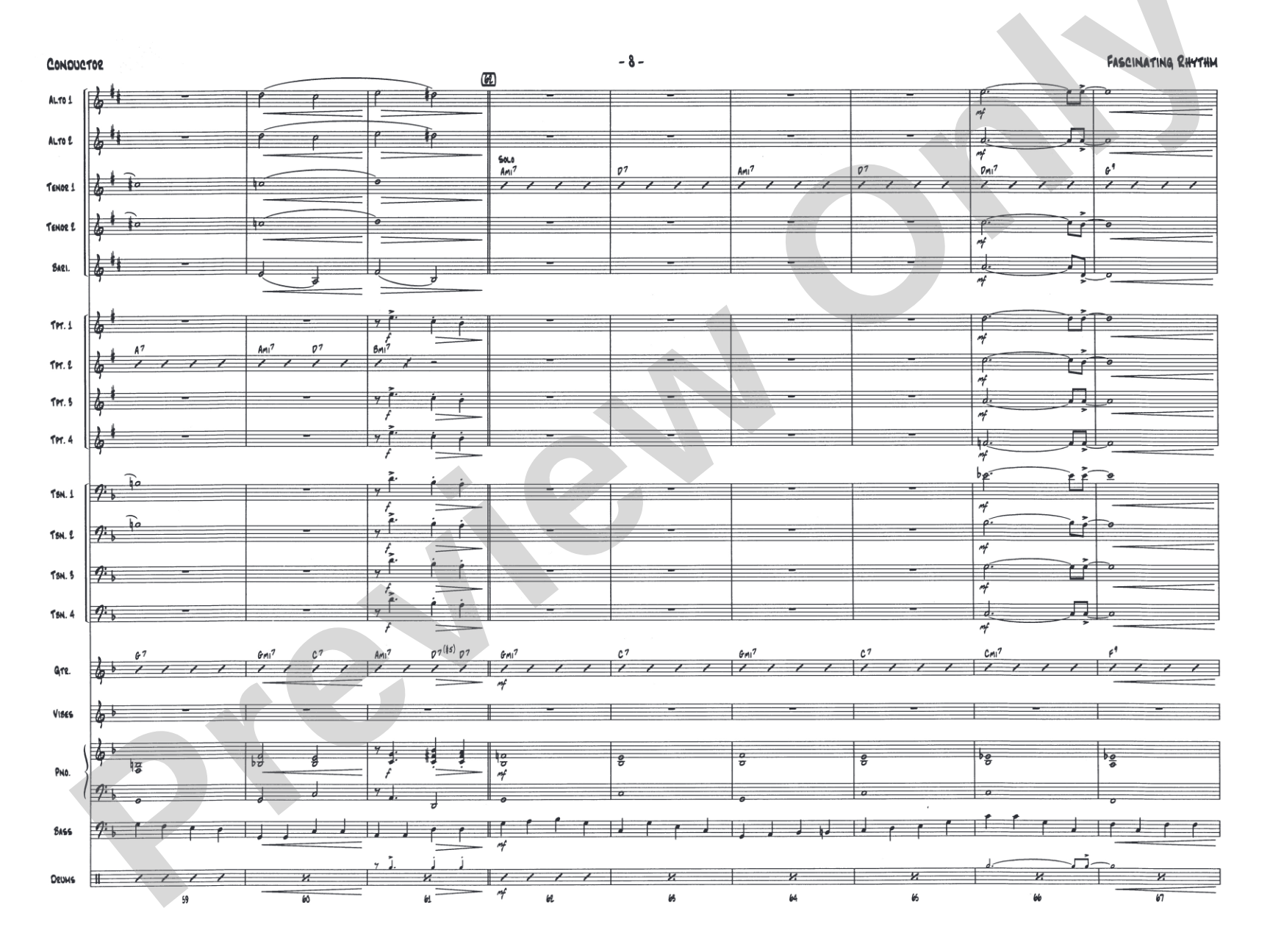
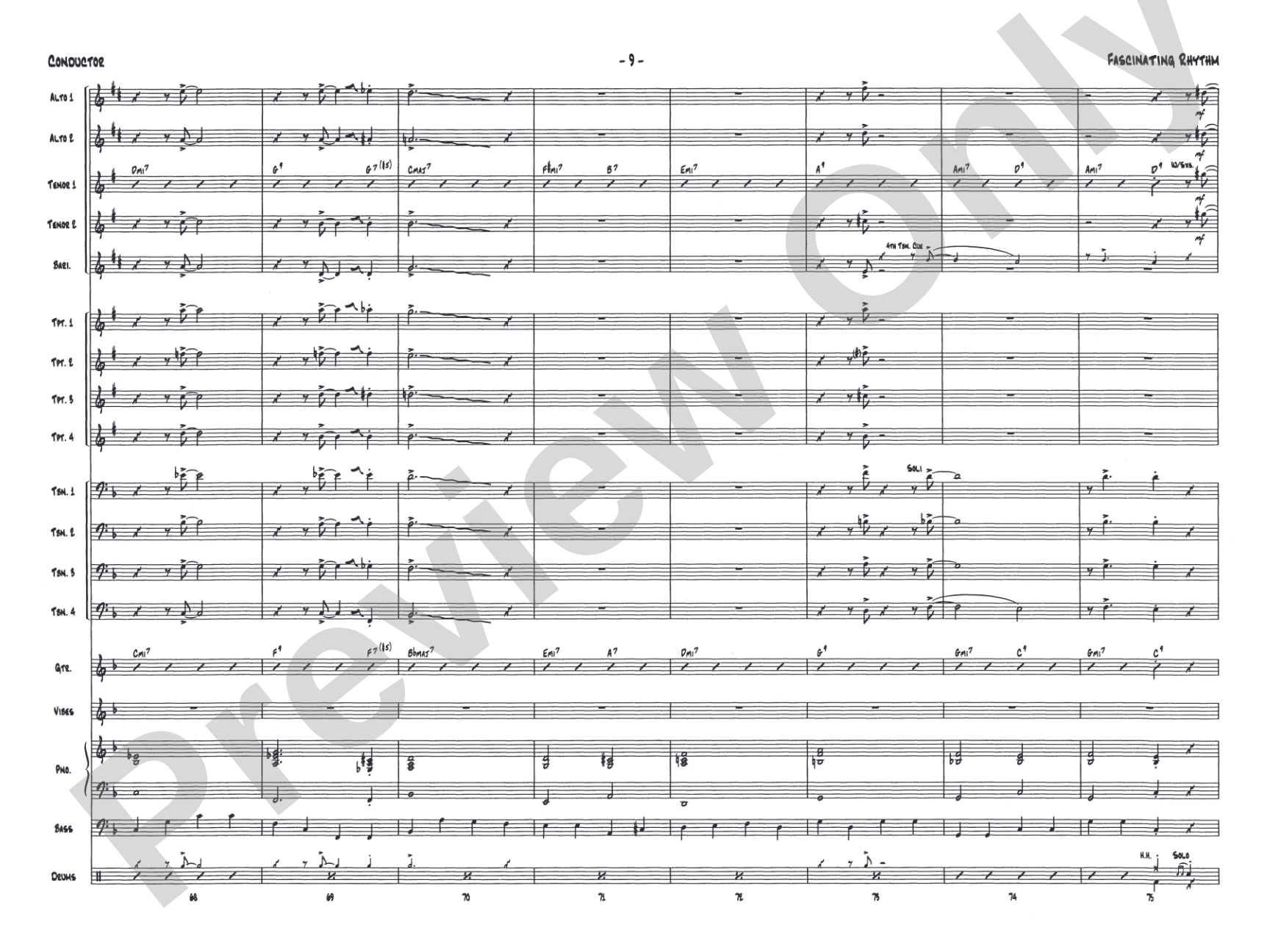
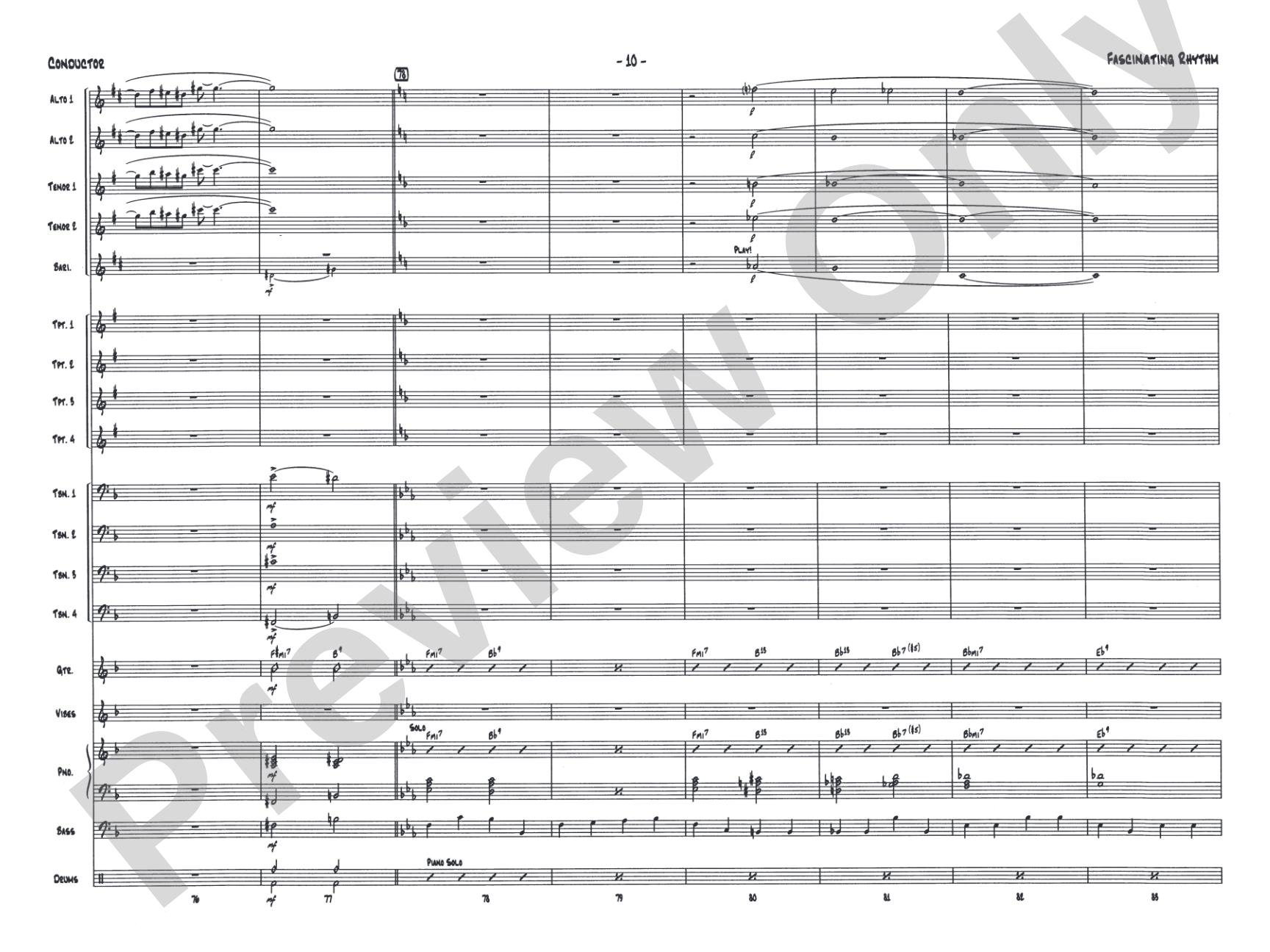
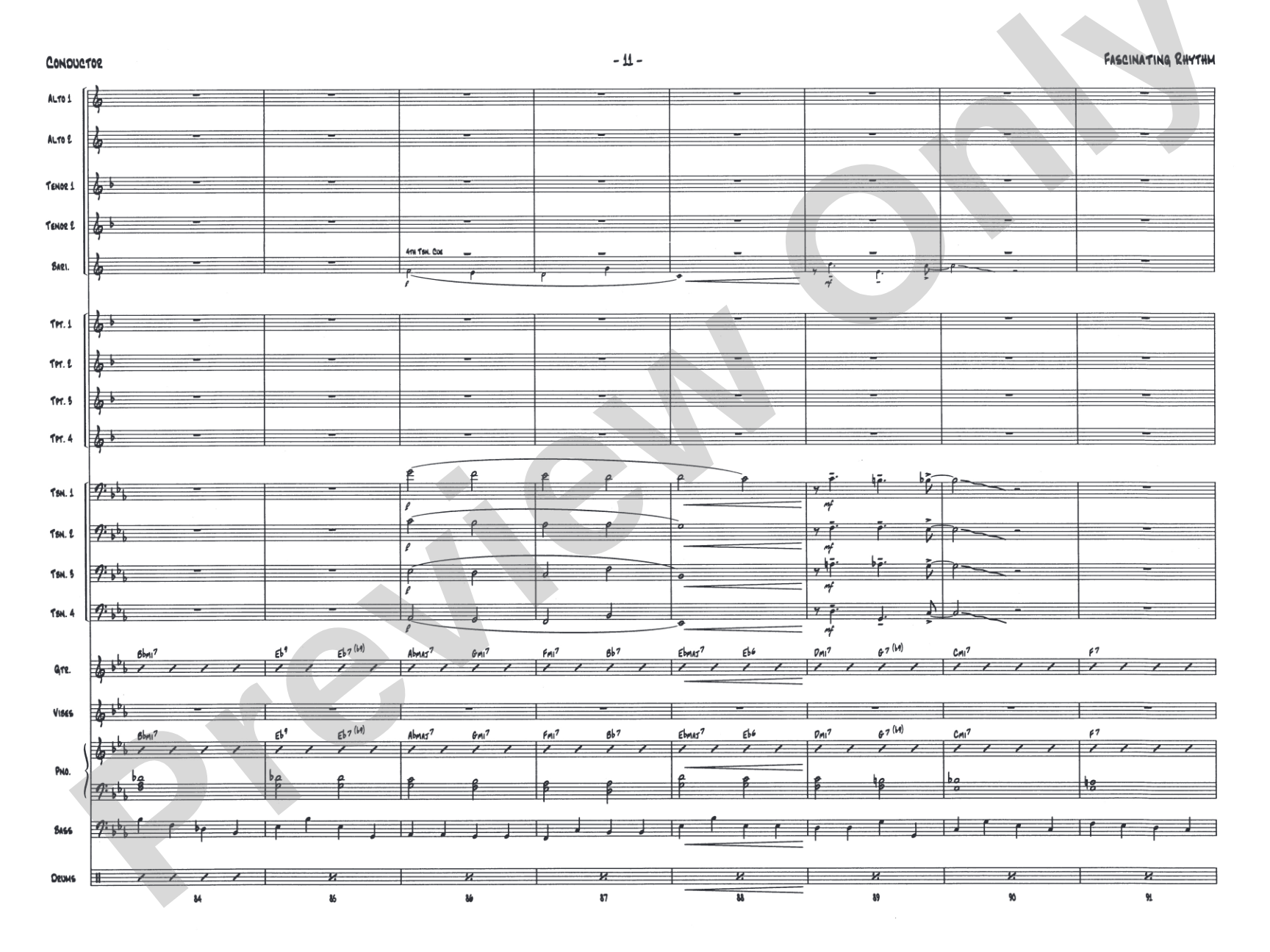
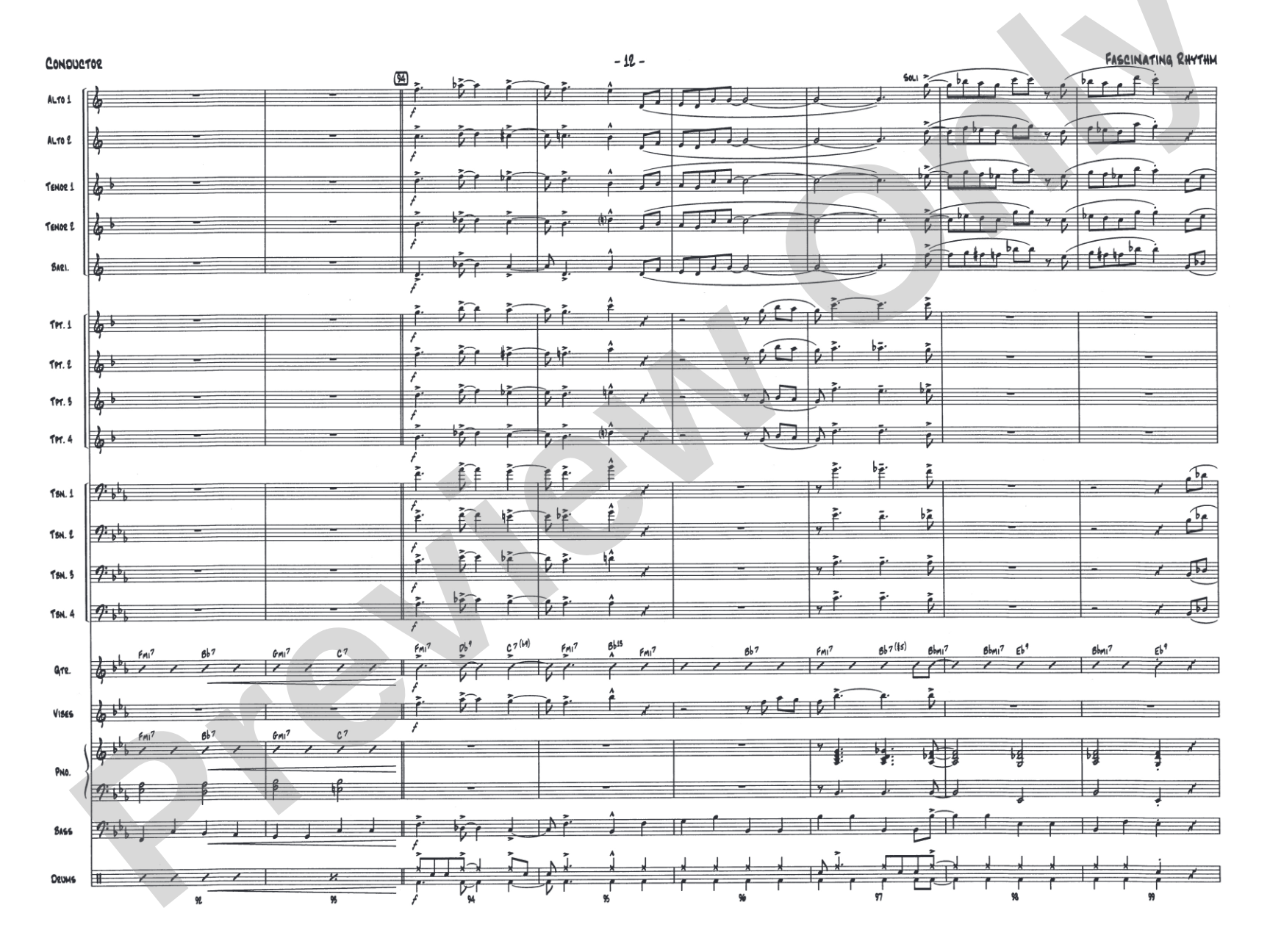
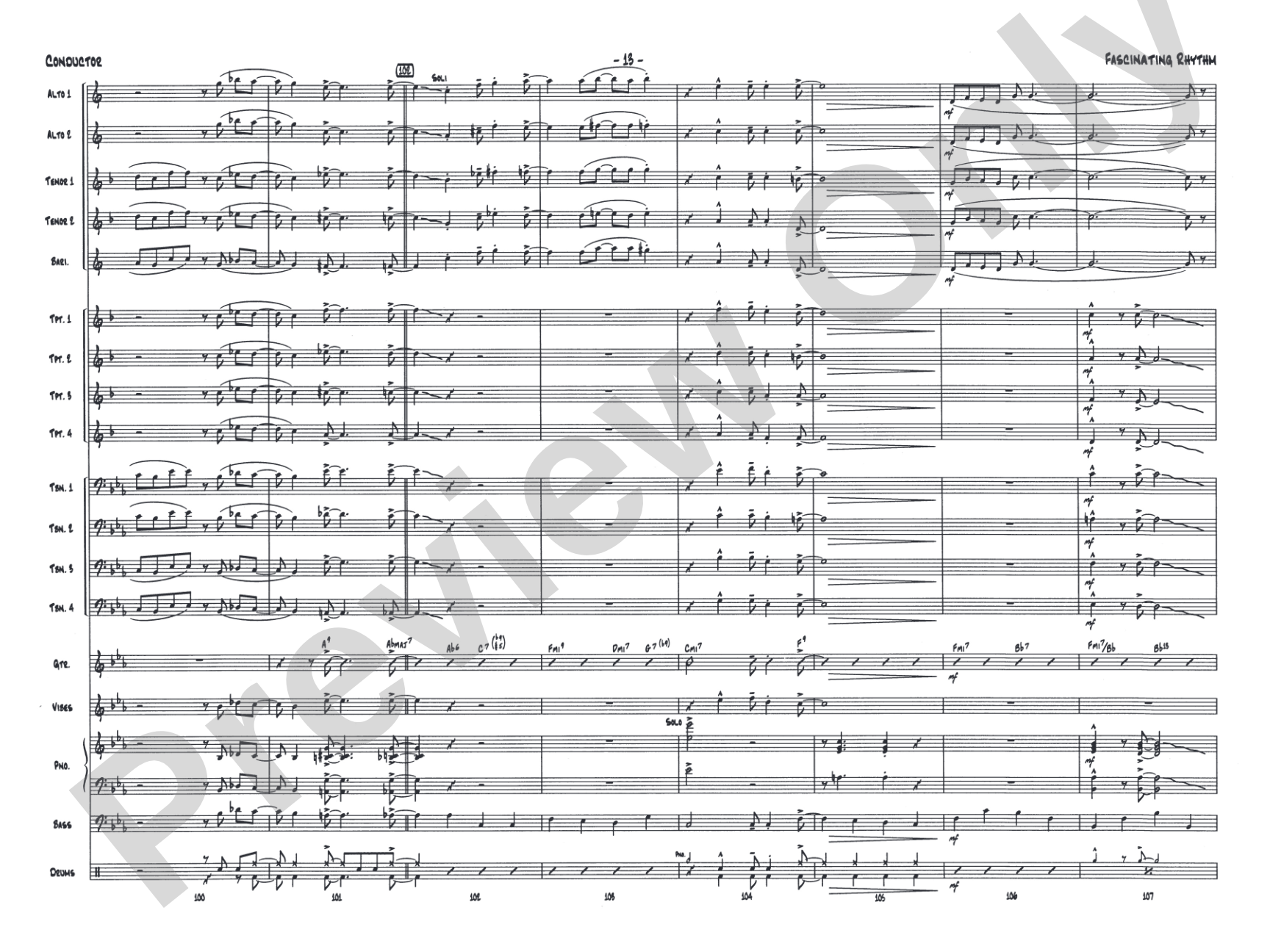
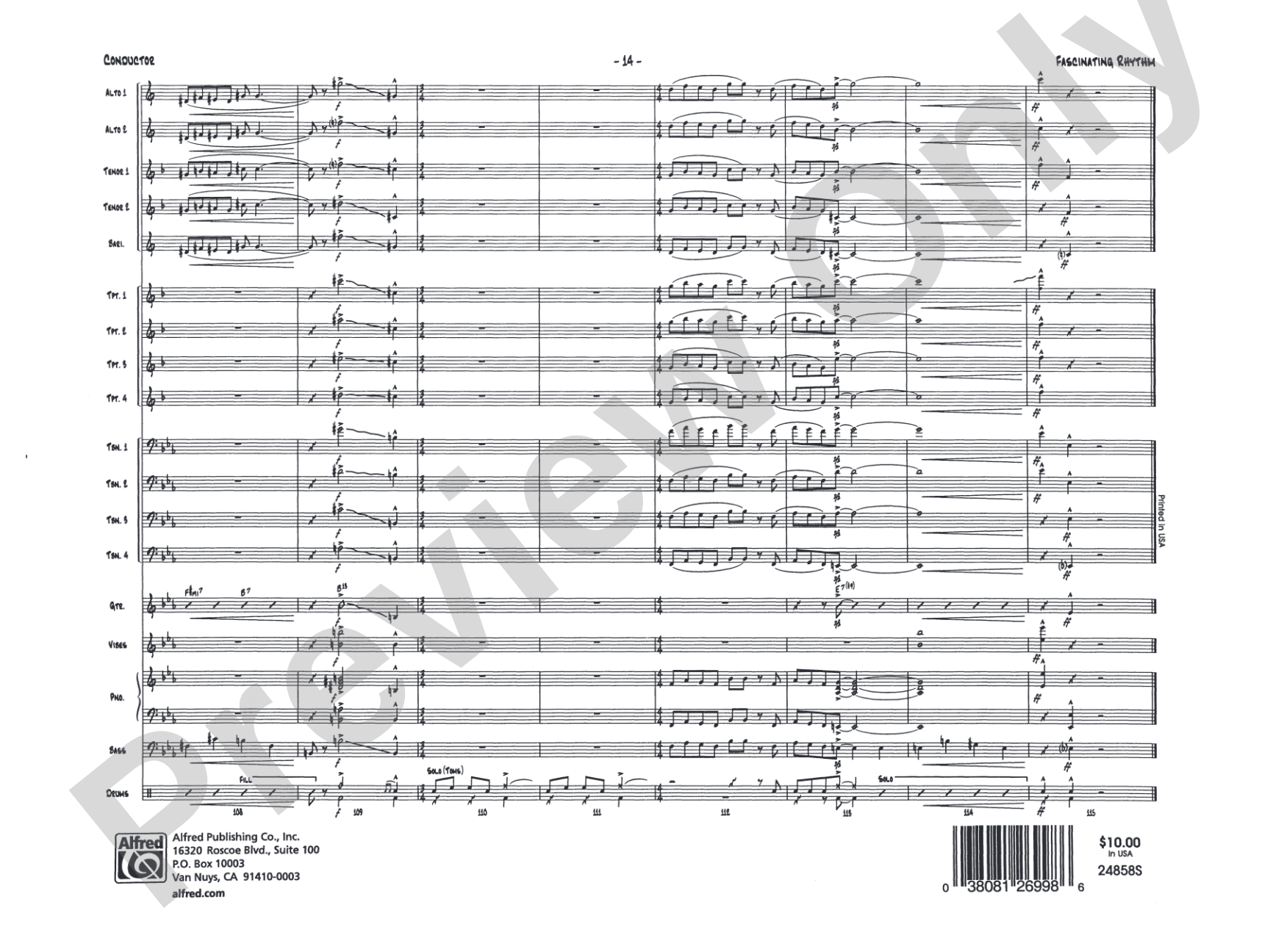

Fascinating Rhythm: Score
By George Gershwin / arr. Dave Wolpe
Grade: 4 (Medium Advanced / Difficult)
Item: 00-PR-0005394
$10.00
Pickup currently not available
Description
This chart is a showstopper for concert or festival. One of Dave Wolpe's finest charts, this tune has meter changes, key changes, and solos for trumpet, tenor and piano. This superior chart is worth every minute of rehearsal!


Don't just read it, hear it, play along with it, and watch your students grow with it. In MakeMusic Cloud, Fascinating Rhythm: Score comes alive with professional accompaniment, adjustable tempo, and built-in practice tools that turn solo practice into real progress.
Open in the Player
Jump straight in and assign it today.
Start Your Free Trial
Open this title and explore the full library in minutes.
Sample Audio
1
Audio File
--:--
0:00
0:00
Sample Video
No sample videos found.
Additional Details
Series:
Premier Jazz Series
Publisher:
Alfred Music
Page Count:
78
SKU:
00-PR-0005394
More about this title
About the Composer: George Gershwin
George Gershwin (1898-1937) bridged the concert hall and the jazz club with a compositional voice that remains unmatched in American music. His rhythmic vitality, sophisticated harmonies, and gift for memorable melody made him a transformative figure in 20th-century music. Educators value Gershwin's work because it legitimizes jazz and popular idioms in classical contexts without compromising either tradition.
Gershwin's compositions continue to anchor jazz ensemble curricula and concert programs. His ability to write music that rewards both serious musicians and audiences has made his works standard repertoire for ensembles at all levels.
Why we love this
Dave Wolpe's interpretation of this Gershwin standard delivers everything a Grade 4 ensemble needs: sophisticated arranging that respects the original while creating fresh ensemble challenges. The meter and key changes demand real musicianship from your players, and the solo features give your best trumpet, tenor, and pianist moments to shine in a context that matters.
What to expect
Infectious and driving, with a swagger that comes from Gershwin's gift for syncopation. The piece pivots through keys and meters with a sense of discovery rather than confusion, keeping both the ensemble and the audience engaged in where the music will land next.
Who it's for
This arrangement suits jazz ensembles with solid fundamentals and players ready to tackle harmonic complexity and rhythmic independence. Your trumpet, tenor saxophone, and pianist need secure technique and the confidence to navigate changes while the rest of the ensemble supports their improvisation.
How to get the most out of it
- Isolate the meter changes in sectional rehearsals before running the full chart. Have rhythm section lock the pulse during transitions; brass and saxes follow their lead rather than anticipating.
- The solos work best when the rhythm section establishes a groove first. Spend time getting the comping clear so soloists have a dependable foundation to build from.
- Balance the written sections against the solo moments so the chart doesn't feel like it stops each time a featured player takes the lead. Ensure the ensemble voice remains present and supportive.
- Mark all key changes in advance. Intonation shifts are common when traversing different tonal centers; address this explicitly with the ensemble.
How to use it
Program this as a centerpiece in a jazz festival or concert that features your ensemble's strongest soloists. It works beautifully alongside other Gershwin arrangements or as a bridge piece between a classical set and a contemporary jazz suite.
Skills your students will build
- Navigating meter changes (implied by the description of metric complexity in the original)
- Executing key modulations with secure intonation
- Comping and accompanying featured soloists with ensemble cohesion
- Reading jazz articulation and style within a complex harmonic framework
- Balancing written sections with improvised solo sections