
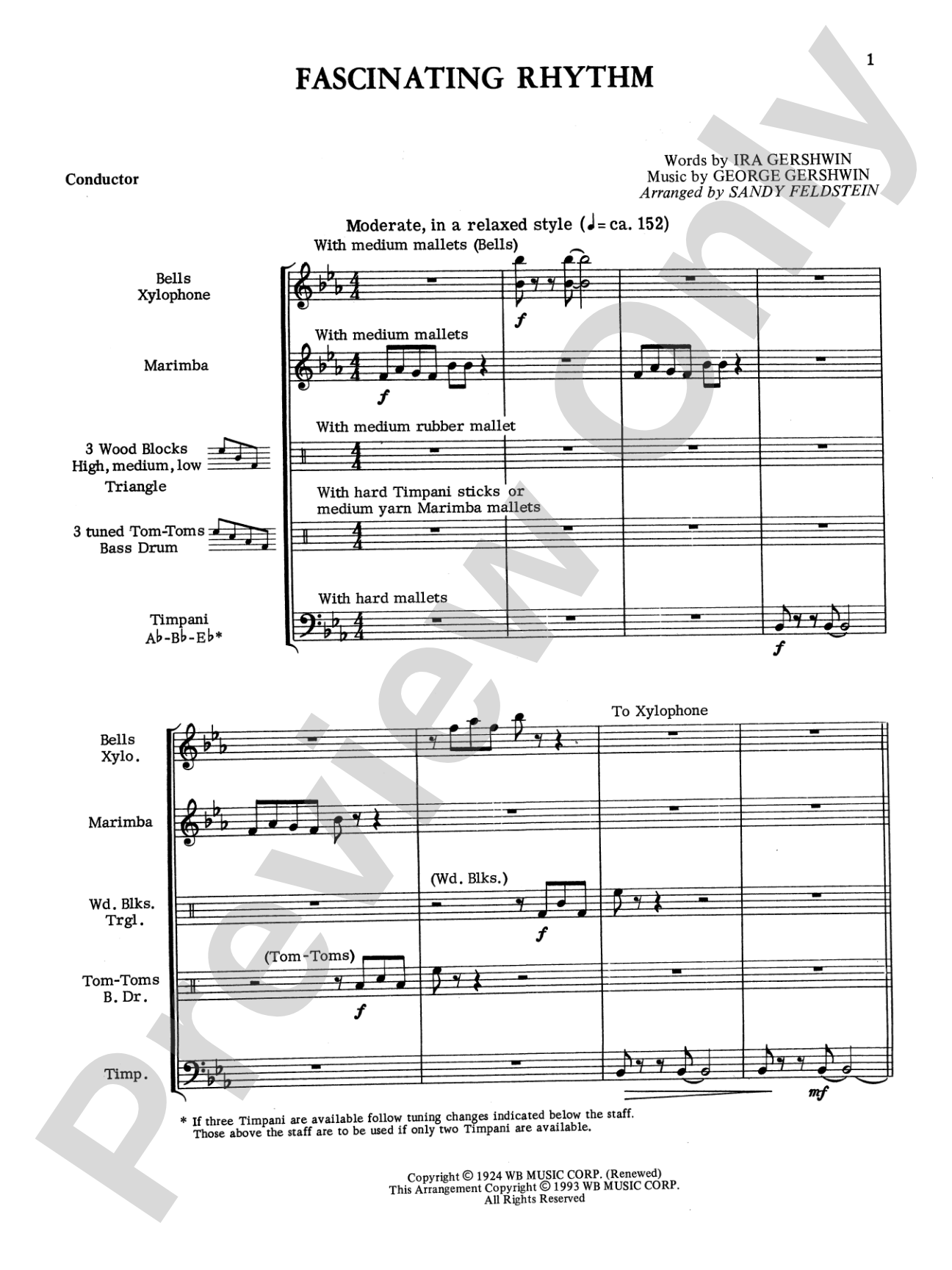
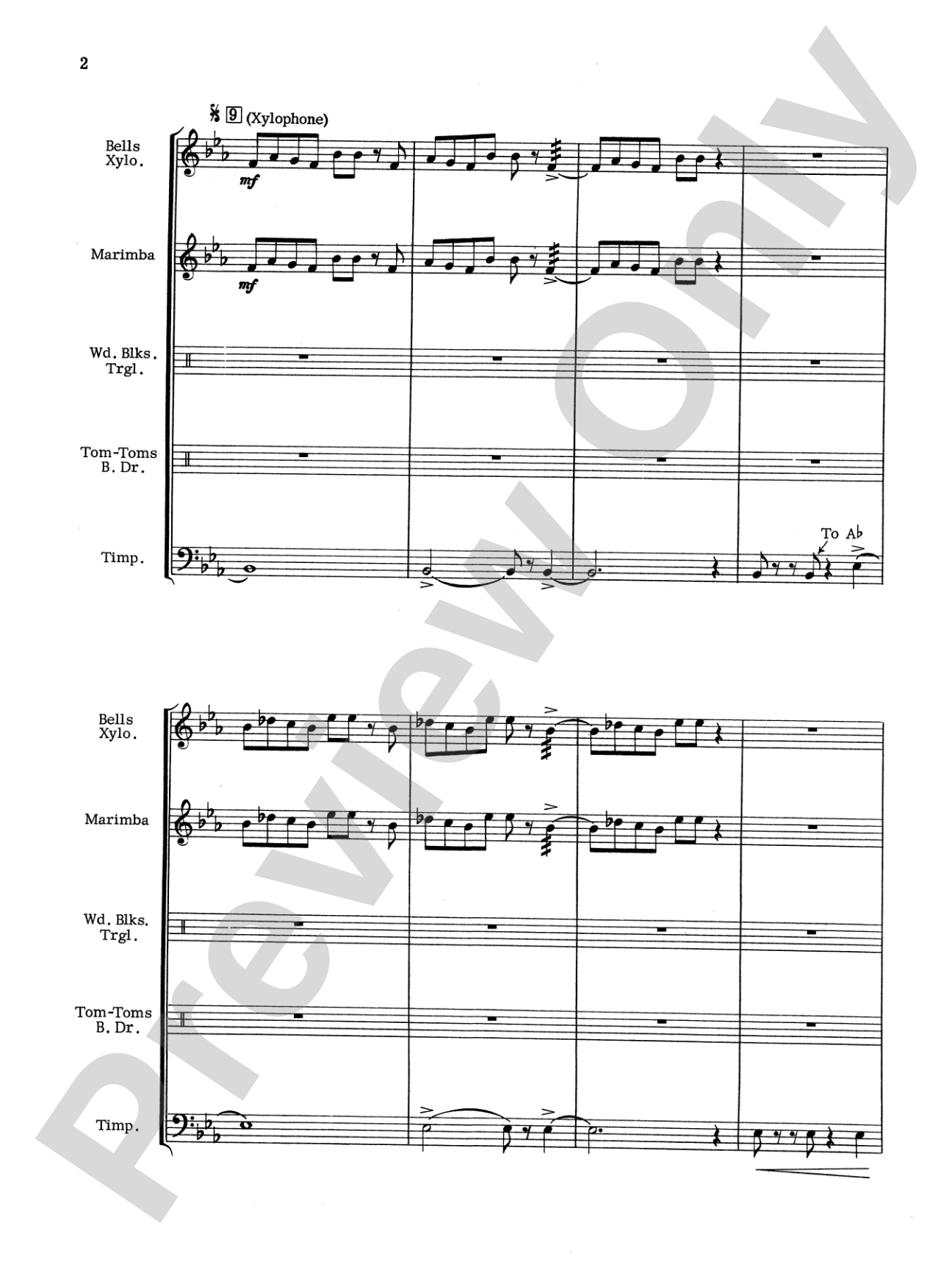
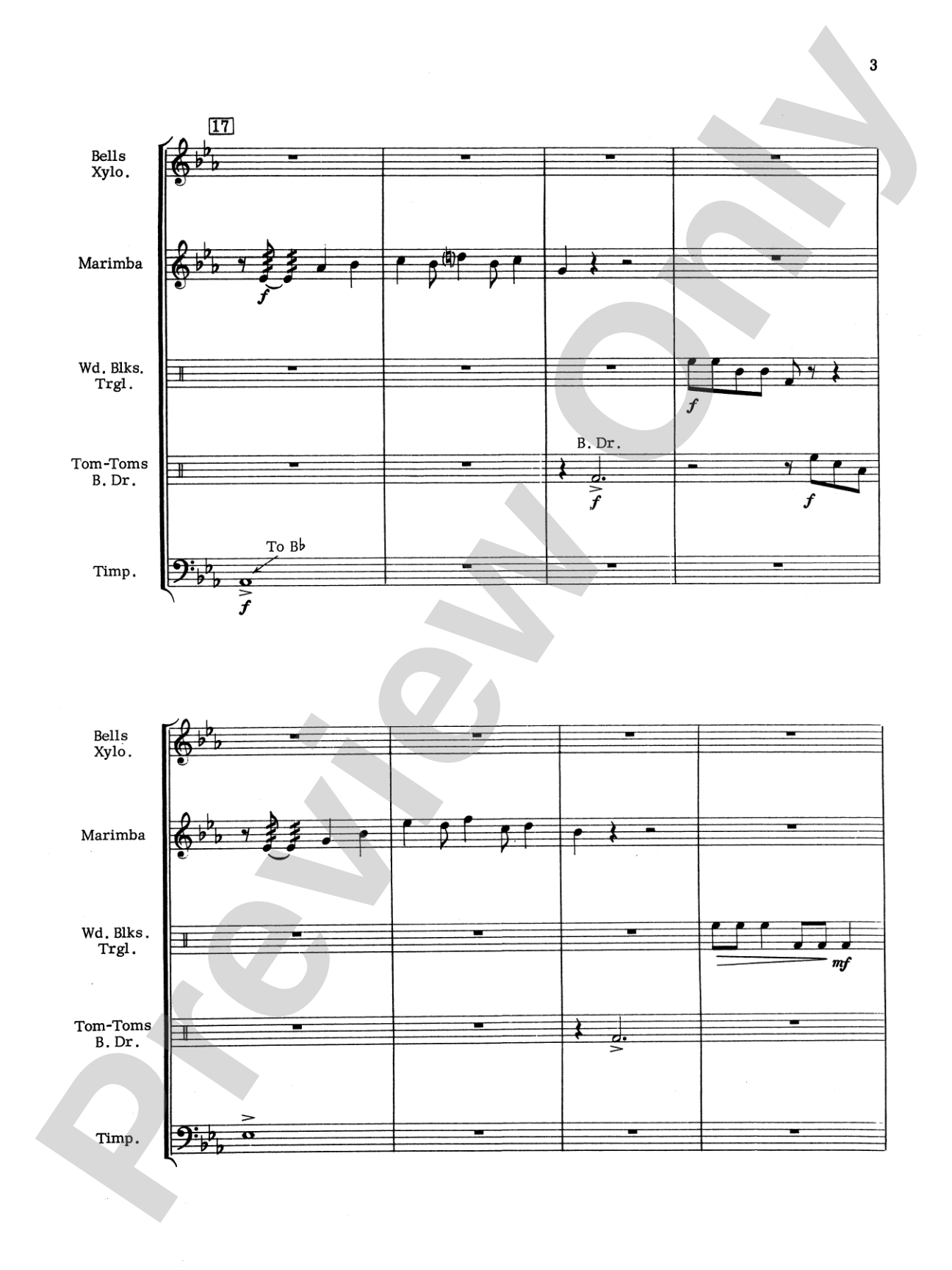
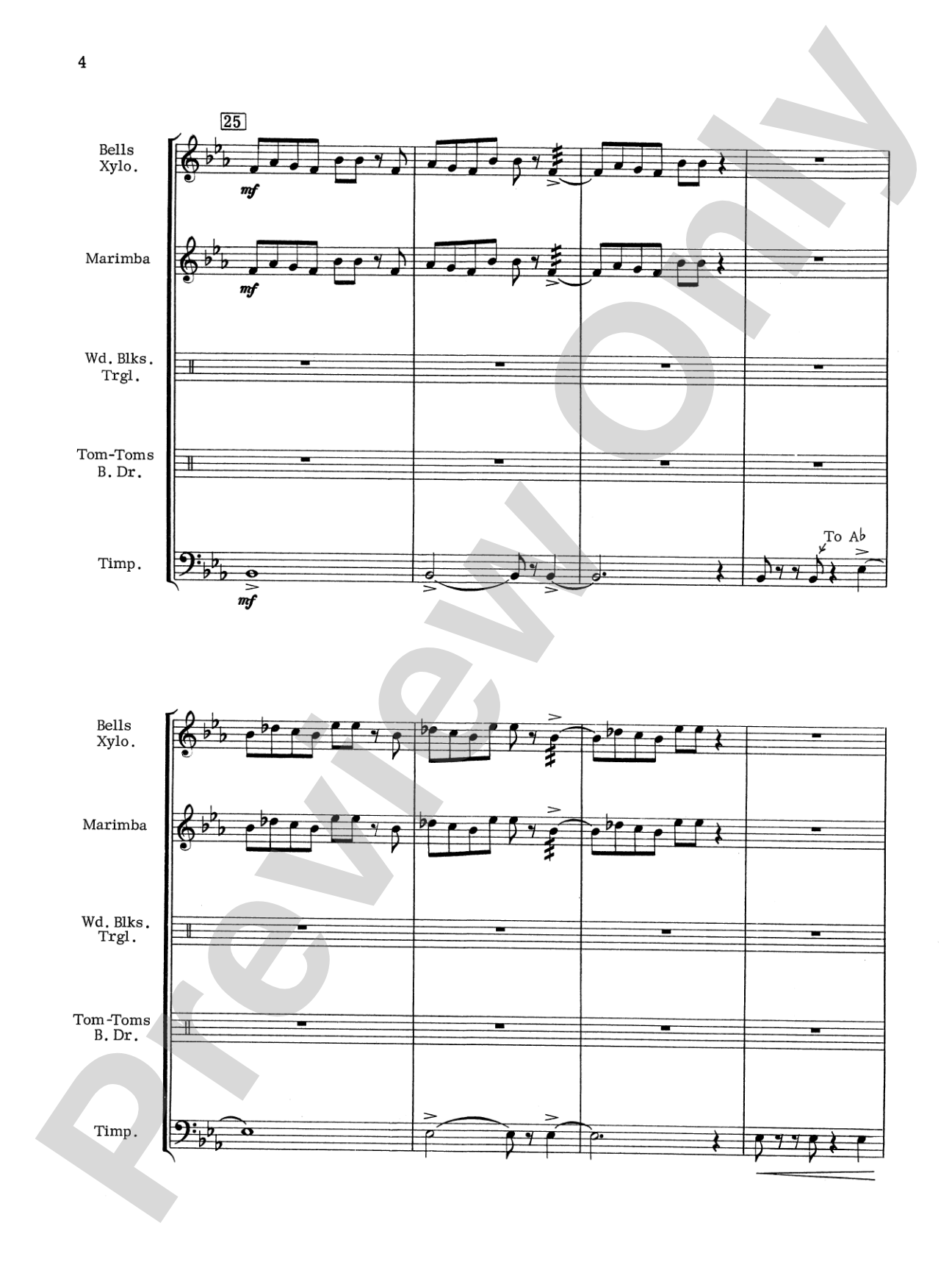

Fascinating Rhythm: Score
For 5 Players
By George Gershwin / arr. Sandy Feldstein
Level: Intermediate
Item: 00-PR-0004825
$8.00
Pickup currently not available
Description
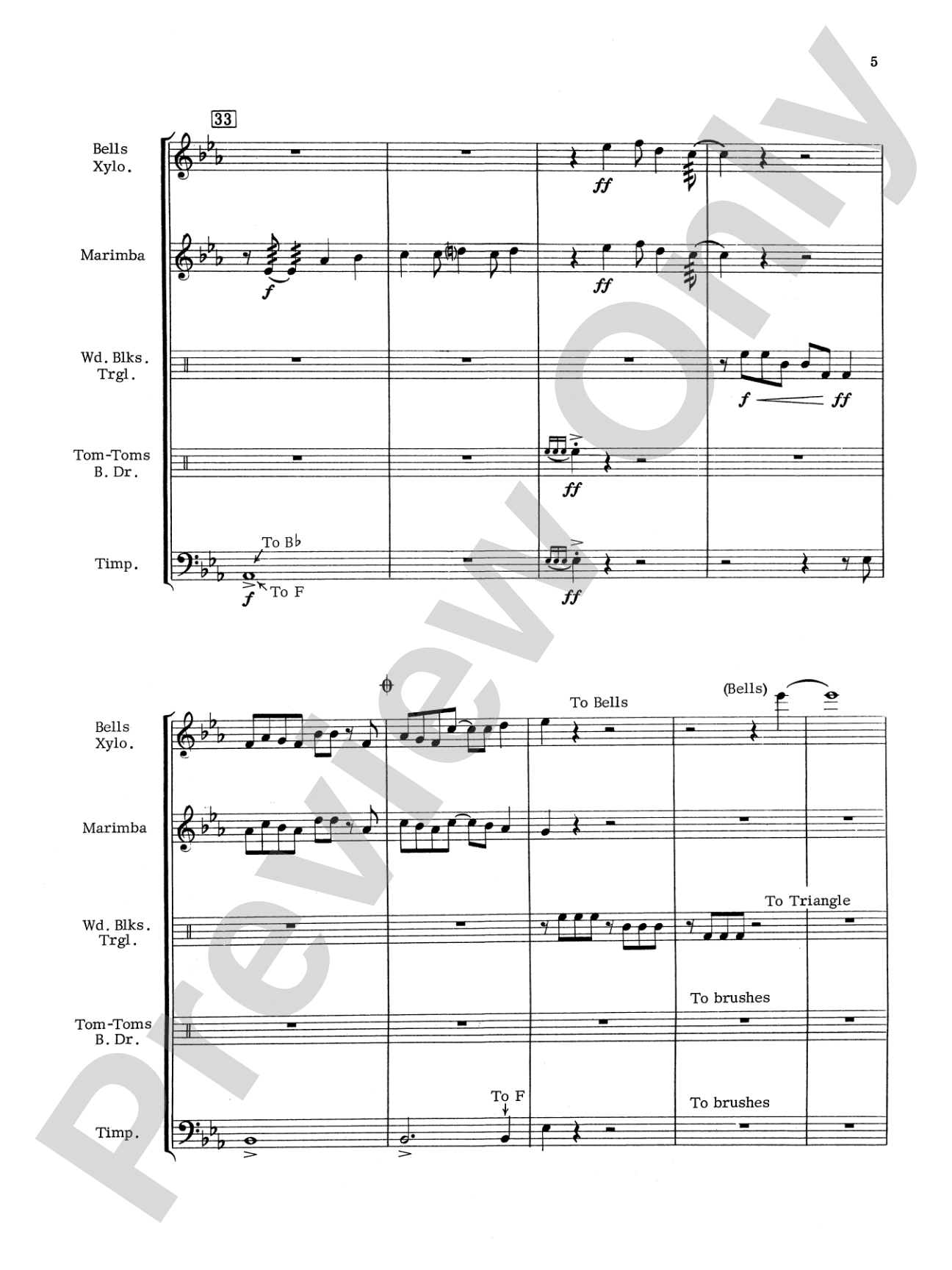
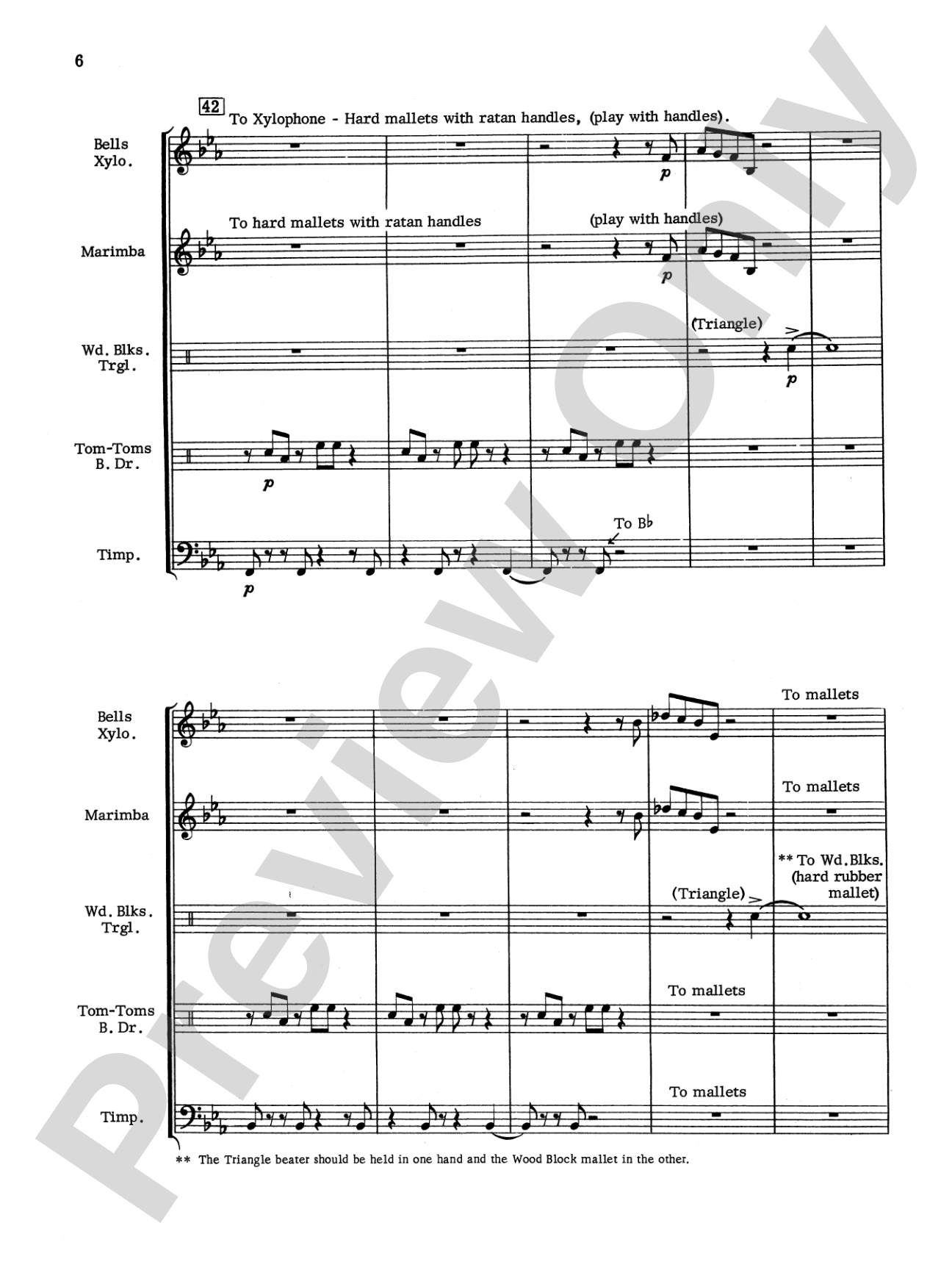
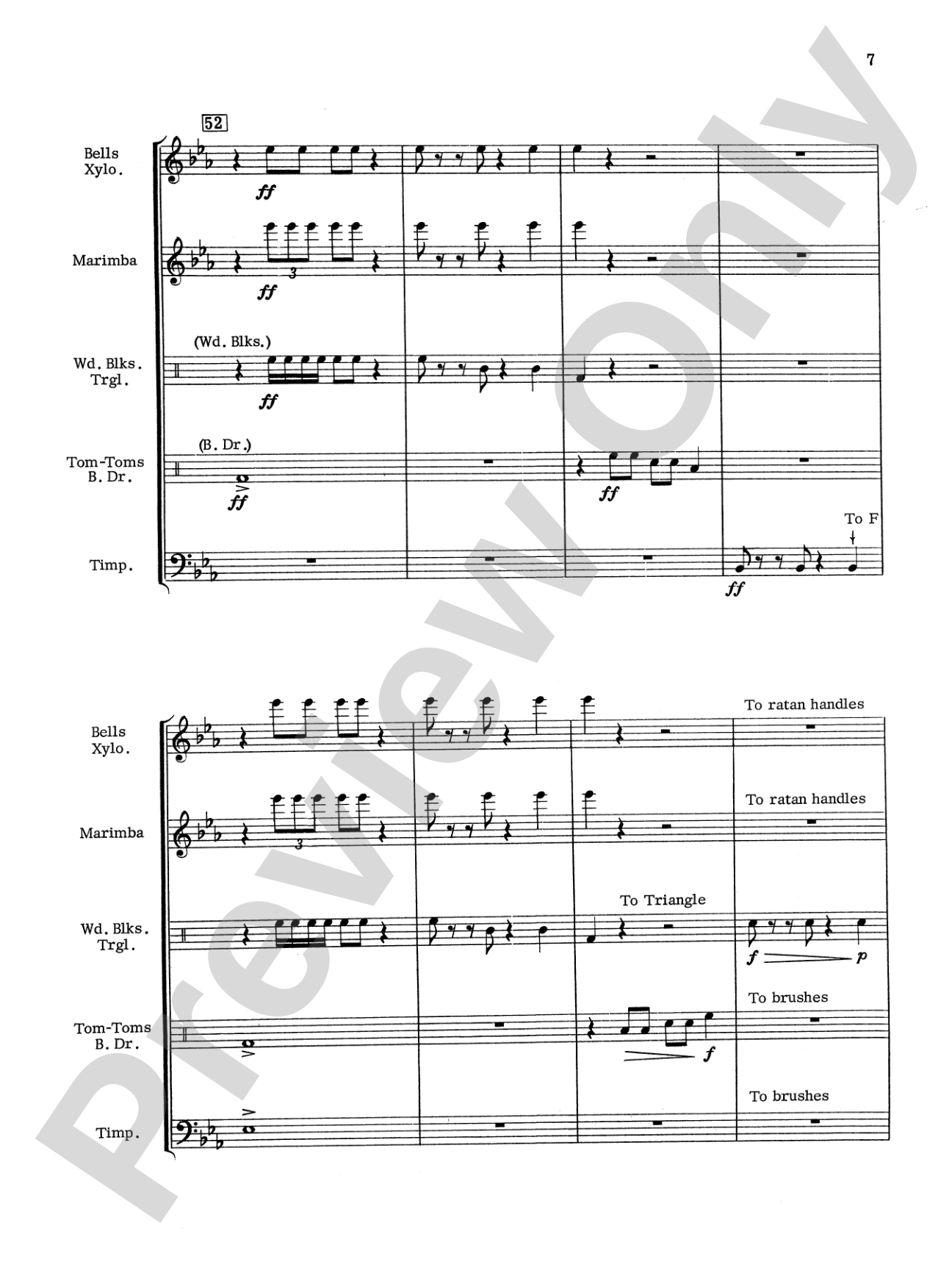
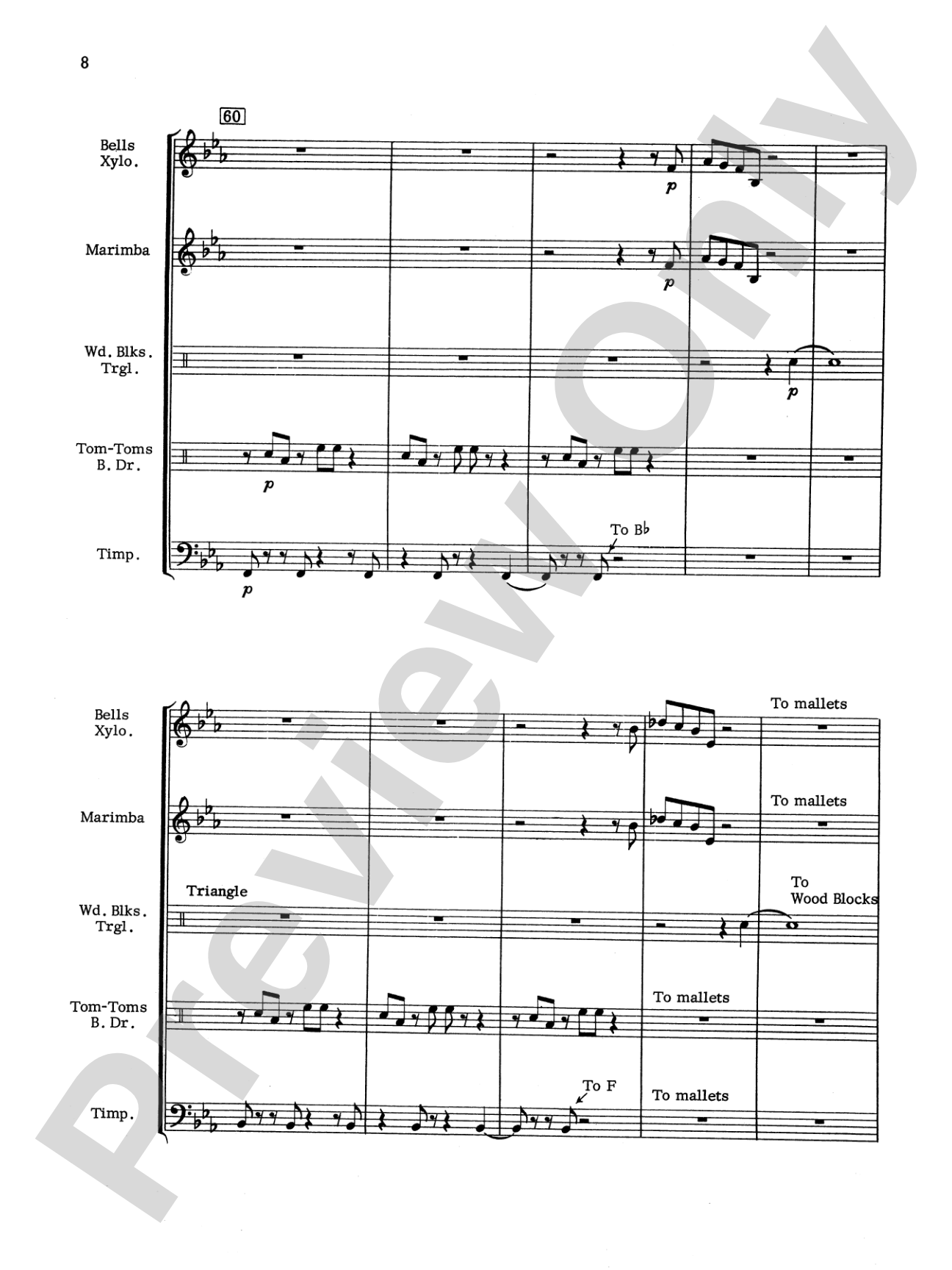
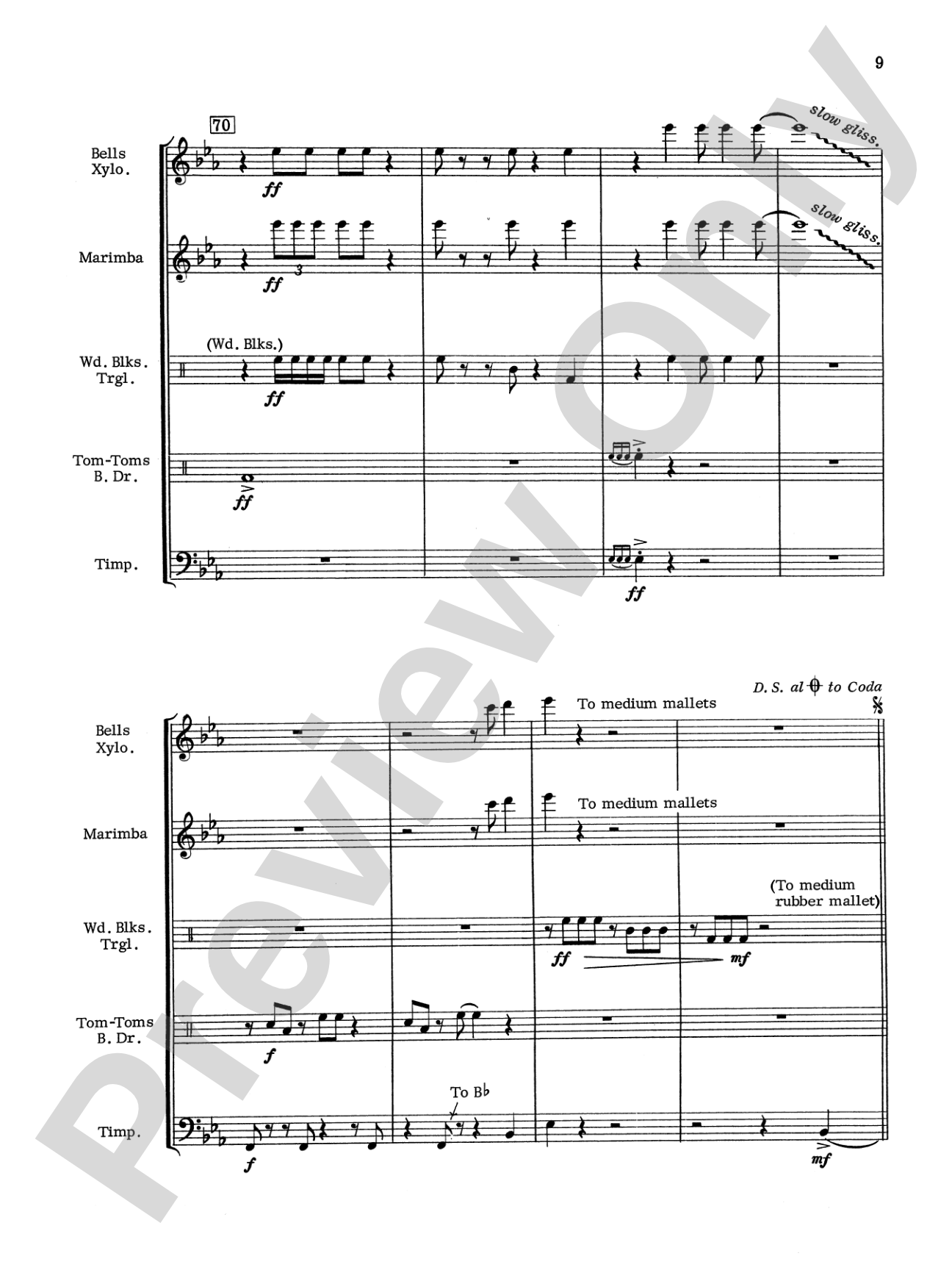
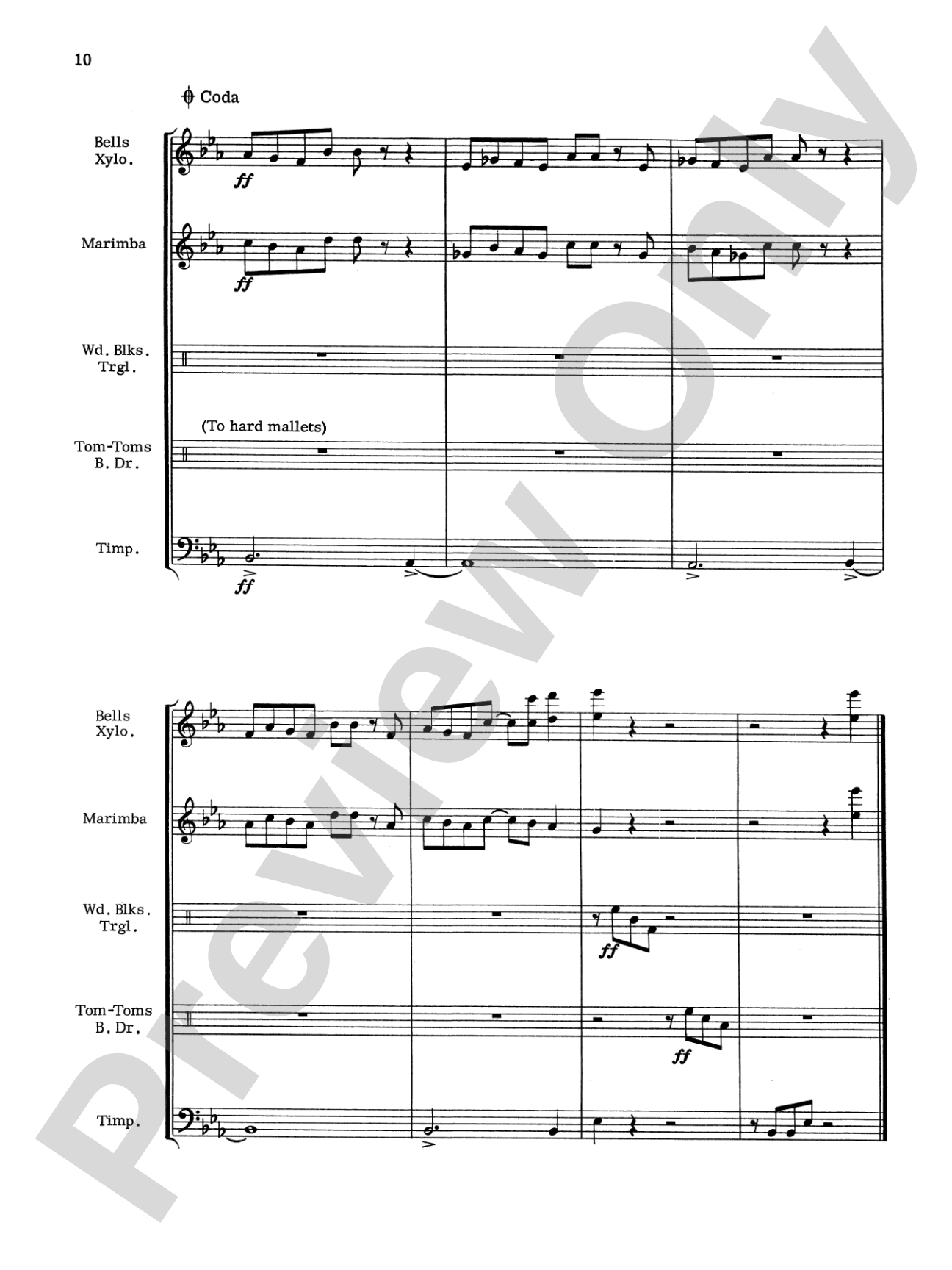
For five players. Who can resist a Gershwin tune! "Fascinating Rhythm" "swings" here in a jazz/pop style. The arrangement utilizes unique percussion sounds (i.e., brushes on tuned timpani, mallet handles on drums and keyboard bars) to create unusual colors. A percussion quintet with two keyboard parts provided. Instrumentation: bells, xylophone, marimba, 3 woodblocks, triangle, 3 tom-toms, bass drum, 3 timpani.


Don't just read it, hear it, play along with it, and watch your students grow with it. In MakeMusic Cloud, Fascinating Rhythm: Score comes alive with professional accompaniment, adjustable tempo, and built-in practice tools that turn solo practice into real progress.
Open in the Player
Jump straight in and assign it today.
Start Your Free Trial
Open this title and explore the full library in minutes.
Sample Audio
No sample audio found.
Sample Video
No sample videos found.
Additional Details
Series:
Percussion Performance Series
Publisher:
Alfred Music
Page Count:
24
SKU:
00-PR-0004825
More about this title
About the Composer: George Gershwin
George Gershwin (1898-1937) shaped American music by fusing classical forms with jazz idioms at a time when such synthesis was considered radical. His catalog spans concert works, musical theater, and popular songs, all unified by his gift for melody and his instinct for what made audiences listen. For percussion educators, his works offer students a direct connection to the modernist impulse that defined early twentieth-century composition.
Gershwin's rhythmic invention and harmonic sophistication made him a natural fit for ambitious school arrangements. His melodies sing even when filtered through unconventional instrumentations, and his jazz vocabulary gives student ensembles permission to explore swing, syncopation, and contemporary idiom alongside the classical tradition.
Why we love this
Sandy Feldstein's arrangement captures the propulsive energy of Gershwin's original while treating the percussion section as a full compositional voice rather than a time-keeping backdrop. The scoring makes real artistic demands (brushes on timpani, mallet handles on drums and keyboard bars) while remaining achievable for intermediate players, and the five-player configuration works perfectly for percussion programs that need flexible ensemble options.
What to expect
The piece swings with the breeziness of a 1920s jazz standard, but Feldstein's orchestration keeps surprising you with unusual sonorities. Brushes whisk across timpani heads; wooden sticks tap out conversational rhythms on drums and mallets; bells and xylophone trade the melody back and forth. It feels modern and playful at once, as if Gershwin himself had cracked open a percussion closet to see what colors he could steal.
Who it's for
Intermediate percussion ensembles ready for a standard-repertoire piece that balances rhythmic sophistication with ear-friendly melody. Five players with access to a full complement of percussion instruments will find this arrangement sits comfortably in their range, and directors seeking a Gershwin work that showcases both classical and contemporary percussion technique will find exactly what they need.
How to get the most out of it
- Treat the brushes on tuned timpani as a textural spotlight. These moments cut through the ensemble only when the rhythmic precision is absolutely locked; underscore the importance of this technique in rehearsal before adding tempo.
- Balance the two keyboard parts carefully so neither dominates. Bells and xylophone should read together as a harmonic unit; test this balance at lower tempos first, then add back the swing.
- Build swing feel gradually by isolating the woodblock parts (all three voices together) until the players own the off-beat punctuation that drives the whole piece.
- Mallet selection changes the sound of mallet-handle strokes on drums and keyboard bars significantly. Experiment with different stick lengths and head weights to find tones that sit well with the tuned percussion rather than muddying it.
How to use it
Program this as a concert centerpiece that bridges classical repertoire and jazz idiom in a single work, or pair it with other twentieth-century American pieces for a thematic concert on modernism and popular music. It works equally well as a spring concert closer that leaves audiences smiling, or as part of a percussion showcase where different quintet combinations each present a contrasting work.
Skills your students will build
- Jazz/swing phrasing and rhythmic interpretation
- Mallet control across multiple instruments (bells, xylophone, marimba, timpani, tom-toms)
- Ensemble balance and blend with mixed percussion voices
- Extended percussion techniques (brushes on timpani, mallet handles on various surfaces)
- Reading multiple keyboard parts simultaneously and maintaining harmonic awareness
- Rhythmic precision in syncopated and off-beat passage work