
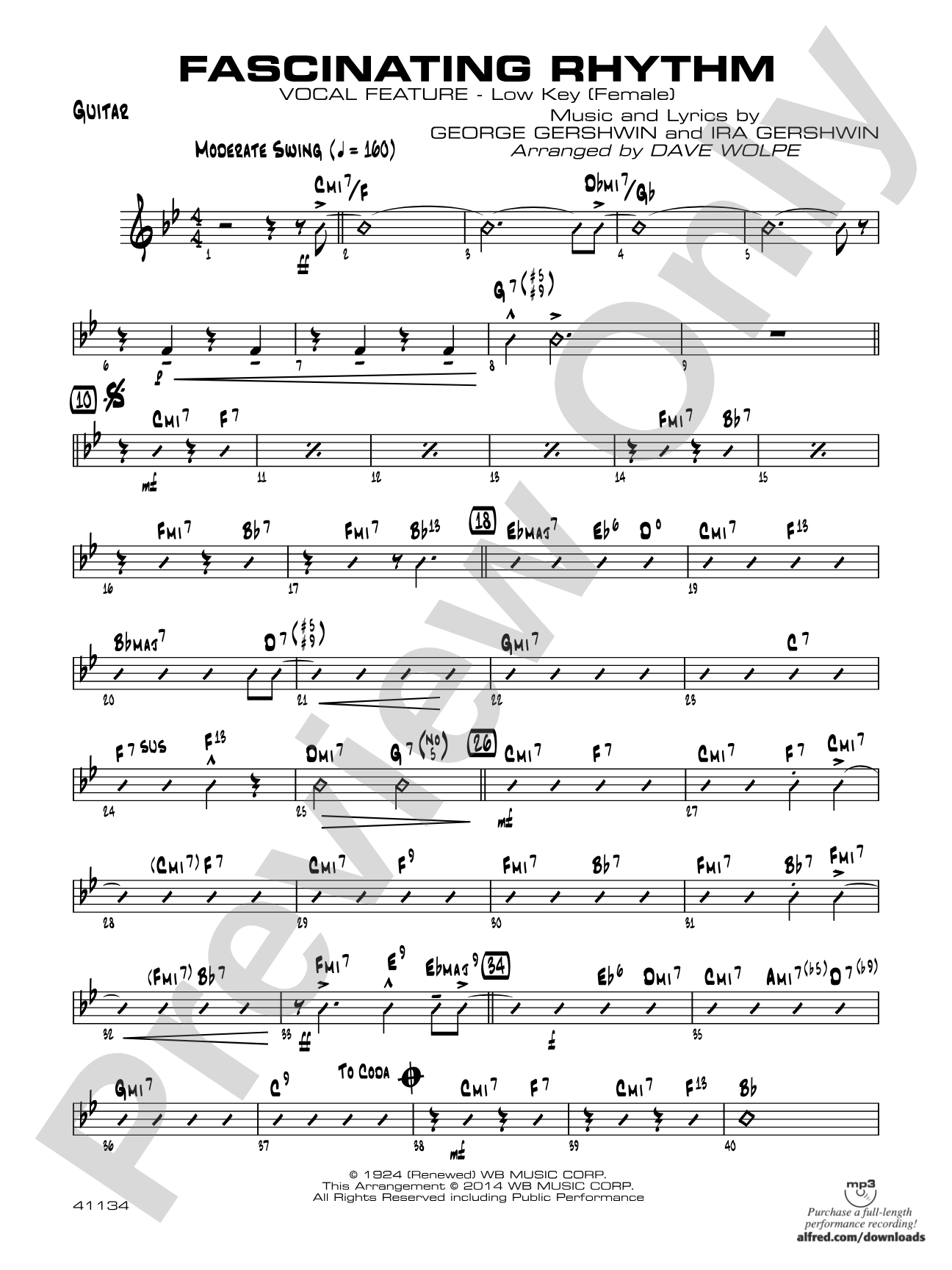

Fascinating Rhythm: Guitar
Music and lyrics by George Gershwin and Ira Gershwin / arr. Dave Wolpe
Grade: 3.5 (Medium)
Item: 00-PC-0016271_G
$3.00
Pickup currently not available
Description
Vocal with jazz ensemble at a swingin' 160 BPM. Gershwin's great show tune arranged in two keys. The low female key is B-flat with the vocal range from F below middle C to third line B-flat. The high male key is E-flat with range from B-flat below middle C to top space E-flat, treble clef. Lead trumpet range is to A, and a written-out tenor sax solo is provided. (2:58)


Don't just read it, hear it, play along with it, and watch your students grow with it. In MakeMusic Cloud, Fascinating Rhythm: Guitar comes alive with professional accompaniment, adjustable tempo, and built-in practice tools that turn solo practice into real progress.
Open in the Player
Jump straight in and assign it today.
Start Your Free Trial
Open this title and explore the full library in minutes.
Sample Audio
1
Audio File
--:--
0:00
0:00
Sample Video
No sample videos found.
Additional Details
Series:
Jazz Vocal Series
Publisher:
Alfred Music
Page Count:
82
SKU:
00-PC-0016271_G
More about this title
About the Composer: George Gershwin
George Gershwin (1898-1937) bridged the worlds of popular song and concert music with a compositional voice that felt entirely new to American audiences. His melodies had the infectious quality of Tin Pan Alley, yet his harmonic language drew from classical training and jazz idioms, creating works that could thrive equally in Broadway theaters and concert halls. "Fascinating Rhythm" exemplifies his gift for marrying sophisticated rhythmic energy with memorable, singable lines.
Gershwin's collaborative partnership with lyricist Ira Gershwin produced some of the greatest American songs ever written. Though his life was cut short, his influence on both musical theater and instrumental jazz remains foundational to music education and performance. Directors return to Gershwin again and again because his songs are instantly recognizable, deeply musical, and endlessly rewarding to work with.
Why we love this
Dave Wolpe's arrangement captures the swagger and wit of the original while giving your jazz ensemble real work to do. The written tenor sax solo is a genuine feature, not an afterthought, and the two-key setup means you can program this with both alto and tenor singers without compromising anyone's range. At Grade 3.5, it's solidly playable for developing ensembles yet sophisticated enough to showcase maturity.
What to expect
Pure, unapologetic joy delivered at a clip that keeps everyone's energy up. The syncopation dances around the beat without losing sight of a melody so strong it's lodged itself in the American musical memory for a century. It's the sound of a composer grinning while proving popular music can also be genuinely smart.
Who it's for
Singers who want to prove they can handle jazz idiom and style, not just classical legit singing. Jazz ensembles at the intermediate level looking for a famous tune that carries genuine musical content and doesn't rely on novelty or vocal histrionics.
How to get the most out of it
- Lock the swing feel early in rehearsals by having the rhythm section establish the groove at 160 BPM before layering in horns. The tempo is brisk, and ensemble cohesion depends on anchoring that pocket from day one.
- Give the lead trumpet player time to shape the characteristic Gershwin phrases; this isn't a chart where high notes alone carry the section. Phrasing and attack matter more than volume.
- The tenor sax solo should breathe as a genuine improvisation moment even though it's written out. Coach the soloist to land on the downbeats of phrases while maintaining the swagger Gershwin intended.
- Balance the vocalist's projection with the ensemble during tutti sections. Jazz ensemble writing often buries the voice if the brass doesn't stay responsive to dynamic shape.
How to use it
Program this as a standalone feature showcasing your ensemble's versatility and polish, or pair it with other American songbook selections for a themed set. The 2:58 duration makes it a strong opener for a jazz concert, settling the audience into the idiom while establishing that you're serious about musicality.
Skills your students will build
- Swing feel and jazz articulation in an ensemble setting
- Balancing vocal projection over jazz ensemble textures
- Reading and executing written jazz solos with appropriate stylistic inflection
- Maintaining tempo and ensemble precision at brisk tempos
- Interpreting the harmonic language and phrasing conventions of the American songbook