
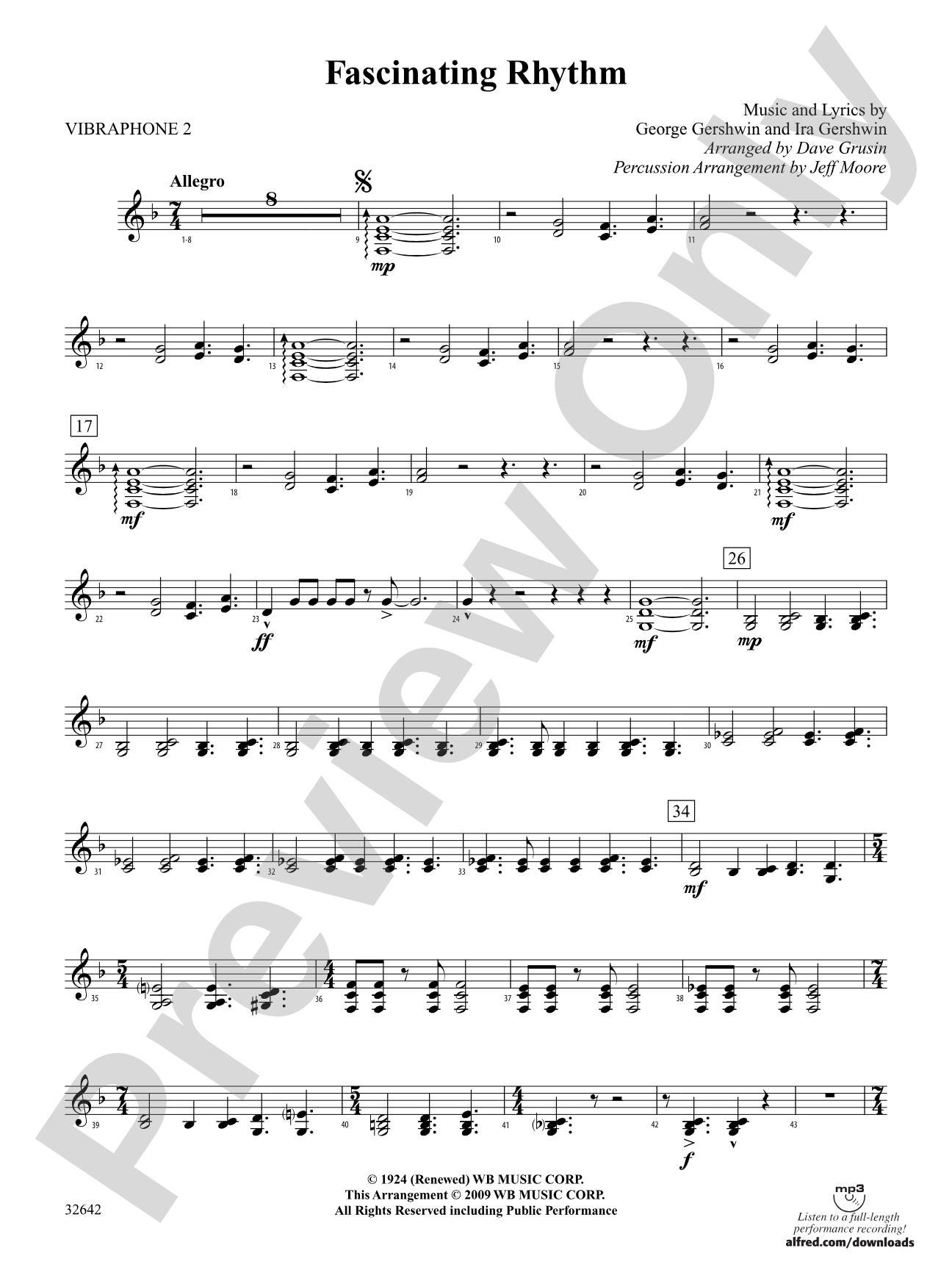

Fascinating Rhythm: 2nd Vibes
For Percussion Septet with Optional Bass Guitar
By George Gershwin / arr. Jeff Moore
Level: Intermediate / Advanced
Item: 00-PC-0014412_V2
$3.00
Pickup currently not available
Description
Alfred's Pop Percussion Ensemble Series has added this new arrangement, written especially for the developing intermediate and advanced percussion ensemble. A George Gershwin favorite, Fascinating Rhythm has been scored to feature the vibraphone and drumset. Setting the familiar Gershwin melody in "7," this arrangement is based on Dave Grusin's version that featured Gary Burton on vibes and Dave Weckl on drums.


Don't just read it, hear it, play along with it, and watch your students grow with it. In MakeMusic Cloud, Fascinating Rhythm: 2nd Vibes comes alive with professional accompaniment, adjustable tempo, and built-in practice tools that turn solo practice into real progress.
Open in the Player
Jump straight in and assign it today.
Start Your Free Trial
Open this title and explore the full library in minutes.
Sample Audio
1
Audio File
--:--
0:00
0:00
Sample Video
No sample videos found.
Additional Details
Series:
Alfred's Pop Percussion Ensemble Series
Publisher:
Alfred Music
Page Count:
34
SKU:
00-PC-0014412_V2
More about this title
About the Composer: George Gershwin
George Gershwin (1898-1937) bridged classical and popular music in ways that fundamentally changed American composition. His integration of jazz idioms, blues harmonies, and vernacular rhythms into concert works created a distinctly American sound that transcended genre boundaries. Rhapsody in Blue remains his most famous work, yet pieces like Fascinating Rhythm showcase his gift for memorable melody and sophisticated harmonic language in shorter forms.
For music educators, Gershwin's output offers accessible entry points into 20th-century concert music without sacrificing artistic depth. His melodies sing naturally on any instrument, his rhythms engage performers immediately, and his harmonic language rewards careful listening. Students encounter genuine masterworks rather than simplified approximations.
Why we love this
Jeff Moore's arrangement captures the sophistication of Dave Grusin's recording while keeping the ensemble roles flexible enough for developing players. Setting Gershwin's brilliant melody in 7/4 throughout creates a modern rhythmic challenge that feels fresh, not gimmicky; your ensemble gains genuine metric literacy rather than novelty technique. The vibraphone and drumset spotlight gives those players real musical agency without sidelining the rest of the group.
What to expect
Sophisticated swinging energy wrapped around one of Gershwin's most propulsive melodies. The 7/4 meter gives the familiar tune an almost suspended feeling, as though the beat is slightly behind where you expect it, creating rhythmic tension that's exhilarating rather than disorienting. Bright, modern, and undeniably fun.
Who it's for
Intermediate to advanced percussion ensembles ready to tackle modern metric challenges without sacrificing musicality. Your ensemble should have solid players on vibraphone and drumset capable of carrying the arrangement's twin engines. This works best for programs that've already spent time with standard chamber percussion repertoire and want something with genuine concert polish.
How to get the most out of it
- Anchor the 7/4 meter by subdividing internally; don't rely on the ensemble to feel the time together at first. Have your timekeeper(s) practice with the recorded accompaniment (if available) before rehearsal to internalize Dave Weckl's groove.
- Balance the vibraphone melody so it floats above the ensemble without forcing players to overproject. The Gershwin tune should seem effortless, especially over busy rhythmic figures.
- Layer in the drumset's comping gradually. Develop the foundation and harmonic language first, then add the rhythmic sophistication of the drums so nothing feels rushed or cluttered.
- Highlight the harmonic movement under the familiar melody. Gershwin's chords contain jazz color that will surprise players expecting diatonic accompaniment; let those moments land.
How to use it
Program this as a centerpiece for a contemporary American music concert, pairing it naturally with other jazz-inflected works or concert band arrangements from the same era. Its length and moderate instrumentation demands make it suitable for competitions or festival showcases where you want to represent both your ensemble's versatility and the repertoire's artistic legitimacy. Consider placing it mid-program where the rhythmic energy lifts the entire concert's momentum.
Skills your students will build
- Reading and internalizing compound meters (7/4)
- Balancing melodic prominence with ensemble texture
- Interpreting jazz-influenced comping and rhythmic figures
- Coordinating vibraphone and drumset as co-leading voices
- Responding to harmonic sophistication beyond diatonic harmony
- Maintaining ensemble cohesion in asymmetrical time