
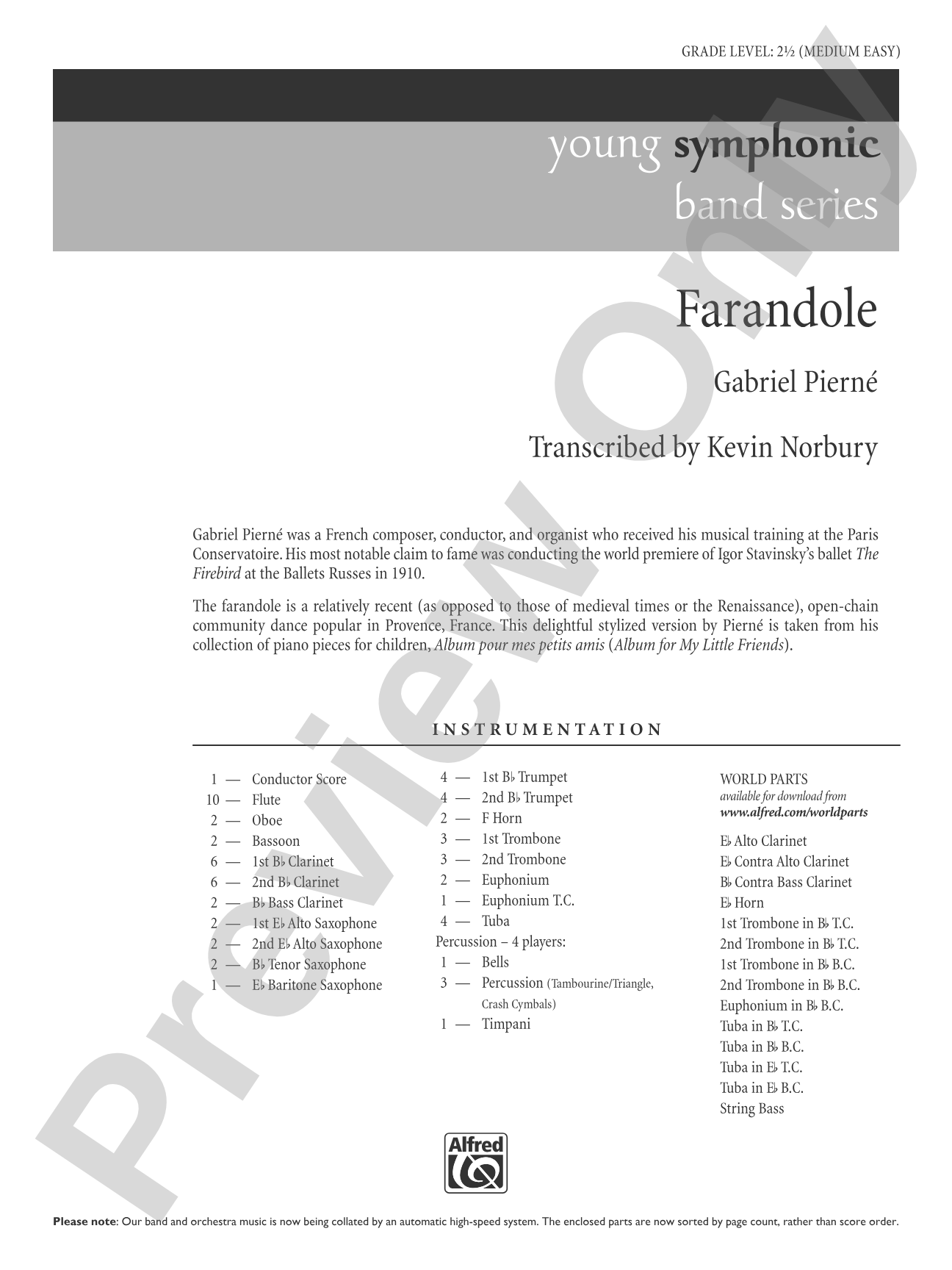
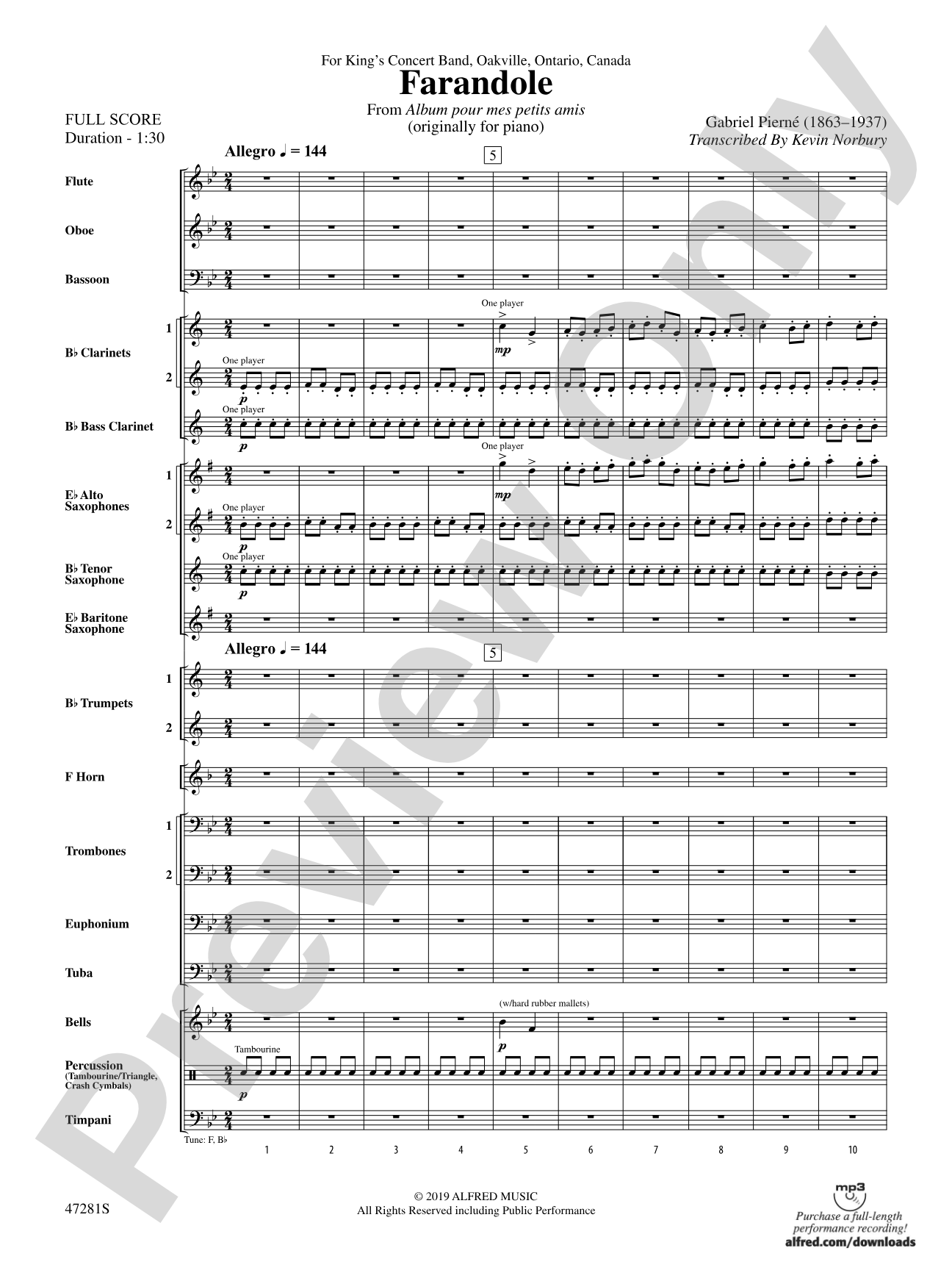
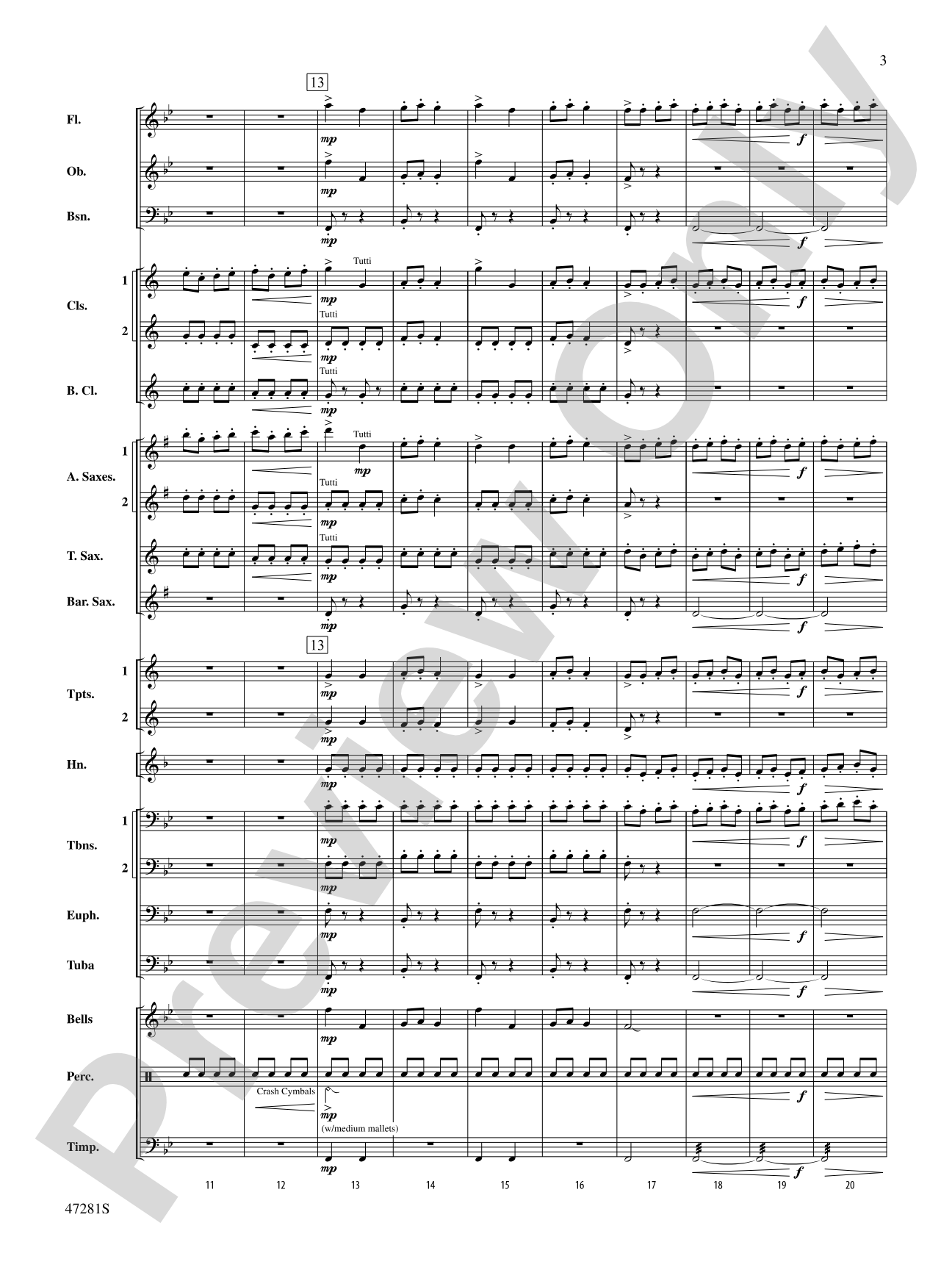
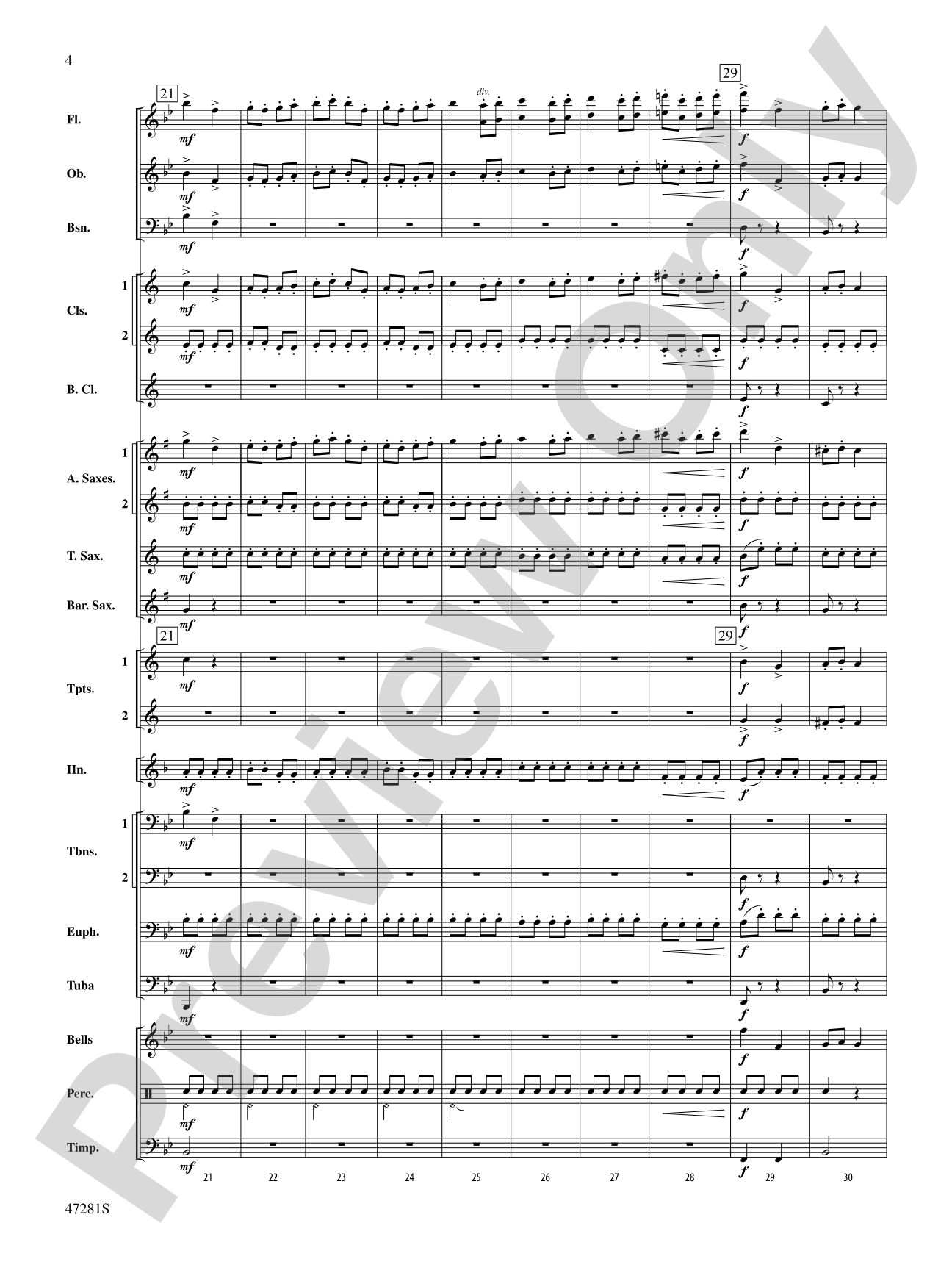
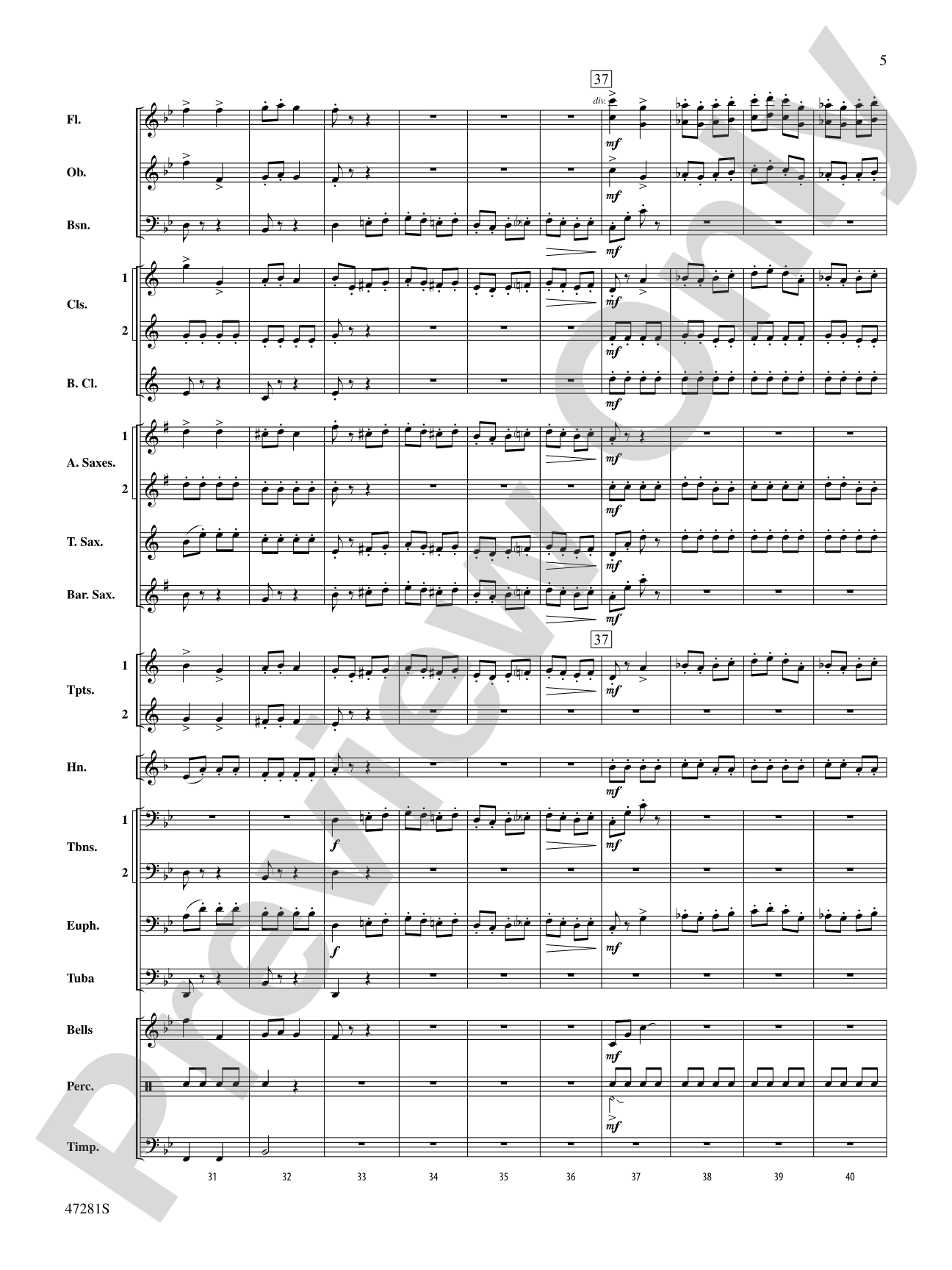
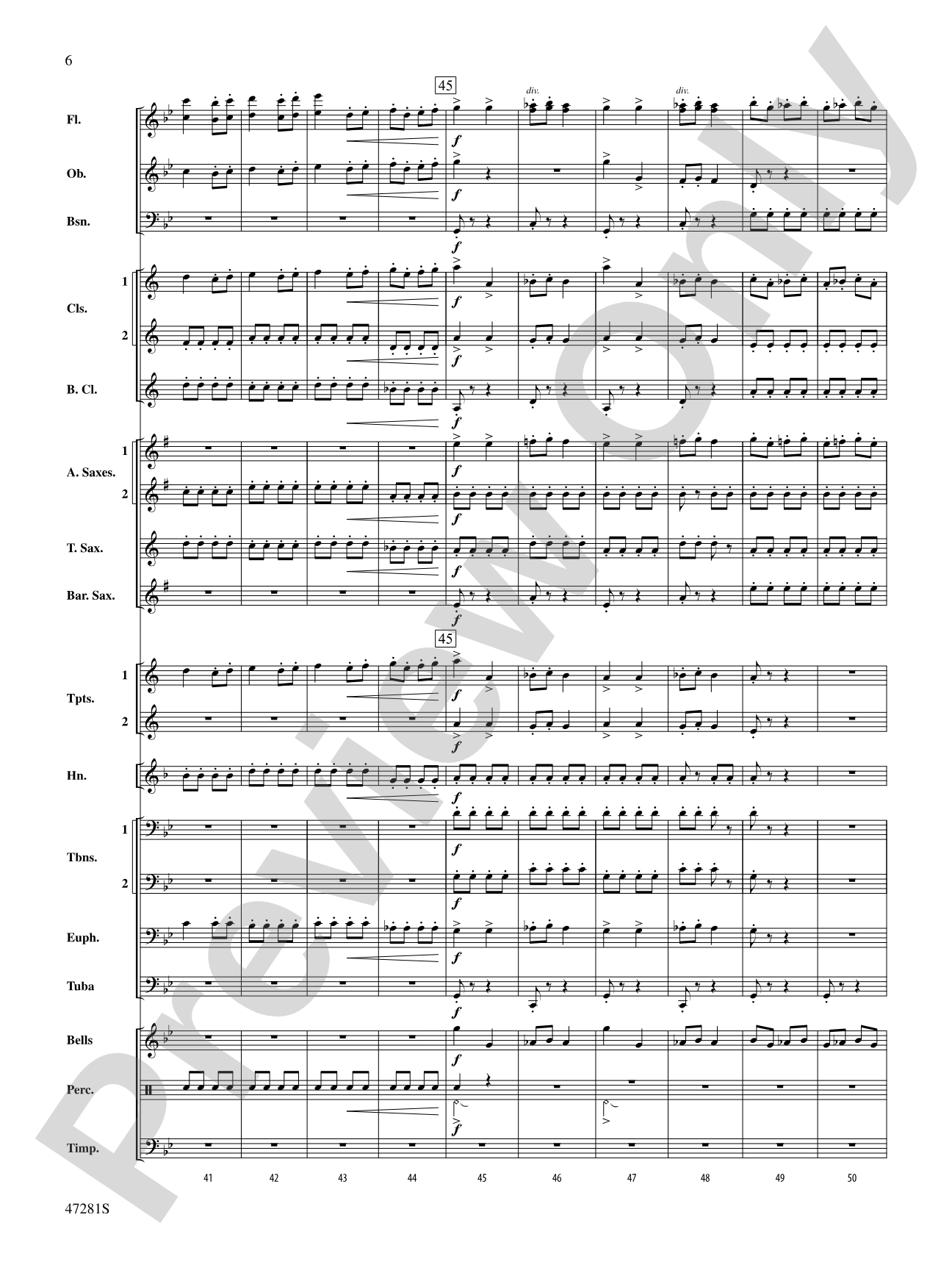
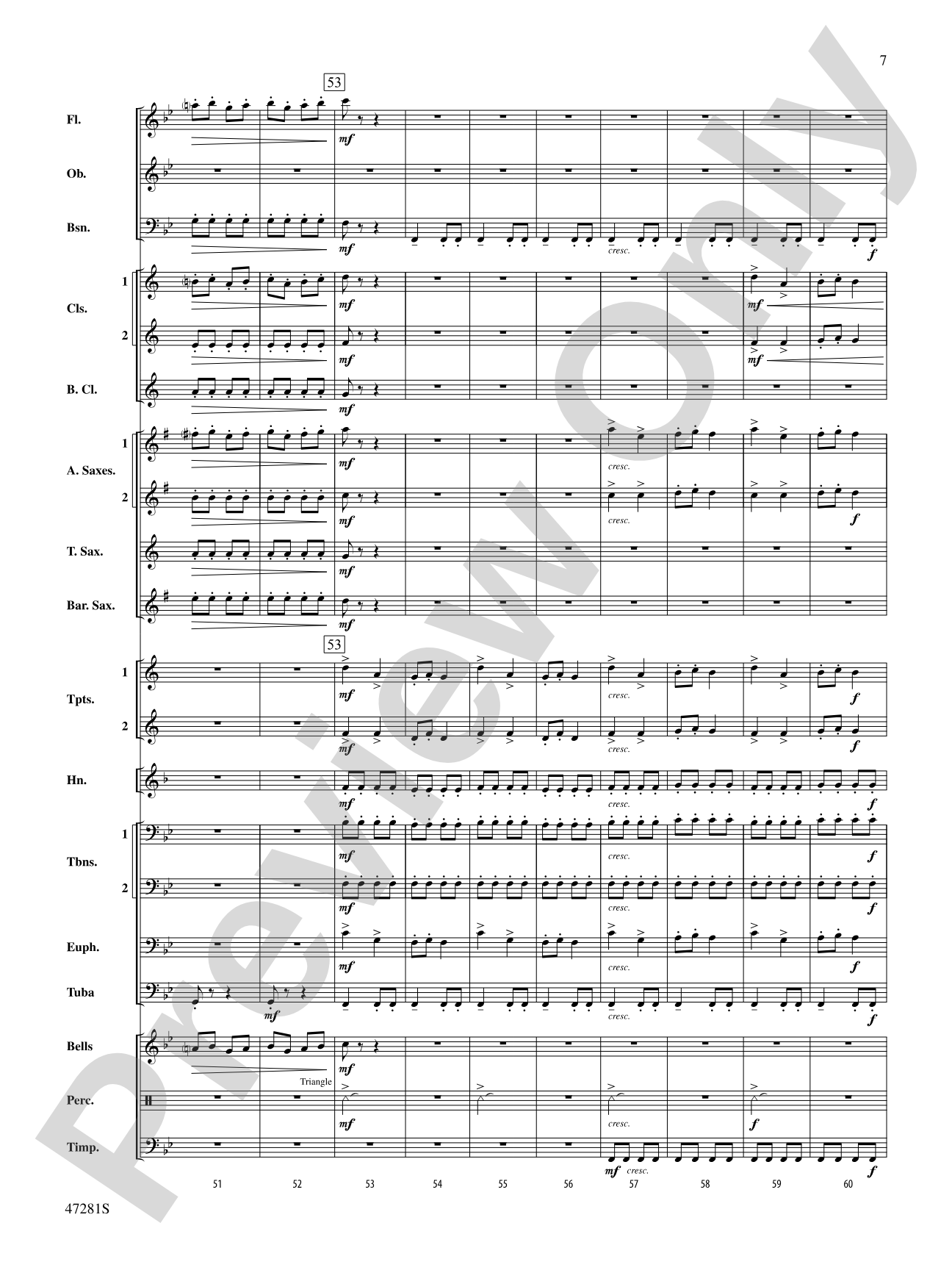
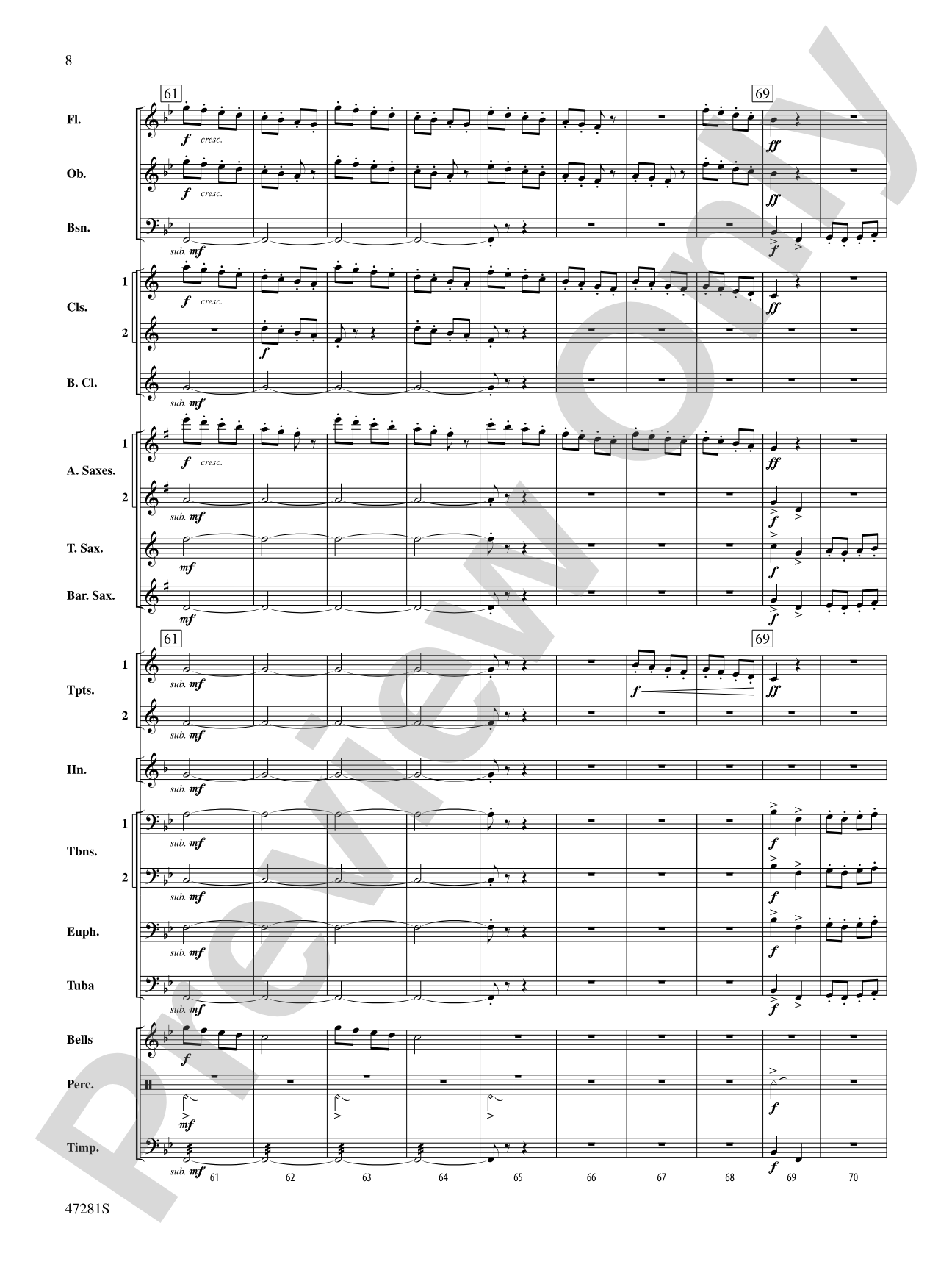
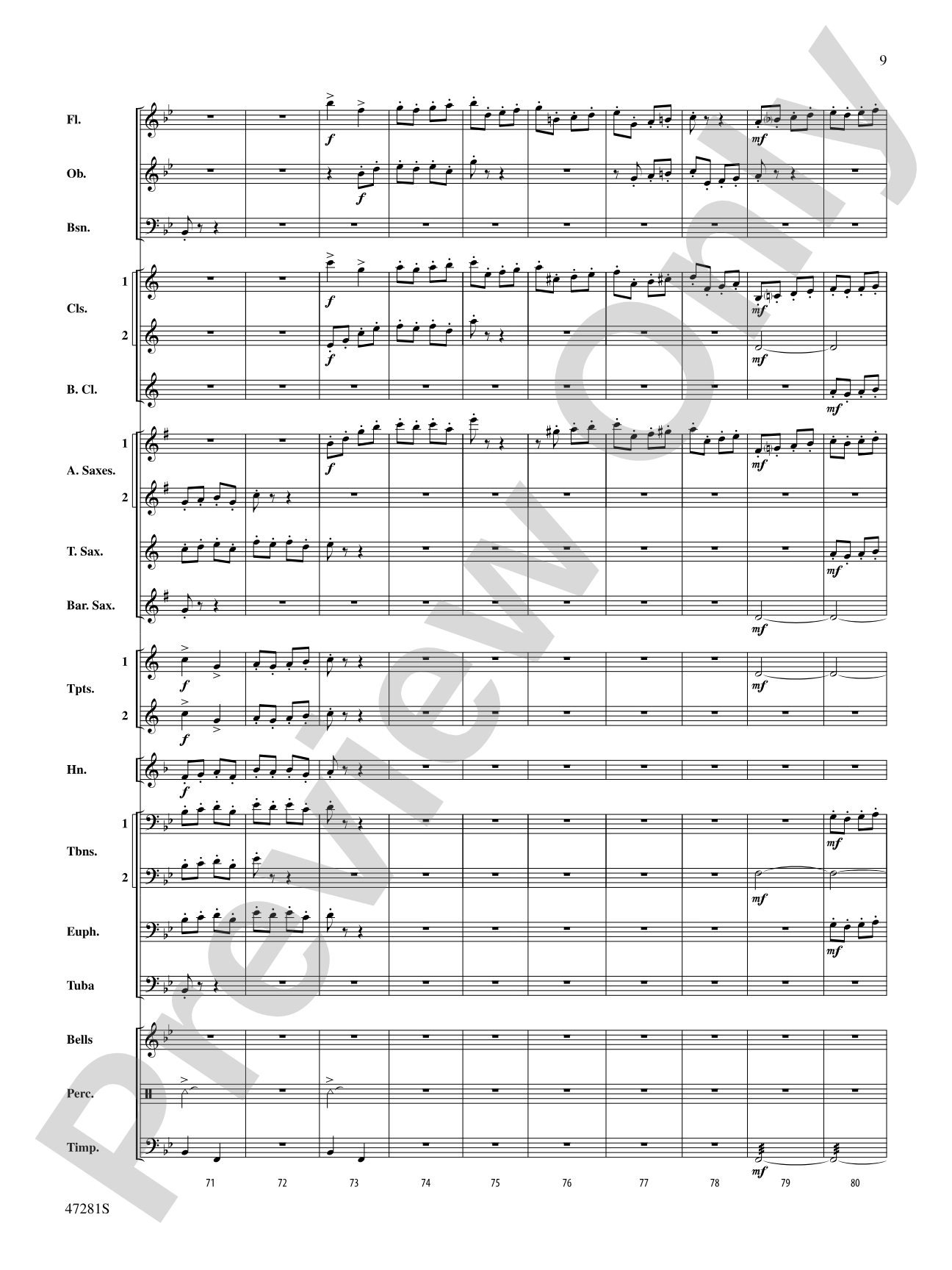
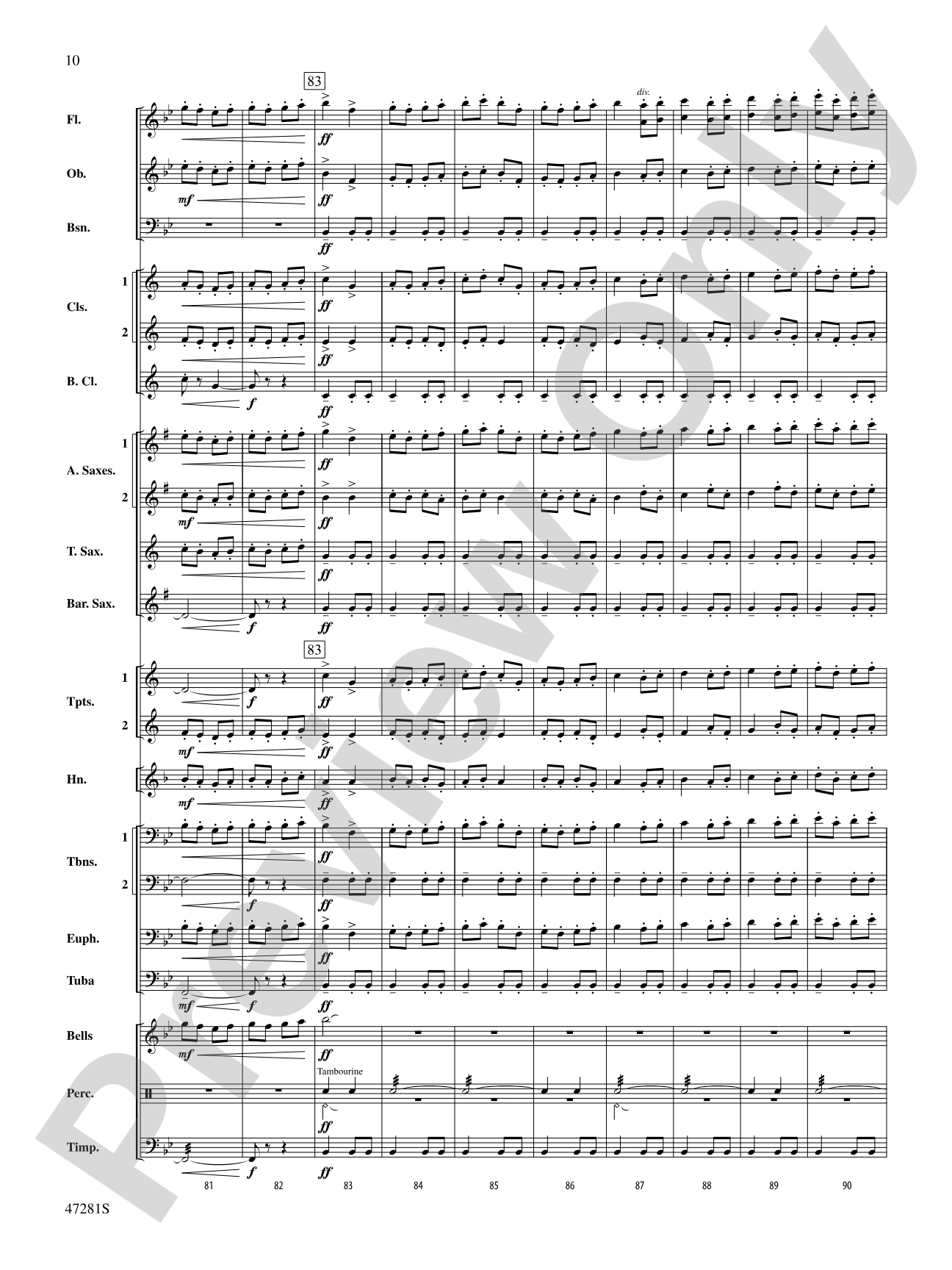
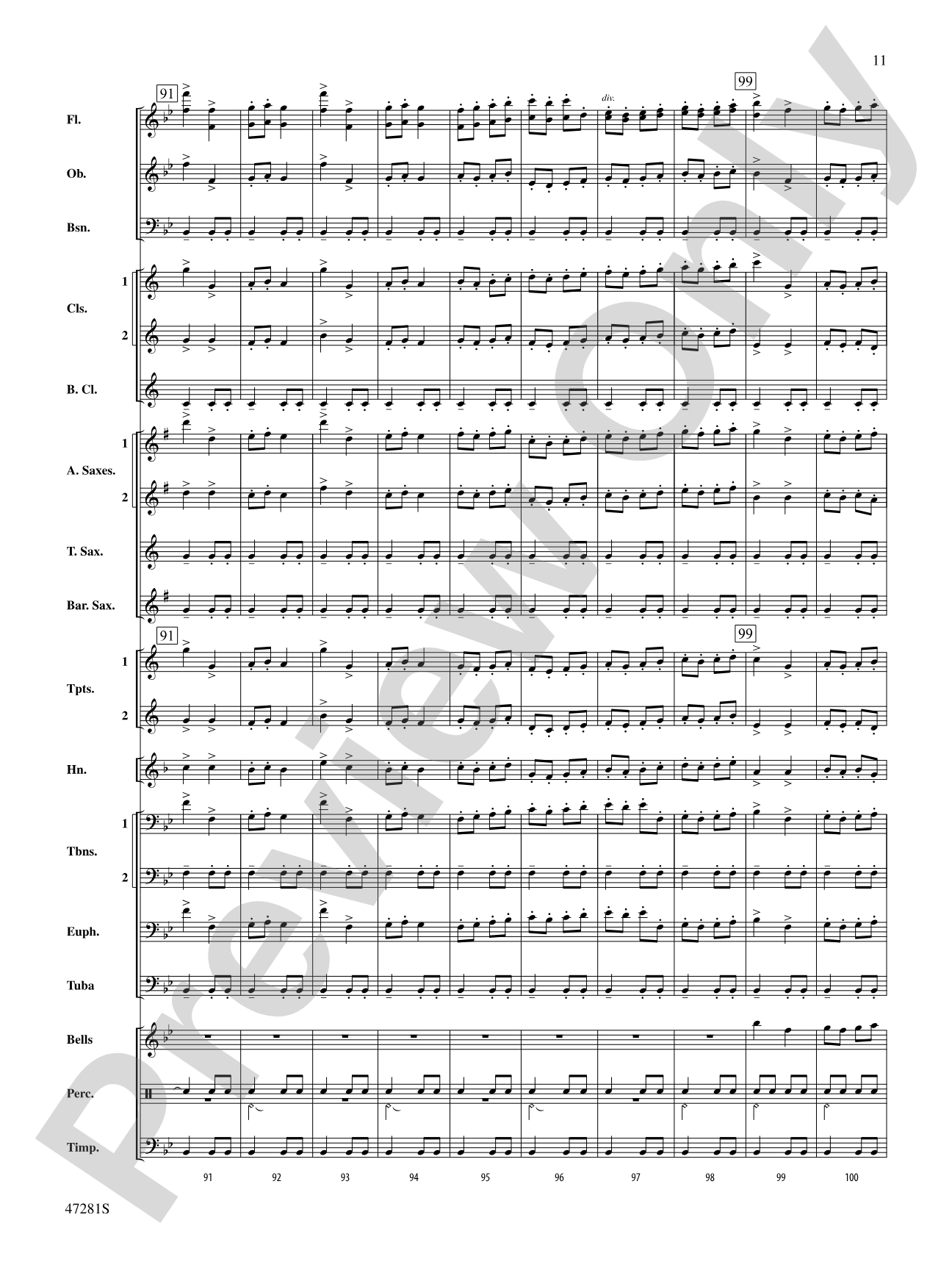
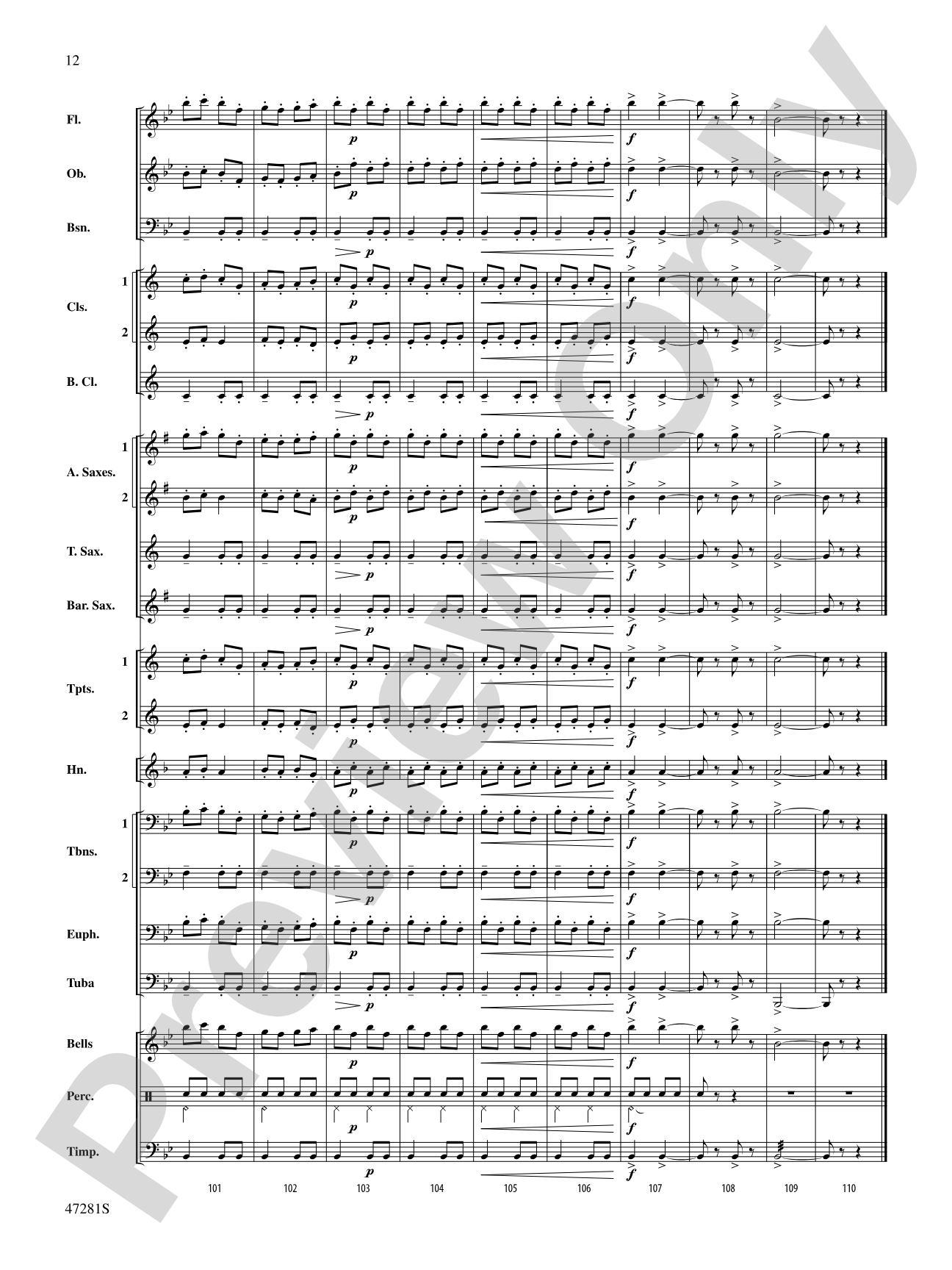

Farandole: Score
By Gabriel Pierné / transcribed by Kevin Norbury
Grade: 2.5 (Medium Easy)
Item: 00-PR-0006099
$8.00
Pickup currently not available
Description
The farandole is an open-chain community dance popular in Provence, France. This delightful, stylized version by Pierné is taken from his collection of piano pieces for children, Album pour mes petits amis (Album for my little friends).


Don't just read it, hear it, play along with it, and watch your students grow with it. In MakeMusic Cloud, Farandole: Score comes alive with professional accompaniment, adjustable tempo, and built-in practice tools that turn solo practice into real progress.
Open in the Player
Jump straight in and assign it today.
Start Your Free Trial
Open this title and explore the full library in minutes.
Sample Audio
1
Audio File
--:--
0:00
0:00
Sample Video
Additional Details
Series:
Young Symphonic
Publisher:
Alfred Music
Page Count:
126
SKU:
00-PR-0006099
More about this title
About the Composer: Gabriel Pierné
Gabriel Pierné (1863-1937) was a French composer and conductor whose gifts for orchestration made him a natural arranger of his own work. He spent decades leading the Colonne Orchestra in Paris, where he championed new music and developed an ear for what sounds brilliant across different ensembles. His keyboard works, especially those written for young musicians, reveal a gift for melody and harmonic color that translates beautifully to band.
Pierné's approach to writing for students never talked down to them. His Album pour mes petits amis (Album for My Little Friends) proved that pieces for young players could be musically substantial and genuinely French in character, without sacrificing accessibility. This farandole captures the spirit of a Provençal village dance while teaching musicians how to shape phrasing and maintain energy across a full ensemble.
Why we love this
Kevin Norbury's arrangement respects Pierné's original melodic architecture while giving modern concert bands the tools to execute the piece with full orchestral warmth. At Grade 2.5, this sits at that rare sweet spot where technique is still emerging but musicianship expectations feel grown-up. The stylized Provençal character offers something genuinely different from the standard Grade 2 repertoire without requiring your first-year players to solve complex rhythmic or harmonic puzzles.
What to expect
Sunlit and spirited, with the loose-limbed joy of a village celebration. The melody moves with a natural lilt that wants to dance; underneath, steady harmonic support gives the whole ensemble something solid to lean into. This isn't heavy or dark. It's the musical equivalent of stepping outside on a warm afternoon.
Who it's for
Concert bands working at Grade 2 or 2.5 who want a genuine masterwork rather than a filler piece. Directors preparing students for festival or contest settings will find this gives them competitive programming that also builds musicianship. It works equally well for groups looking to expand their French repertoire or to introduce ensemble concepts like balancing lines and maintaining character while playing at lighter technical levels.
How to get the most out of it
- Keep the main theme singing across the ensemble. In Provençal style, the dance has swagger and lift; resist the urge to play it straight or cautious.
- Lock the internal voices to a steady pulse rather than following the melody's natural rubato. This anchors the sound and lets the top line breathe.
- Balance the woodwind solos against the full sections. These moments are the heart of the piece; they'll be lost if the surrounding parts play at the same dynamic level.
- Observe the score's articulation markings closely. Pierné is specific about what bounces and what sustains, and that specificity defines the character.
How to use it
Open a concert with this. Its brevity and immediate appeal make it an excellent opener that settles an audience while showing off your band's ability to shape a complete musical thought. It also pairs naturally with other French works or pieces in a European-themed program, and its lighter character balances heavier works that might follow. For festival adjudication, it demonstrates controlled ensemble playing and attention to style without hiding behind complexity.
Skills your students will build
- Maintaining even tone and balance across sustained harmonic sections
- Shaping melodic lines with natural phrasing rather than square, metronomic approaches
- Responding to articulation markings as carriers of style and character
- Coordinating internal voices so solos stand without drowning out accompaniment