
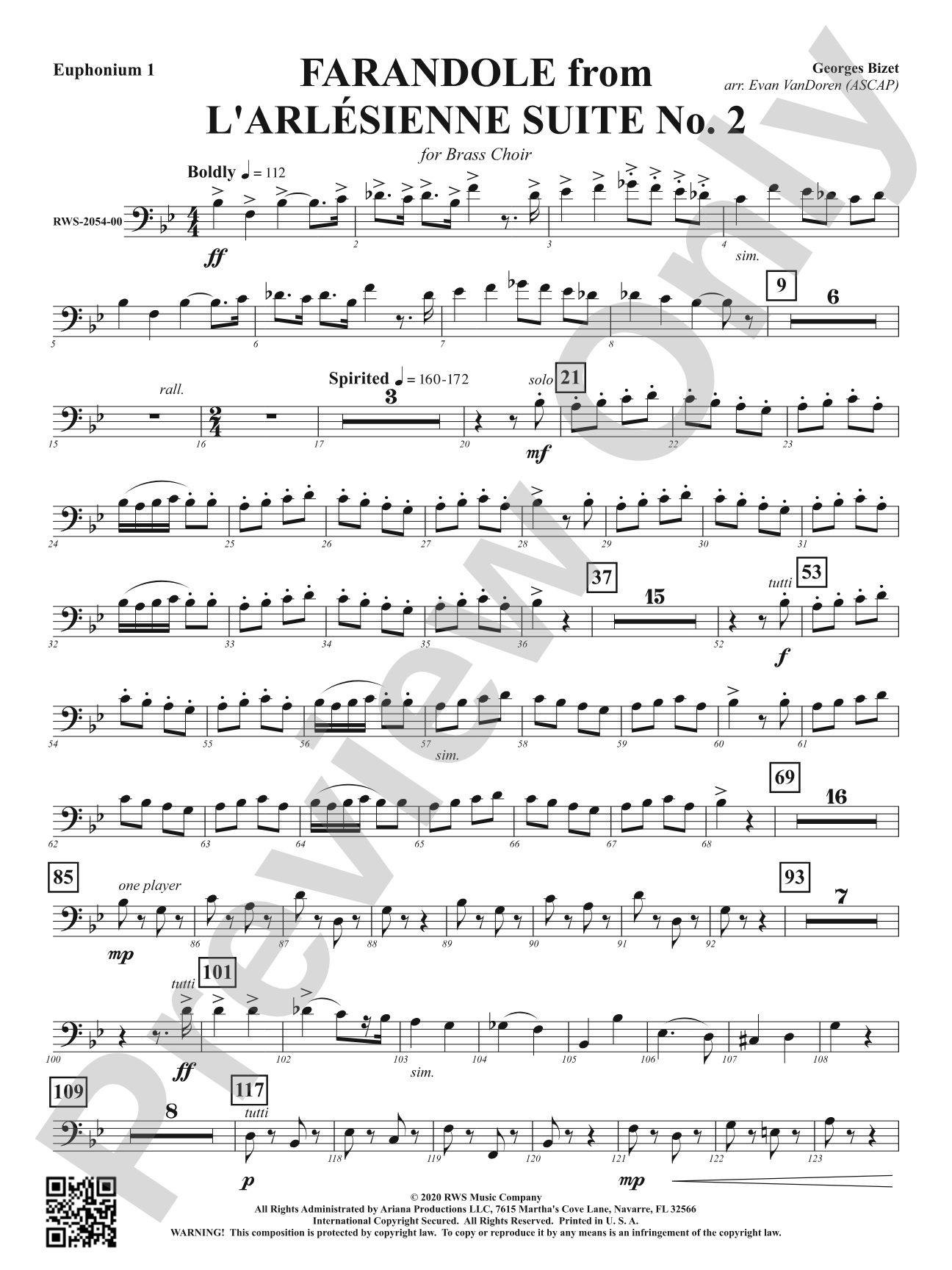

Farandole from L'Arlésienne Suite No. 2 - For Brass Choir: Baritone B.C.
For Brass Choir
By Georges Bizet / arr. Evan VanDoren
Grade: 4
Item: 98-PC-RWS2054_BBC1
$3.99
Pickup currently not available
Description
Bring on the big brass sound! Like the dance of the same name, Farandole is upbeat, high energy, and best done with friends. Your brass choir performance will feature every instrument as melodies are passed from section to section. A musical challenge for advanced players while still technically accessible for high school groups.
Original Item#: RWS-2054-00


Original Item#: RWS-2054-00
Farandole from L'Arlésienne Suite No. 2 - For Brass Choir: Baritone B.C. isn't in MakeMusic Cloud just yet...but it could be. Let us know you'd like to see it, and you'll help shape what comes next. In the meantime, start a free trial and dive into thousands of interactive titles your students can play along with today.
Request This Title
Tell us you want it.
Start Your Free Trial
Explore everything that's ready to play right now.
Sample Audio
1
Audio File
--:--
0:00
0:00
Sample Video
No sample videos found.
Additional Details
Series:
RWS - Festival Ensemble
Publisher:
RWS Music Company
SKU:
98-PC-RWS2054_BBC1
More about this title
About the Composer: Georges Bizet
Georges Bizet (1838-1875) composed some of the 19th century's most enduring theatrical music, yet spent much of his career in the shadow of more celebrated contemporaries. His operatic masterpiece Carmen revolutionized the genre with its unflinching portrayal of working-class characters and its incorporation of Spanish musical color, though it scandalized audiences at its 1875 premiere. Beyond opera, Bizet's instrumental works reveal a composer of elegant orchestration and melodic invention, qualities that made pieces like L'Arlésienne Suite perennial favorites in concert halls and, later, in transcriptions for ensembles of all sizes.
Bizet's music rewards performers who embrace both its technical demands and its theatrical spirit. His melodies sing naturally across any instrument, his harmonic language is accessible without being simplistic, and his sense of orchestral color translates brilliantly into arrangements. For student musicians, Bizet's works offer the chance to engage with material of genuine artistic substance while building skills in style, phrasing, and ensemble balance.
Why we love this
This arrangement captures everything that makes Farandole irresistible: relentless forward motion, infectious melody, and the perfect vehicle for showcasing your entire brass section. Evan VanDoren's scoring ensures every player matters, passing principal lines around so that trombone, horn, and trumpet sections all get moments to shine. The piece works equally well as a contest selection or a concert centerpiece because it demands musicianship and precision while delivering the kind of crowd-pleasing energy that reminds audiences why brass music endures.
What to expect
Farandole pulses with the exuberance of a Provençal street celebration. Melodies dance from one brass section to another with infectious joy, while the underlying harmonic movement propels the piece forward with unstoppable momentum. The writing feels both light and substantial, never precious, with moments of brilliant tutti contrast against cleaner, more transparent textures that let individual voices breathe.
Who it's for
Advanced high school brass choirs and adult community ensembles looking for Grade 4 repertoire that balances technical accessibility with genuine musical substance. Directors will find the scoring transparent enough that not every player requires virtuosic technique, yet demanding enough in terms of precision, balance, and style to challenge strong players. The piece suits groups with a full complement of brass instruments (trumpets, horns, trombones, tubas) and works well for festival competitions or concert programs seeking high-energy repertoire.
How to get the most out of it
- Keep the eighth-note pulse steady and energetic throughout; the Farandole's character depends entirely on rhythmic precision and forward momentum, so lock in with your percussion section early in rehearsal.
- Balance the melody carefully as it moves between sections. Mark your parts clearly to identify who has the tune and who supports it, then rehearse those transitions deliberately so they feel seamless rather than fragmented.
- Shape phrases with slight dynamic swells and releases to maintain listener interest across the many melodic repetitions; mechanical evenness will drain the piece of its dance-like character.
- Use the full dynamic range from p to ff. This arrangement thrives on contrast, so don't shy away from the softer moments even when the ensemble is large.
How to use it
Program this as an opener or closer if you want maximum energy and audience engagement. It pairs beautifully with other masterwork arrangements or Romantic-era transcriptions, especially if you're building a concert around "greatest hits" of classical music. The piece also serves as an excellent contest selection because its combination of musical sophistication and technical clarity appeals to a broad range of adjudicators.
Skills your students will build
- Reading and executing rapid sixteenth-note passage work at tempo
- Balancing ensemble dynamics across multiple sections passing the primary melody
- Maintaining rhythmic precision during extended repetitive melodic figures
- Responding to quick sectional transfers of thematic material
- Stylistic interpretation of Romantic-era arrangement conventions in brass writing