Fantasy on Nordic Themes: 2nd E-flat Alto Saxophone Sheet Music Preview

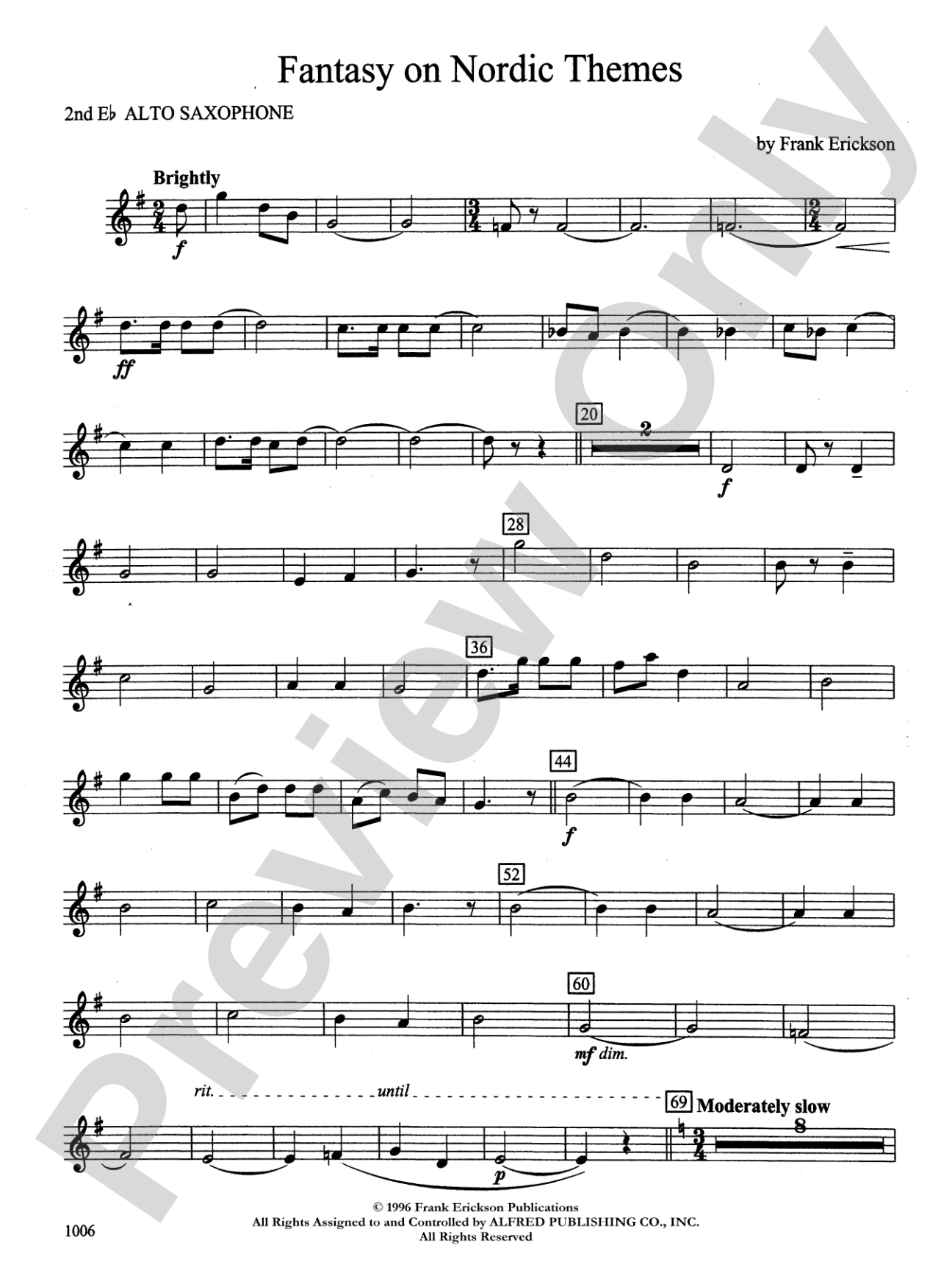
Fantasy on Nordic Themes: 2nd E-flat Alto Saxophone

By Frank Erickson

Grade: 2 (Easy)

Item: 00-PC-0001632_AX2

Digital Download
$3.00
Description
In western culture the richest heritage of folk music is undoubtedly of British origin. Even our American folk songs owe much to this tradition and the same can be said of Nordic (Scandinavian) folk songs as well. The origin of folk songs is quite similar throughout all of Scandinavia. This is a comprehensive designed "folk music" tune that generally covers peasant songs and instrumental pieces which have survived from earlier times.

Don't just read it, hear it, play along with it, and watch your students grow with it. In MakeMusic Cloud, Fantasy on Nordic Themes: 2nd E-flat Alto Saxophone comes alive with professional accompaniment, adjustable tempo, and built-in practice tools that turn solo practice into real progress.

Sample Audio
No sample audio found.
Sample Video
Additional Details
Series: Frank Erickson Publications
Publisher: Alfred Music
Page Count: 268
SKU: 00-PC-0001632_AX2

More about this title

About the Composer: Frank Erickson

Frank Erickson (1923-1996) was an American composer and educator whose catalog of band music shaped school music programs across the country for decades. He possessed an exceptional gift for arranging folk material in ways that honored the source melodies while remaining accessible to student musicians, and his understanding of band instrumentation made every part singable and purposeful.

Why we love this

Erickson's approach to folk arrangement is distinctive because he doesn't oversimplify the material. The score respects Scandinavian melodic character while staying comfortably within Grade 2 range, giving students genuine musical substance rather than just a reduction. Directors appreciate that this piece engages the full ensemble meaningfully without requiring virtuosity, making it an ideal choice for building repertoire depth in developing bands.

What to expect

The music carries the warmth and directness of peasant and instrumental traditions from Scandinavia, with melodies that feel both ancient and immediate. There's a wholesome, unforced quality to the writing that invites the band to play with honest musicality rather than technical display.

Who it's for

This works for bands in their second or third year of study, including mixed-ability groups where you need to engage both developing and more confident players. It's also suitable for community band and adult amateur ensembles seeking accessible, meaningful concert repertoire.

How to get the most out of it

  • Let the folk melodies breathe. Avoid rushing the phrase endings, especially when the melody passes between sections. Student musicians often finish phrases too quickly when they're not the primary voice carrier.
  • Balance the accompaniment carefully. In Grade 2 arrangements, the tendency is to let the harmony and rhythmic parts overshadow the tune. The folk themes should always sing through the texture.
  • Pay attention to articulation as a shaper of phrase. Erickson's tongue marks and releases are intentional choices that define each melody's character. Mark these clearly in rehearsal.
  • Use the full score to hear how sections interact. With 268 pages of parts, the conductor must know exactly where each melodic fragment lives and how it connects to the larger architecture.

How to use it

Program this alongside other Erickson folk arrangements or folk-inspired pieces to create a thematic concert exploring traditional music across cultures. It also pairs well early in a concert as a solid, confidence-building selection that sets a positive tone for the audience while showcasing your band's ability to shape lyrical material.

Skills your students will build

  • Sustaining lyrical phrases without rushing tempo
  • Balancing melody and accompaniment within the ensemble
  • Playing with evenness across sections when passing a single melodic line
  • Understanding folk music arrangement conventions and melodic ornamentation
  • Reading and executing articulation markings as musical intent rather than technical direction

You May Also Like