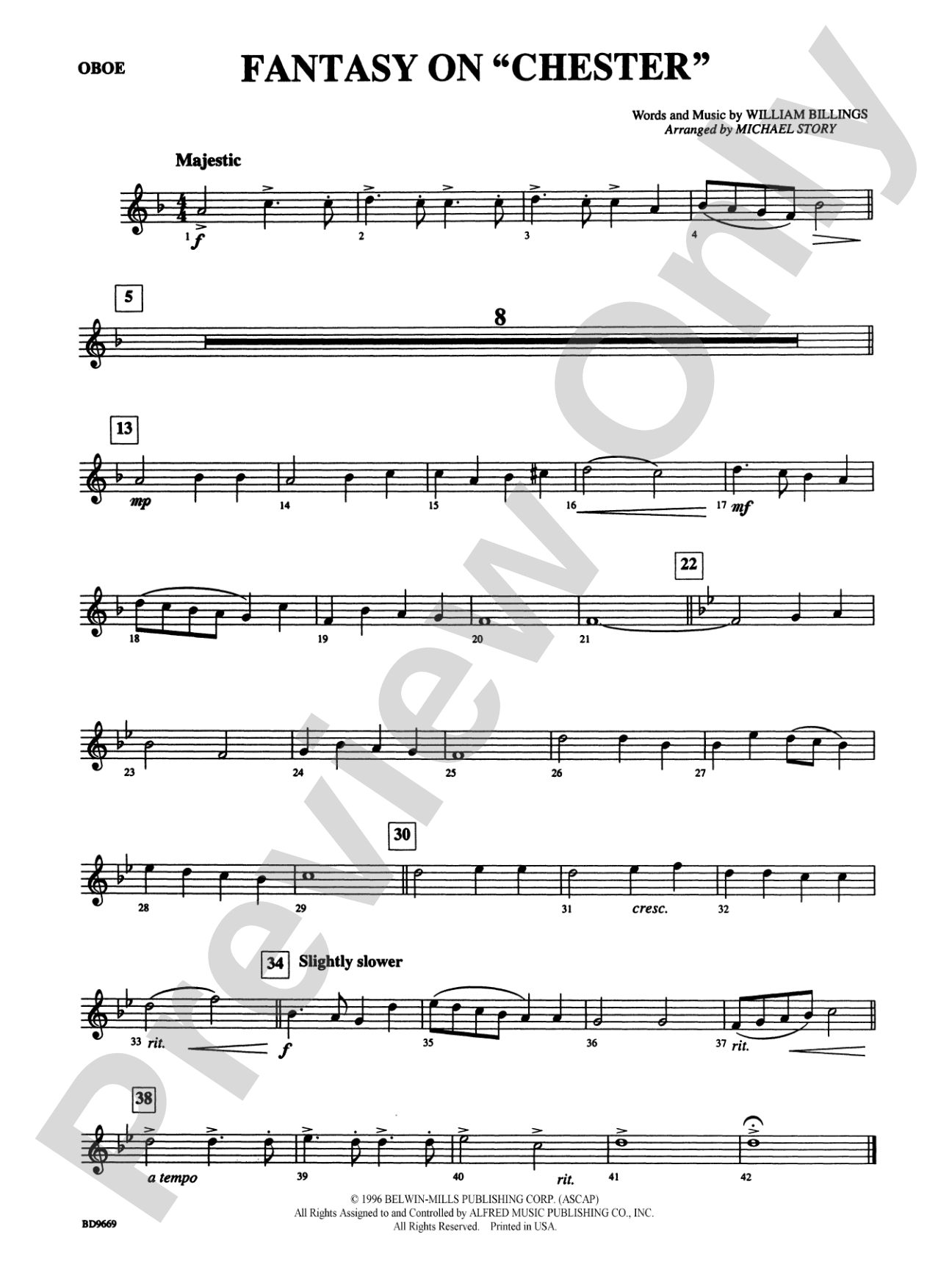
Fantasy on "Chester": Oboe Sheet Music Preview

Fantasy on "Chester": Oboe

By William Billings / scored by Michael Story

Grade: 1 (Very Easy)

Item: 00-PC-0015189_O1

Digital Download
$3.00
Description
This famous melody became very popular during the American Revolution and was first published in 1778 as a patriotic hymn. It served as the unofficial national anthem during that war. Michael Story infuses this tune with satisfying harmonic structuring and presents it in a version playable by the youngest band or ensemble. A most satisfying and sophisticated presentation. (1:51)

Don't just read it, hear it, play along with it, and watch your students grow with it. In MakeMusic Cloud, Fantasy on "Chester": Oboe comes alive with professional accompaniment, adjustable tempo, and built-in practice tools that turn solo practice into real progress.

Sample Audio
0:00
0:00
Sample Video
Additional Details
Series: Belwin Beginning Band
Publisher: Alfred Music
Page Count: 134
SKU: 00-PC-0015189_O1

More about this title

About the Composer: William Billings

William Billings (1746-1800) was a self-taught Boston composer who became one of the most influential American musicians of the late 18th century. He wrote sacred vocal music, hymns, and patriotic songs that defined the sound of early American music, and he was among the first composers born in the United States to achieve lasting recognition for his work.

Billings' compositions circulated widely through singing schools and church choirs throughout New England and the colonies. His most enduring piece, "Chester," emerged during the American Revolution as a rallying cry set to sturdy, memorable melody. Though he received no formal training, his harmonic instincts and understanding of singable melody established him as a foundational voice in American musical identity.

Why we love this

This arrangement captures everything that makes "Chester" powerful without overwhelming young players. Story respects the melody's patriotic strength while building the harmonic foundation gradually across the ensemble, giving every section something rewarding to play. A Grade 1 piece this musically coherent is rare; it teaches sophistication without complexity.

What to expect

Sturdy and proud, like singing together around a hearth. The melody sits in the middle of the ensemble, supported by clear harmonic blocks that feel inevitable and warm rather than complicated. There's dignity without pretension, and the piece conveys genuine respect for its source material.

Who it's for

Beginning and young concert bands playing at Grade 1 level, as well as mixed youth ensembles introducing patriotic repertoire. Directors seeking accessible material with historical substance and programming appeal for summer concerts, 4th of July events, or festival appearances will find this invaluable.

How to get the most out of it

  • Balance the melody between parts so it reads clearly. The tune belongs to the audience first, so support it rather than compete with it.
  • Shape the phrasing in four-bar units to let the hymn-tune character breathe naturally.
  • Keep the tempo steady and deliberate. This is a patriotic statement, not a march; allow the harmonic movement to register.
  • Use the recorded accompaniment to lock intonation and ensemble sound, especially for the full-band sections.

How to use it

Pair this with other early American selections for a patriotic concert set, or open a summer pops program with it. Its brevity (1:51) and historical resonance make it ideal for holiday events or community concerts where the audience values the story as much as the sound.

Skills your students will build

  • Reading simple four-part harmony with independent melodic lines
  • Maintaining steady harmonic rhythm in supporting parts
  • Balancing between melody and accompaniment textures
  • Recognizing and executing a hymn-tune style with appropriate phrasing
  • Sight-reading concert band parts at Grade 1 level

You May Also Like