
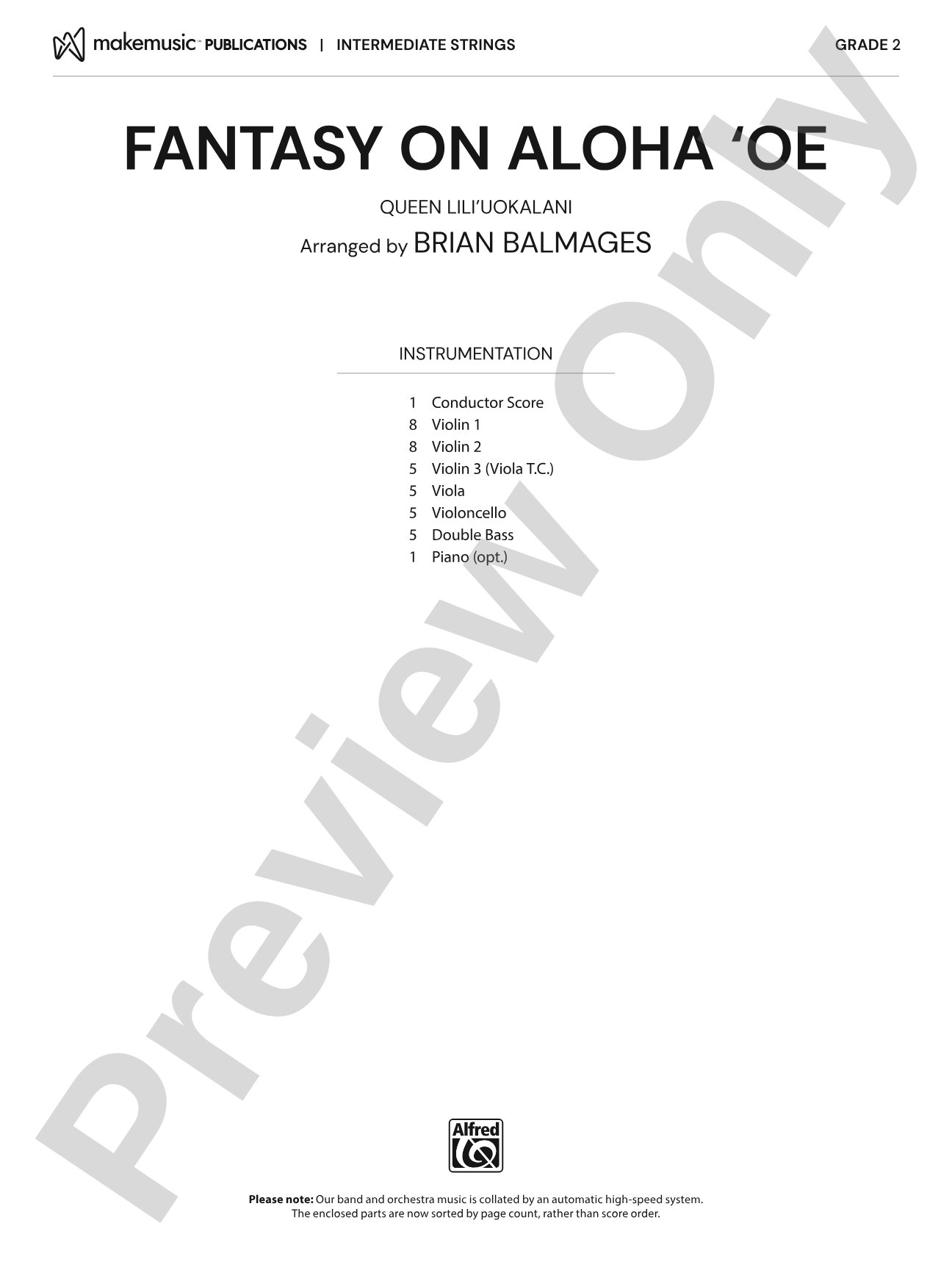

Fantasy on Aloha 'Oe: String Orchestra Conductor Score & Parts
By Queen Lili'uokalani / arr. Brian Balmages
Grade: 2
Item: 00-PK-0008799

$60.00
One moment…
Description
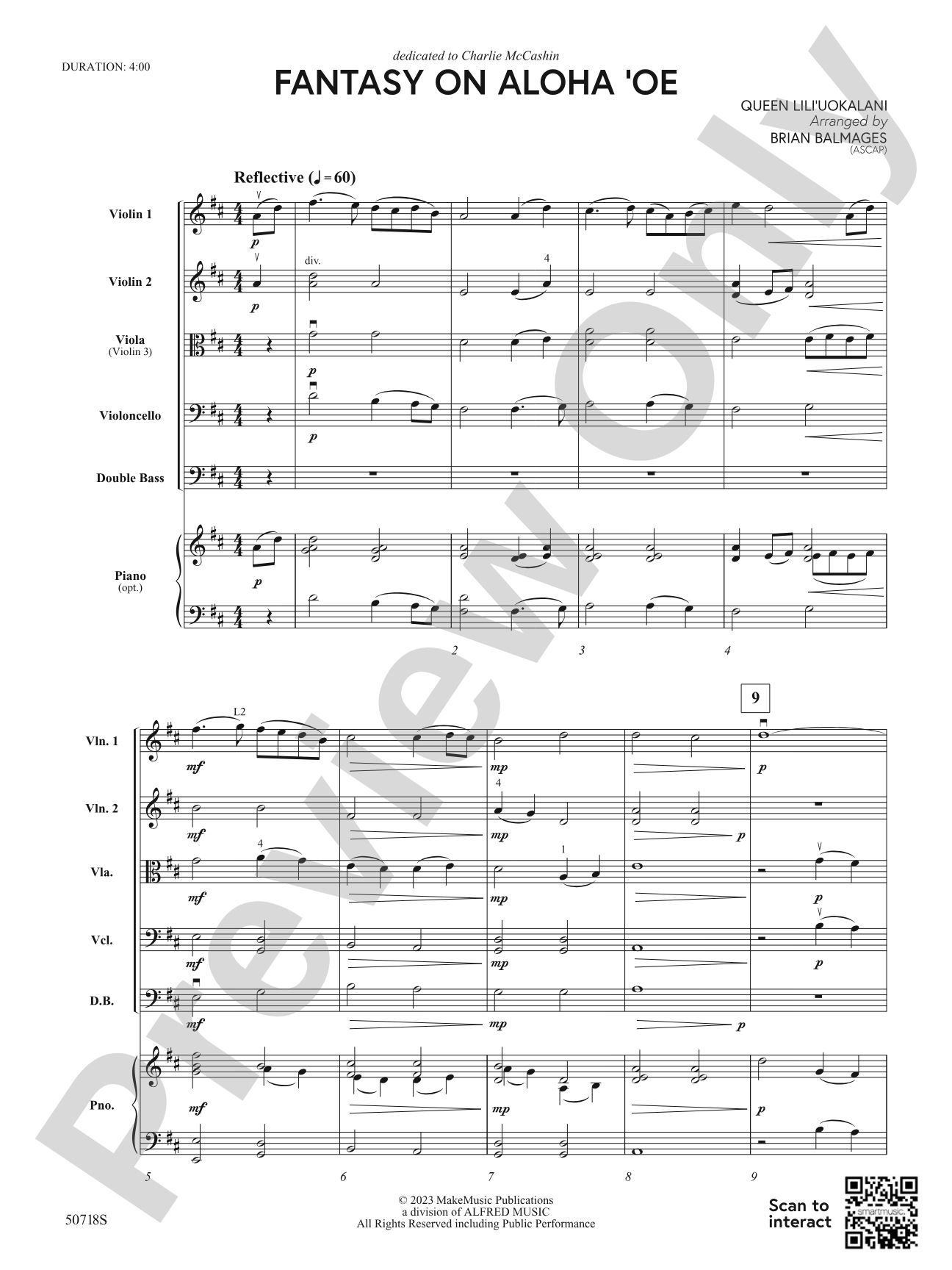
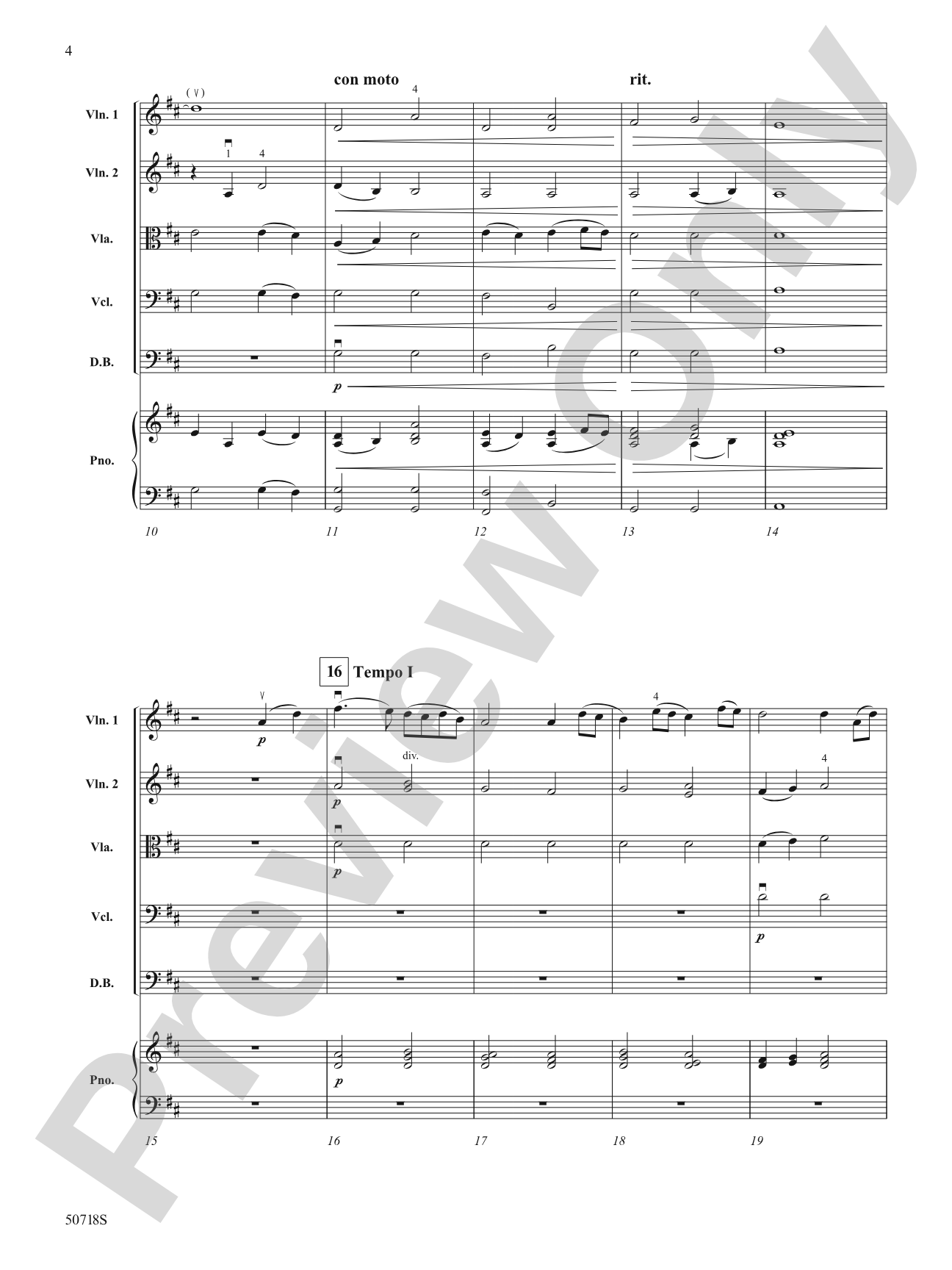
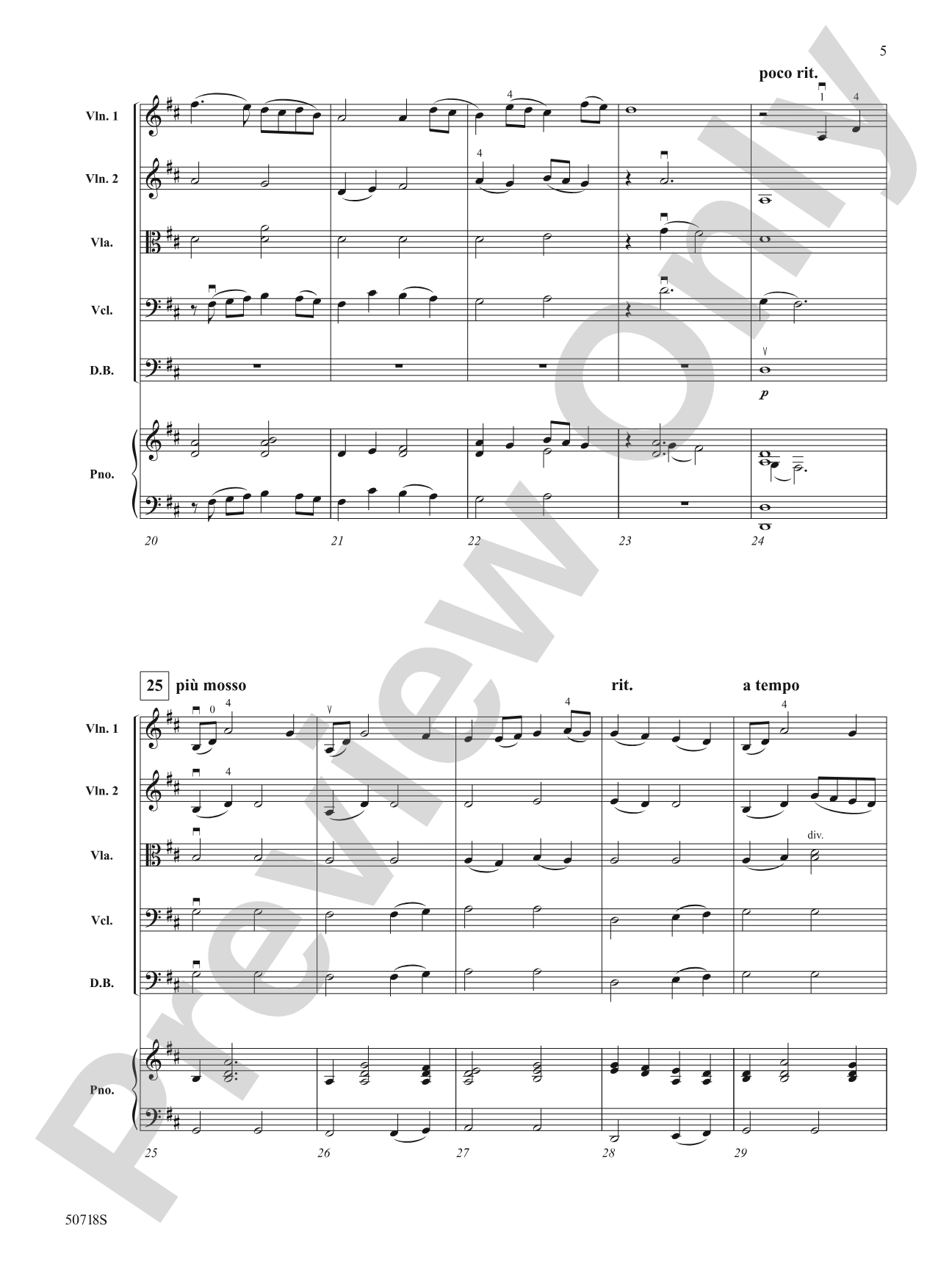
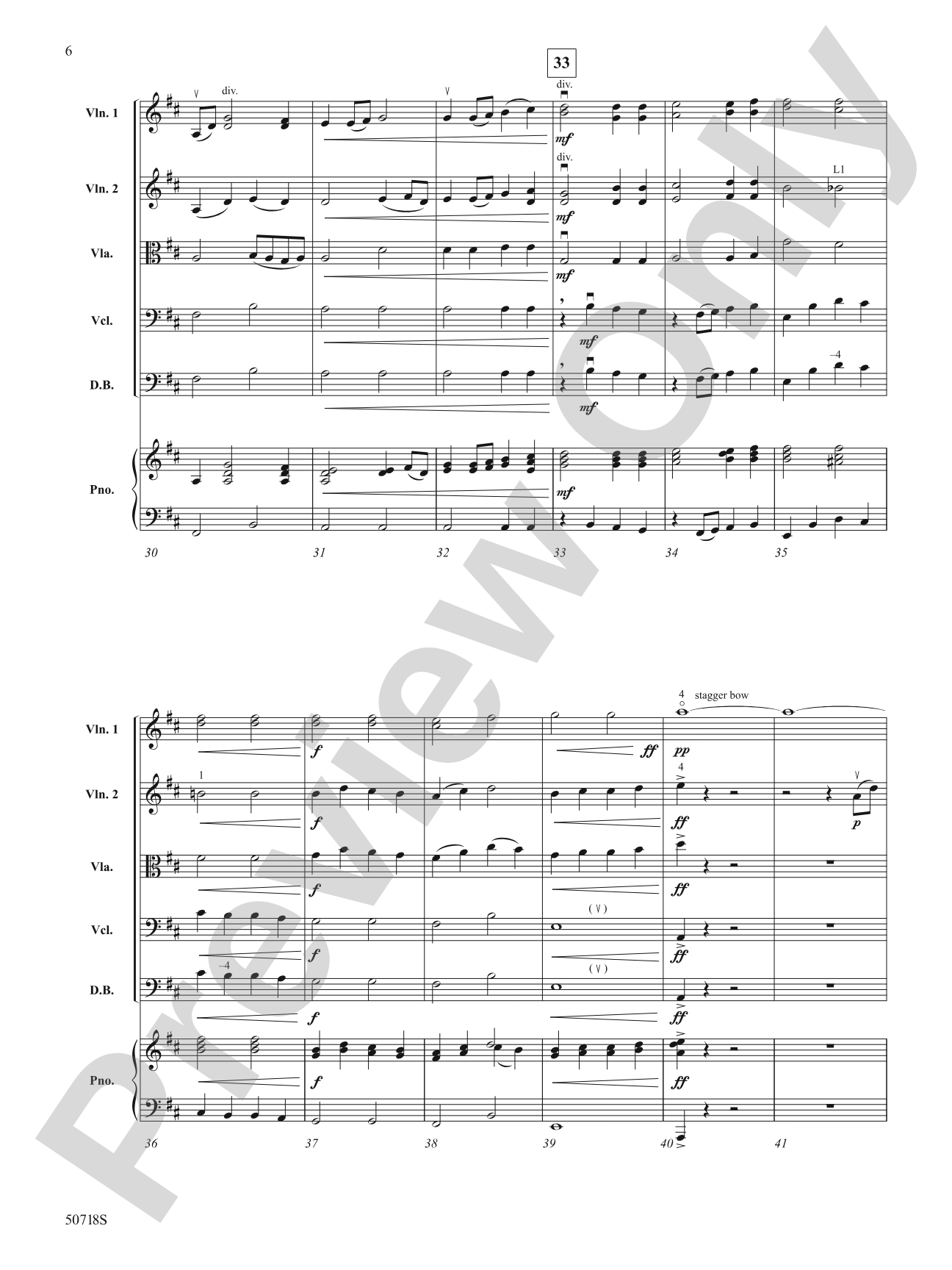
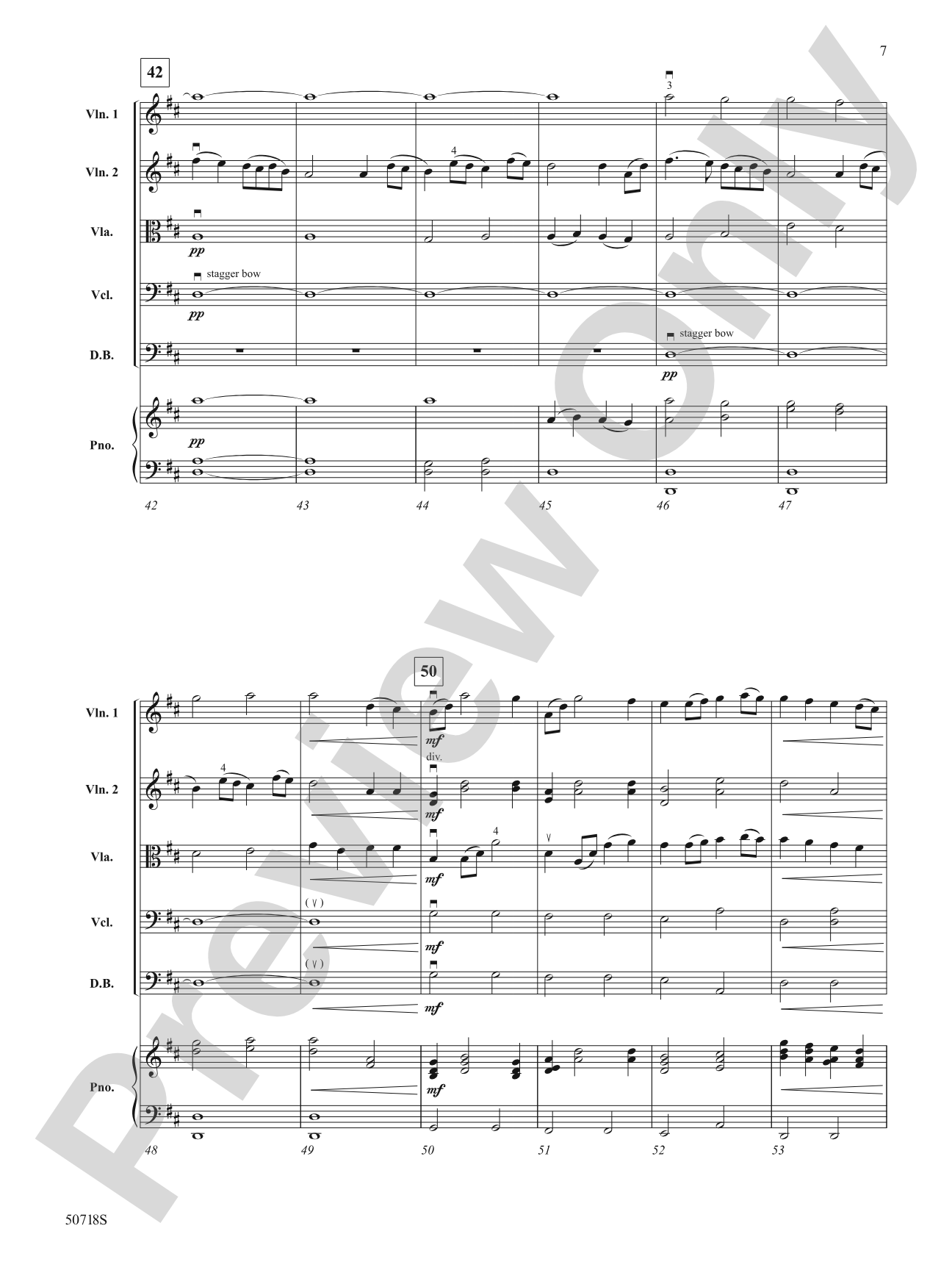
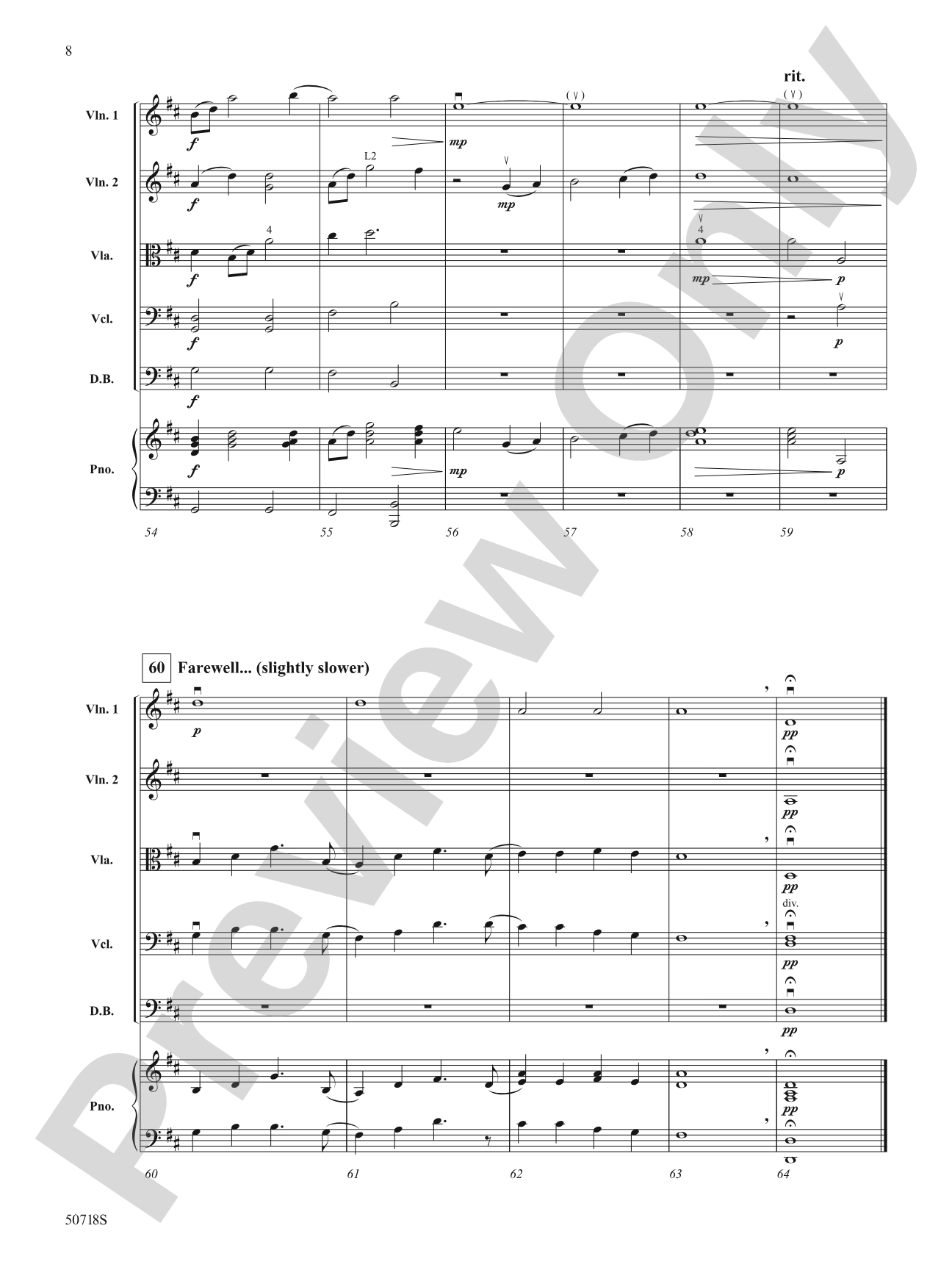
This gorgeous fantasy is based on the well-known Hawaiian song Aloha 'Oe, written by Queen Lili'uokalani. Translated as "Farewell to Thee," Fantasy on Aloha 'Oe works extremely well both as a lyrical portion of a program or as a part of an emotional send-off to celebrate graduating students. Brian Balmages has done a masterful job intertwining beautiful harmonic twists in a work that is extremely accessible to younger students, yet sounds mature enough to be enjoyed by more accomplished ensembles. Absolutely stunning. (4:00)


Don't just read it, hear it, play along with it, and watch your students grow with it. In MakeMusic Cloud, Fantasy on Aloha 'Oe: String Orchestra Conductor Score & Parts comes alive with professional accompaniment, adjustable tempo, and built-in practice tools that turn solo practice into real progress.
Open in the Player
Jump straight in and assign it today.
Start Your Free Trial
Open this title and explore the full library in minutes.
Sample Audio
1
Audio File
--:--
0:00
0:00
Sample Video
Additional Details
Series:
MakeMusic Intermediate Strings
Publisher:
MakeMusic Publications
SKU:
00-PK-0008799
More about this title
About the Composer: Queen Lil'uokalani
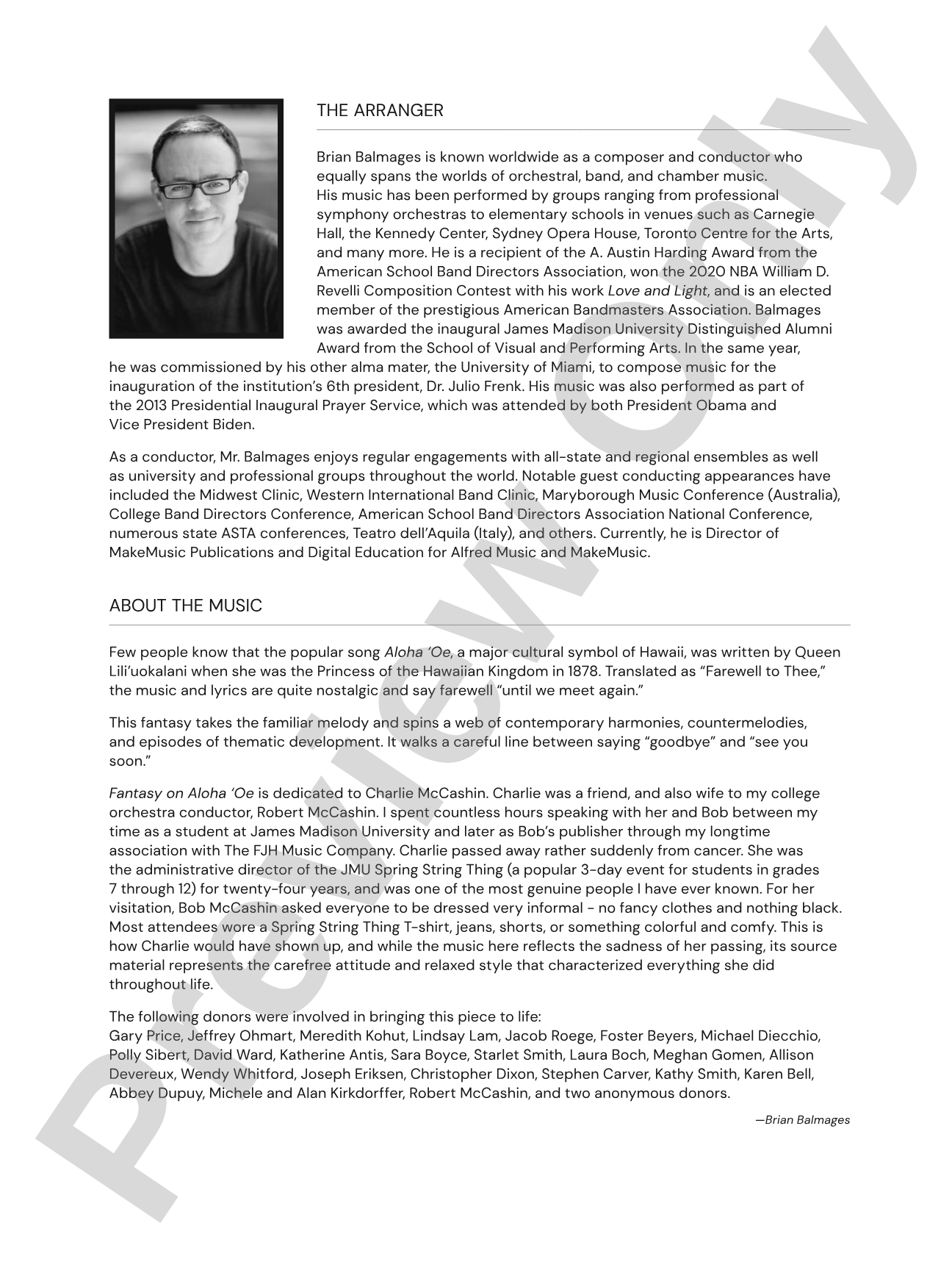
Queen Lili'uokalani (1838-1917) was Hawaii's last reigning monarch and a accomplished musician and composer. During her reign and afterward, she created dozens of compositions that drew from Hawaiian musical traditions while incorporating Western harmonic structures. Her songs remain central to Hawaiian culture and continue to be performed and cherished worldwide.
Aloha 'Oe, composed in 1878, is perhaps her most enduring work. The song's gentle melody and poignant lyrics about parting have made it a staple at farewells, graduations, and commemorative occasions for well over a century.
Why we love this
Brian Balmages has preserved the emotional heart of this beloved Hawaiian standard while adding harmonic sophistication that rewards both young ensembles discovering the piece and mature orchestras deepening their interpretation. The arrangement sits beautifully for Grade 2 players, making it an accessible choice for advancing strings without sacrificing the musical gravity the melody deserves.
What to expect
The piece unfolds with a quiet dignity, carrying the gentle melancholy of farewell without heaviness. Balmages' harmonic language adds poignant color and sophistication while keeping the focal point always on Lili'uokalani's serene, singable melody, creating a moment of reflection that feels both intimate and grand.
Who it's for
This arrangement serves string orchestras at the intermediate level who want to perform a piece with genuine cultural significance and emotional depth. It is particularly well suited to graduation ceremonies, spring concerts, or any program calling for a lyrical centerpiece that audiences will recognize and feel deeply.
How to get the most out of it
- Shape the main melody with consistent vibrato in the first violin part; the simplicity of the tune depends on expressive playing rather than technical display.
- Balance the accompaniment voices carefully so they support rather than obscure Lili'uokalani's melody, which should always sing through the texture.
- Take time in slower sections to let harmonic colors bloom; resist rushing through the quieter moments where Balmages' chromatic touches appear.
- Coordinate the ensemble's breath points and phrase endings to create a unified emotional arc, especially important in the reflective passages.
How to use it
Program this as the emotional focal point of a spring or graduation concert, either solo or paired with lighter opening works to establish a reflective mood. The four-minute duration and concert-ready character also make it valuable for festival and competition settings where judges appreciate both cultural authenticity and solid musicianship.
Skills your students will build
- Sustaining longer phrases with consistent tone quality and intonation
- Balancing multiple melodic lines while maintaining textural clarity
- Responding to harmonic color changes that go beyond basic major and minor tonalities
- Expressing emotional nuance through dynamics and vibrato rather than technical complexity