Fantastic Foster: 2nd B-flat Clarinet Sheet Music Preview

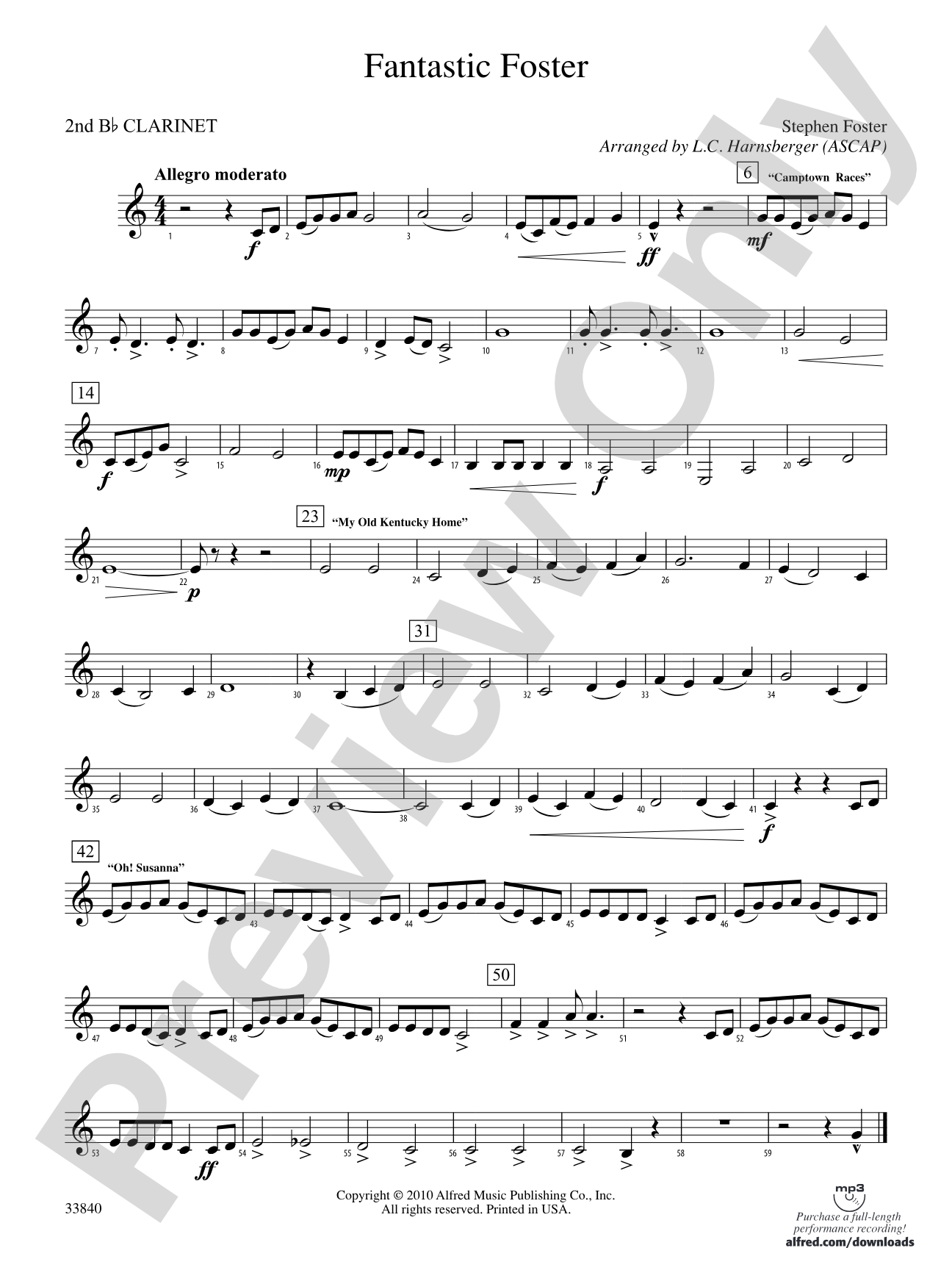
Fantastic Foster: 2nd B-flat Clarinet

By Stephen Foster / arr. L. C. Harnsberger

Grade: 1 (Very Easy)

Item: 00-PC-0014571_C2

Digital Download
$3.00
Description
During his short life (1826--1864), Stephen C. Foster wrote over 200 songs, including some that are still extremely popular today. A few of his songs are so well known that many believe they are American folk songs. In this arrangement, three of his most popular songs are arranged for young band. The entire band shares the melody of "Camptown Races," which is followed by a tender setting of "My Old Kentucky Home" featuring the woodwinds and bells. Everything comes to a rousing conclusion with Foster's first big hit, "Oh! Susanna," that lets the entire band shine.

Don't just read it, hear it, play along with it, and watch your students grow with it. In MakeMusic Cloud, Fantastic Foster: 2nd B-flat Clarinet comes alive with professional accompaniment, adjustable tempo, and built-in practice tools that turn solo practice into real progress.

Sample Audio
0:00
0:00
Sample Video
Additional Details
Series: Alfred Debut Series
Publisher: Alfred Music
Page Count: 122
SKU: 00-PC-0014571_C2

More about this title

About the Composer: Stephen Foster

Stephen Foster (1826-1864) composed over 200 songs in his brief lifetime, establishing himself as one of America's most prolific songwriters. His melodies became so deeply woven into American culture that many are now mistaken for traditional folk songs, a testament to their universal appeal and memorability. Foster's gift lay in crafting simple, direct melodies that carried emotional weight without complexity, making his work endlessly adaptable and performable across skill levels.

Why we love this

Harnsberger's arrangement captures the infectious energy of these Foster classics while keeping the instrumentation accessible for developing bands. The piece moves smartly through three contrasting moods, preventing any single arrangement from wearing out its welcome. Young musicians get to experience genuine concert repertoire, not simplified stand-ins, and audiences recognize every note.

What to expect

Bright and unpretentious, like a celebration of American musical heritage without a trace of self-consciousness. The arrangement moves from playful vigor to gentle reflection and back to joyful exuberance, taking the audience on a complete emotional journey in a compact timeframe.

Who it's for

Beginning and early intermediate concert bands seeking substantive repertoire that audiences genuinely enjoy. This works beautifully for groups in their first or second year of concert band experience, where players need parts they can execute cleanly while still delivering a polished performance.

How to get the most out of it

  • Balance the melody line in 'Camptown Races' so it speaks clearly across the full band; resist letting middle voices overwhelm the top line.
  • Shape 'My Old Kentucky Home' with dynamic restraint in the woodwind and bell section; this tenderness makes the final return to full ensemble more impactful.
  • Anchor 'Oh! Susanna' with a steady rhythmic pulse from the low brass and percussion; the tune's folk character thrives when the foundation is rock-solid.
  • Use the digital score to locate potential balance trouble spots before rehearsal so you can address them with precision rather than general dynamic markings.

How to use it

Open a concert with 'Fantastic Foster' to establish warmth and accessibility immediately, or place it mid-program as a palate cleanser between more demanding contemporary works. It pairs naturally with other early American or folk-inspired repertoire and works equally well as a spring or fall concert opener.

Skills your students will build

  • Playing sustained melodic lines in ensemble without losing shape or direction
  • Balance between melody and accompaniment when the entire band carries the tune
  • Dynamic contrast within a narrow expressive range (Grade 1 appropriate)
  • Articulation clarity in folk-style melodies with natural speech rhythms
  • Sectional independence while maintaining ensemble cohesion across multiple tunes

You May Also Like