Fantastic Beasts: The Secrets of Dumbledore: 2nd E-flat Alto Saxophone Sheet Music Preview

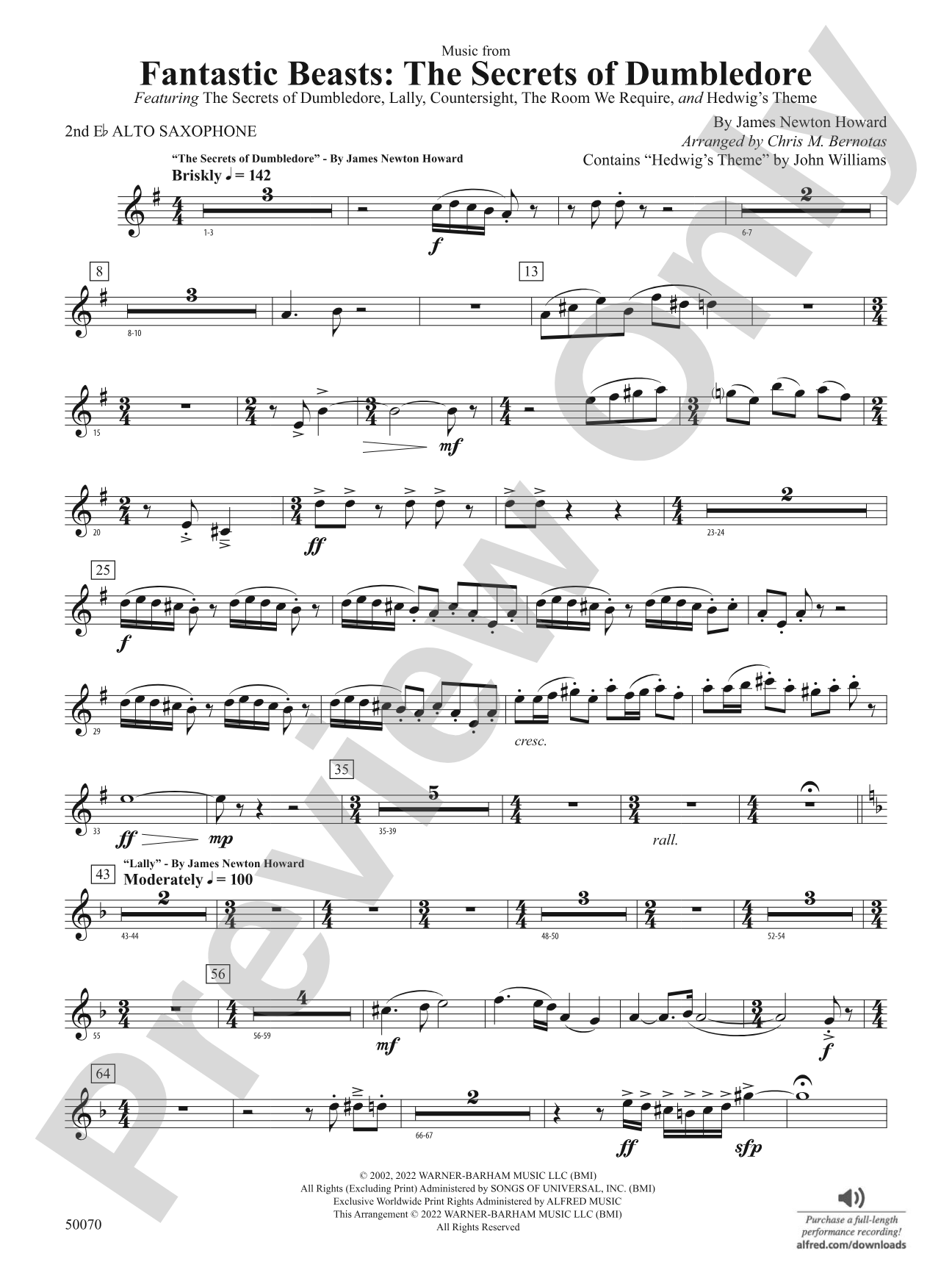
Fantastic Beasts: The Secrets of Dumbledore: 2nd E-flat Alto Saxophone

Featuring: The Secrets of Dumbledore / Lally / Countersight / The Room We Require / Hedwig's Theme

By James Newton Howard, contains "Hedwig's Theme" by John Williams / arr. Chris M. Bernotas

Grade: 3.5

Item: 00-PC-0018861_AX2

Digital Download
$3.00
Description
Fantastic Beasts: The Secrets of Dumbledore is as musically intriguing as the motion picture's storyline with its stunning music by James Newton Howard. The magic and mystery of this installment of J.K. Rowling's adventure will come to life with this exciting arrangement by Chris M. Bernotas. Featuring these highlights from the score: "The Secrets of Dumbledore," "Lally," "Countersight," "The Room We Require," and "Hedwig's Theme." (4:25)

Don't just read it, hear it, play along with it, and watch your students grow with it. In MakeMusic Cloud, Fantastic Beasts: The Secrets of Dumbledore: 2nd E-flat Alto Saxophone comes alive with professional accompaniment, adjustable tempo, and built-in practice tools that turn solo practice into real progress.

Sample Audio
0:00
0:00
Sample Video
Additional Details
Series: Pop Concert Band
Publisher: Alfred Music
SKU: 00-PC-0018861_AX2

More about this title

About the Composer: James Newton Howard

James Newton Howard has scored over 150 films across genres ranging from drama to fantasy to action, establishing himself as one of Hollywood's most prolific and versatile composers. His work on the Fantastic Beasts series demonstrates his gift for creating magical soundscapes that balance orchestral sophistication with accessibility for student ensembles.

Why we love this

This arrangement captures the cinematic sweep of Howard's score while remaining genuinely playable at the 3.5 level. Chris M. Bernotas has thoughtfully scaled the orchestration without sacrificing the signature themes and harmonic richness that make the source material compelling.

What to expect

Mysterious and adventurous, with moments of whimsy and darker undertones that reflect the film's blend of wonder and peril. The arrangement invites players into a cinematic world where familiar themes interweave with new textures, creating an immersive listening experience that captures both the magic and the intrigue of Dumbledore's story.

Who it's for

Concert bands at the intermediate level seeking contemporary repertoire with broad appeal. This arrangement works equally well for bands looking to program film music, groups preparing for a pop or movie-themed concert, and ensembles wanting to explore thematic development in a familiar musical context.

How to get the most out of it

  • Balance the melodic content across sections. The arrangement distributes memorable themes among woodwinds, brass, and strings, so no single section should dominate the overall texture.
  • Pay attention to dynamic shaping around thematic statements. These film themes rely on clear phrase arcs to land their emotional impact, so guide the ensemble through intentional crescendos and releases.
  • Use the recorded accompaniment as a reference for tempo and style, but trust your own interpretation of phrasing once the band understands the basic groove.
  • Lock in the rhythmic foundation early. Several sections feature rhythmic motifs that anchor the harmonic movement, so rhythmic section precision will elevate the entire performance.

How to use it

Program this as the centerpiece of a film music concert, pairing it with other movie scores at similar levels to create a thematic evening. It also fits naturally alongside other contemporary pop arrangements, or use it as a season finale that rewards audiences with recognizable music from a beloved franchise.

Skills your students will build

  • Phrasing and shaping melodic lines within a film music context
  • Balance and blend across multiple sections carrying thematic material simultaneously
  • Maintaining rhythmic precision in layered, syncopated accompaniment figures
  • Interpreting dynamic contrast to support cinematic storytelling

You May Also Like