
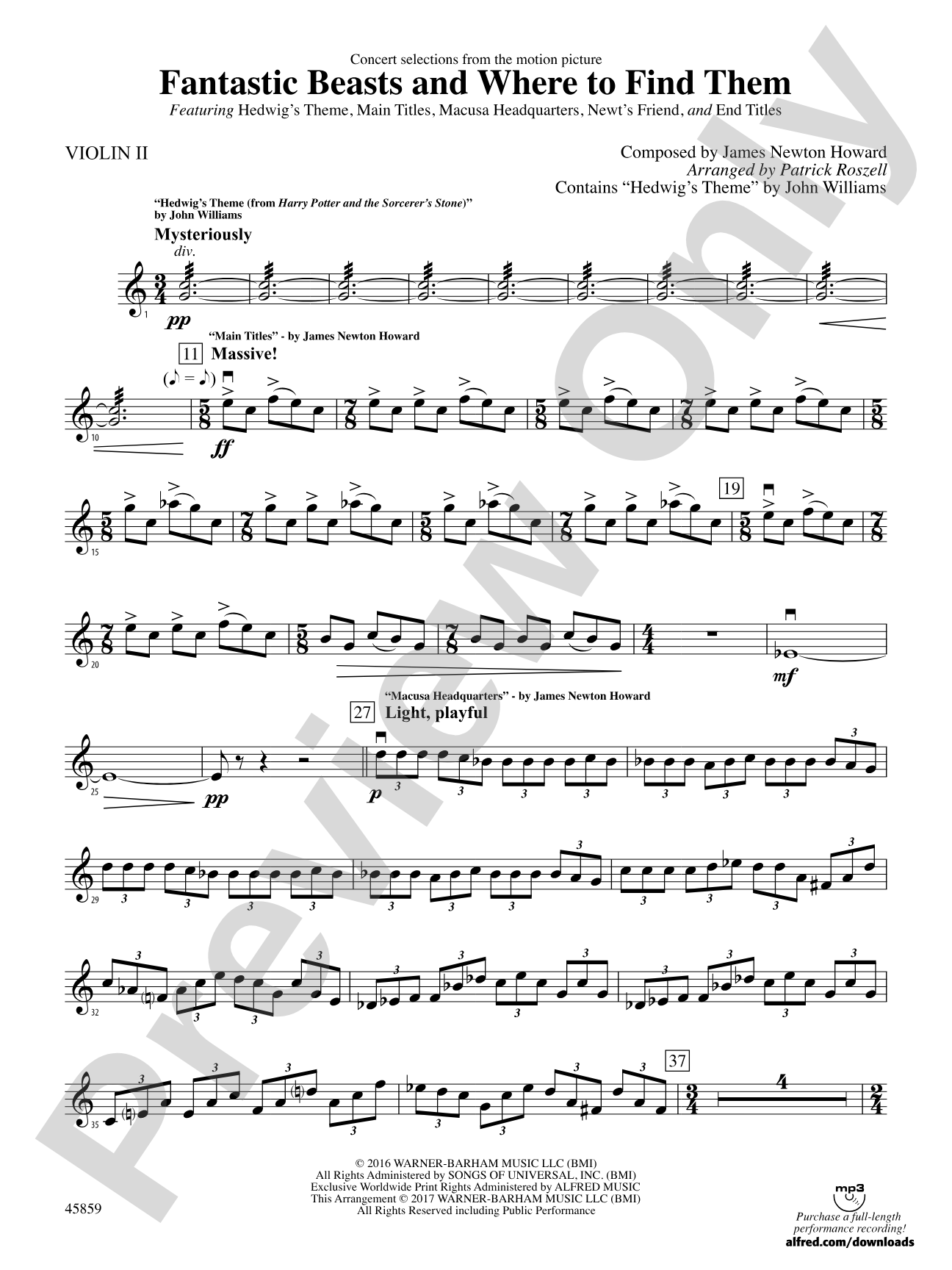

Fantastic Beasts and Where to Find Them: 2nd Violin
Featuring: Hedwig's Theme / Main Titles / Macusa Headquarters / Newt's Friend / End Titles
Composed by James Newton Howard / arr. Patrick Roszell (contains "Hedwig's Theme" by John Williams)
Grade: 3.5
Item: 00-PC-0017658_VN2
$5.99
Pickup currently not available
Description
The magic, mystery, and wonder of the adventures in the hit movie from J. K. Rowling swirl, twirl, and spiral in this fantastic arrangement by Patrick Roszell. Including "Hedwig's Theme," "Main Titles," "Macusa Headquarters," "Newt's Friend," and "End Titles," all sections have delightful parts in this medley from the hit movie Fantastic Beasts and Where to Find Them. (5:30)


Don't just read it, hear it, play along with it, and watch your students grow with it. In MakeMusic Cloud, Fantastic Beasts and Where to Find Them: 2nd Violin comes alive with professional accompaniment, adjustable tempo, and built-in practice tools that turn solo practice into real progress.
Open in the Player
Jump straight in and assign it today.
Start Your Free Trial
Open this title and explore the full library in minutes.
Sample Audio
1
Audio File
--:--
0:00
0:00
Sample Video
Additional Details
Series:
Pop Concert Full Orchestra
Publisher:
Alfred Music
Page Count:
240
SKU:
00-PC-0017658_VN2
More about this title
About the Composer: James Newton Howard
James Newton Howard has composed and orchestrated music for over 100 films, including the Harry Potter series, The Hunger Games films, and the Fantastic Beasts franchise. His approach to film scoring emphasizes melodic clarity and emotional depth, making his concert arrangements particularly effective for ensemble performance. Howard's work is characterized by lush orchestrations that support both dramatic narrative and accessible musicality, qualities that serve student orchestras especially well.
Why we love this
Roszell's arrangement captures the enchantment and playfulness of Rowling's wizarding world while keeping the orchestration balanced enough for Grade 3.5 ensembles to execute with confidence. The medley structure moves through five memorable themes without overstaying any single idea, maintaining audience engagement across a five-and-a-half-minute runtime. Students get to play genuinely film-quality music that sounds impressive without requiring virtuosic technique.
What to expect
The score swirls with the mystery and charm of a magical world. Melodies emerge from rich harmonic backgrounds, creating moments of soaring beauty alongside playful, dance-like passages that capture the wonder of Fantastic Beasts. The orchestration sparkles with color while maintaining a sense of theatrical grandeur.
Who it's for
Conductors of full orchestras at the upper-middle school through early high school level who want accessible popular music with genuine orchestral color and cinematic appeal. This arrangement serves directors seeking a crowd-pleasing concert program piece that reinforces ensemble balance, phrasing, and melodic awareness without excessive technical demands.
How to get the most out of it
- Conduct the legato passages in 'Hedwig's Theme' with clear phrase arcs; these moments often come across as stiff when directors lose the singing quality underneath the note changes.
- Balance the woodwind solos against the harmonic foundation from lower strings and brass. These melodies sit high in the texture and need room to speak without getting buried.
- Mark tempo relationships between sections clearly in rehearsal. The transitions between 'Main Titles' and 'Macusa Headquarters' shift the character considerably, and students need to understand where the pulse sits.
- Attend to the articulation contrasts throughout the medley. Clean, dry articulation in the rhythmic sections makes the legato passages feel more expressive by comparison.
How to use it
Program this during a fall concert season or a thematic film music evening. The piece works equally well as a standalone feature or paired with other Harry Potter universe selections for a longer medley concept. Its length and moderate difficulty make it ideal for a mid-program position where you want to build audience momentum without dramatic tempo shifts.
Skills your students will build
- Sustaining legato phrasing across phrase boundaries in woodwind and string lines
- Balancing solo lines against accompanimental textures
- Executing clean articulation changes between legato and staccato sections
- Coordinating tempo and style transitions within a medley structure
- Reading and performing the full orchestral score with attention to dynamic shaping