Fantasia on a Theme by Thomas Tallis Sheet Music Preview

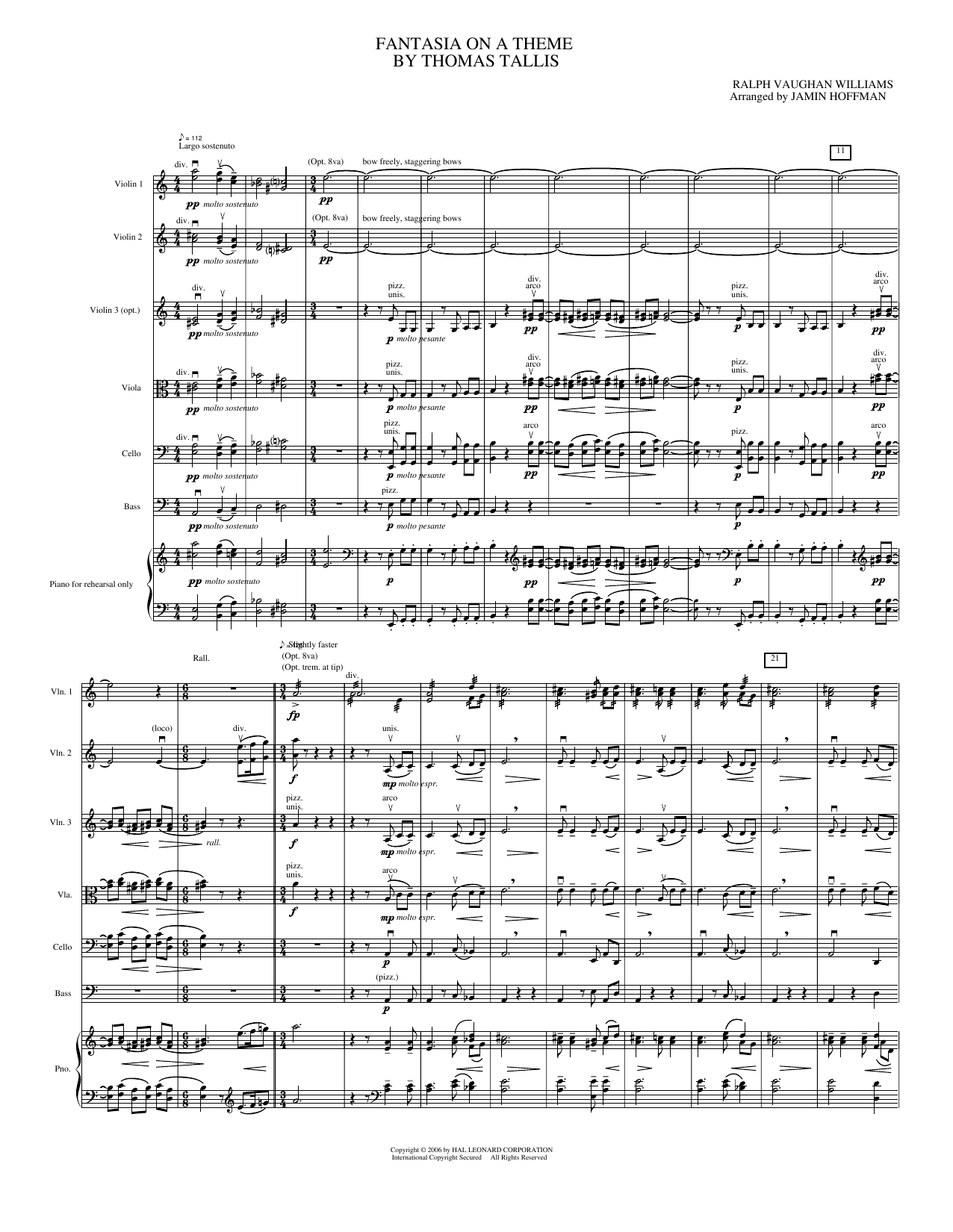
Fantasia on a Theme by Thomas Tallis: String Orchestra Conductor Score & Parts

By Ralph Vaughan Williams / Arranged by Jamin Hoffman

Grade: 3-4

Item: 35-PK00426806

Digital Download
$45.00

Buy Extra Parts (Digital PDF Download)

Parts Added to Cart!

Description
Fantasia on a Theme by Thomas Tallis

Fantasia on a Theme by Thomas Tallis: String Orchestra Conductor Score & Parts isn't in MakeMusic Cloud just yet...but it could be. Let us know you'd like to see it, and you'll help shape what comes next. In the meantime, start a free trial and dive into thousands of interactive titles your students can play along with today.

Sample Audio
No sample audio found.
Sample Video
Additional Details
Publisher: Hal Leonard
SKU: 35-PK00426806

More about this title

About the Composer: Ralph Vaughan Williams

Ralph Vaughan Williams shaped British musical identity in the twentieth century through his deep engagement with folk melody and modal harmony. His arrangements of traditional material were never mere antiquarian exercises; instead, they became vehicles for exploring color, texture, and emotional depth in ways that influenced generations of composers.

Why we love this

Vaughan Williams orchestrated the sixteenth-century Tallis theme with such transparent luminosity that the piece became his own invention rather than a simple arrangement. String players at this level get to experience how a single melodic line can sustain an entire work through variations in doublings, octave placement, and harmonic support, making it an ideal study in orchestral writing fundamentals.

What to expect

The work inhabits a timeless space where sixteenth-century melody floats over contemporary harmonic support, creating a contemplative, almost spiritual atmosphere. Listeners experience both reverence for the ancient tune and wonder at how it transforms through each orchestral restatement.

Who it's for

String orchestras working at Grade 3 to 4 benefit enormously from this arrangement because it teaches harmonic restraint and long-line singing without requiring complex rhythmic or technical demands. Both advanced middle school ensembles and community orchestras find in this piece a rewarding entry point to twentieth-century British music.

How to get the most out of it

  • Balance the violas and lower strings carefully in the opening statement; they carry harmonic weight that defines the modal character Vaughan Williams sought.
  • Shape long phrases across multiple bars rather than stopping at each cadence. The work unfolds like a meditation, so conductor and players must think architecturally about breathing points.
  • Listen for the recording included with parts to grasp Vaughan Williams's original orchestration; the string arrangement follows his harmonic logic faithfully and reveals which doublings matter most.
  • Tune pure fifths and fourths, especially in the modal sections. Equal temperament can muddy the archaic sound Vaughan Williams was pursuing.

How to use it

This piece makes a natural opening for a concert exploring connections between Renaissance and modern composition, or it can anchor a program focused on British music and cultural identity. Its modest length and relative accessibility also suit it well as a teaching work in mid-year rehearsals when you want to build sophistication without overwhelming schedules.

Skills your students will build

  • Sustaining lyrical phrases across harmonic changes without rushing
  • Understanding modal harmony and how it differs from functional tonality
  • Balancing inner voices with outer melodic lines
  • Playing with stylistic awareness of early music conventions
  • Responding to subtle conductor cueing in slow, meditative material

You May Also Like