
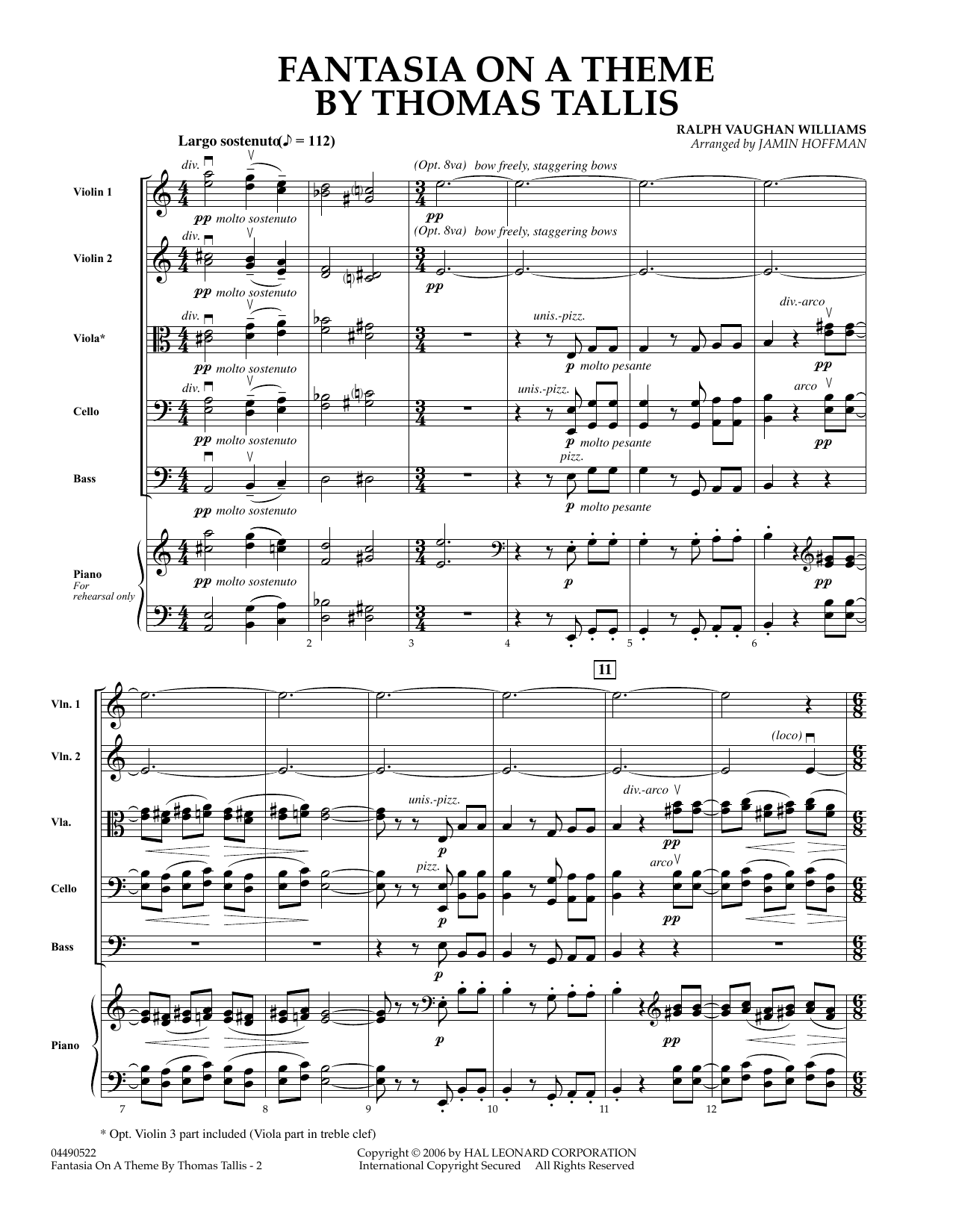

Fantasia on a Theme by Thomas Tallis: String Orchestra Conductor Score & Parts
As performed by Ralph Vaughan Williams / As performed by Vaughan Williams / Arranged by Jamin Hoffman
Grade: 3-4
Item: 35-PK00319808
$50.00
Pickup currently not available
Buy Extra Parts (Digital PDF Download)
Parts Added to Cart!
Description
Fantasia on a Theme by Thomas Tallis


Fantasia on a Theme by Thomas Tallis: String Orchestra Conductor Score & Parts isn't in MakeMusic Cloud just yet...but it could be. Let us know you'd like to see it, and you'll help shape what comes next. In the meantime, start a free trial and dive into thousands of interactive titles your students can play along with today.
Request This Title
Tell us you want it.
Start Your Free Trial
Explore everything that's ready to play right now.
Sample Audio
No sample audio found.
Sample Video
No sample videos found.
Additional Details
Publisher:
Hal Leonard
SKU:
35-PK00319808
More about this title
About the Artist: Ralph Vaughan Williams
Ralph Vaughan Williams stands among the most important British composers of the 20th century, yet his music draws deeply from English Renaissance sources and folk traditions. His orchestral works balance sophisticated harmonies with a distinctly approachable melodic sensibility, making them essential repertoire for developing ensembles and seasoned professionals alike.
Why we love this
Vaughan Williams' original work for string orchestra is already a masterclass in texture and restraint; Jamin Hoffman's arrangement respects that vision while opening the piece to more flexible ensemble configurations. The writing sits comfortably under the fingers, yet demands real musicianship around phrasing, intonation, and the layering of independent string parts that create that signature RVW shimmer.
What to expect
Luminous and contemplative, the piece unfolds with the quality of light filtering through stained glass. There's a gentleness to the harmony and a sense of stillness, even when the texture becomes more active, that asks players to listen inward as much as outward.
Who it's for
String orchestras at the intermediate level benefit most from this arrangement, particularly groups transitioning from easier baroque works into more complex twentieth-century writing. It works equally well in a school festival setting or as a concert opener where you need something accessible yet refined.
How to get the most out of it
- Pay attention to the divisi passages as distinct textural layers rather than accompaniment and melody. Each voice group carries its own musical weight, and balance matters more than volume.
- The Tallis theme itself is modal and somewhat static harmonically; shape the longer lines through subtle dynamic shaping and vibrato control rather than relying on harmonic momentum.
- Use the conductor's score to map out how inner voices move between first and second violins, violas, and cellos. This clarifies what students are listening for and where precision in rhythm becomes audible.
- Allow space for the theme to breathe at its return. Resist the urge to rush through the texture-building passages that surround it.
How to use it
This sits naturally in a concert that pairs English Renaissance and modern works, or use it as a bridge between a classical concerto and something contemporary. Its moderate length and meditative character make it an effective second or third piece on a program, giving audiences a moment of reflection without diminishing energy.
Skills your students will build
- Balancing divisi string parts and hearing independent melodic lines
- Sustaining tone quality and intonation across longer phrase arcs
- Responding to modal harmony and understanding color through orchestration rather than functional chord progression
- Precision in rhythmic alignment when multiple string sections move together
- Shaping phrasing without relying on dramatic dynamic contrasts