
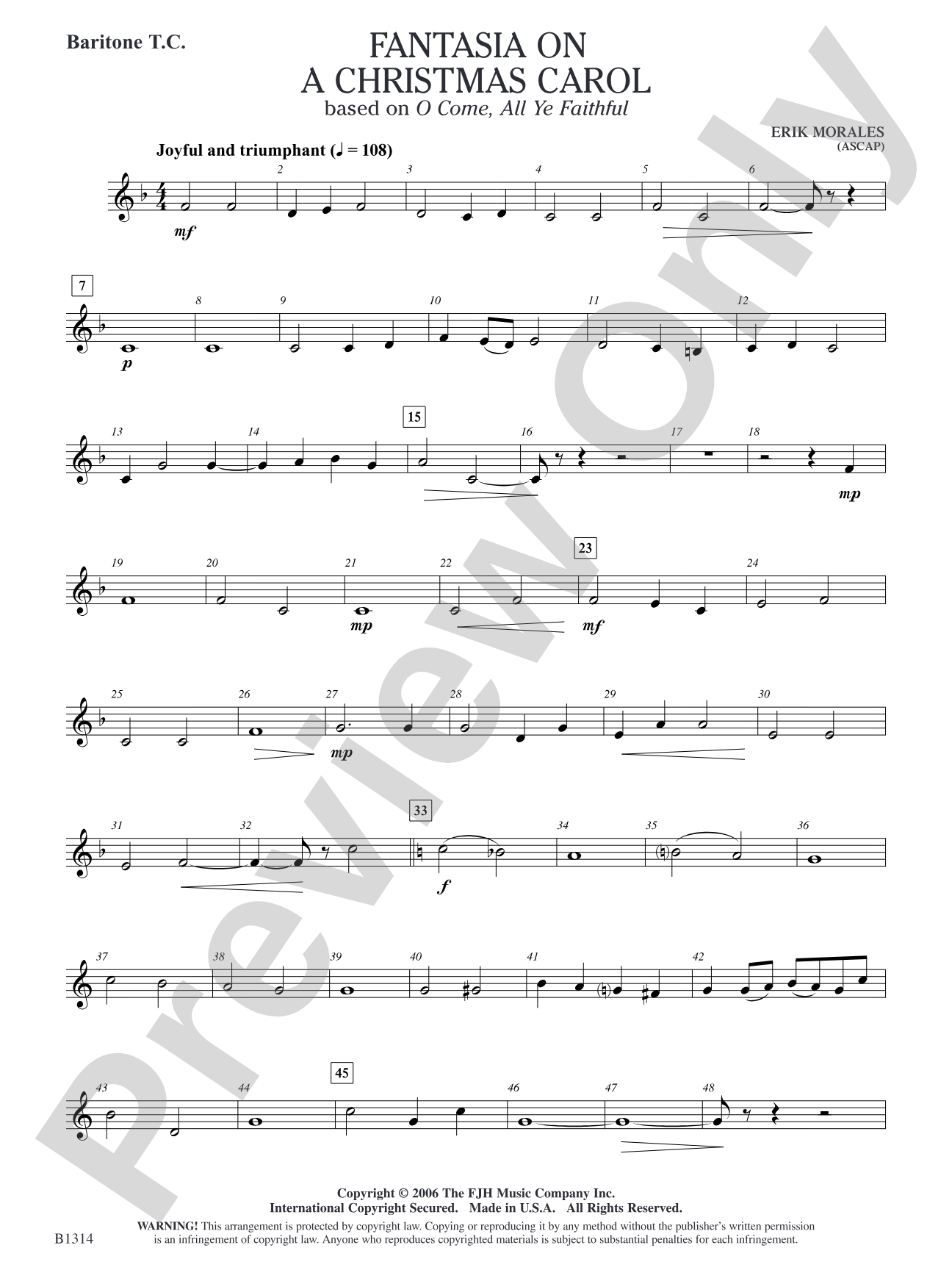

Fantasia on a Christmas Carol (based on O Come, All Ye Faithful): Baritone T.C.
based on O Come, All Ye Faithful
By Erik Morales
Grade: 2.5
Item: 98-PC-DB1314_BTC1
$7.00
Pickup currently not available
Description
Cleverly combining the classic carol O Come All Ye Faithful with Bach's Sheep May Safely Graze, this work is ideal for directors looking for a more serious addition to their winter concert. Covering the full gamut of styles, the different sections of the work flow seamlessly into each other to create a unified statement of joy and exuberance. Fantastic and imaginative writing for young bands!


Fantasia on a Christmas Carol (based on O Come, All Ye Faithful): Baritone T.C. isn't in MakeMusic Cloud just yet...but it could be. Let us know you'd like to see it, and you'll help shape what comes next. In the meantime, start a free trial and dive into thousands of interactive titles your students can play along with today.
Request This Title
Tell us you want it.
Start Your Free Trial
Explore everything that's ready to play right now.
Sample Audio
1
Audio File
--:--
0:00
0:00
Sample Video
No sample videos found.
Additional Details
Series:
FJH Young Band
Publisher:
The FJH Music Company, Inc.
SKU:
98-PC-DB1314_BTC1
More about this title
About the Composer: Erik Morales

Erik Morales has spent his career building bridges between artistic substance and educational accessibility. Born in New York City in 1966, he began composing professionally while still in high school, when a former band director commissioned him to arrange for marching band in south Florida. That early opportunity launched a prolific path: he earned degrees from Florida International University and the University of Louisiana, Lafayette, and has since published over 150 works across wind, orchestral, jazz, and chamber settings.
Morales is particularly known for his contributions to the trumpet repertoire. His trumpet ensembles have earned first-place finishes at the National Trumpet Competitions, and his Concerto for Trumpet in C and Piano premiered at the 2009 International Trumpet Guild conference. Beyond performance accolades, his approach to composition consistently prioritizes educational value without sacrificing musical integrity, making his work a staple in school programs nationwide.
Why we love this
Morales threads together two beloved melodies without ever feeling forced or gimmicky. The real strength lies in how the arrangement respects both themes, letting each have genuine musical space while building genuine excitement. For a winter concert that needs sophistication alongside accessibility, this strikes the balance that makes young musicians sound and feel accomplished.
What to expect
The piece unfolds like a musical conversation between two traditions, starting with the warmth of a familiar carol and gradually introducing learned counterpoint that deepens rather than complicates the mood. By the conclusion, both melodies emerge together in a jubilant statement that feels earned and genuinely festive.
Who it's for
Directors programming a winter concert who want substance beyond typical holiday pops but refuse to sacrifice playability for young ensembles. This works particularly well for groups at the Grade 2 to 2.5 range seeking material that challenges without overwhelming.
How to get the most out of it
- Balance the carol melody against the Bach counterpoint in the middle sections. Young bands often bury one voice trying to support the other; rehearse them as equal partners.
- Let the style shifts breathe. Mark clear transitions between sections so the ensemble understands when the character changes, not just the harmony.
- Watch for dynamic control in the final statement. The work builds to exuberance, but clarity matters more than volume; overpowering will blur the melodic lines.
How to use it
Open the second half of your winter concert with this one. It works as a natural bridge between more contemporary pops and any classical pieces you've programmed, signaling to the audience that holiday music can be both accessible and musically serious. Pair it with a straight arrangement of O Come All Ye Faithful elsewhere on the program and the thematic connection becomes a programming strength rather than redundancy.
Skills your students will build
- Recognizing and playing Bach-style counterpoint at an accessible level
- Balancing two simultaneous melodic lines of equal importance
- Executing style transitions and character changes within a single piece
- Sustaining dynamic control through extended lyrical passages
- Ensemble blend and voice independence in polyphonic textures