
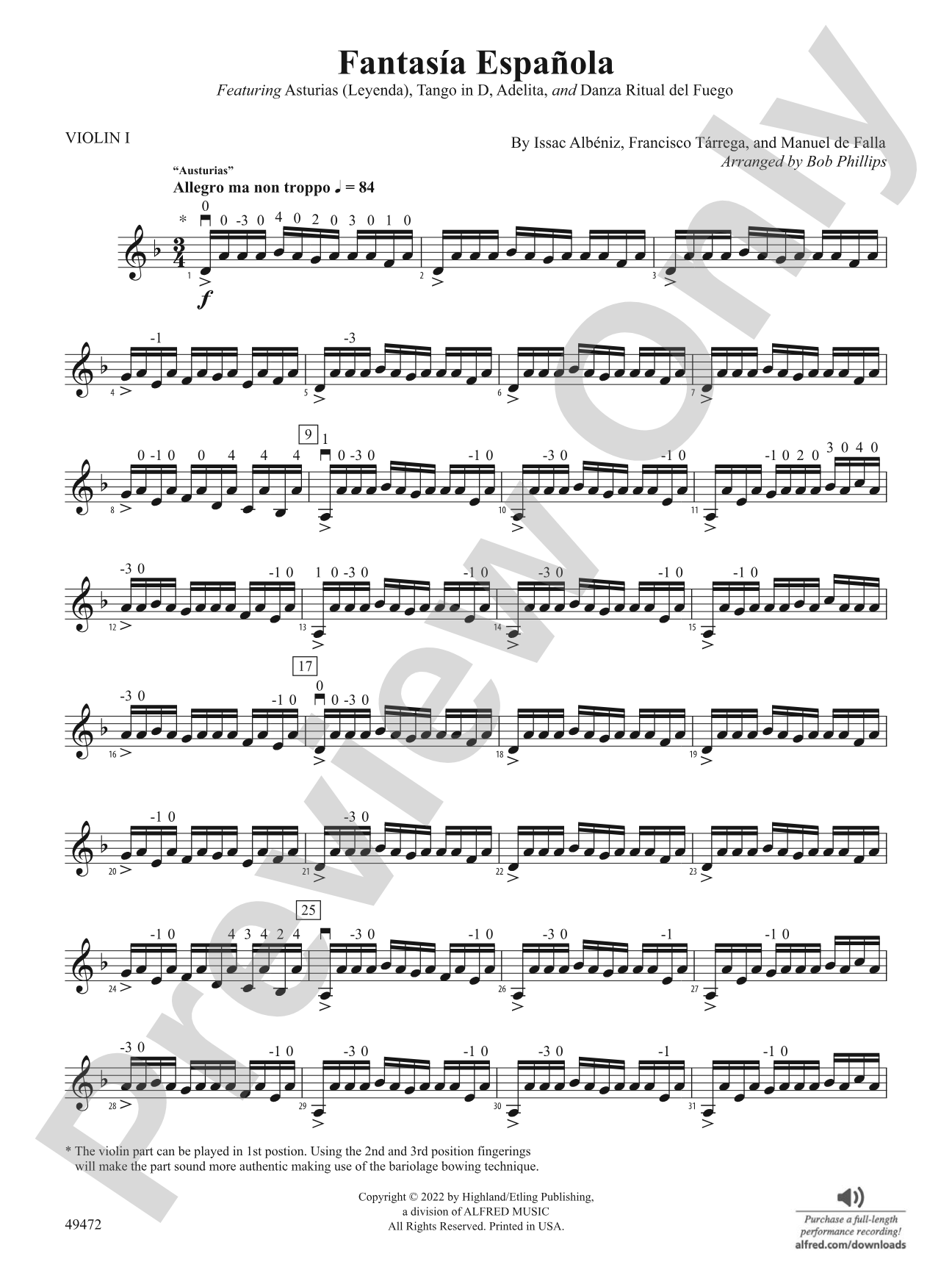

Fantasía Española: 1st Violin
Featuring: Asturias (Leyenda) / Tango in D, Adelita / Danza Ritual del Fuego
By Issac Albéniz, Francisco Tárrega, and Manuel de Falla
Grade: 3.5
Item: 00-PC-0018790_VN1
$3.00
Pickup currently not available
Description
A spell-binding exploration of the music of Spain, Fantasía Española features four exciting yet contrasting sections and challenging parts for all players. Three of Spain's most famous composers are represented in this medley arranged by Bob Phillips. The piece begins with an exciting, driving excerpt from "Asturias (Leyenda)", by Isaac Albéniz, which, though written for piano, is most often heard on guitar. The setting of this section allows the violins and violas a display of virtuosity with its unrelenting rhythmic drive. Beautiful, lyric, and emotional, "Tango in D," also by Albéniz, will showcase the musicianship of the entire orchestra. Originally written for piano, the strings will shine in this second section of the arrangement. The third section is the slow and lyric, "Adelita." Drawn from the deep treasure of Spanish guitar music and written by the father of classical guitar, Francisco Tárrega, this piece is simply beautiful. The medley concludes with "Danza Ritual del Fuego" from the ballet El Amor Brujo. Written by Manuel de Falla for full orchestra, the string setting drives to a fabulous and dramatic finish.(5:45)


Don't just read it, hear it, play along with it, and watch your students grow with it. In MakeMusic Cloud, Fantasía Española: 1st Violin comes alive with professional accompaniment, adjustable tempo, and built-in practice tools that turn solo practice into real progress.
Open in the Player
Jump straight in and assign it today.
Start Your Free Trial
Open this title and explore the full library in minutes.
Sample Audio
1
Audio File
--:--
0:00
0:00
Sample Video
Additional Details
Series:
Highland String Orchestra (HSO)
Publisher:
Alfred Music
SKU:
00-PC-0018790_VN1
More about this title
About the Composer: Issac Albéniz
Isaac Albéniz (1860-1909) stands as one of Spain's most important composers, a pianist and nationalist who channeled the rhythms, harmonies, and character of Spanish folk music into concert works of genuine sophistication. His piano works, particularly the suite "Iberia," remain cornerstones of the Spanish repertoire and have influenced generations of composers seeking to capture national identity through music.
Why we love this
Bob Phillips crafts a superb medley that spans the full emotional and technical range your orchestra can handle at this level. You get genuine masterworks—not simplified versions, but thoughtful string arrangements that preserve the character of "Asturias" and "Tango in D" while giving every section real responsibility and musicianship to develop.
What to expect
This medley sweeps you through Spain's musical landscape: the fierce, propulsive energy of Asturias gives way to intimate, languid elegance in the Tango section, then finds stillness in the gentle classical beauty of Adelita before erupting into the percussive fire and passion of Falla's ritual finale. Each section feels complete and earned, never rushed or superficial.
Who it's for
String orchestras at the intermediate level who want substantive engagement with real Spanish masterworks rather than folk arrangements. Conductors seeking a contest or festival piece that challenges players across all sections while remaining musically rewarding for audiences.
How to get the most out of it
- Anchor the rhythmic drive of "Asturias" with a steady pulse from the cellos and basses; the violins and violas will lock in more securely when the foundation doesn't waver.
- Shape the second movement's lyric lines with careful attention to phrase length rather than bar length, letting singers breathe naturally even though you're working with strings.
- Bring out the gentle, classical guitar character of "Adelita" by keeping vibrato under control and favoring transparency over weight in the middle section.
- Build the final section's dramatic arc incrementally; resist the urge to push tempo in "Danza Ritual del Fuego" until the last eight bars.
How to use it
Pair this with other nationalist works or string writing from the same era to frame a concert exploring how European composers drew from folk traditions. Its five-and-a-half-minute length and emotional variety make it an ideal centerpiece for a spring or festival concert, where audiences appreciate both the familiar Spanish idiom and genuine musical substance.
Skills your students will build
- Rhythmic precision in driving, syncopated passages
- Sustained lyricism and phrase shaping across longer lines
- Balance and transparency in multi-layered string textures
- Dynamic contrast between intimate and dramatic sections
- Idiomatic interpretation of Spanish musical character