Fantaisie-Impromptu Theme from Op. 66 (Posthumous) Sheet Music Preview

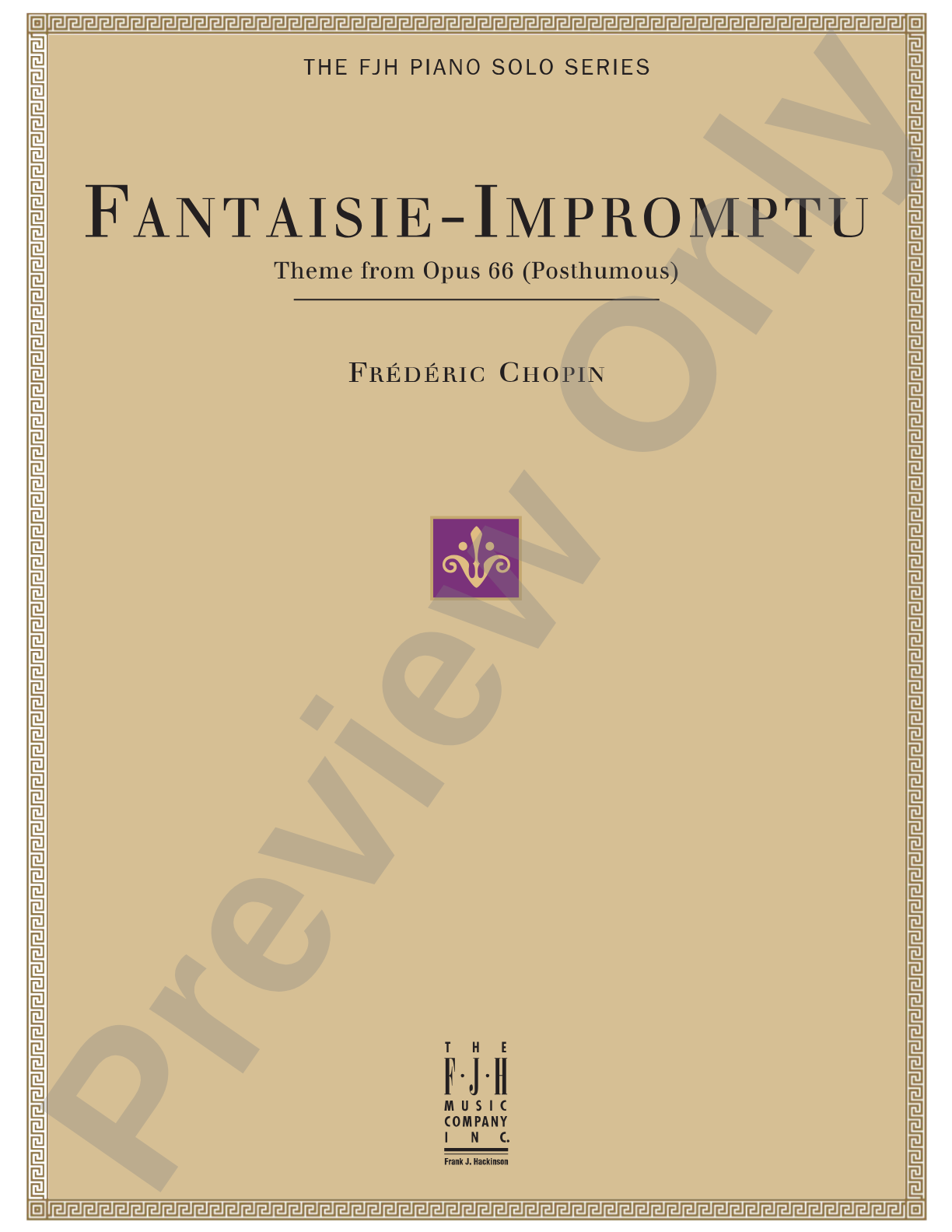
Fantaisie-Impromptu Theme from Op. 66 (Posthumous): Piano

By Frederic Chopin / arr. Edwin McLean

Item: 98-DPS1012

Digital Download
$2.50
Description
This famous Chopin melody is here accessibly arranged in C major. Though a bit simplified, it still achieves the rich, open harmonies that support the theme. Known to some as "I'm Always Chasing Rainbows," perhaps because it plays so calmly after a stormy opening in the original version. Makes a great introduction to the world of virtuosic repertoire.

Fantaisie-Impromptu Theme from Op. 66 (Posthumous): Piano isn't in MakeMusic Cloud just yet...but it could be. Let us know you'd like to see it, and you'll help shape what comes next. In the meantime, start a free trial and dive into thousands of interactive titles your students can play along with today.

Sample Audio
No sample audio found.
Sample Video
Additional Details
Series: The FJH Piano Solo Series
Publisher: The FJH Music Company, Inc.
SKU: 98-DPS1012

More about this title

About the Composer: Frederic Chopin

Frederic Chopin (1810-1849) stands among the most influential pianists and composers of the Romantic era. He wrote almost exclusively for piano, crafting a body of work that transformed the instrument's expressive possibilities and technical demands. His nocturnes, études, and shorter character pieces became cornerstones of the piano repertoire, valued equally for their structural innovation and their capacity to convey intimate emotion.

Chopin's music demands both technical precision and interpretive depth from performers. His harmonic language was adventurous for its time, and his approach to melody emphasized lyrical singing tone at the keyboard. For music educators, his works serve as a bridge between classical form and modern expressiveness, making them essential for students seeking to understand Romantic-era aesthetics.

Why we love this

This arrangement captures one of Chopin's most recognizable themes while remaining genuinely playable for intermediate pianists. Rather than strip away the composer's harmonic sophistication, the C major transposition and simplified figuration preserve the lyrical beauty that makes this melody unforgettable. Programming this alongside a student's regular repertoire offers immediate access to masterwork-level writing without requiring the technical wizardry of the original.

What to expect

Serene and songlike, this melody unfolds with the calm reflective quality of a Chopin nocturne. The open, rich harmonies create a sense of unhurried elegance, inviting the player to discover how much musical depth can exist within a straightforward harmonic framework.

Who it's for

This arrangement suits intermediate pianists encountering Romantic masterworks for the first time, as well as students building confidence with expressive playing. Advanced students can also use it as a warm-up or as preparation for tackling the original, more demanding version.

How to get the most out of it

  • Shape the melody with a singing tone throughout, letting each phrase breathe naturally rather than rushing between sections. The accompaniment supports but never dominates the upper line.
  • Listen carefully to the harmonic movement beneath the tune. Even in this simplified version, subtle chord changes create the emotional arc that made this theme famous.
  • Maintain consistent pedal discipline to achieve the open sonorities mentioned in the description while keeping harmonic clarity. Change the pedal with harmonic shifts, not mechanically with the beat.

How to use it

Feature this as a solo recital piece that showcases lyrical playing without requiring virtuosic display, or pair it with other Romantic-era character works to illustrate the period's emphasis on melody and mood. It also works well as an encore after a more technically demanding performance.

Skills your students will build

  • Singing tone production and long-phrase phrasing
  • Harmonic listening and voice leading awareness
  • Pedal control for sustaining rich sonorities
  • Interpretation of Romantic-era expression markings
  • Access to masterwork-level composition and melody writing

You May Also Like