

Fanga Alafia: 3-Part Mixed Choral Octavo
Traditional Welcome Song / arr. Andy Beck
Item: 00-PO-0007170

$2.30
Minimum order quantity: 10 copies
Please note: Under U.S. copyright law, you must purchase the exact number of copies needed for your ensemble. Printing, duplicating or sharing additional copies is strictly prohibited.
Pickup currently not available
Related Items
Fanga Alafia: TBB Choral Octavo |
$2.30
|
View | |
Fanga Alafia: 2-Part Choral Octavo |
$2.30
|
View | |
Fanga Alafia: PianoTrax Digital Audio Download |
$29.99
|
View | |
Fanga Alafia: 3-Part Mixed Choral Octavo |
$2.30
|
View | |
Fanga Alafia: TBB Choral Octavo |
$2.30
|
View | |
Fanga Alafia: 2-Part Choral Octavo |
$2.30
|
View | |
Fanga Alafia: Choral Octavo SoundTrax CD |
$29.99
|
View |
Description
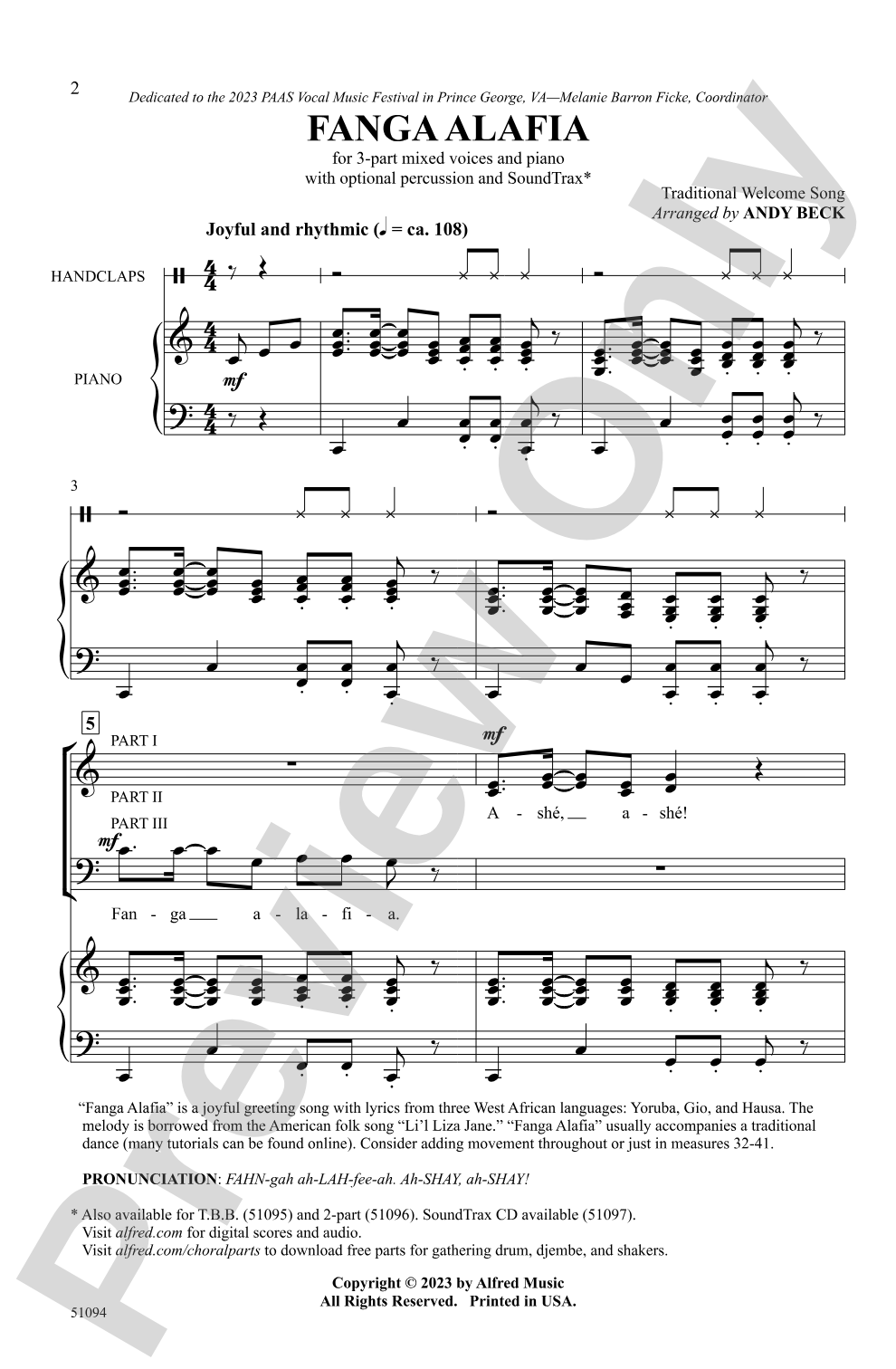
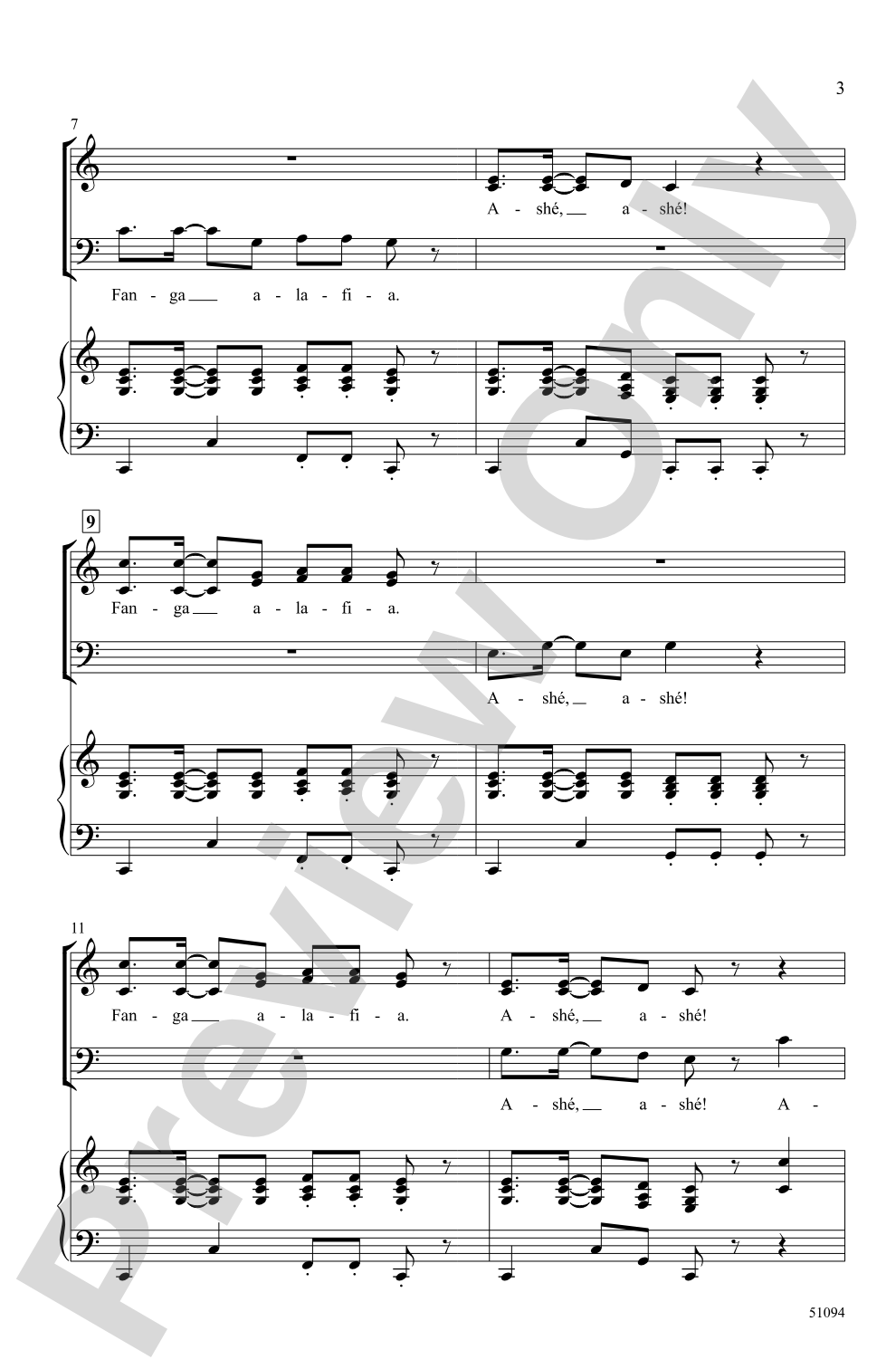
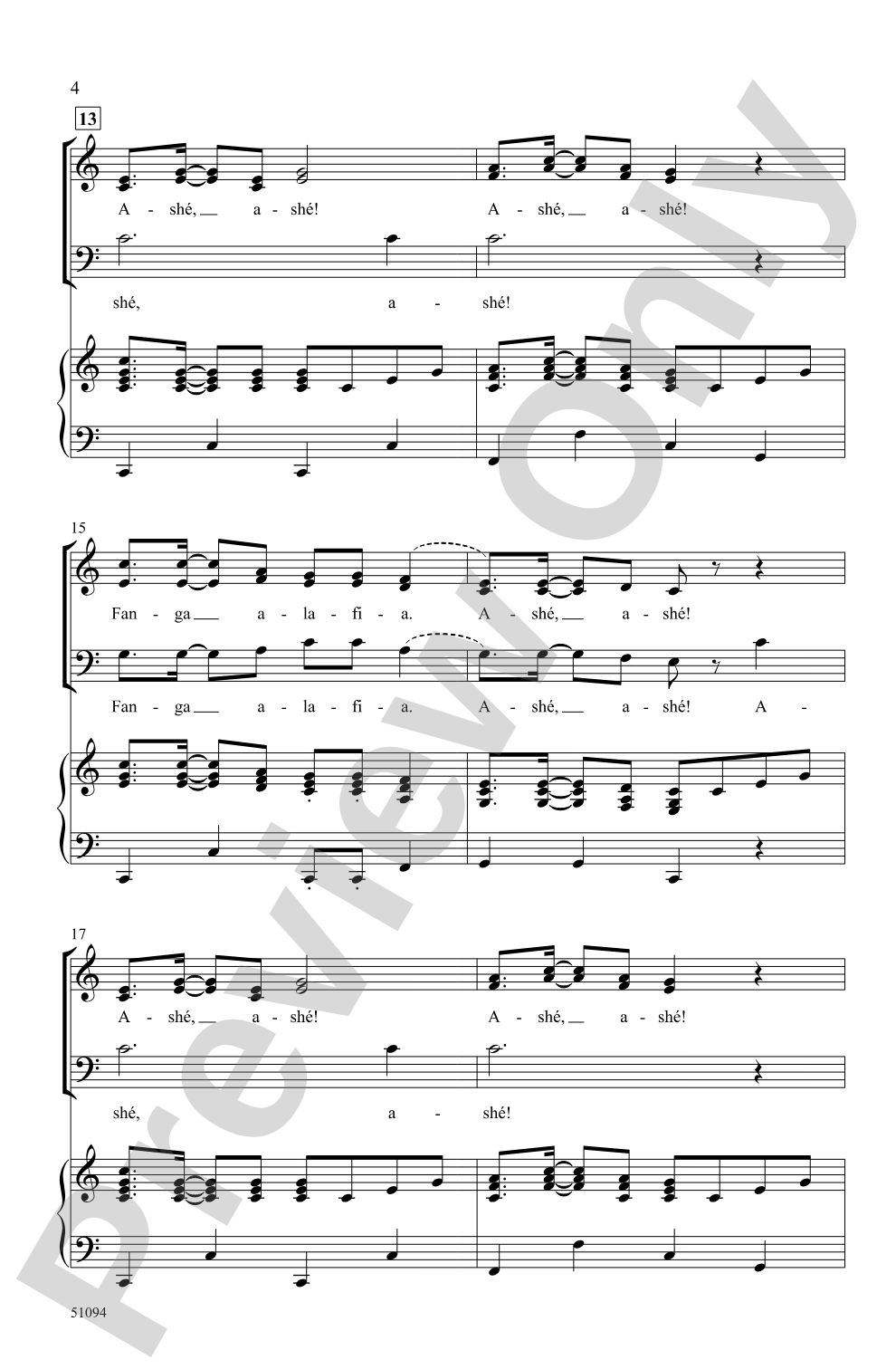
This lively welcome song traditionally accompanies the West African fanga dance. Built on the familiar tune (plus some new material and a few English words), this general music class favorite is fully developed as a choral arrangement. Scattered handclaps, syncopated rhythms, and bright harmonies make this well-crafted setting a joy to perform! A modulating breakdown section in the middle offers the opportunity to incorporate the dance. Downloadable percussion parts are available online.


Don't just read it, hear it, play along with it, and watch your students grow with it. In MakeMusic Cloud, Fanga Alafia: 3-Part Mixed Choral Octavo comes alive with professional accompaniment, adjustable tempo, and built-in practice tools that turn solo practice into real progress.
Open in the Player
Jump straight in and assign it today.
Start Your Free Trial
Open this title and explore the full library in minutes.
Sample Audio
1
Audio File
--:--
0:00
0:00
Sample Video
Additional Details
Series:
Alfred Choral Designs
Publisher:
Alfred Music
Page Count:
12
SKU:
00-PO-0007170
Instrumentation:
Percussion
More about this title
About the Composer: Andy Beck

Andy Beck oversees choral publications at Alfred Music and has composed and arranged more than 450 choral works, vocal resources, and children's musicals that are actively performed worldwide. His pedagogical materials—including Sing at First Sight, Foundations in Choral Sight Singing, and Vocalize! 45 Vocal Warm-Ups That Teach Technique—have become standards in music classrooms. Beyond the printed page, he is sought after as a guest conductor, choreographer, adjudicator, and clinician across the United States and internationally, having led honor choirs and all-state ensembles throughout the Southeast.
A trained tenor with degrees from Ithaca College (Bachelor's in Music Education) and Northwest Missouri State University (Master's in Music Education), Beck performs with the North Carolina Master Chorale Chamber Choir and has been an Alfred Music studio singer since 1992. He brings deep experience in musical theatre, choral artistry, and music literacy advocacy to everything he writes. His commitment to accessible, high-quality choral literature shapes not only his own compositions but the entire Alfred choral catalog he helps curate.
Why we love this
This piece strikes an uncommon balance: it honors the authentic West African tune while building something genuinely fun to rehearse and perform. The modulating breakdown section in the middle isn't just a musical idea; it's an invitation to move, which transforms a general music class from singing at chairs to actually engaging the cultural roots of the piece.
What to expect
Energetic and welcoming, with a sense of celebration built into every phrase. The syncopated rhythms create forward momentum, while the bright harmonies and handclaps generate the feeling of a gathering or processional. Even at rest moments, the piece pulses with life.
Who it's for
General music classes and mixed choirs looking for a piece that teaches cultural awareness, rhythm, and ensemble cohesion simultaneously. It works equally well for singers with limited experience and more advanced groups seeking repertoire with real pedagogical substance.
How to get the most out of it
- Keep the handclaps crisp and rhythmically tight; they're not accompaniment flourishes but essential texture. Consider assigning them strategically so singers can focus on their parts while the percussion layer locks in.
- Shape the modulation to the breakdown section with clear dynamic contrast. The key change should feel like opening a door, not just a technical shift.
- Work the syncopated rhythms in isolation before full rehearsal. These rhythms drive the energy, but rushing through them wastes the arrangement's personality.
- Balance brightness with clarity in the three-part harmony. The voicing is lean by design; make sure the blend doesn't muddy the harmonic color.
How to use it
Program this early in a concert to set an upbeat, inclusive tone. It also pairs naturally with other world music selections or works that emphasize rhythm and movement, and its length and accessibility make it ideal for spring pops concerts or multicultural celebrations.
Skills your students will build
- Syncopated rhythm reading and performance
- Singing in three-part mixed voicing (SAB)
- Rhythmic independence (maintaining parts while handclaps create layered texture)
- Modulation and key change awareness
- Cultural context and world music literacy