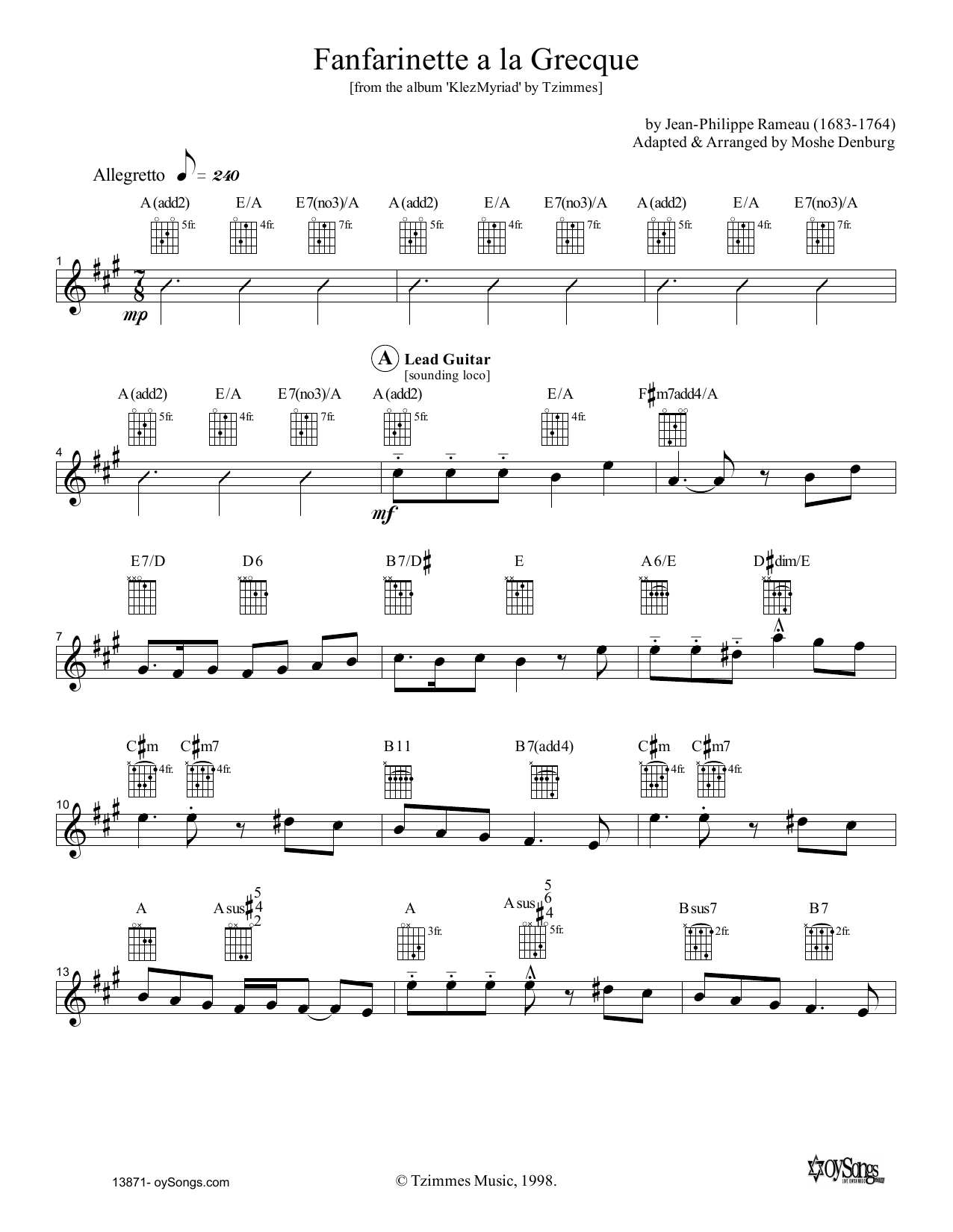
Fanfarinette a la Grecque Sheet Music Preview

Fanfarinette a la Grecque: Lead Sheet / Fake Book

Arranged by Moshe Denburg

Item: 35-DS00391019

Digital Download
$3.99
Description

Fanfarinette a la Grecque: Lead Sheet / Fake Book isn't in MakeMusic Cloud just yet...but it could be. Let us know you'd like to see it, and you'll help shape what comes next. In the meantime, start a free trial and dive into thousands of interactive titles your students can play along with today.

Sample Audio
No sample audio found.
Sample Video
Additional Details
Publisher: Hal Leonard
Page Count: 5
SKU: 35-DS00391019

More about this title

Why we love this

Denburg's arrangement captures the ceremonial grandeur of Greek-influenced Jewish music in a format that works equally well for solo keyboard performance or as accompaniment for vocalists. The lead sheet format gives you flexibility to adapt the piece for your ensemble while the harmonic language stays fresh and intentional. It's the kind of arrangement that respects the source material while making it genuinely playable in a variety of settings.

What to expect

Stately and processional, with an underlying warmth that comes from the traditional harmonic language. The piece carries a sense of occasion without demanding virtuosity, making it feel both reverent and inviting.

Who it's for

Pianists and keyboardists looking for dignified, accessible repertoire with cultural resonance, as well as vocal soloists needing accompaniment for Jewish liturgical or inspirational settings. Teachers programming concert music that reflects diverse musical traditions will find this arrangement both musically substantial and straightforward to prepare.

How to get the most out of it

  • Pay attention to the harmonic rhythm in the opening; let each chord breathe rather than rushing through the progression.
  • Balance the melodic line with accompaniment texture, especially if you're playing both parts on one keyboard. The lead sheet notation makes it clear where the solo voice should sit in the mix.
  • If you're accompanying a vocalist, listen for where they naturally want to take time or add expression, then support that with subtle flexibility in the rhythmic framework.

How to use it

Pair this with other pieces from Mediterranean or Middle Eastern musical traditions to create a thoughtfully curated program section. It works beautifully as an opening or closing statement, particularly in contexts where you want to honor specific cultural or spiritual themes without requiring elaborate orchestration.

Skills your students will build

  • Reading lead sheet notation and chord symbols
  • Interpreting and realizing chord progressions on keyboard
  • Accompanying melodic lines with sensitivity to phrasing
  • Understanding harmonic language in Jewish musical traditions

You May Also Like