
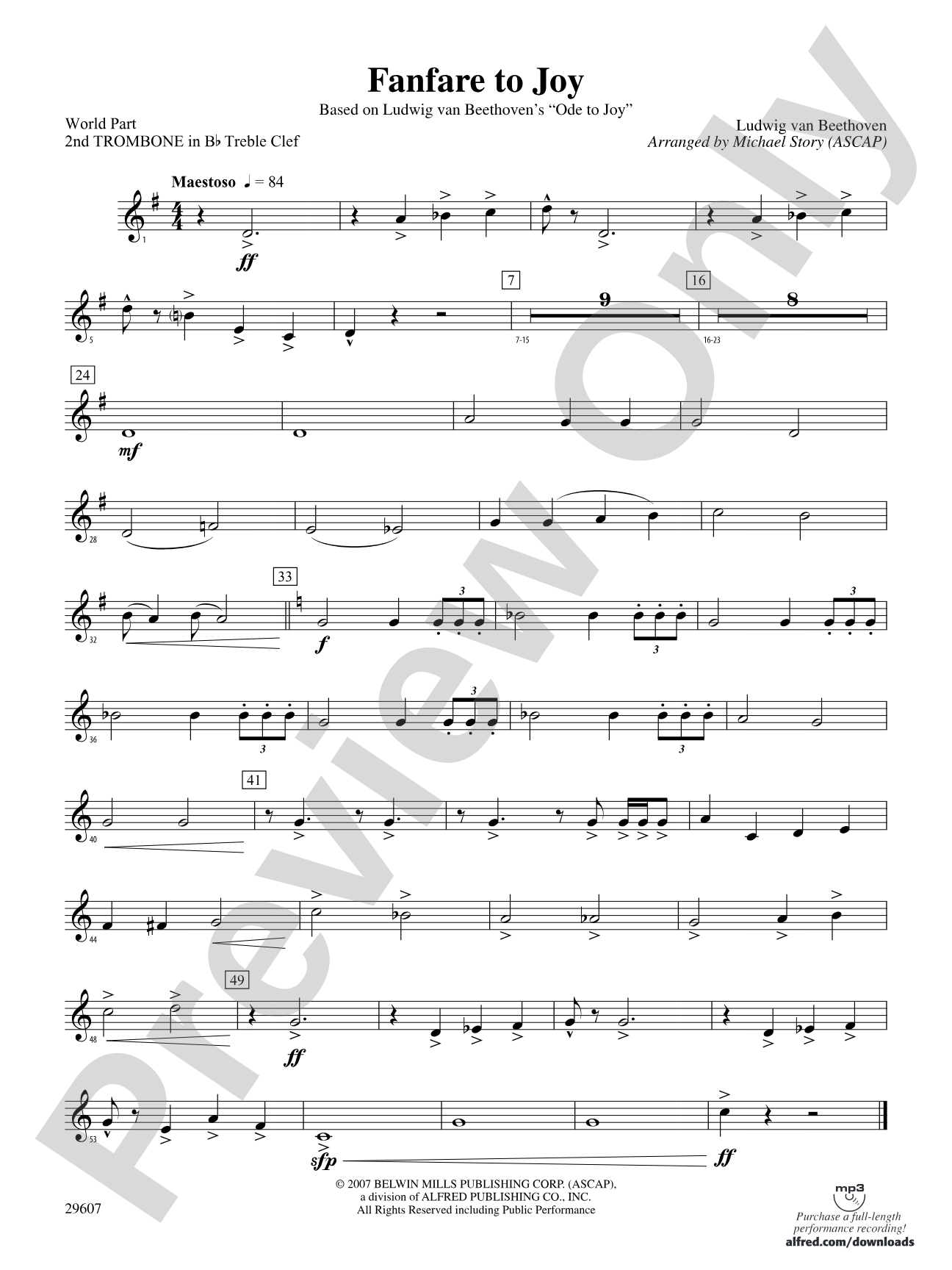

Fanfare to Joy: (wp) 2nd B-flat Trombone T.C.
By Ludwig van Beethoven / arr. Michael Story
Grade: 3 (Medium Easy)
Item: 00-PC-0001497_wpTN2TC
$5.99
Pickup currently not available
Description
A contemporary setting of Beethoven's revered melody is scored in a fanfare-style that will certainly draw acclaim. Following the introductory statement, the arrangement builds with intensity and intricacy to a dramatic conclusion. Bold and magnificent, this setting will be a dynamic opening to any program! (2:43) This title is available in MakeMusic Cloud.


Don't just read it, hear it, play along with it, and watch your students grow with it. In MakeMusic Cloud, Fanfare to Joy: (wp) 2nd B-flat Trombone T.C. comes alive with professional accompaniment, adjustable tempo, and built-in practice tools that turn solo practice into real progress.
Open in the Player
Jump straight in and assign it today.
Start Your Free Trial
Open this title and explore the full library in minutes.
Sample Audio
1
Audio File
--:--
0:00
0:00
Sample Video
No sample videos found.
Additional Details
Series:
Belwin Concert Band
Publisher:
Alfred Music
Page Count:
118
SKU:
00-PC-0001497_wpTN2TC
More about this title
About the Composer: Ludwig van Beethoven
Ludwig van Beethoven (1770-1827) fundamentally transformed Western music by expanding the symphonic form, deepening harmonic language, and insisting that instrumental music could express profound emotion and philosophical ideas. His nine symphonies, 32 piano sonatas, and string quartets remain central to the concert repertoire and continue to challenge musicians across all levels. The "Ode to Joy" melody from his Ninth Symphony has become an anthem of human brotherhood and appears in settings ranging from intimate chamber arrangements to grand orchestrations.
Beethoven's deafness during his most productive years makes his achievement even more remarkable. He composed without hearing his own work performed, relying entirely on his inner ear and musical imagination. For music educators and students, Beethoven's music offers an enduring lesson: that technical mastery and emotional authenticity together create timeless art.
Why we love this
Michael Story's fanfare arrangement captures the ceremonial grandeur and forward momentum that make this melody so universally recognized, while the Grade 3 scoring keeps the piece within reach for developing ensembles. The structural arc from calm introduction through intensifying complexity to a dramatic finish gives conductors a clear dramatic trajectory to shape, making this an excellent choice for teaching program pacing and musical storytelling. Programming this early in a concert immediately establishes energy and sophistication without overextending technical demands.
What to expect
Ceremonial and uplifting from the outset, with a sense of pageantry that grows increasingly grand. The arrangement honors Beethoven's original melody while wrapping it in bright orchestral colors and rhythmic vitality, creating a performance that feels both accessible and genuinely impressive.
Who it's for
Directors programming Grade 2-4 ensembles who want a recognizable, musically substantial opening piece that doesn't require extended rehearsal time. Students benefit from playing a melody they likely already know, which builds confidence while learning how orchestration and arrangement transform a simple tune into concert-hall material.
How to get the most out of it
- Shape the opening statement with clear articulation and a focused tone; this is the moment audiences recognize the melody, so let the familiarity work in your favor rather than overshadowing it with excessive dynamics.
- Balance the layered sections during the build by checking that inner voices remain audible as complexity increases; subdivide the more intricate passages in rehearsal to lock rhythmic independence.
- Treat the dramatic conclusion as a true climax by gradually releasing all musical elements (dynamic control, accent clarity, rhythmic precision) into a unified, powerful statement rather than allowing individual sections to overplay.
- Use the recorded accompaniment in MakeMusic Cloud to help sections internalize their parts within the full arrangement's tempo and texture.
How to use it
This works beautifully as a concert opener, especially before more introspective or technically demanding works that benefit from an energized audience and ensemble. It also pairs well in thematic programs exploring "masterworks across centuries" or as a celebratory finale if programmed last.
Skills your students will build
- Recognizing and executing a fanfare style (strong rhythmic articulation, sustained resonance, clarity of statement)
- Maintaining balance and blend as orchestration thickens and harmonic complexity increases
- Building dynamic shape across a multi-section form (introduction, development, climax)
- Interpreting a familiar melody within a new arrangement context