Fanfare, Processional and Recessional: 2nd Trombone Sheet Music Preview

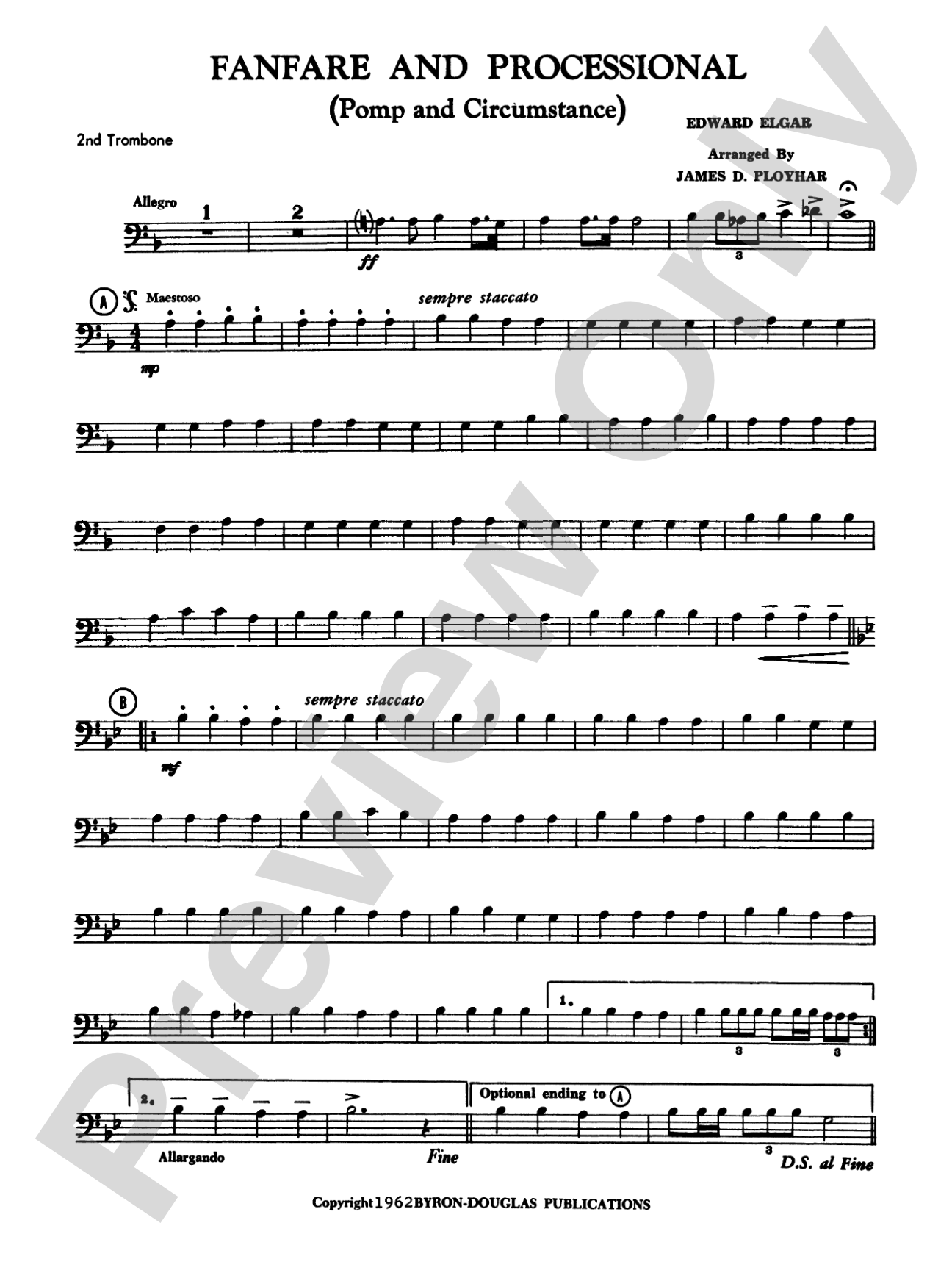
Fanfare, Processional and Recessional: 2nd Trombone

By Edward Elgar / arr. James D. Ployhar

Grade: 3 (Medium Easy)

Item: 00-PC-0014643_TN2

Digital Download
$3.00
Description

Don't just read it, hear it, play along with it, and watch your students grow with it. In MakeMusic Cloud, Fanfare, Processional and Recessional: 2nd Trombone comes alive with professional accompaniment, adjustable tempo, and built-in practice tools that turn solo practice into real progress.

Sample Audio
No sample audio found.
Sample Video
Additional Details
Series: Belwin Symphonic Band
Publisher: Alfred Music
Page Count: 122
SKU: 00-PC-0014643_TN2

More about this title

About the Composer: Edward Elgar

Edward Elgar (1857–1934) was an English composer whose orchestral works defined late Romantic music and remain central to the concert band repertoire. Though trained outside the traditional conservatory system, Elgar developed a distinctly English compositional voice, blending structural mastery with sweeping melodic invention. His processional and ceremonial works in particular have become staples of formal occasions and concert programming.

Why we love this

Ployhar's arrangement captures the ceremonial grandeur and harmonic richness of Elgar's original conception while sitting comfortably at Grade 3. The piece offers directors a legitimate masterwork that doesn't require virtuosic technical demands, making it accessible for intermediate ensembles without sacrificing musical substance or audience impact.

What to expect

A confident processional that moves with pageantry and dignity. The music unfolds with Edwardian formality, brightened by clear brass fanfares and supported by a sturdy harmonic foundation. There's ceremony here, but never stiffness; the melodic lines sing with natural eloquence.

Who it's for

Directors leading concert bands at the intermediate level who want to program significant English repertoire without excessive technical complexity. This works equally well for groups preparing for regional festivals or formal concert occasions where ceremonial music is expected.

How to get the most out of it

  • Shape the fanfare sections with clear articulation and natural phrase breathing; avoid rushing the march rhythms despite their driving energy.
  • Balance the inner voices carefully during harmonic transitions. The arrangemnet's fullness depends on support from the second clarinets, saxophones, and lower woodwinds.
  • Conduct the processional and recessional sections with steady pulse and minimal gesture; the music's stateliness comes from ensemble precision, not interpretive flourish.
  • Reserve dynamic peaks for the full ensemble moments and pull back during thinner textures to let details emerge cleanly.

How to use it

Position this as the opening or closing piece for formal occasions, festivals, or spring concert programs. It pairs well with lighter contemporary works and creates a distinguished anchor point in a mixed repertoire concert without requiring extended rehearsal time relative to its impact.

Skills your students will build

  • Executing characteristic Romantic-era phrasing with proper emphasis and release
  • Balancing independent inner voices within dense harmonic textures
  • Maintaining steady pulse and ensemble precision during march rhythms
  • Reading divided brass and woodwind parts with clear part independence
  • Responding to conducted direction in ceremonial contexts

You May Also Like