
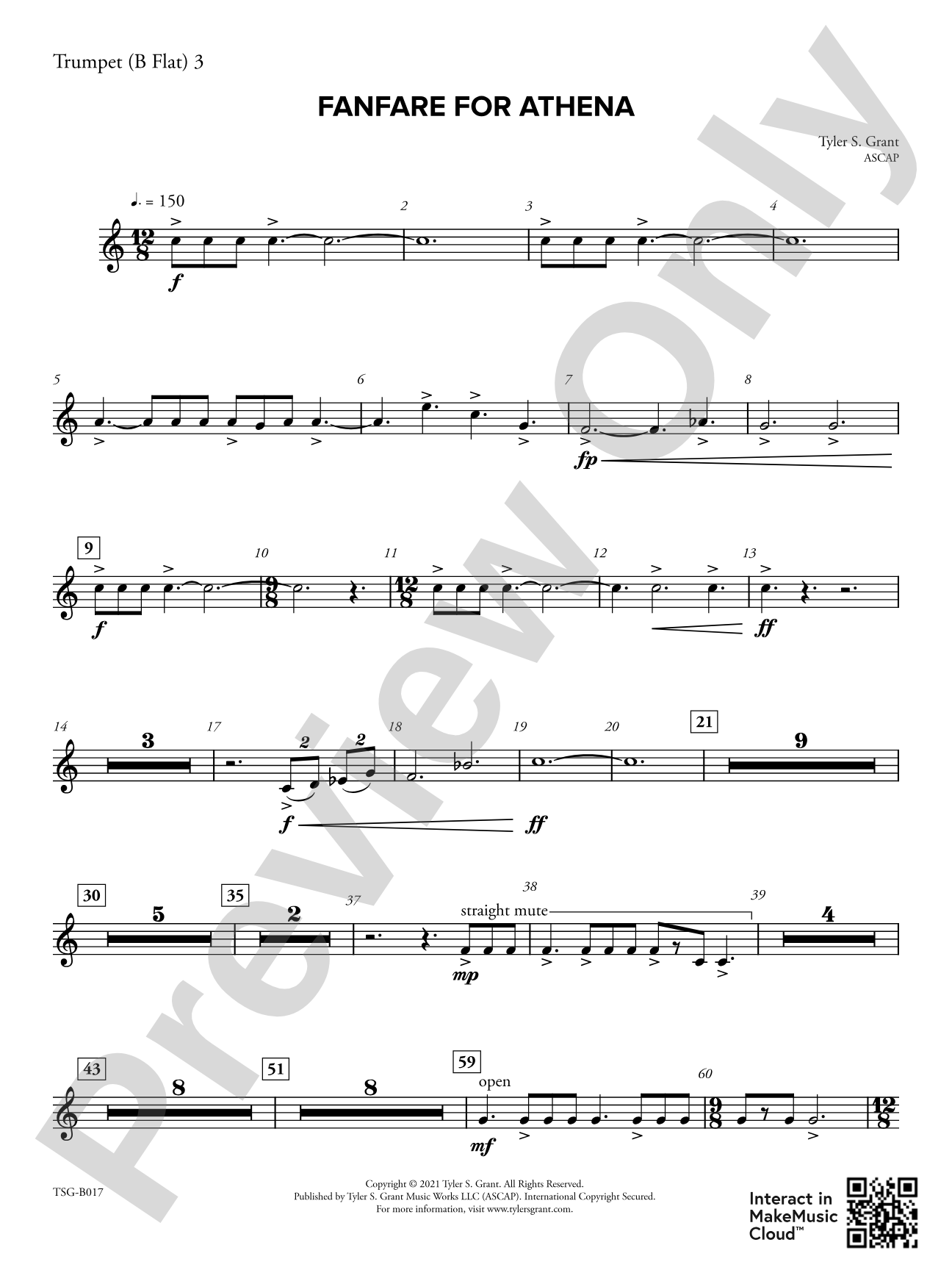

Fanfare for Athena: 3rd B-flat Trumpet
By Tyler S. Grant
Grade: 4
Item: 98-PC-TGB017_T3
$4.50
Pickup currently not available
Description
Fanfare for Athena by Tyler S. Grant was written to portray the goddess of wisdom and knowledge; this fanfare is a bold and vigorous start to any concert program. Exquisite woodwind flourishes juxtaposed with fresh brass interjections create a confident yet unique experience for audiences and musicians. (2:15)


Fanfare for Athena: 3rd B-flat Trumpet isn't in MakeMusic Cloud just yet...but it could be. Let us know you'd like to see it, and you'll help shape what comes next. In the meantime, start a free trial and dive into thousands of interactive titles your students can play along with today.
Request This Title
Tell us you want it.
Start Your Free Trial
Explore everything that's ready to play right now.
Sample Audio
1
Audio File
--:--
0:00
0:00
Sample Video
Additional Details
Series:
Tyler S. Grant Music Works
Publisher:
Tyler S. Grant Music Works, LLC.
SKU:
98-PC-TGB017_T3
More about this title
About the Composer: Tyler S. Grant

Tyler S. Grant has built a reputation as a prolific composer and arranger whose works appear regularly on honor ensemble programs and curated repertoire lists across North America and beyond. His compositions have earned recognition including a 2014 win in the Dallas Wind Symphony's "Call for Fanfares" Competition, and his music continues to be performed by collegiate and professional ensembles. Since 2010, he has maintained a steady output of commissions and publications while maintaining an active conducting and clinic schedule.
Grant brings deep pedagogical perspective to his writing. He has served as a clinician with over 100 school instrumental music programs across more than 15 states and contributed to Alfred Music's Sound Innovations: Ensemble Development series. His works have been heard at major venues including The Midwest Clinic, Carnegie Hall, Bands of America Grand Nationals, and the Macy's Thanksgiving Day Parade. A graduate of the University of Alabama with a degree in instrumental music education, he studied conducting with Professor Randall Coleman and credits composer Brian Balmages as a key influence on his craft.
Why we love this
Grant has mastered the art of the concert opener that actually sounds sophisticated. The interplay between ornate woodwind writing and punchy brass statements gives performers real colors to explore while maintaining the forward drive that audiences expect from a fanfare. This lands solidly in the Grade 4 sweet spot: challenging enough to feel like a genuine showcase, accessible enough that rehearsal time translates directly to polish.
What to expect
A goddess arrives. Bold and assured from the downbeat, with woodwind details that shimmer and brass voices that announce themselves without overshadowing. The piece radiates intelligence and poise, creating an immediate sense that something important is unfolding.
Who it's for
Concert bands at the Grade 4 level looking for an opener that commands respect. This works equally well for festival and contest contexts or as a season launch that sets a confident tone for your program.
How to get the most out of it
- Balance the featured woodwind flourishes by having your second and third chairs track dynamic shapes closely with the firsts; the exquisite writing only shines when all voices land together.
- Address the brass interjections as interruptions with intention. They should feel confident and assertive, never tentative. Work the articulation and attacks separately before binding them to the surrounding woodwind material.
- Keep the overall arc from first note to the final cadence. At 2:15, there's no room for drag; map the pacing in early rehearsals so ensemble energy sustains throughout.
How to use it
Program this at the top of your concert to establish energy and sophistication. The 2:15 duration makes it an efficient opener that leaves time for substantial works on the second half. It also serves as a strong festival or contest selection that showcases your ensemble's control over dynamic contrast and articulation.
Skills your students will build
- Dynamic shaping and control across full ensemble
- Articulation clarity in rapid woodwind passages
- Ensemble balance when featured and accompanimental voices interact
- Stylistic interpretation of programmatic writing
- Precision attacks and releases in brass interjections