
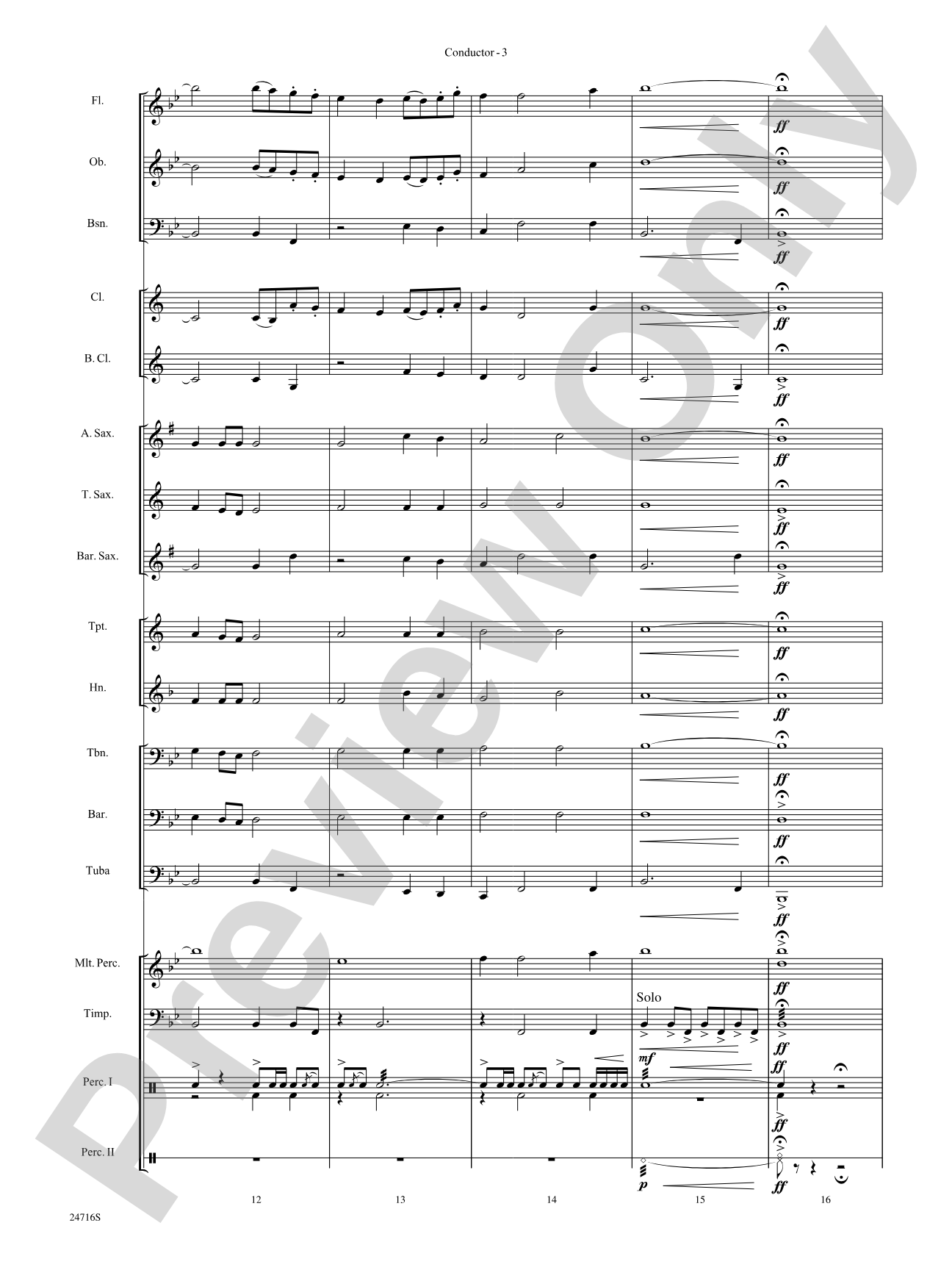
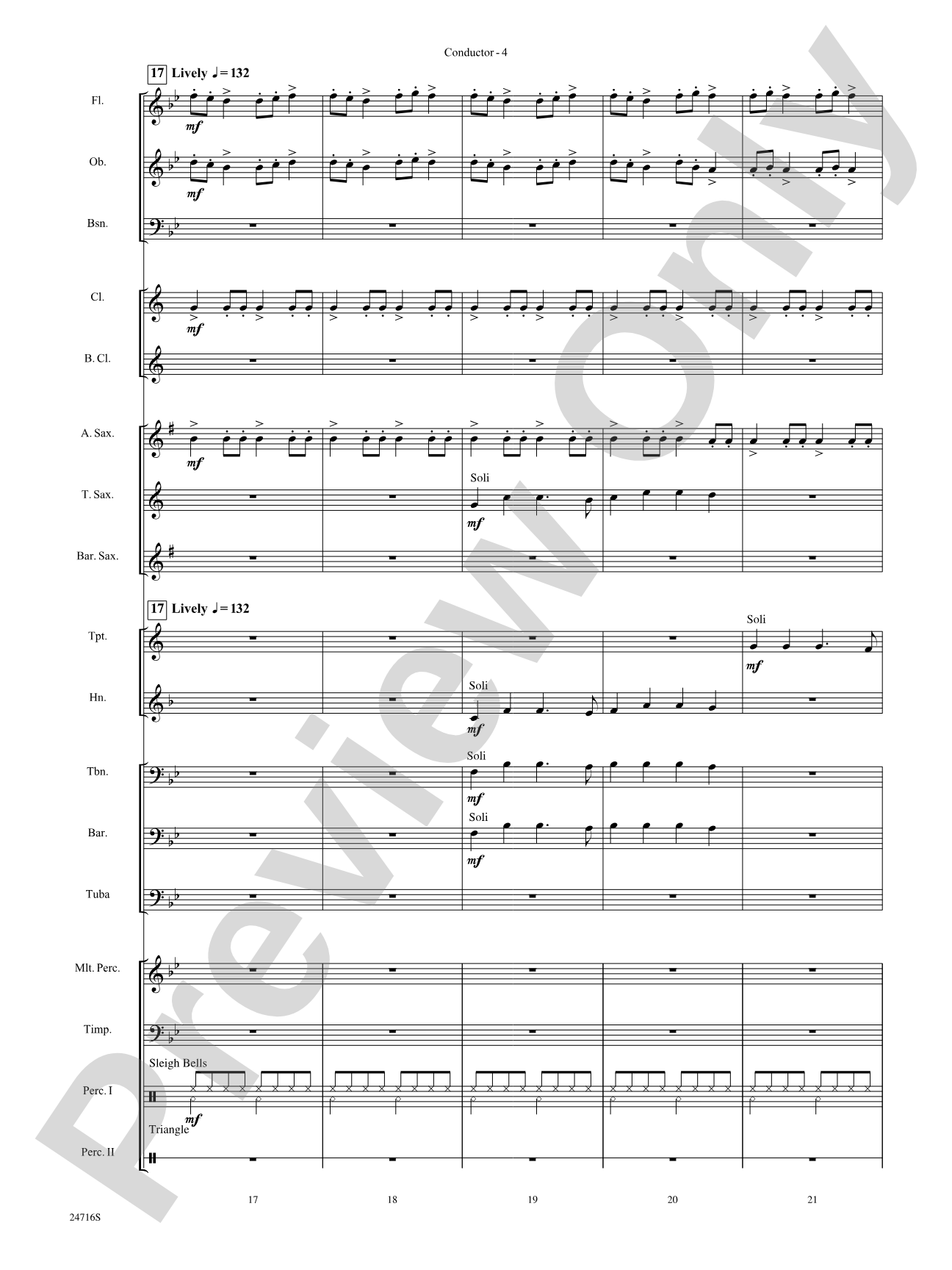
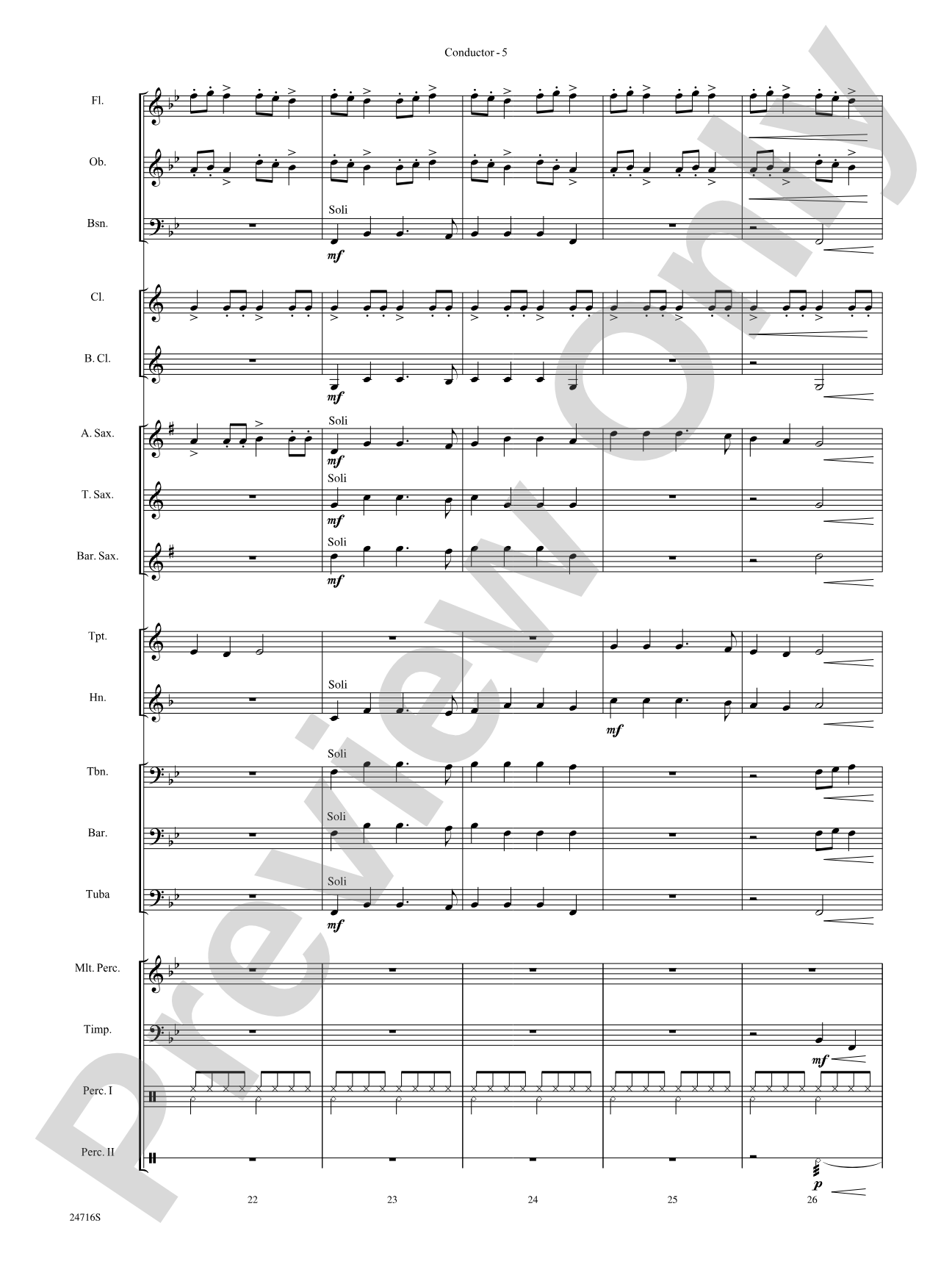
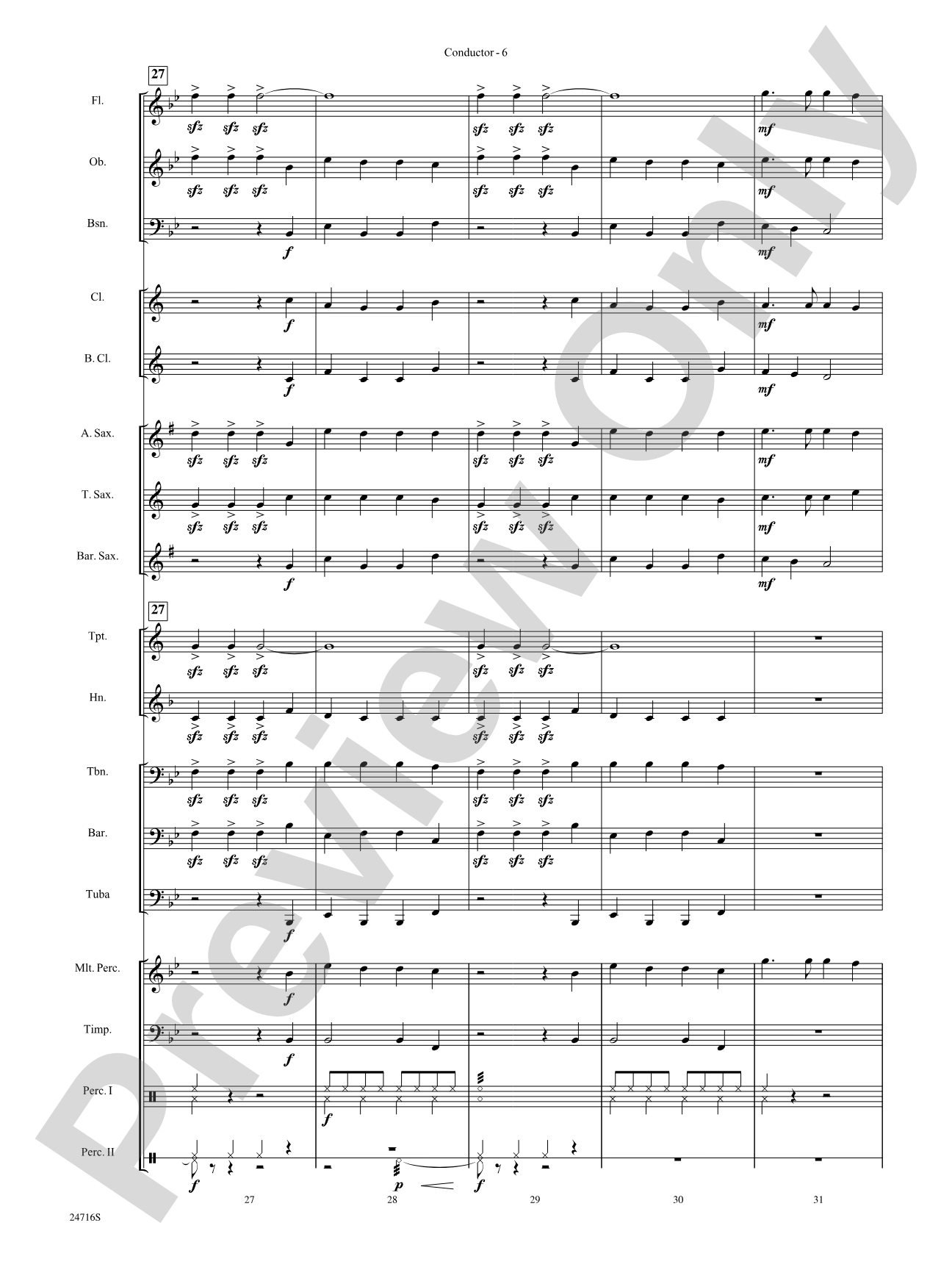

Fanfare for a Holiday Celebration: Concert Band Conductor Score & Parts
Arr. Robert W. Smith
Grade: 1 (Very Easy)
Item: 00-PK-0000882

$56.00
Pickup currently not available
Buy Extra Parts (Digital PDF Download)
Parts Added to Cart!
Related Items
Fanfare for a Holiday Celebration: Concert Band Conductor Score & Parts |
$56.00
|
View |
Description
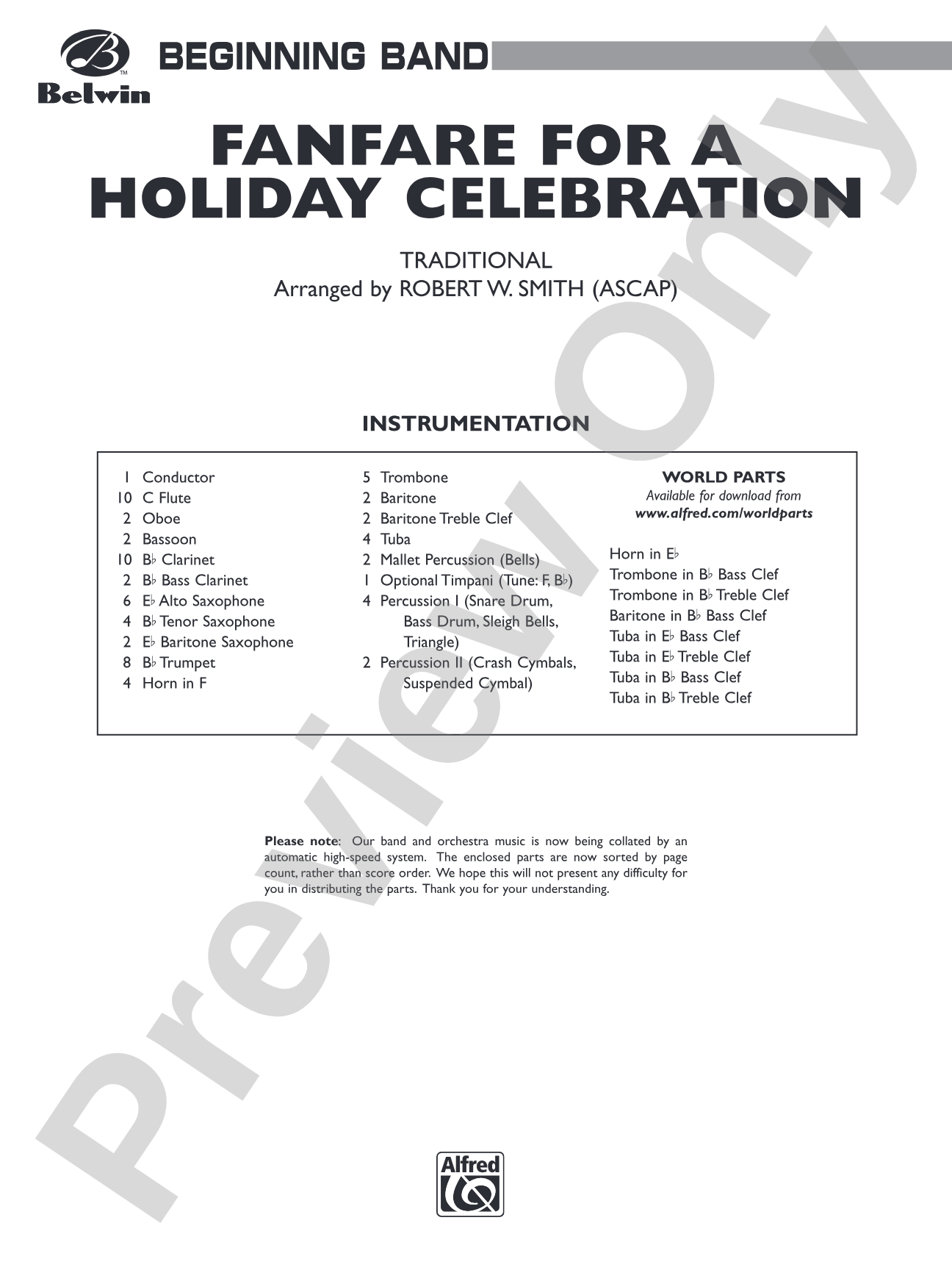
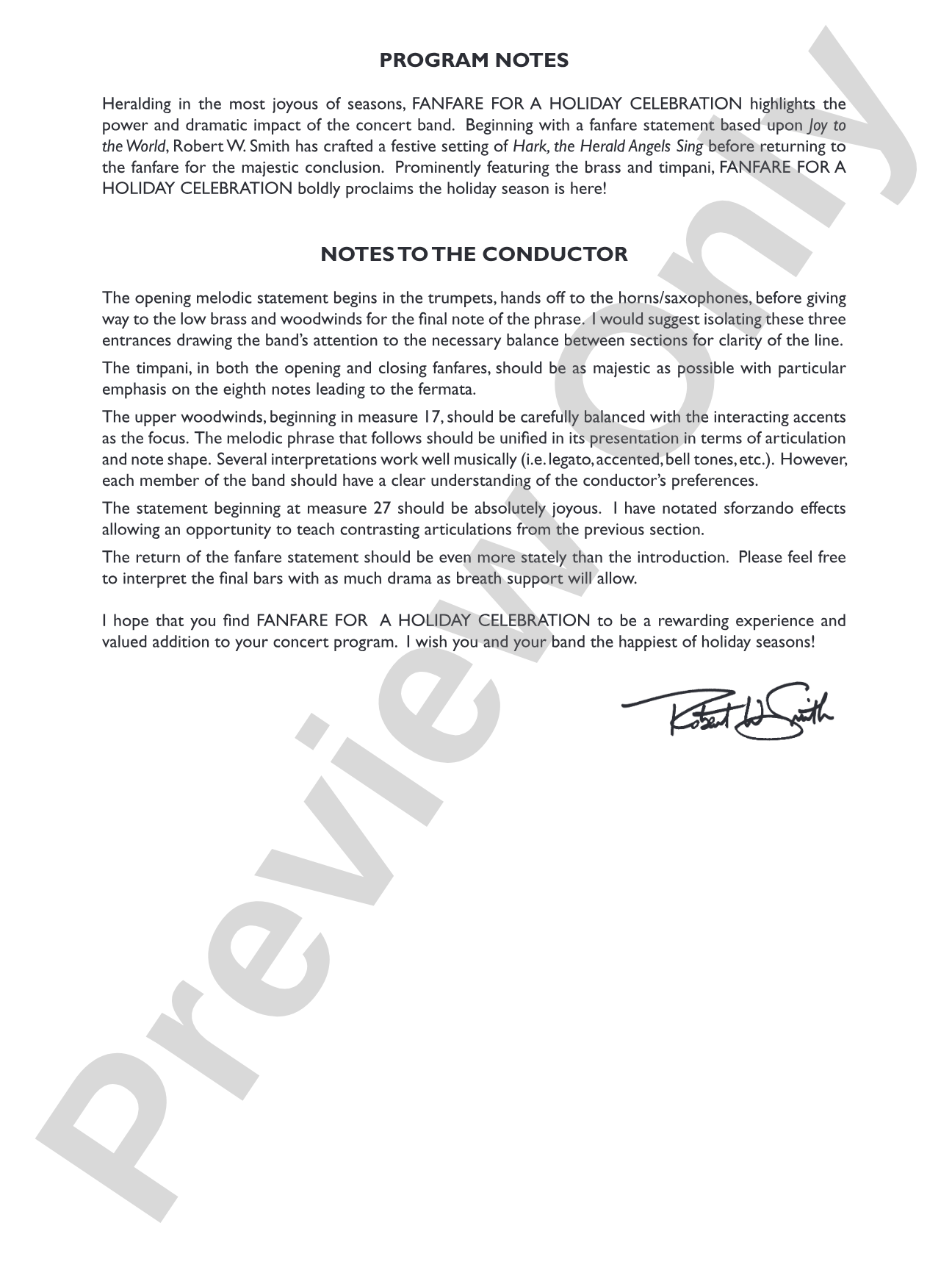
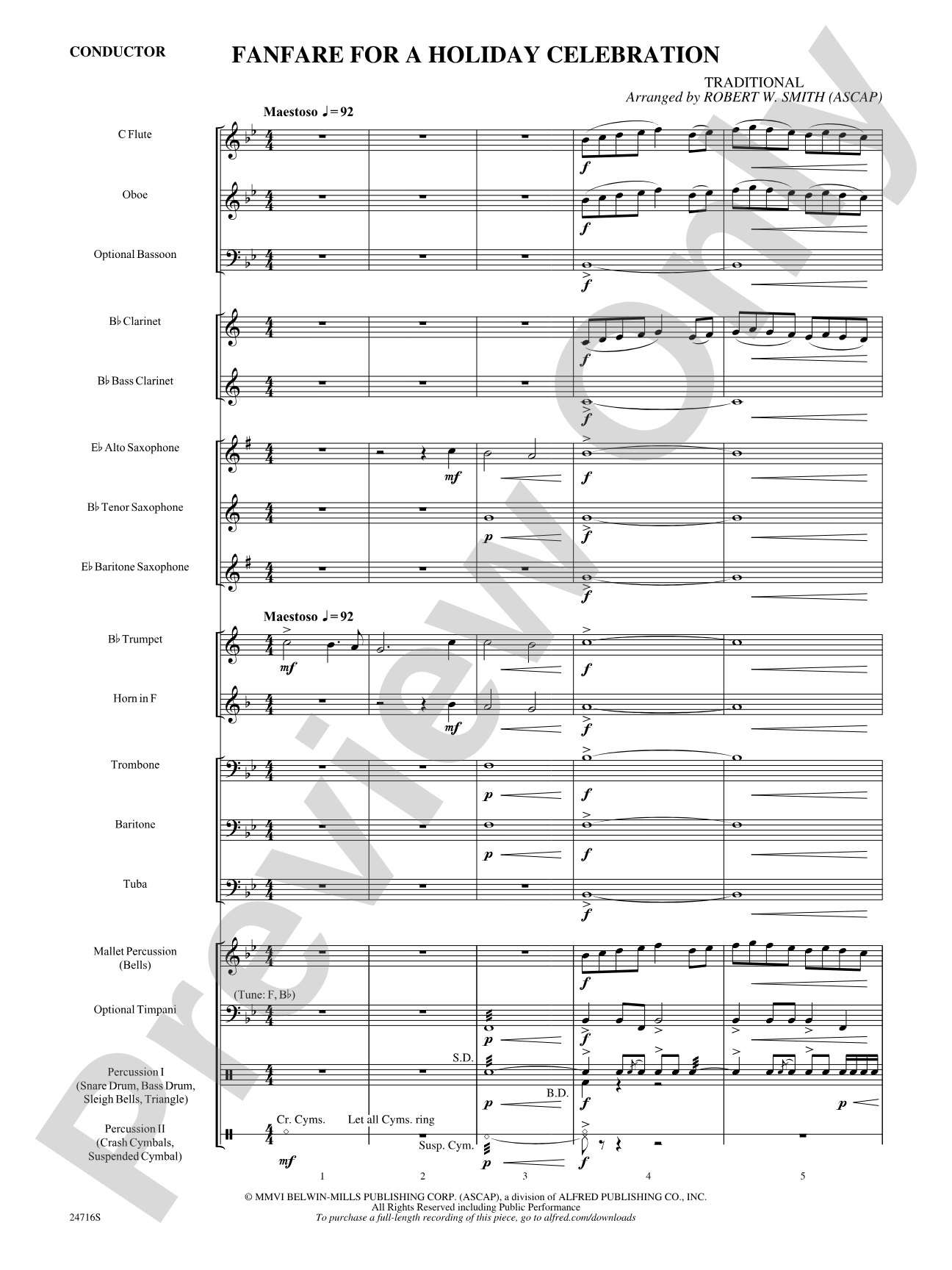
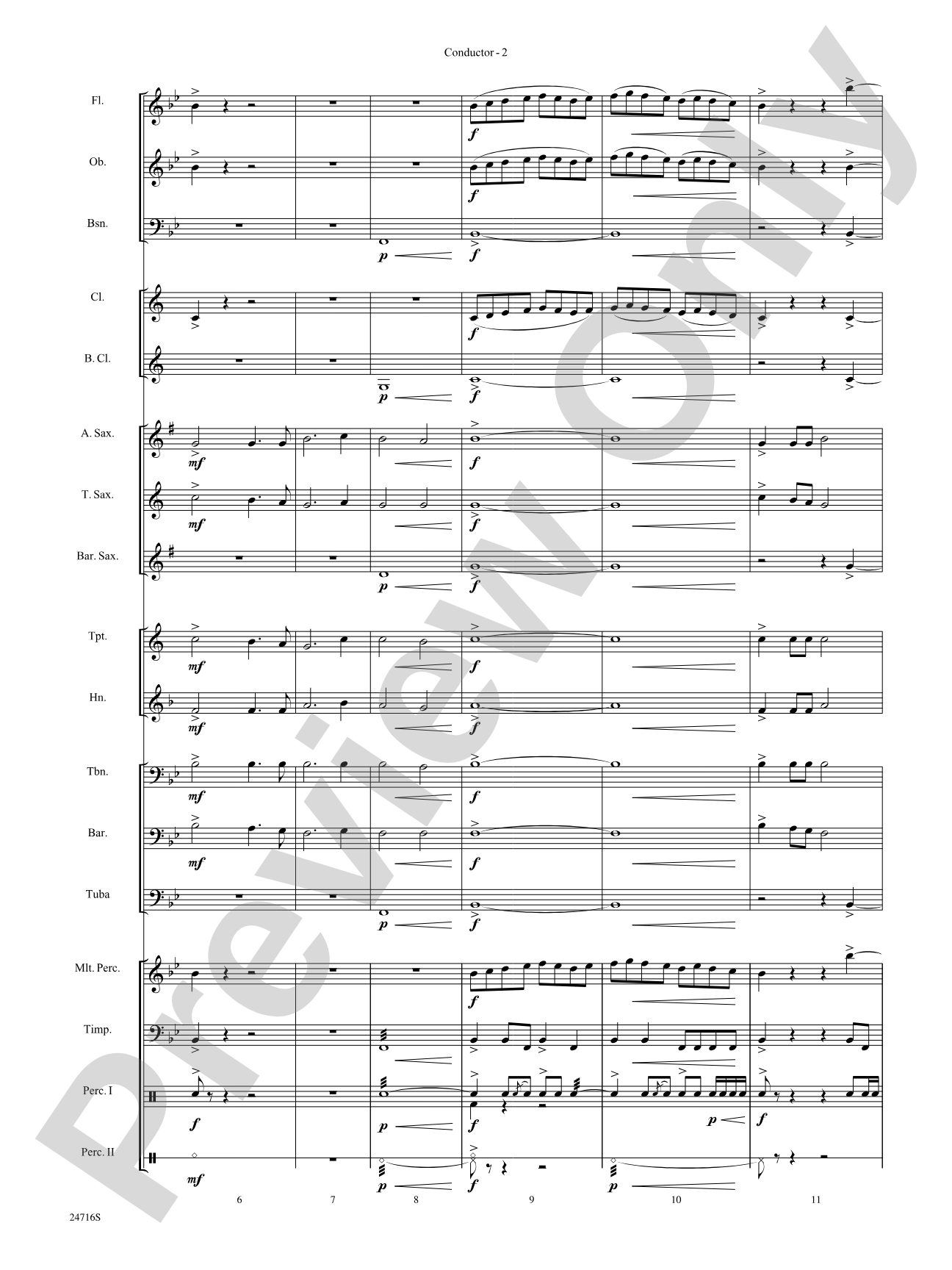
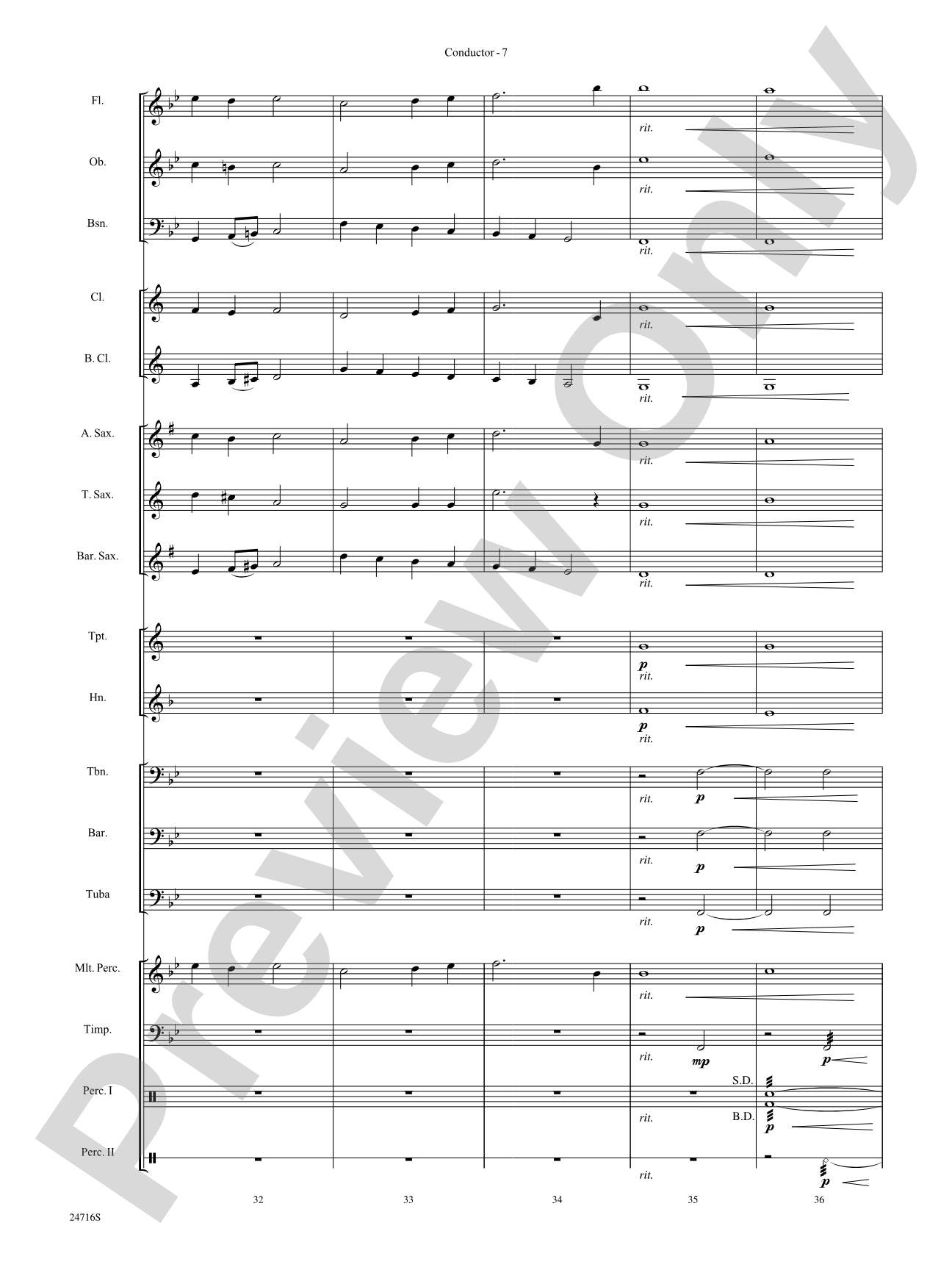
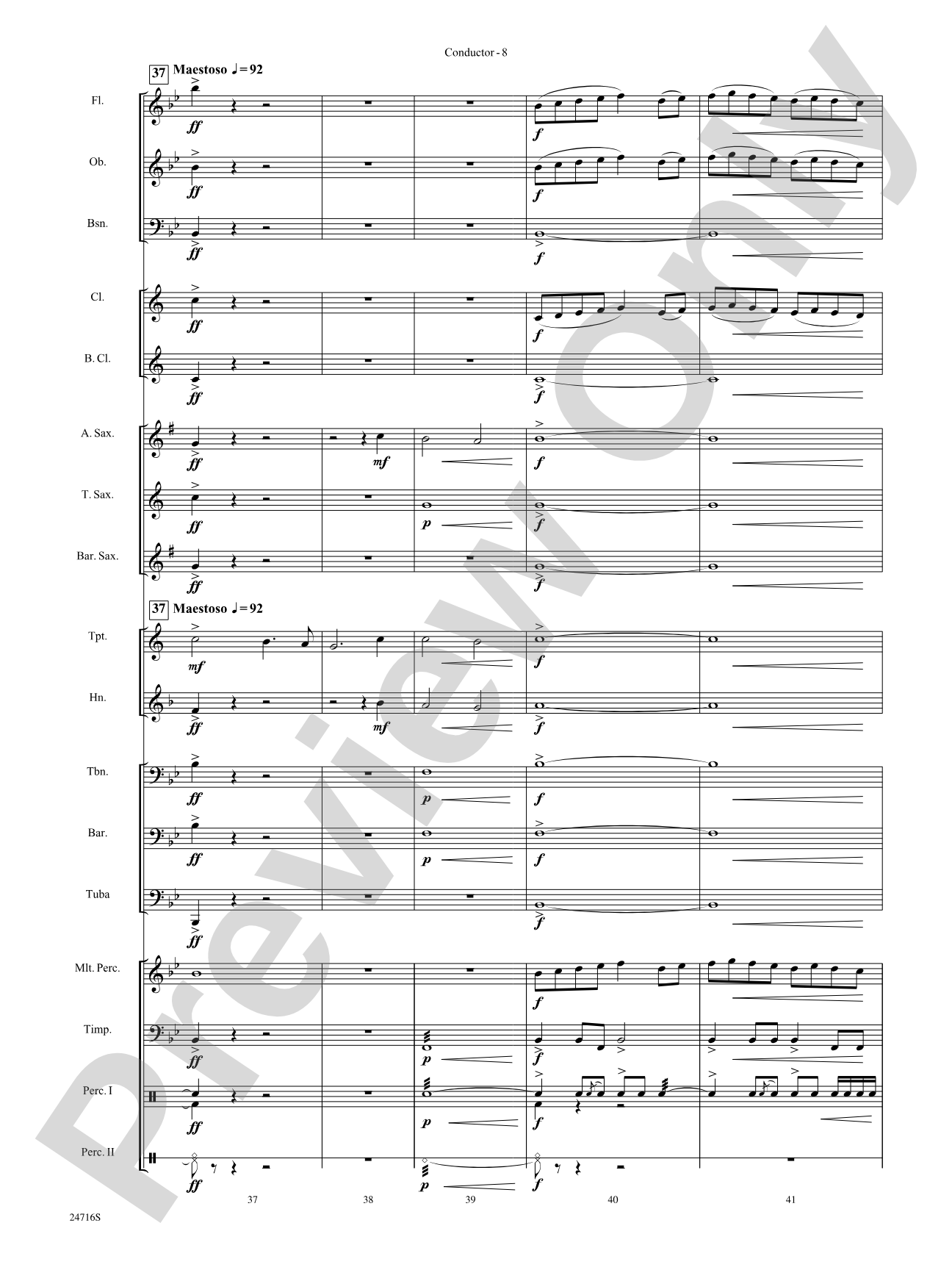
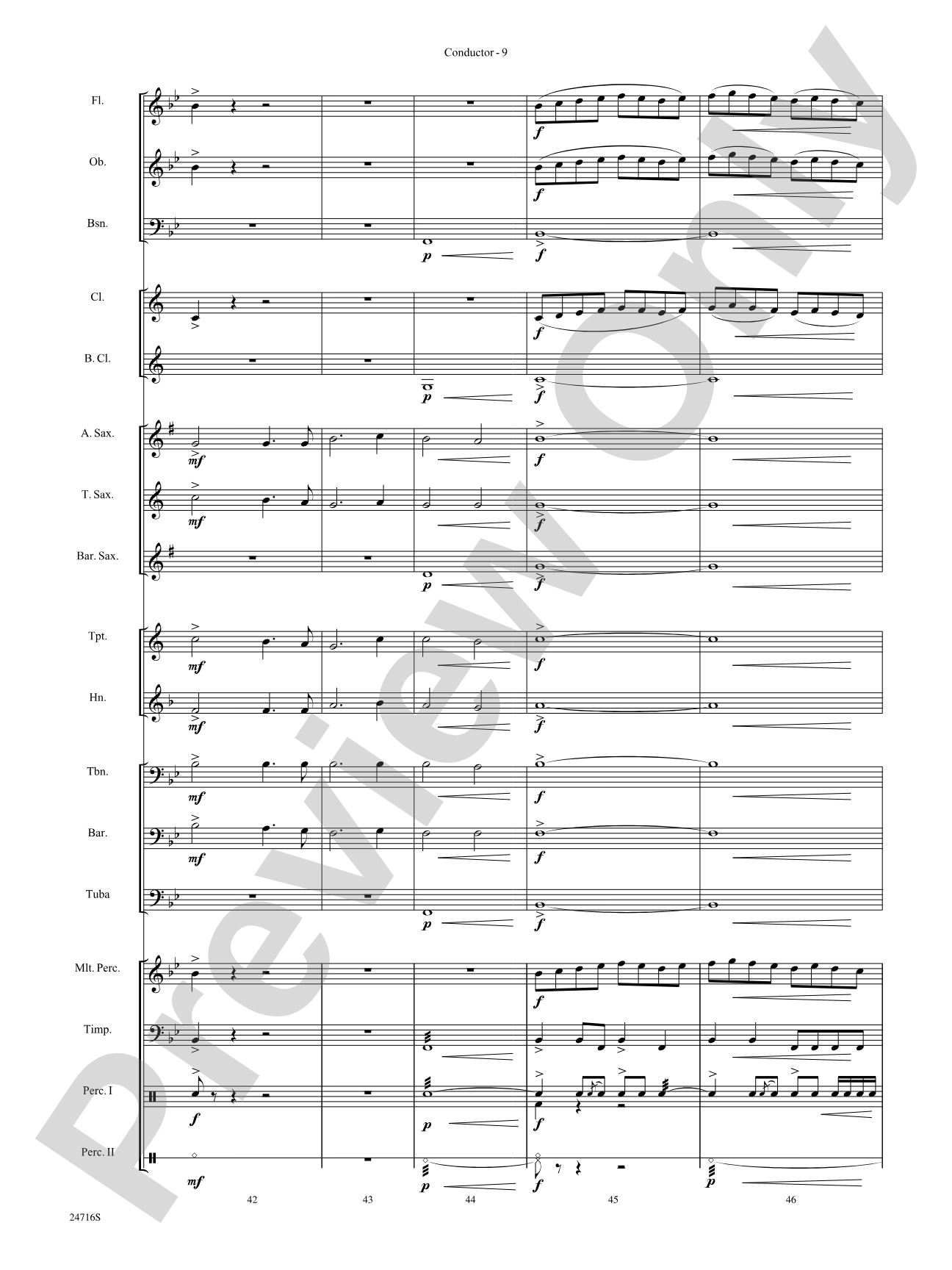
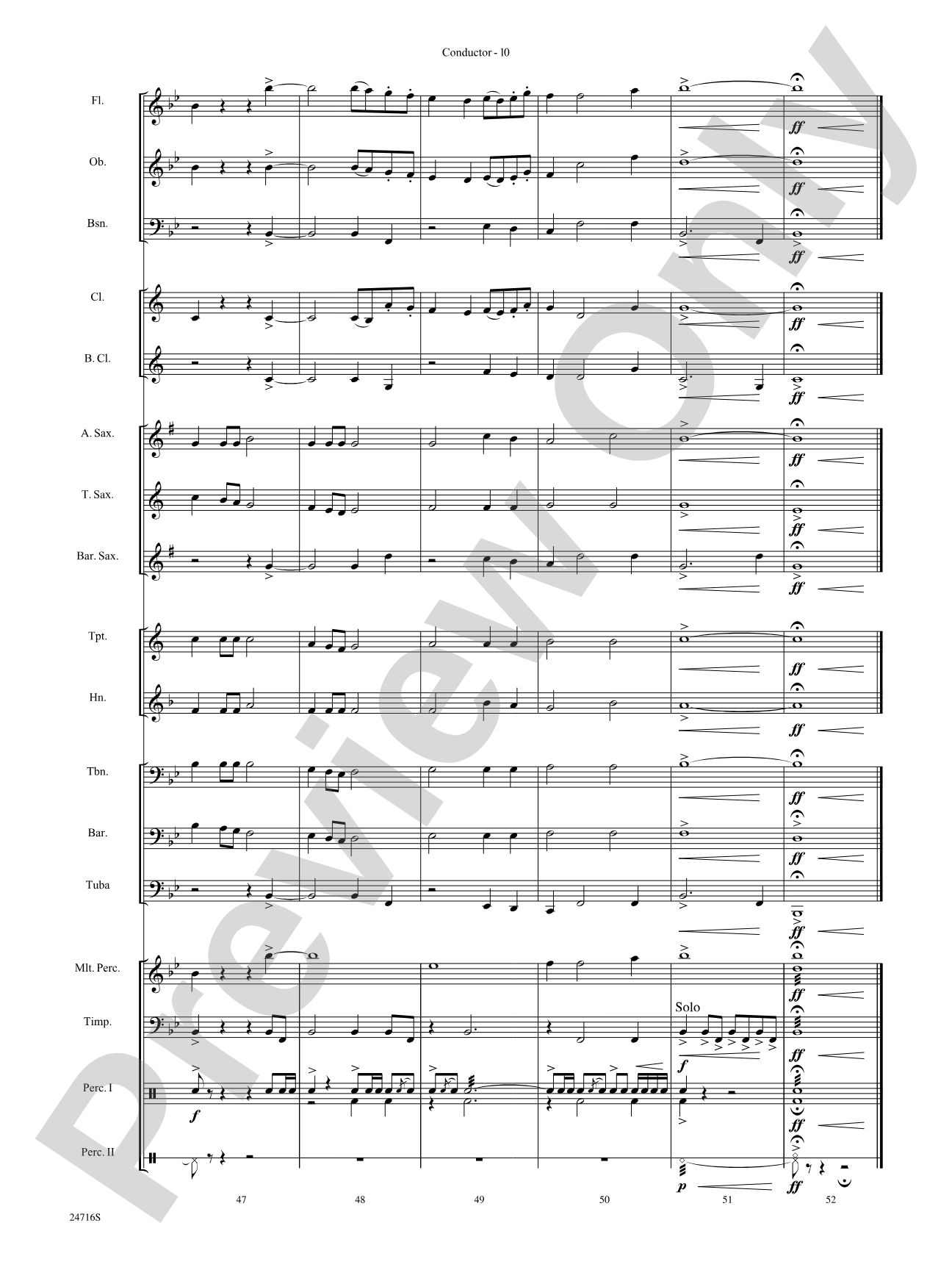
Looking for the perfect opening or closing selection for your holiday program---well look no further! "Fanfare for a Holiday Celebration" is a gallant musical statement based upon holiday favorites. Beginning with "Joy to The World," Robert W. Smith has crafted a festive setting of "Hark, the Herald Angels Sing" before returning to the fanfare for the majestic conclusions. Scored in a bold fanfare format, your audience will take note from the downbeat. Program it as a closer and there'll be no question . . . the holiday season is here!


Don't just read it, hear it, play along with it, and watch your students grow with it. In MakeMusic Cloud, Fanfare for a Holiday Celebration: Concert Band Conductor Score & Parts comes alive with professional accompaniment, adjustable tempo, and built-in practice tools that turn solo practice into real progress.
Open in the Player
Jump straight in and assign it today.
Start Your Free Trial
Open this title and explore the full library in minutes.
Sample Audio
1
Audio File
--:--
0:00
0:00
Sample Video
No sample videos found.
Additional Details
Series:
Belwin Beginning Band
Publisher:
Alfred Music
Page Count:
144
SKU:
00-PK-0000882
More about this title
About the Arranger: Robert W. Smith

Robert W. Smith has established himself as a leading voice in American concert band and orchestral composition, with over 400 publications in active use by ensembles worldwide. He holds degrees from Troy State University and the University of Miami, and his original works span from accessible band arrangements to large-scale symphonic works like The Divine Comedy and The Odyssey, which have been performed across North America, Europe, Australia, and Asia.
Beyond the concert hall, Smith's arrangements and compositions have appeared on major network broadcasts, from the Macy's Thanksgiving Day Parade to the Olympic Games and Opening Day at Dodger Stadium. He remains active as both a conductor and clinician, with engagements throughout the United States, Canada, Japan, Australia, and Europe.
Why we love this
Smith knows exactly what a Grade 1 band needs: bright colors, immediate impact, and music that feels substantial without overextending young players. The fanfare framing gives this holiday closer real authority, making it feel like a genuine concert statement rather than a filler piece, and the melodic anchors in "Joy to The World" and "Hark, the Herald Angels Sing" keep the writing grounded and singable throughout.
What to expect
A ceremonial herald announcing the season's arrival. The writing balances festive brightness with formal dignity, giving the band room to project confidence while keeping the musical vocabulary straightforward and achievable. Familiar hymn melodies appear in rich harmonic dress, creating moments of warmth within the overall architectural boldness.
Who it's for
Beginning and early intermediate concert bands looking for a holiday closer with genuine grandeur. This works equally well for students encountering fanfare writing for the first time and for established Grade 1 ensembles seeking a piece that programs with confidence and delivers immediate audience impact.
How to get the most out of it
- Balance the brass chorale announcing "Hark, the Herald Angels Sing" so the melody cuts cleanly; young brass sections often push too hard, so model a lyrical approach in rehearsal before asking them to play it.
- Lock the rhythmic figures in the opening fanfare by having the rhythm section count together silently through the first few measures; this prevents the gallant effect from losing shape.
- Bring out the inner woodwind lines during the hymn statement; they carry subtle harmonic color that rewards careful listening and keeps the texture from feeling one-dimensional.
- Shape the final return to the fanfare with a slight broadening of tempo to emphasize the 'majestic conclusion' without losing forward momentum.
How to use it
Reserve this for concert closer status, where its confident gestures and familiar melodic content can anchor your final impression with the audience. The Grade 1 accessibility means it won't overwhelm a developing ensemble, yet the fanfare treatment commands attention, making it a natural choice for winter concerts where you want to signal celebration without apologizing for the programming level.
Skills your students will build
- Fanfare articulation and projection (clean attacks, sustained phrases)
- Reading hymn-based melody and harmony (familiar chord progressions with proper voice leading)
- Balancing homophonic texture (brass chorale against light accompaniment)
- Executing dynamic shaping across full ensemble (crescendos, sustained forte passages)