
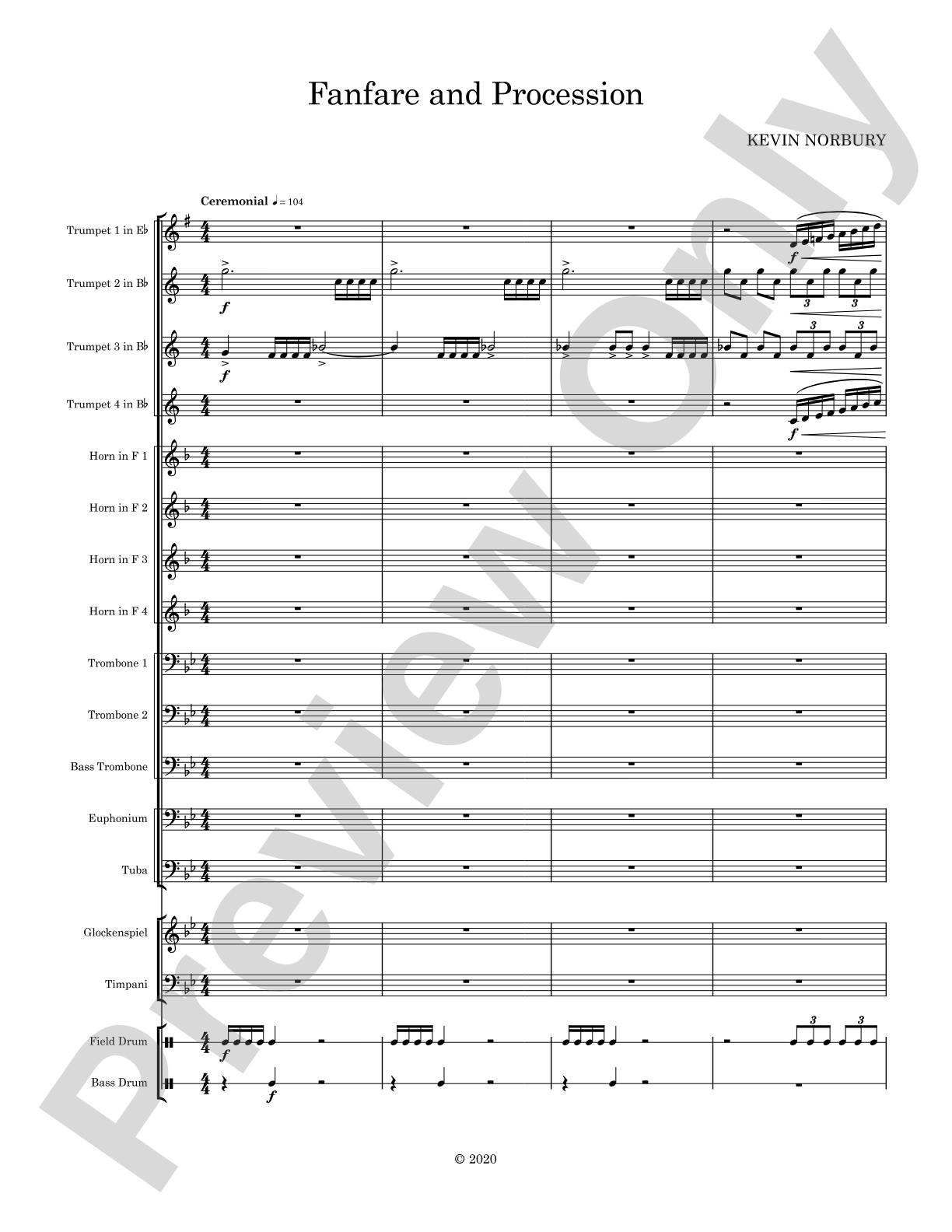
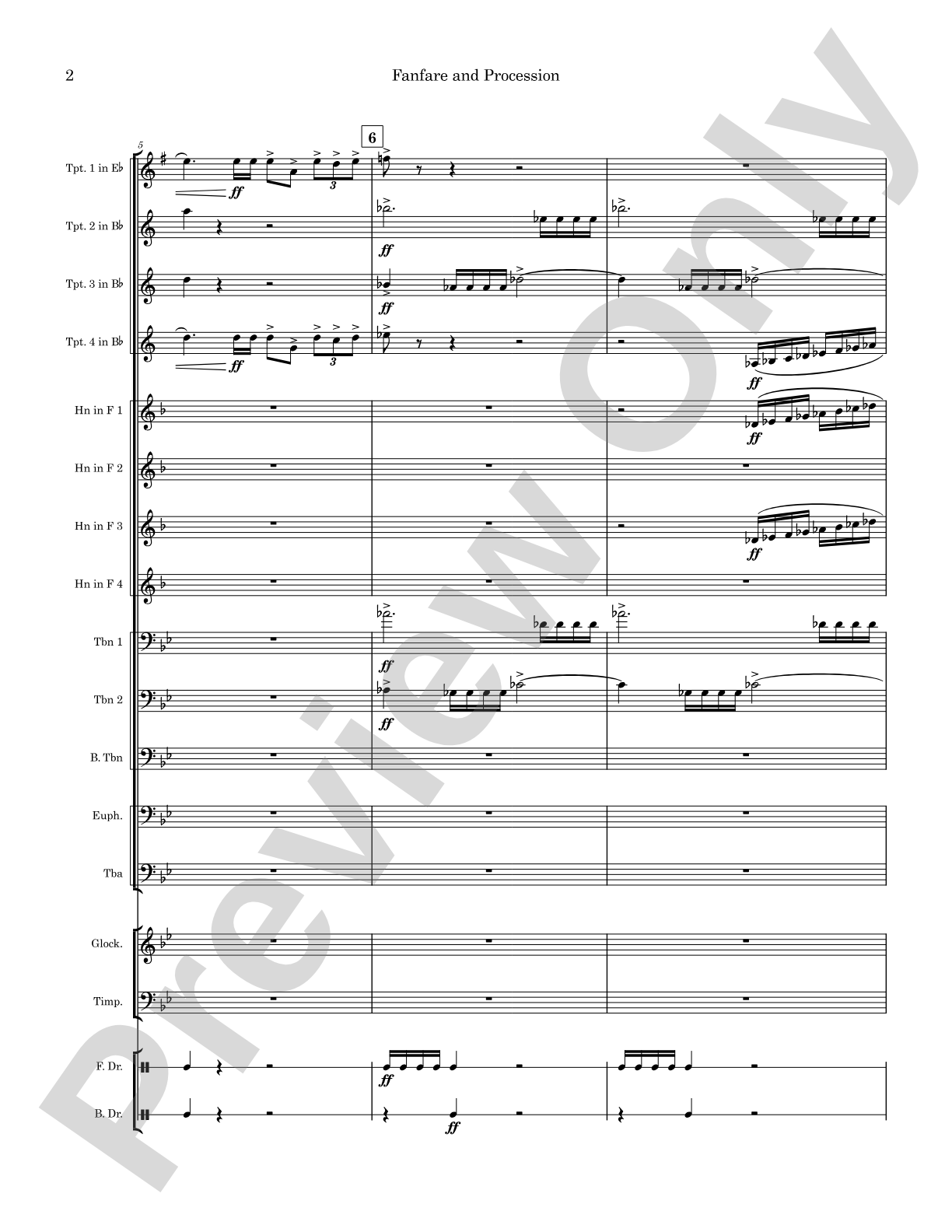
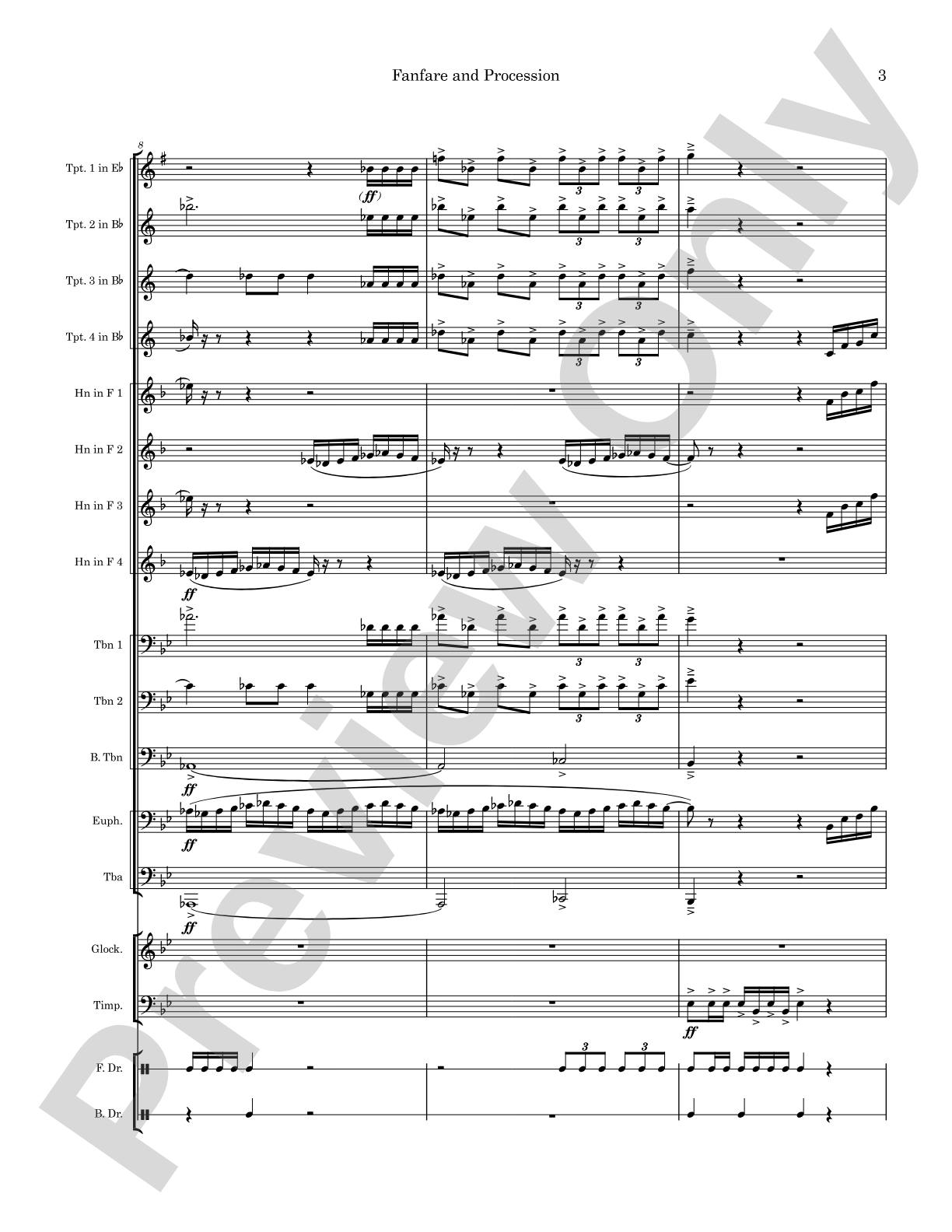
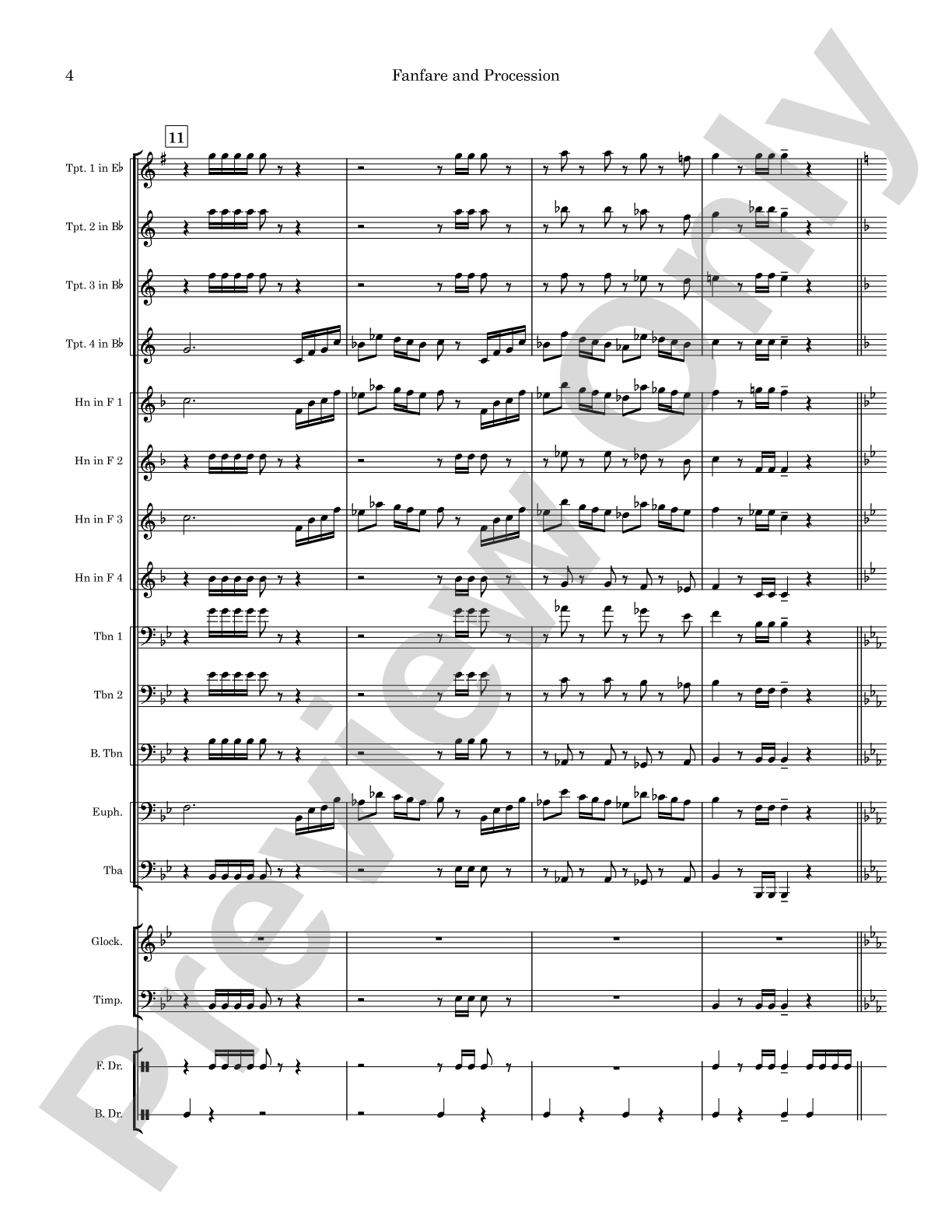
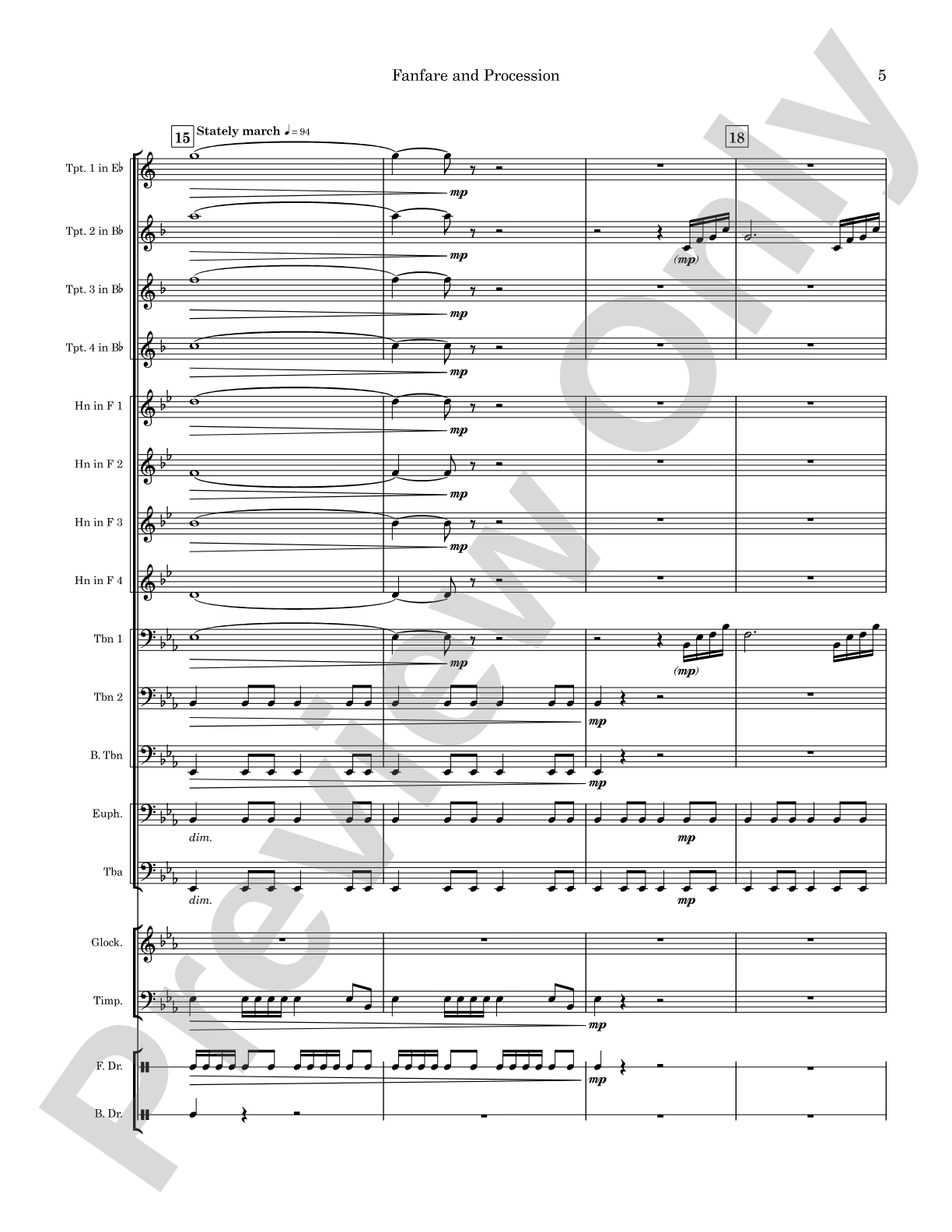
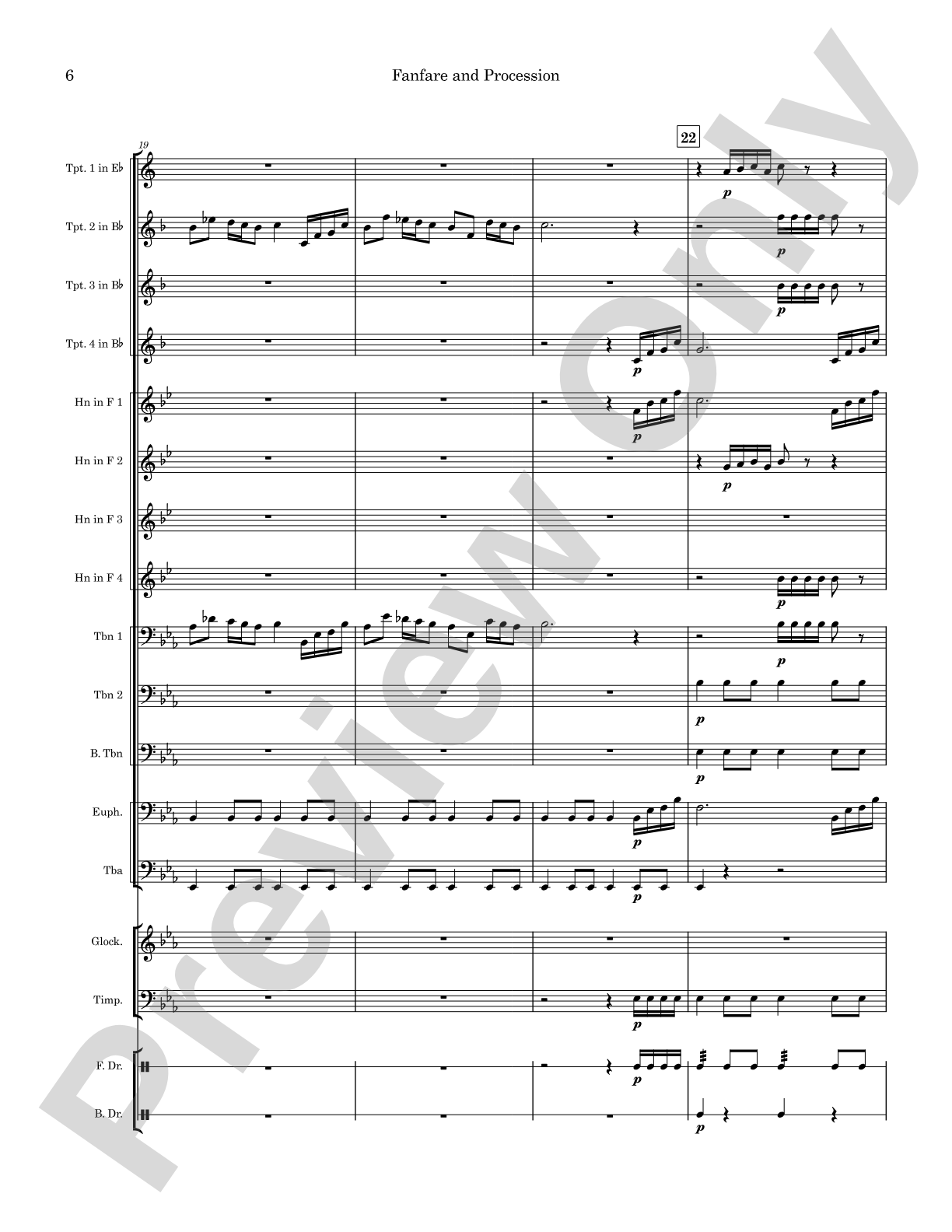
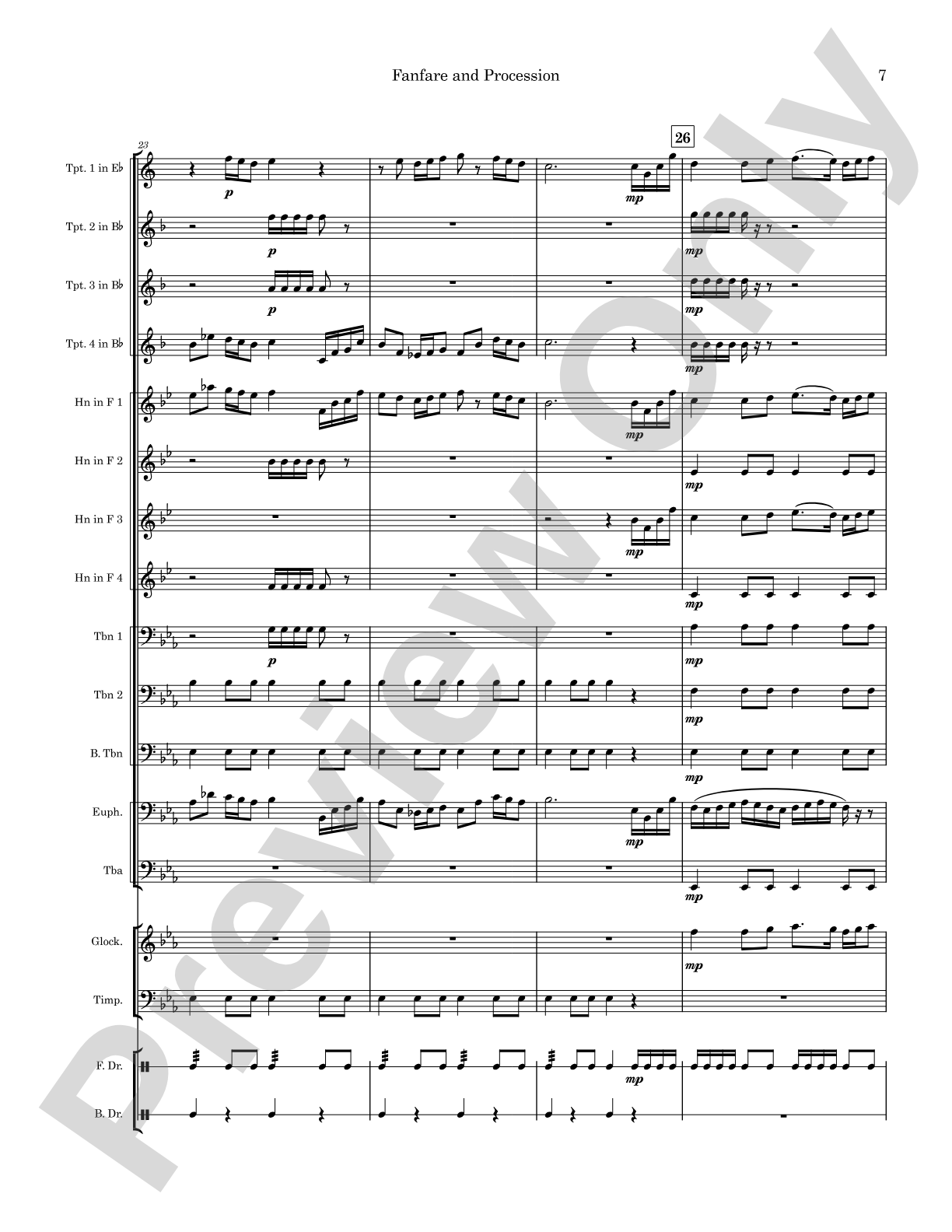
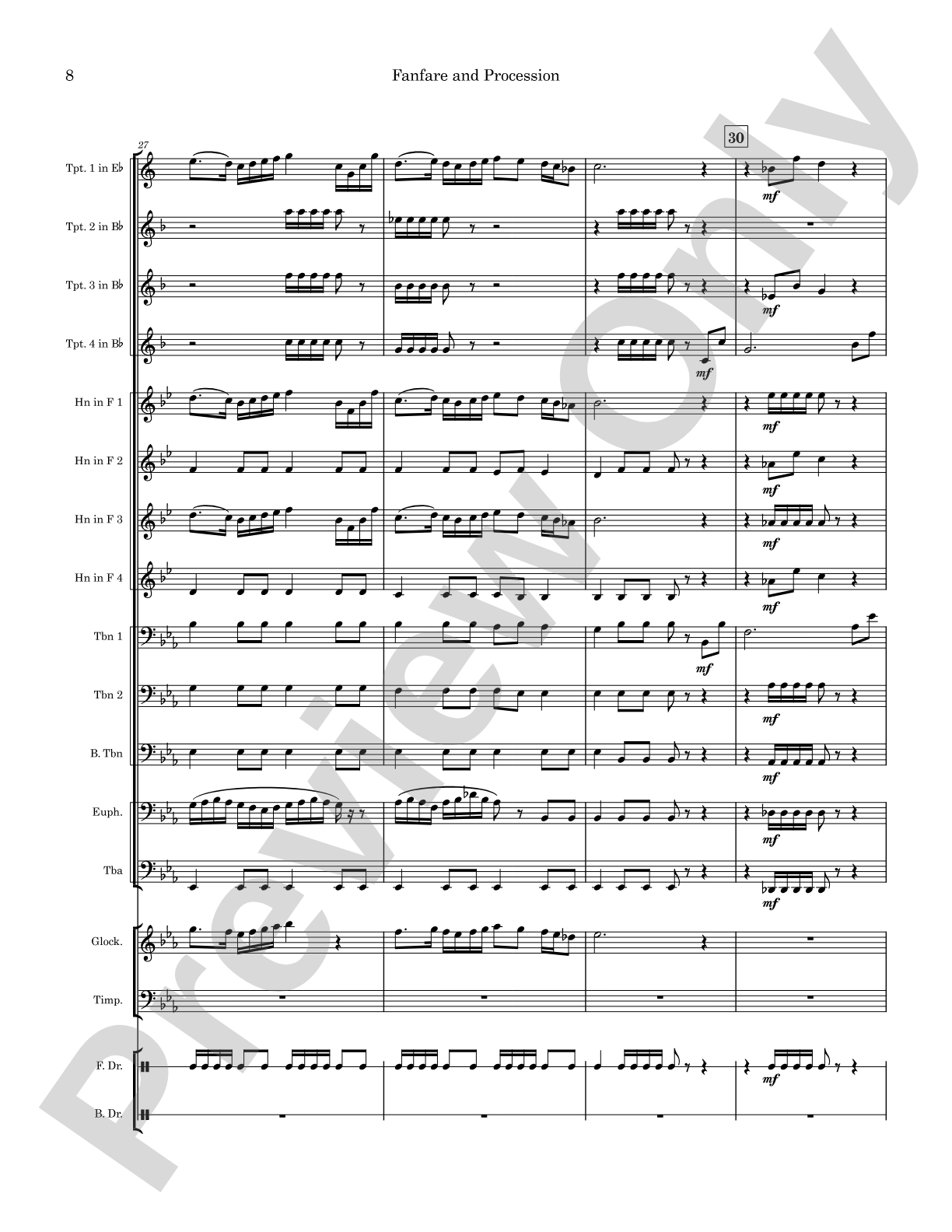
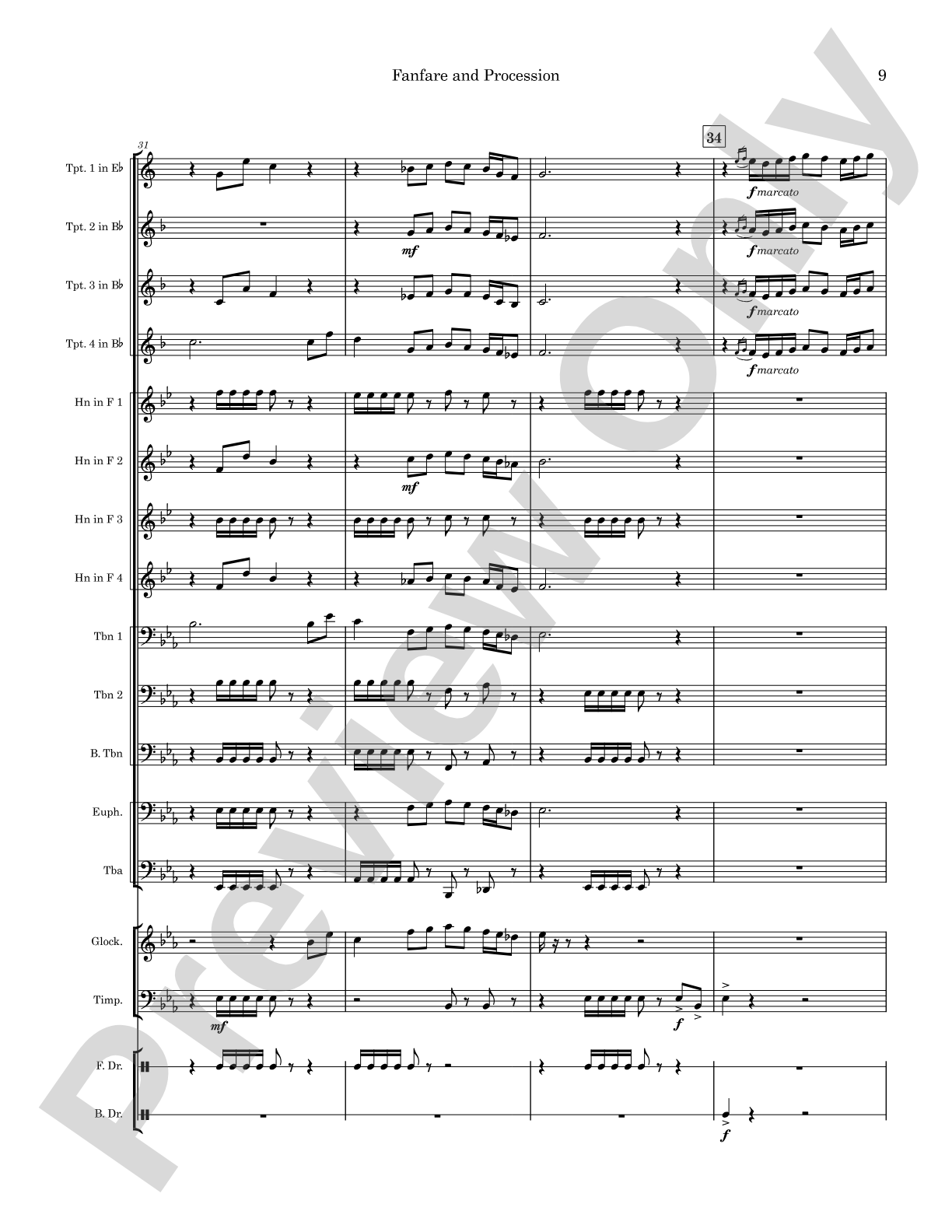
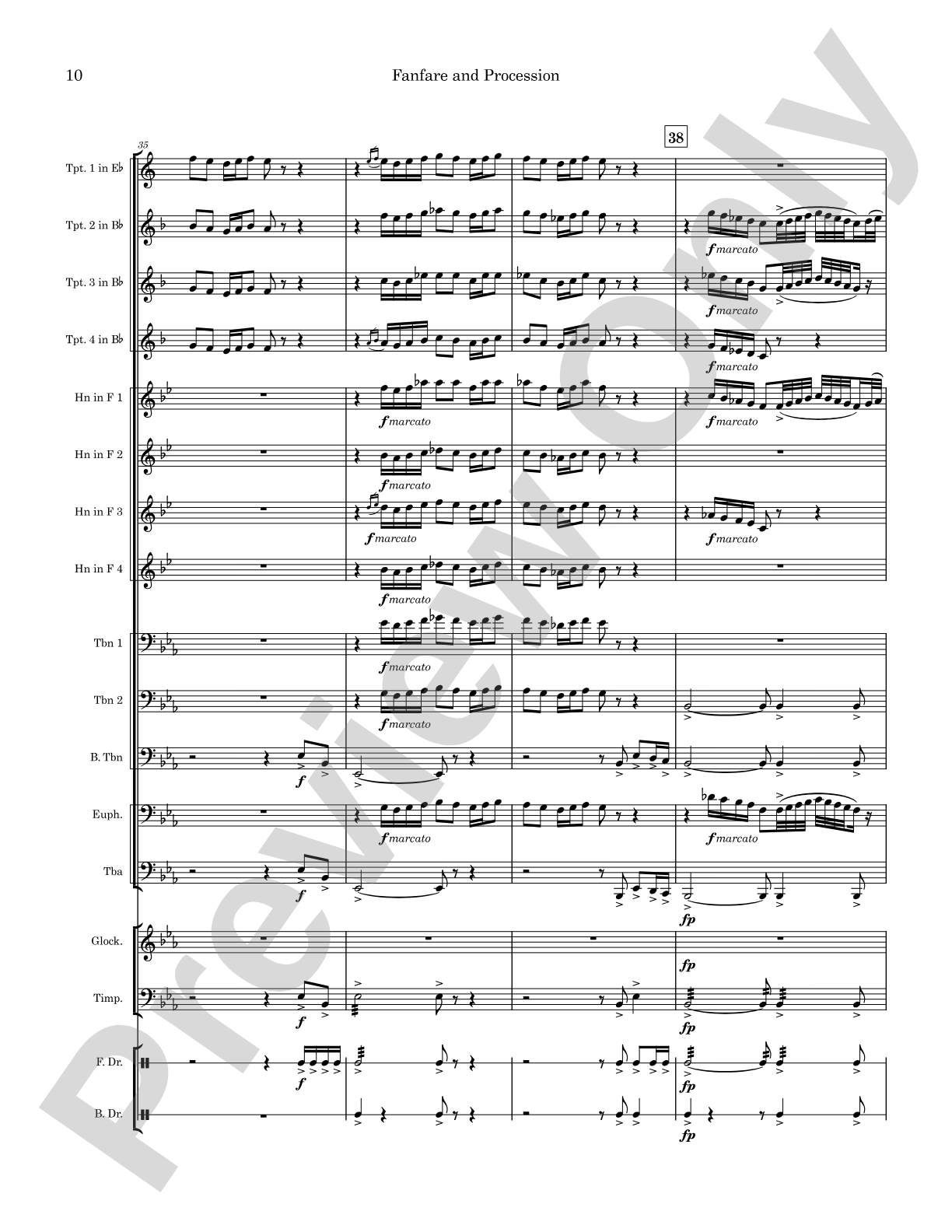
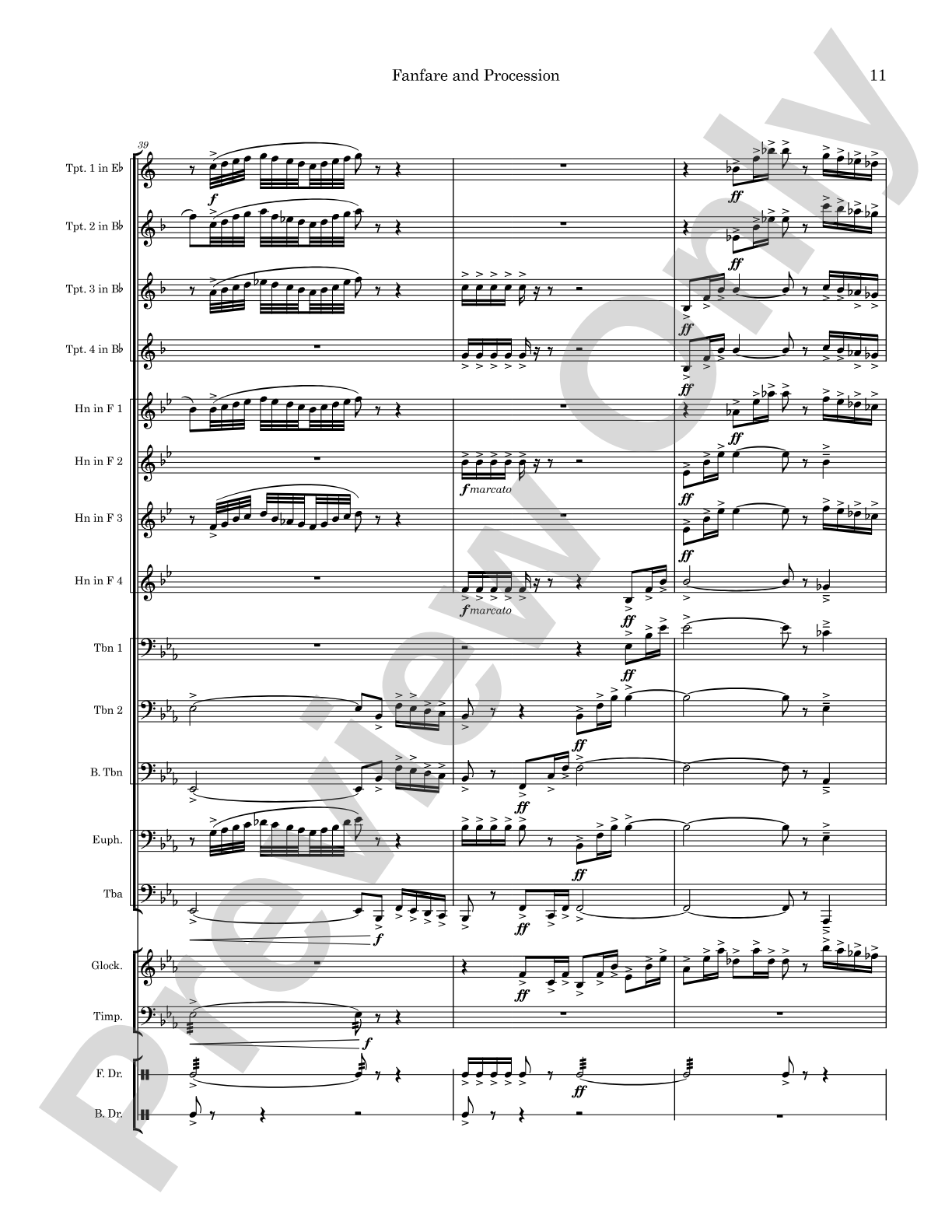
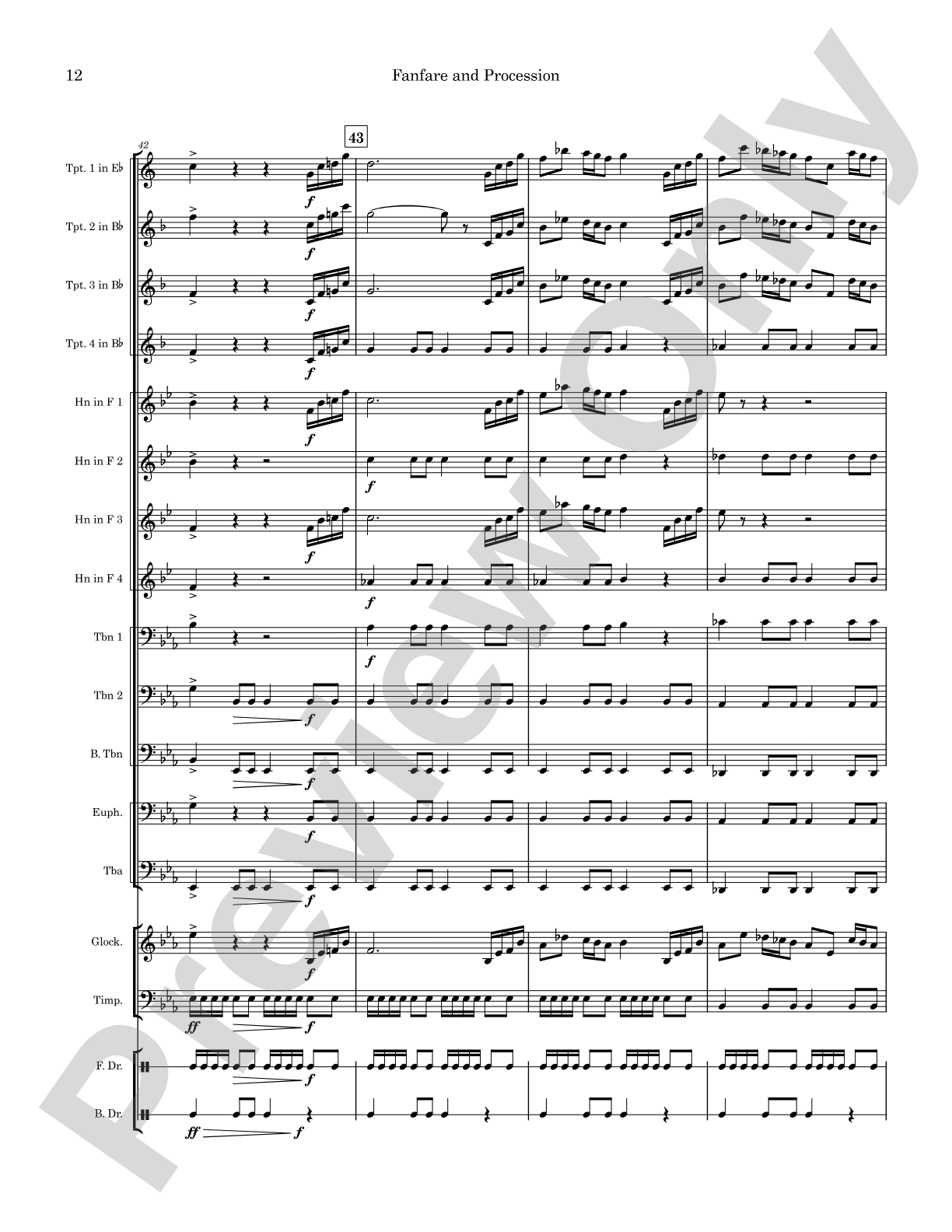
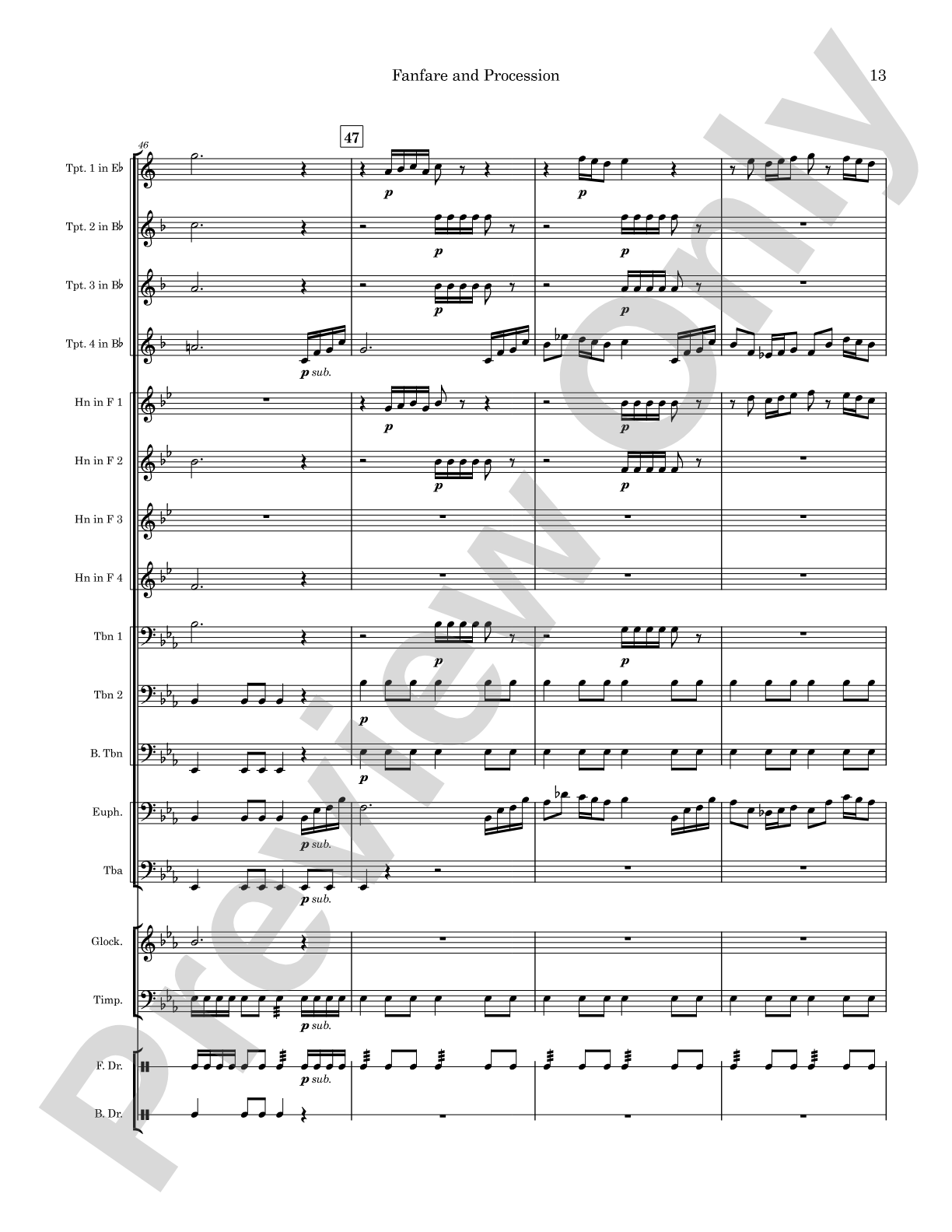
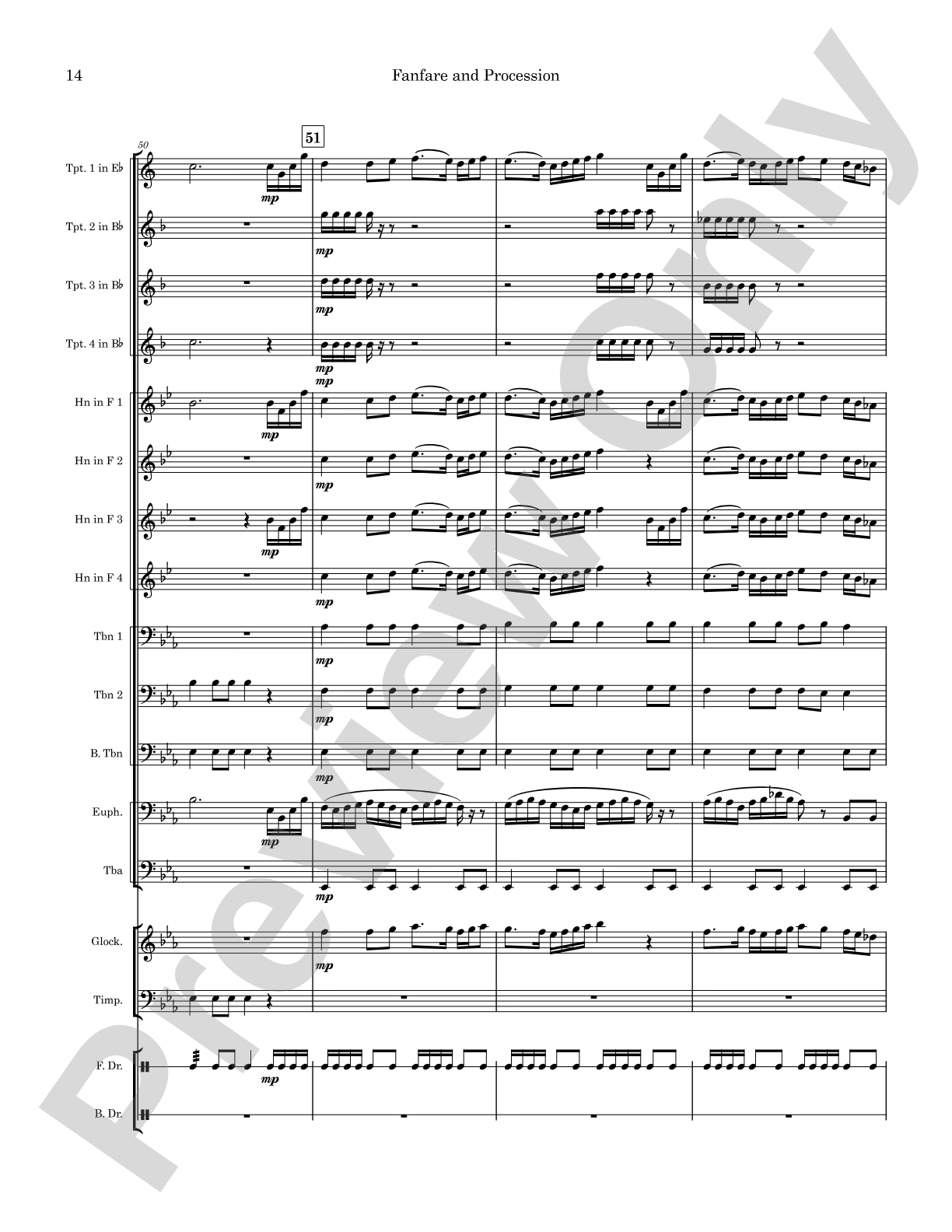
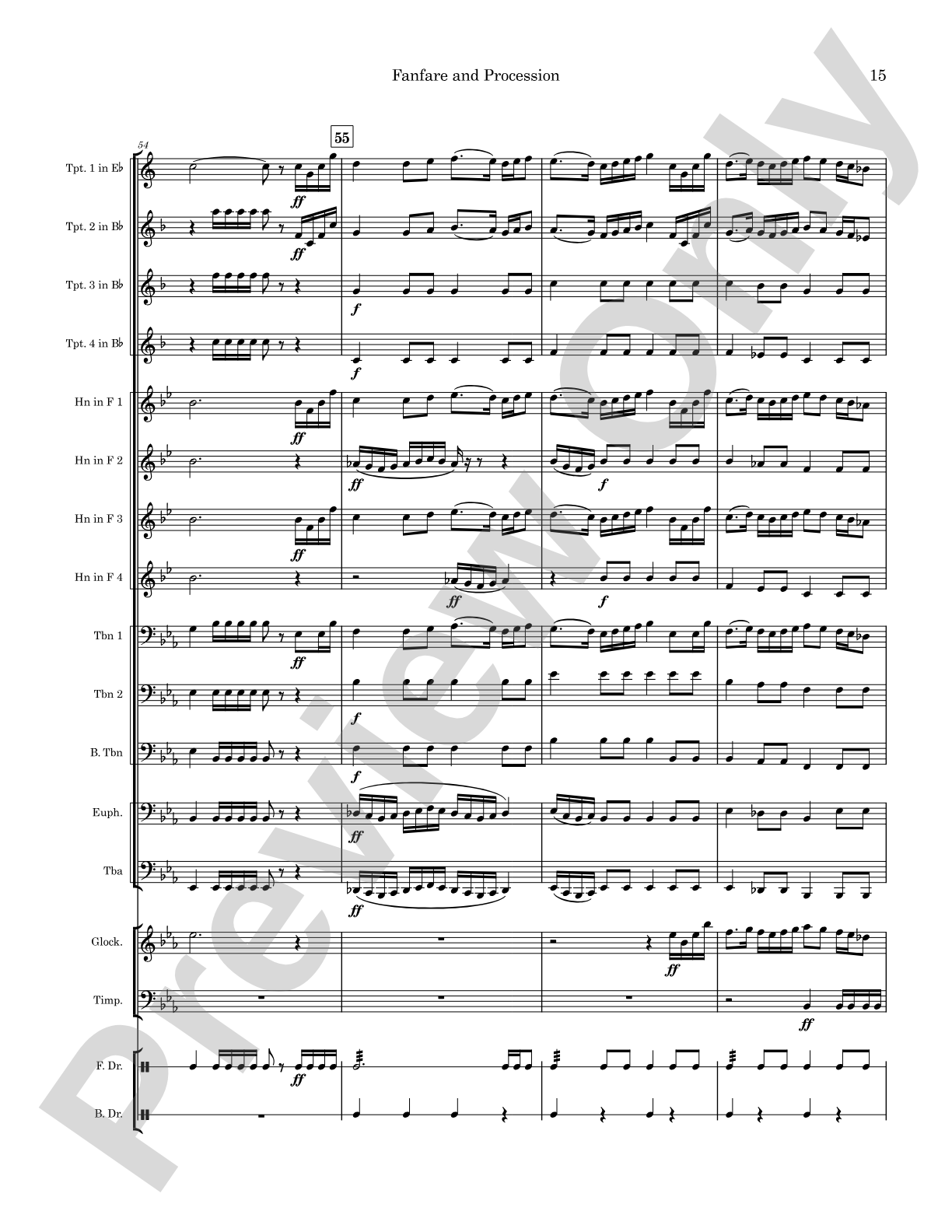
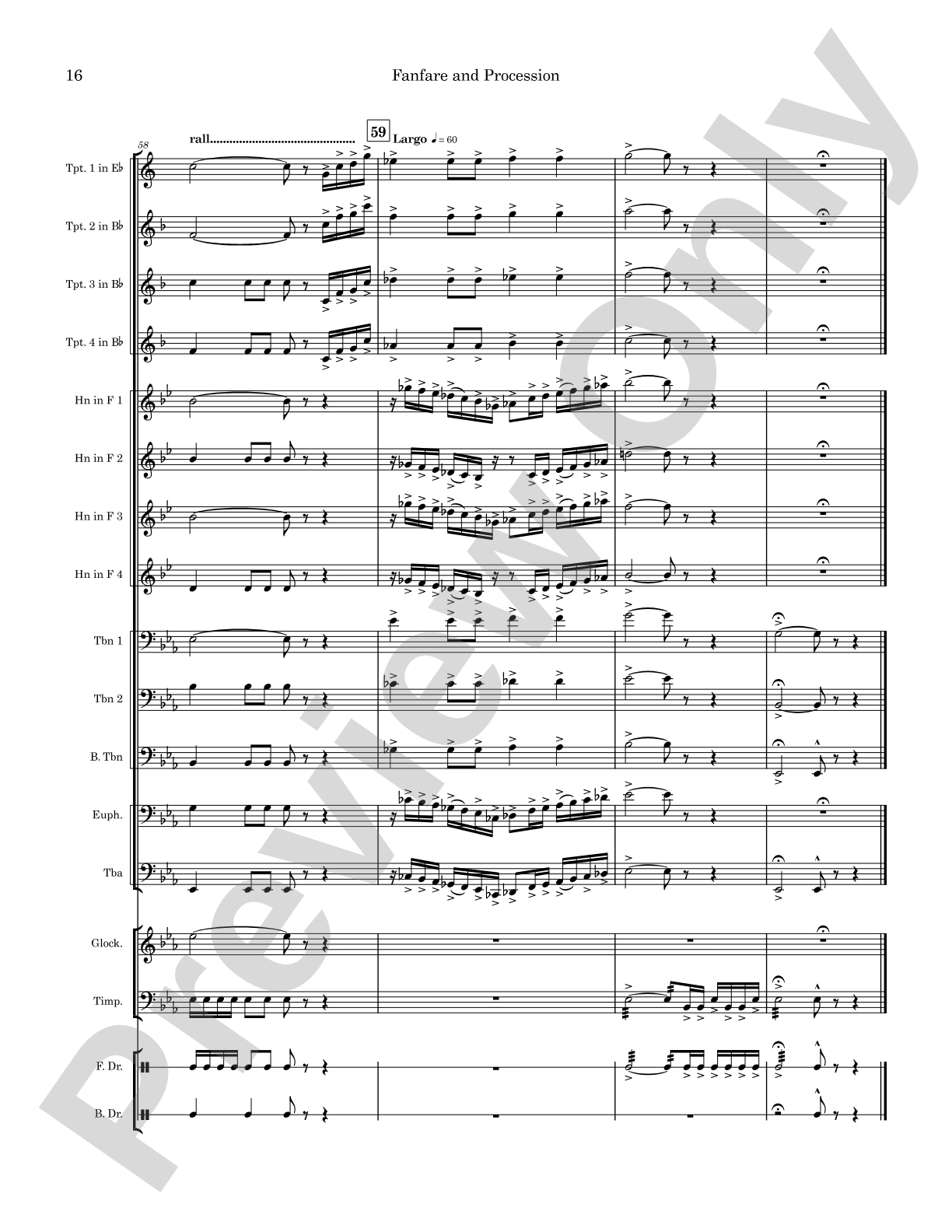

Fanfare and Procession: Score
By Kevin Norbury
Grade: 3 (Medium Easy)
Item: 00-PR-0006807
$8.00
Pickup currently not available
Description
Kevin Norbury's Fanfare and Procession is a regal fanfare composed for brass band that flows to a stately march reminiscent of the grand style and sound of British brass bands. Tasteful percussion parts and tuneful melodies are enhanced by punctuated rhythmic accompaniments and technical flourishes.


Don't just read it, hear it, play along with it, and watch your students grow with it. In MakeMusic Cloud, Fanfare and Procession: Score comes alive with professional accompaniment, adjustable tempo, and built-in practice tools that turn solo practice into real progress.
Open in the Player
Jump straight in and assign it today.
Start Your Free Trial
Open this title and explore the full library in minutes.
Sample Audio
No sample audio found.
Sample Video
No sample videos found.
Additional Details
Series:
Alfred Digital Concert Band
SKU:
00-PR-0006807
More about this title
About the Composer: Kevin Norbury
Kevin Norbury has established himself as a composer and arranger with a strong command of British brass band idioms and concert band literature. His work consistently showcases an understanding of how to write idiomatically for wind ensembles, balancing accessibility with musical substance.
Why we love this
Norbury captures the pageantry and ceremonial weight of British brass band tradition without requiring a large ensemble or advanced technique. The piece moves seamlessly from fanfare to march, giving you a complete emotional arc in a manageable timeframe, and the balance between brass brilliance and tuneful melody keeps it engaging for both players and audiences.
What to expect
Stately and ceremonial, opening with fanfare-like brass declarations before flowing into a grand march with the measured dignity of a formal procession. The orchestration balances regal weight with clear, tuneful melodic writing that keeps the piece approachable rather than overly demanding.
Who it's for
Bands at the Grade 3 level with solid fundamentals in both brass and woodwind sections and enough percussion depth to cover multiple parts cleanly. This works equally well for school concert bands preparing for festival or for community ensembles seeking repertoire with genuine ceremonial character.
How to get the most out of it
- Balance the opening fanfare so the brass chorale sits prominently above the rhythmic accompaniment; the punctuation in lower voices should support, not compete.
- Shape the transition into the march with a clear lift after the fanfare section to signal the new character; this moment benefits from a slight broadening before settling into the march tempo.
- Layer the dynamic builds in the second half by bringing in sections gradually rather than all at once; this allows the audience to hear how the harmonic color deepens as more voices enter.
- Give the percussion parts rhythmic clarity and definition; their punctuations are structural markers, so articulate them cleanly even at softer dynamic levels.
How to use it
Open a concert with this piece to set a formal or celebratory tone, or position it as a festival opener when you want immediate impact and engagement. Its ceremonial character also makes it fitting for graduation, dedication, or holiday concert programming where pageantry adds meaning.
Skills your students will build
- Brass section blend and balance in homophonic settings
- Rhythmic precision and coordination across multiple accompaniment patterns
- Sustaining full-bodied tone while responding to dynamic and stylistic direction
- Listening to and supporting melodic lines as secondary voices
- Percussion articulation and clarity within formal, march-like contexts