
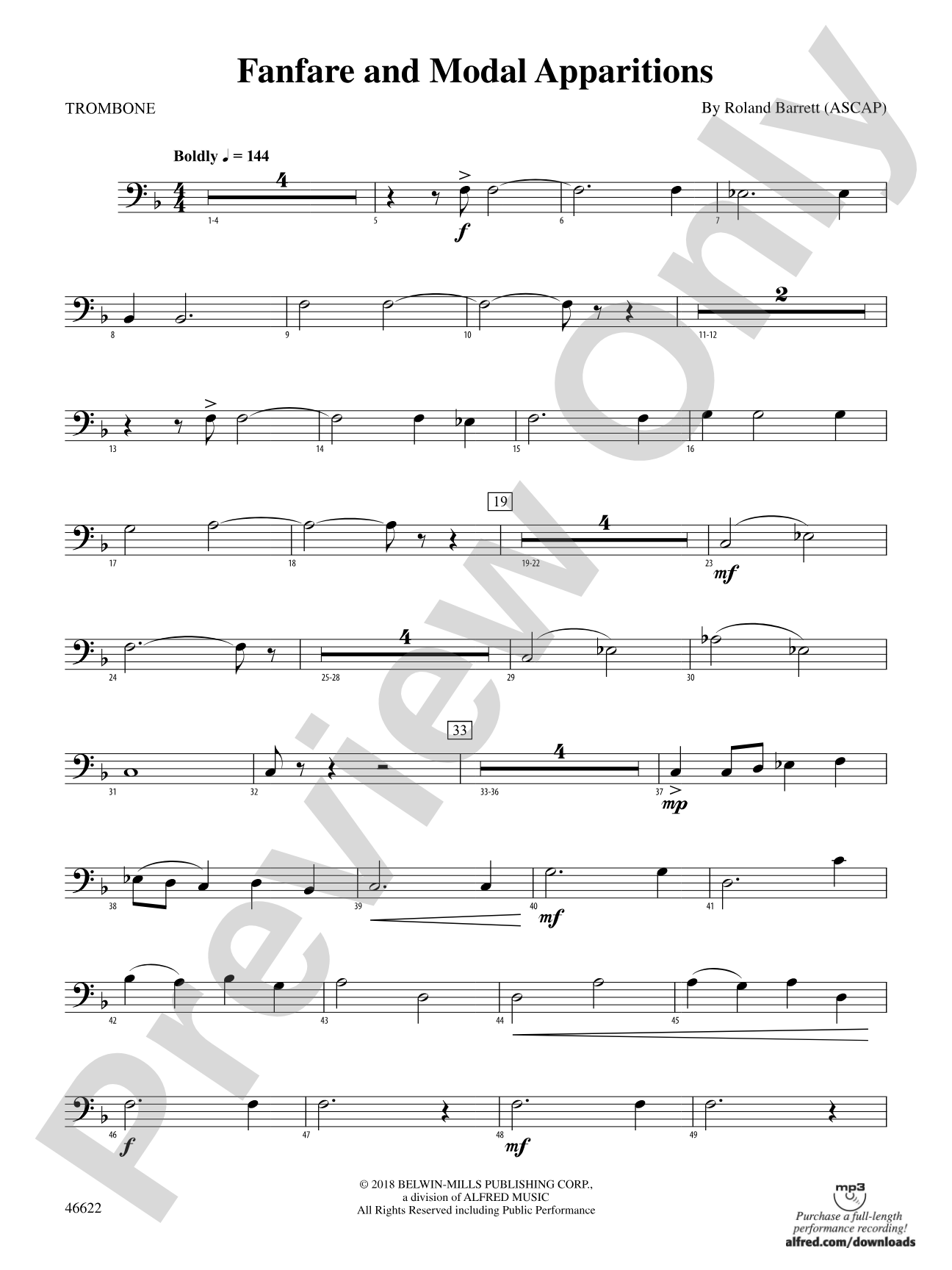

Fanfare and Modal Apparitions: 1st Trombone
By Roland Barrett
Grade: 2 (Easy)
Item: 00-PC-0018056_TN1
$3.00
Pickup currently not available
Description
A powerful and dramatic opening statement gives way to a series of apparitions, each one bringing its own set of stylistic changes affording each member of the band to participate, before finally culminating in a bold and emphatic concluding section. This piece serves well for contests and concerts. A distinctive addition to the developing band literature.


Don't just read it, hear it, play along with it, and watch your students grow with it. In MakeMusic Cloud, Fanfare and Modal Apparitions: 1st Trombone comes alive with professional accompaniment, adjustable tempo, and built-in practice tools that turn solo practice into real progress.
Open in the Player
Jump straight in and assign it today.
Start Your Free Trial
Open this title and explore the full library in minutes.
Sample Audio
1
Audio File
--:--
0:00
0:00
Sample Video
Additional Details
Series:
Belwin Young Band
Publisher:
Alfred Music
Page Count:
252
SKU:
00-PC-0018056_TN1
More about this title
About the Composer: Roland Barrett

Roland Barrett holds a faculty position in music theory and composition at the University of Oklahoma, where he teaches 20th century topics at both undergraduate and graduate levels. He brings twenty years of experience in band music, including fifteen years as Assistant Director of Bands before joining the faculty in 2001. Barrett also arranges for the Pride of Oklahoma marching band.
As a composer and arranger, Barrett has published over two hundred works for symphonic band, chamber ensembles, and marching band. His compositions have been performed by the Dallas Wind Symphony and countless All-State and All-Region Honor Bands. His work has been featured on National Public Radio, at the Midwest Band & Orchestra Convention, and at the International Trumpet Guild convention. He is a multiple recipient of the ASCAP Plus award.
Why we love this
This piece demonstrates Barrett's gift for writing accessible yet musically interesting concert band literature. Each section's stylistic shift keeps ensemble members engaged without requiring advanced technical facility, making Grade 2 players feel genuinely musical rather than merely executing notes. The structural arc from dramatic opening through varied apparitions to a powerful finale gives your program momentum and memorability.
What to expect
The opening strikes with authority and drama, establishing presence immediately. As the apparitions unfold, each one shifts the band's character in unexpected ways, creating a sense of discovery and theatrical unfolding. The final section sweeps away all uncertainty, landing with conviction and closure.
Who it's for
Concert band directors programming Grade 2 ensembles who want repertoire that sounds more sophisticated than its technical demands suggest. Directors seeking contest or concert pieces that offer musical substance and stylistic variety without overwhelming players new to more complex forms.
How to get the most out of it
- Balance the opening fanfare so the ensemble projects clarity and authority together; resist the urge to let the brass drown out the woodwind punctuation.
- Shape each apparition as its own small performance arc. Treat tempo and dynamic changes as invitations to reset focus rather than rushing between sections.
- Let the concluding section build gradually. The emphatic finish lands hardest when you've preserved dynamic room to grow from the middle apparitions.
- Use sectional rehearsals to isolate rhythmic figures within each apparition; this speeds ensemble confidence and allows soloists to emerge where the writing intends.
How to use it
Open a concert with this piece to set a bold tone and announce that your band can handle ambitious musical storytelling. Its Grade 2 accessibility also makes it ideal for contest play early in the season when you need effective literature that doesn't require months of preparation. Pair it with contrasting lyrical or lighter works to showcase your ensemble's range within a single performance.
Skills your students will build
- Sustaining ensemble blend across multiple stylistic shifts and tempos
- Responding to structural drama and sectional contrast without losing musical continuity
- Balancing solo moments within ensemble textures
- Reading changing dynamic contexts and maintaining tonal consistency across apparition sections