
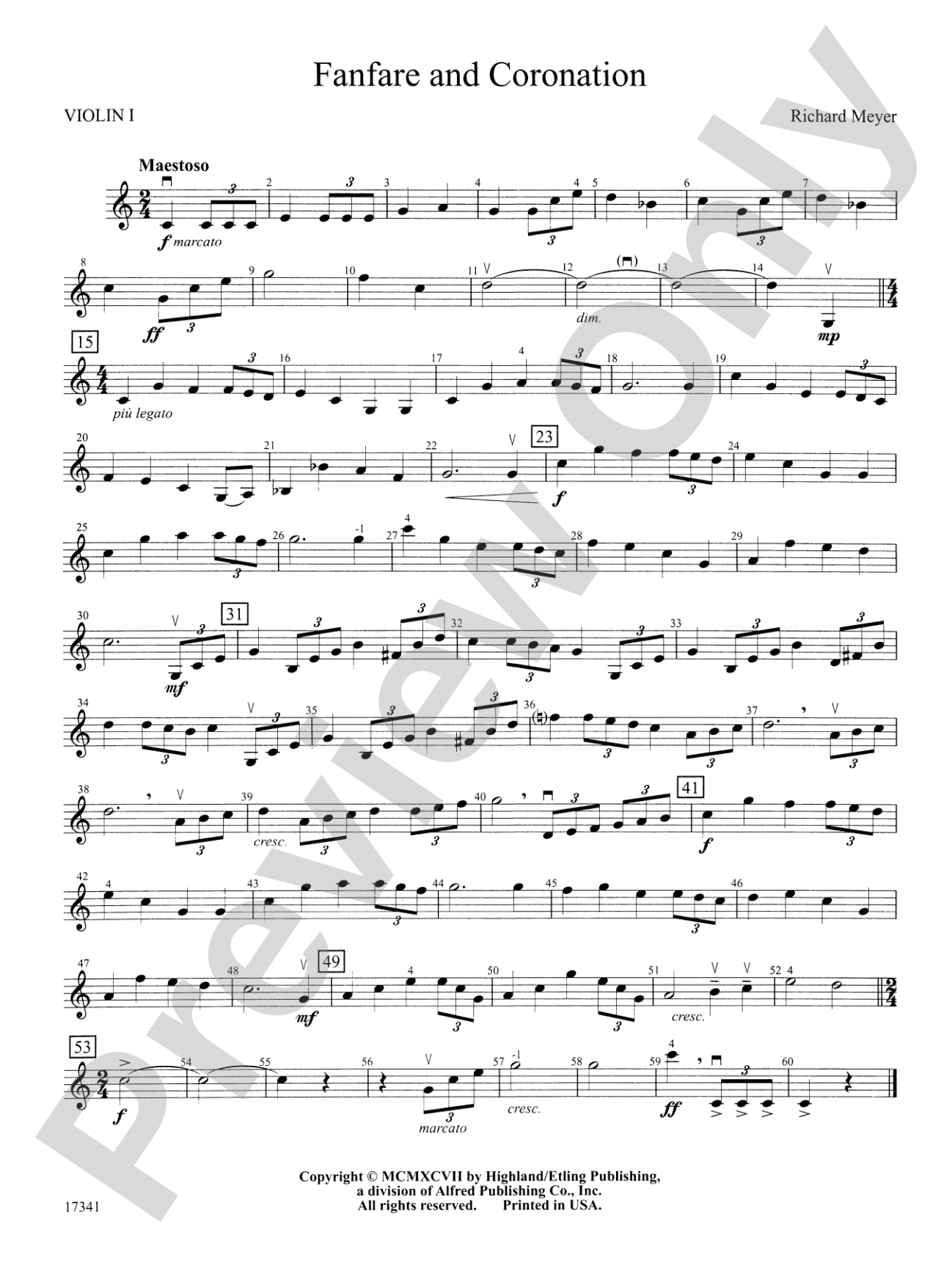

Fanfare and Coronation: 1st Violin
By Richard Meyer
Grade: 1
Item: 00-PC-0000223_VN1
$5.99
Pickup currently not available
Description
The pomp and circumstance of a regal ceremony are evident in this superior selection by Richard Meyer. Ideal for teaching eighth-note triplets, the rich harmonies and expressive melodies of this work show the composer's strong skills at making young orchestras sound really good. Correlated with Strictly Strings, Book 2, page 27. This title is available in MakeMusic Cloud.


Don't just read it, hear it, play along with it, and watch your students grow with it. In MakeMusic Cloud, Fanfare and Coronation: 1st Violin comes alive with professional accompaniment, adjustable tempo, and built-in practice tools that turn solo practice into real progress.
Open in the Player
Jump straight in and assign it today.
Start Your Free Trial
Open this title and explore the full library in minutes.
Sample Audio
1
Audio File
--:--
0:00
0:00
Sample Video
No sample videos found.
Additional Details
Series:
Highland/Etling Strictly Strings
Publisher:
Alfred Music
Page Count:
36
SKU:
00-PC-0000223_VN1
More about this title
About the Composer: Richard Meyer

Richard Meyer brings three and a half decades of string teaching experience to his compositional work, having directed orchestra programs across elementary, middle, and high school levels in Southern California public schools. His tenure at Oak Avenue Intermediate School in Temple City transformed a program of 29 students into 200 active musicians over 22 years, and he expanded his impact through the city's elementary string initiative. Beyond the classroom, Meyer served as music director of the Pasadena Youth Symphony Orchestra for 16 years, leading ensembles on international tours to Vienna, Australia, and Canada.
Meyer's contributions to music education extend across multiple platforms. He pioneered the "Giving Bach" program in 2009, an interactive concert initiative that has earned national recognition for bringing live music to special needs and underserved students throughout the region. As a composer and arranger, he has published over 190 works and spent 16 years as string editor for Alfred Publishing Company. His collaborative efforts include co-authoring the String Explorer Series and Sight-read It for Strings. Meyer has been featured at the A.S.T.A. National Conference, the Texas Orchestra Directors' Association Conference, and string workshops at Ohio State University and Birch Bay, Washington, while also guest-conducting All-State and Honor Orchestras nationally.
Why we love this
Meyer's ear for what young orchestras can accomplish shows in every phrase of this piece. The focus on eighth-note triplets feels organic rather than didactic, woven seamlessly into material that genuinely sounds impressive when performed. Grade 1 ensembles rarely get this kind of combination: pedagogically purposeful yet genuinely ceremonial in character.
What to expect
Ceremonial and stately, with the kind of harmonic richness that makes a young orchestra feel accomplished. The melodies are singable and memorable; the accompaniment figures give every player something engaging to do without technical overreach.
Who it's for
Grade 1 string orchestras looking for festival and contest repertoire that teaches something specific while sounding polished and assured. Directors seeking material that genuinely impresses audiences without requiring advanced string technique.
How to get the most out of it
- Shape the triplet figures with consistent rhythmic clarity; these are the harmonic backbone of the work, so precision here allows the melody to soar.
- Balance the expressive melodies against the supporting voices so the regal quality emerges without any section overshadowing another.
- Approach the dynamic contrasts deliberately rather than abruptly; this creates the pageantry Meyer intended.
- Use the conductor score to identify where individual sections carry the melodic line, then rehearse those passages in section before putting parts together.
How to use it
This works beautifully as an opening number for a winter or spring concert, establishing a confident tone for the program. It's also well-suited to contest and festival performance, where its combination of polish and pedagogical focus speaks to both adjudicators and audiences.
Skills your students will build
- Reading and performing eighth-note triplets in context
- Balancing melody and accompaniment within a harmonic texture
- Executing dynamic shape and expression at Grade 1 level
- Ensemble precision in coordinated rhythmic figures
- Sustaining expressive tone while managing technical demands