
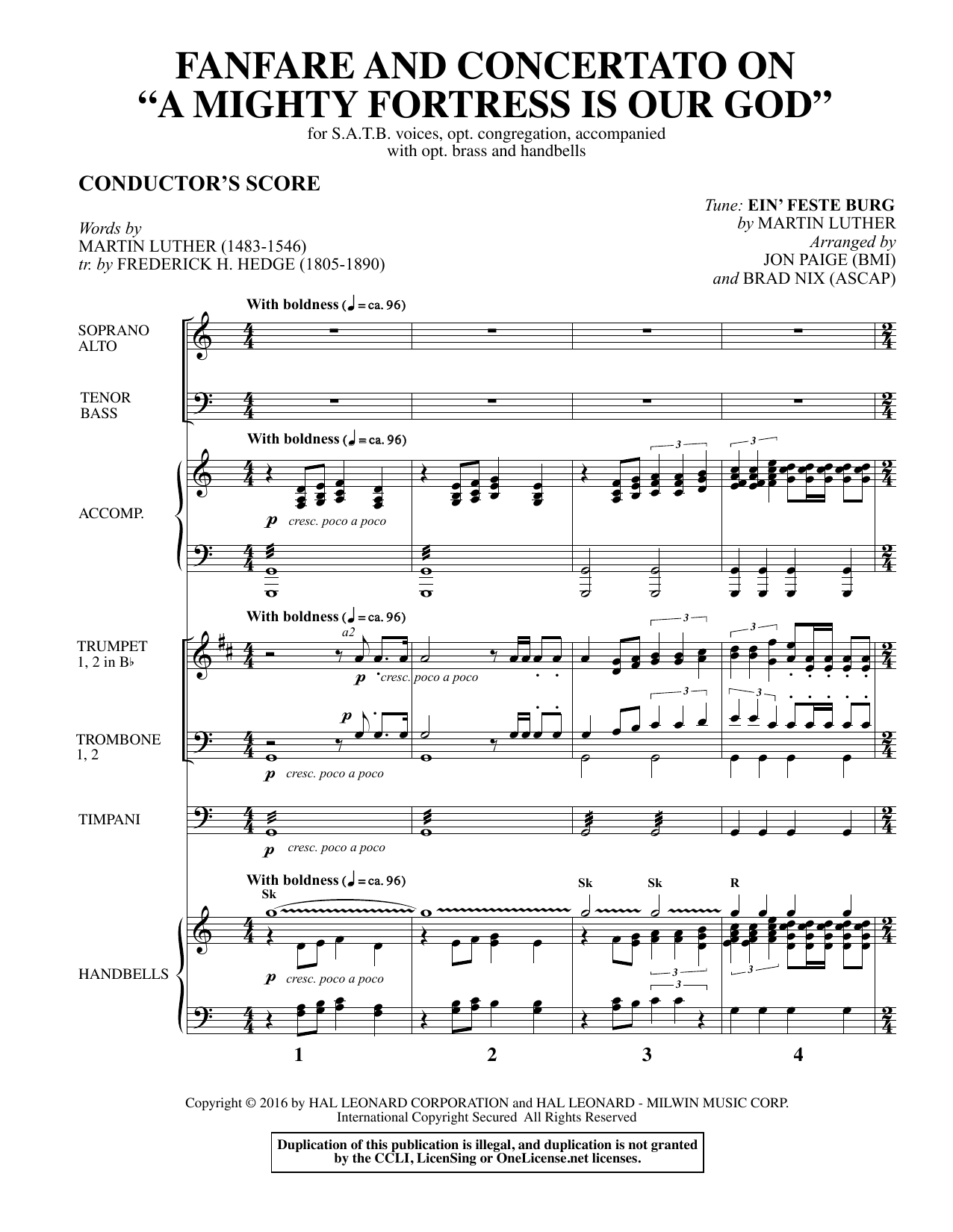

Fanfare and Concertato on A Mighty Fortress Is Our God: Choral Instrumental Pak
As performed by Martin Luther / As performed by Frederick H. Hedge / As performed by Jon Paige / Arranged by Brad Nix
Item: 35-PK00344442
$42.00
Pickup currently not available
Buy Extra Parts (Digital PDF Download)
Parts Added to Cart!
Description
Uses: Call to Worship, General, Hymn Arrangement, Reformation
Scripture: II Samuel 22:2; Psalm 18: 2; Daniel 4:3
This adaptation is especially designed as a congregational anthem. Part of a series of publications conceived to invigorate hymn singing, this powerful arrangement is the ideal opener. The much beloved text and tune are presented with respect. Classic adornments, such as a verse of free harmonization and a final verse that includes a soaring descant, along with choral intros and final tags, complete the package. Festive!


Fanfare and Concertato on A Mighty Fortress Is Our God: Choral Instrumental Pak isn't in MakeMusic Cloud just yet...but it could be. Let us know you'd like to see it, and you'll help shape what comes next. In the meantime, start a free trial and dive into thousands of interactive titles your students can play along with today.
Request This Title
Tell us you want it.
Start Your Free Trial
Explore everything that's ready to play right now.
Sample Audio
No sample audio found.
Sample Video
No sample videos found.
Additional Details
Publisher:
Hal Leonard
SKU:
35-PK00344442
More about this title
About the Artist: Martin Luther
Martin Luther's 1529 hymn 'A Mighty Fortress Is Our God' stands as one of the most consequential religious texts in Western music. Luther composed both the words and melody, creating a congregational anthem of such power and clarity that it became a cornerstone of Protestant worship and musical identity. His approach to hymn writing emphasized direct theological communication paired with memorable, singable melodies that ordinary worshippers could master and internalize.
For music educators, Luther's legacy matters because he understood something fundamental: great congregational music does not diminish itself. His melodies contain strength without pretension, and his texts pair theological substance with poetic economy. This arrangement honors that principle by treating the hymn as a foundation worthy of musical elaboration rather than a vehicle for arranging cleverness.
Why we love this
Brad Nix's arrangement respects the hymn's architectural integrity while adding the celebratory gestures a festive service opener demands. The inclusion of free harmonization in one verse and a descant finale gives your choir real musical shape to build toward, while the choral intros and tags provide exactly the kind of structural clarity that keeps congregational singing grounded. This is festive without becoming fussy.
What to expect
Processional confidence mixed with intimate knowledge. The familiar tune sits in everyone's ears already, so the arrangement can afford to play with it: introducing it freshly, harmonizing it unexpectedly, and sending it skyward in the final verse. This creates the rare feeling of hearing something you already love and discovering it contains more than you remembered.
Who it's for
This works for any choir committed to congregational singing that wants an occasional Sunday to feel genuinely celebratory. Churches looking to open a service with particular resonance, especially around Reformation Sunday or other occasions calling for stronger hymnody, will find this both musically rewarding and theologically apt.
How to get the most out of it
- Balance the descant in the final verse so it soars above rather than overwhelms the congregational harmony beneath it; rehearse the full choir without the descant first to establish the harmonic foundation.
- Shape the free harmonization verse as a moment of introspection; pull back the tempo slightly and ask singers to breathe at the phrase marks rather than powering through, which will highlight the reharmonization without rushing past it.
- Lock the instrumental introduction with the organ or piano; this sets both the tempo and the festive character that carries through the entire piece.
- Keep the final tags crisp and unified in articulation; they function as punctuation, so treat them with rhythmic precision rather than letting them sprawl.
How to use it
Open a service with this when you want the congregation energized and unified from the first hymn. The festive character also makes it a natural fit for an opening anthem on a program featuring other hymn-based sacred music, or for any Sunday where the liturgy or lectionary calls for declarations of faith and strength. Consider placing it early in the service to establish that this is not an ordinary singing Sunday.
Skills your students will build
- Balancing solo or featured lines (descant) against choral harmony
- Maintaining congregational unity while performing varied harmonic treatments
- Executing free harmonization with rhythmic flexibility
- Coordinating instrumental intros with choral entrances
- Building dynamic shape across a hymn-based structure with multiple verses