
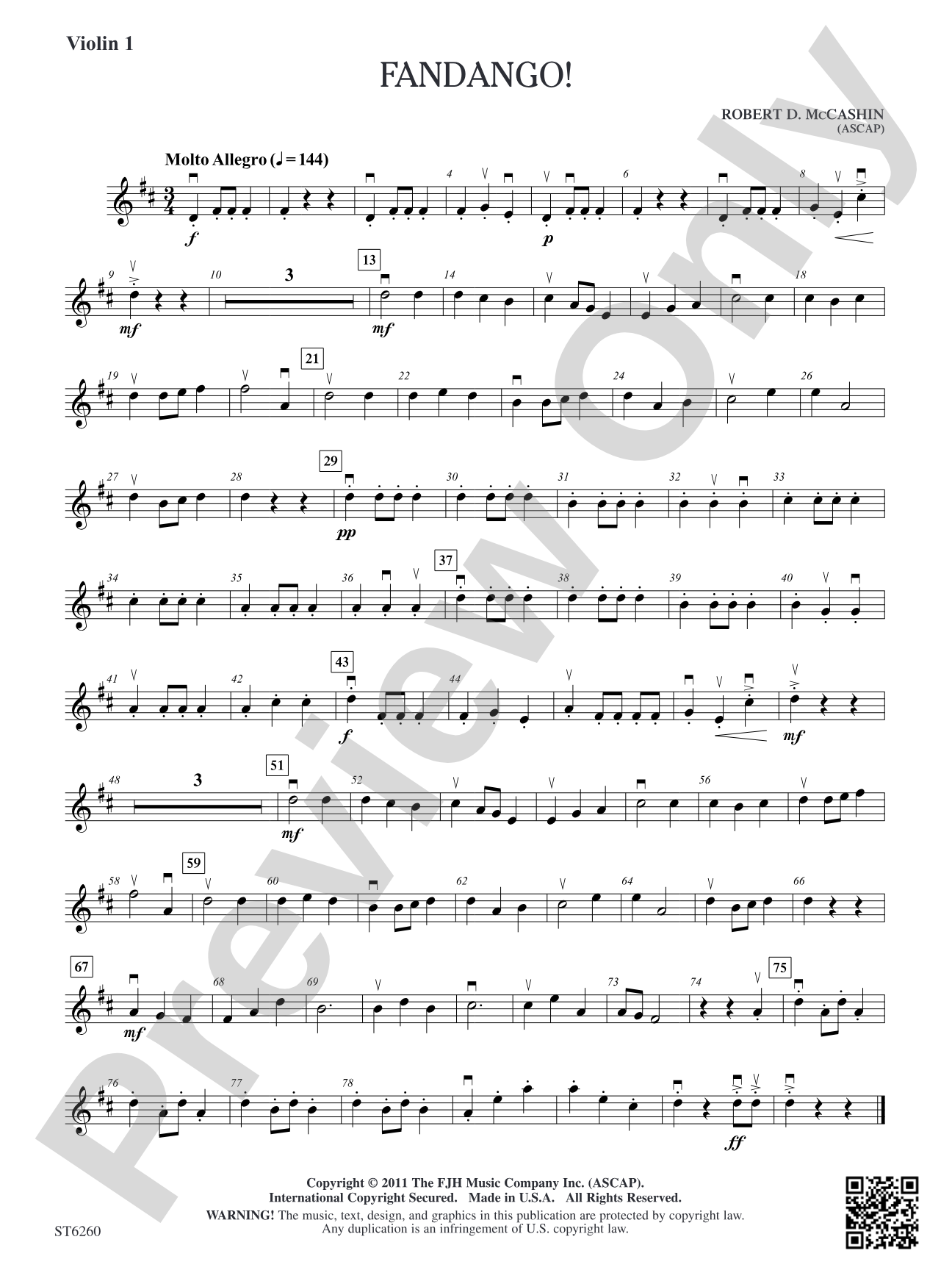

Fandango!: Violin 1
By Robert D. McCashin
Grade: 1.5
Item: 98-PC-DST6260_VN1
$7.00
Pickup currently not available
Description
Experience the Spanish styles of the late 19th century in this clever original for strings! Melodies are shared equally across the ensemble without sounding contrived, and there are many stylistic teaching opportunities ranging from a warm legato sound to a clean staccato bow stroke. Sure to be a hit with both your ensemble and audience!


Don't just read it, hear it, play along with it, and watch your students grow with it. In MakeMusic Cloud, Fandango!: Violin 1 comes alive with professional accompaniment, adjustable tempo, and built-in practice tools that turn solo practice into real progress.
Open in the Player
Jump straight in and assign it today.
Start Your Free Trial
Open this title and explore the full library in minutes.
Sample Audio
1
Audio File
--:--
0:00
0:00
Sample Video
No sample videos found.
Additional Details
Series:
FJH Beginning Strings
Publisher:
The FJH Music Company, Inc.
SKU:
98-PC-DST6260_VN1
More about this title
About the Composer: Robert D. McCashin
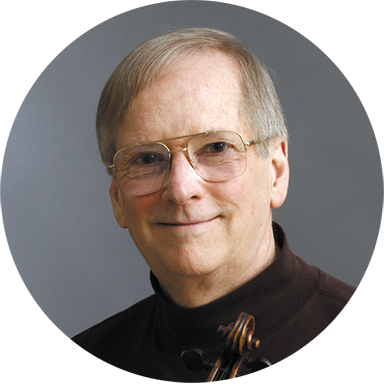
Robert D. McCashin holds a Doctor of Musical Arts in conducting from the University of Arizona and completed his Bachelor and Master of Music degrees in violin performance at Louisiana State University. He spent 43 years in higher education, serving as Professor Emeritus and former Director of Orchestras at James Madison University, where he conducted the Symphony, Chamber Orchestra, and Opera Orchestras while teaching conducting and applied strings at the graduate level. In 2015, he received JMU's Distinguished Teacher Award for the College of Visual and Performing Arts.
McCashin's prolific output as a composer and arranger includes nearly 80 educational works spanning grades 1 through 5, many of which have become standard repertoire and Editors' Choice selections in school music programs. Before joining JMU, he taught at the University of Texas at Arlington and Texas Wesleyan University, where he also founded and conducted the Arlington Youth Symphony. A violinist himself, he has co-authored the widely adopted string class methods New Directions for Strings and A Scale in Time.
Why we love this
McCashin distributes thematic material across the full ensemble without ever feeling forced or unmusical, a skill that keeps 1.5-level orchestras engaged and invested. The piece balances genuine pedagogical value (legato phrasing, clean staccato articulation, Spanish idioms) with the kind of flair that makes both rehearsals and performances genuinely enjoyable, and it works equally well as a festival selection or a concert opener that immediately captures audience attention.
What to expect
Fandango! captures the warmth and rhythmic vitality of 19th-century Spanish guitar music, translated into bright string textures. The piece swings between singing, lyrical passages and snappy, staccato moments, creating a sense of movement and personality that feels fresh rather than formulaic.
Who it's for
String orchestras at the 1.5 grade level who are ready to tackle simple melodies with real stylistic purpose. This piece works for orchestras with competent intonation and basic bow control but do not yet need complex technical demands or dense arranging.
How to get the most out of it
- Shape the Spanish melodies with a warm, singing legato tone in the opening sections; encourage players to think of this as vocal phrasing rather than mechanical bowing.
- Establish the staccato passages with crisp, uniform bow strokes across all sections; a quick rehearsal focused on bow control here will pay dividends in both clarity and style.
- Balance the melody distribution carefully across parts so that no single section dominates; this collaboration is what makes the piece work, so rehearse transitions between instruments explicitly.
- Use the rhythmic energy of the fandango character to drive momentum; avoid dragging the faster passages, as the piece loses its sparkle if the tempo becomes sluggish.
How to use it
Program this as a confident opener on a concert or festival performance where you want to establish energy and engagement immediately. It pairs well with more serious or introspective pieces later in a program and serves equally well as a bridge between educational and concert repertoire.
Skills your students will build
- Warm, sustained legato tone production and phrase shaping
- Clean staccato bow strokes with clear articulation
- Spanish style and fandango rhythm patterns
- Melodic independence across different string sections
- Balance and blend when sharing primary material across the ensemble